Zollinger-Ellison Syndrome: Causes, Symptoms, and Treatment
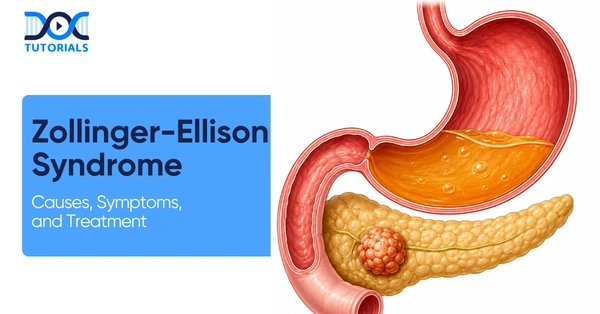
Not all digestive health conditions are common or identifiable. One such rare yet important condition is Zollinger-Ellison Syndrome, where the body produces excessive stomach acid due to specific tumours known as gastrinomas, usually found in the pancreas or duodenum.
Zollinger-Ellison Syndrome is uncommon, affecting only about 0.5 to 3 people per million each year. It is most often diagnosed in individuals between the ages of 20 and 50 and is slightly more common in men than in women. Despite its rarity, understanding this condition is crucial, especially for those working in the medical field. Keep reading to know more.
What is Zollinger-Ellison Syndrome?
Zollinger-Ellison Syndrome (ZES) is a rare disorder caused by gastrin-secreting tumours located in the pancreas or duodenum. This results in the formation of severe ulcers, reflux, and other digestion-related complications.
The Zollinger-Ellison Syndrome (ZES) is a rare disorder in which tumours known as gastrinomas produce excessive amounts of a hormone called gastrin. Another name for this condition is pancreatic ulcerogenic tumour syndrome.
They are a type of neuroendocrine tumour which are normally found in the pancreas or the duodenum (top part of the small intestine). Of all gastrinomas, 60% are cancerous. These tumours stimulate cells that release gastrin, which in turn stimulates the stomach to produce gastric acid. This excess acid leads to ulcers, acid reflux, and other digestive problems.
This may result in chronic diarrhoea in aggressive peptic ulcer disease in severe cases. Treatment is symptom-based, although in some cases, surgical removal of the tumours can provide a cure. However, tumours can recur.
What are the Causes of Zollinger-Ellison Syndrome?
ZES is caused by gastrin-producing tumours that may arise due to genetic conditions like Multiple Endocrine Neoplasia type 1 or occur randomly. These tumours increase gastrin levels, leading to excess acid secretion and ulcer formation.
Here are the important causes of Zollinger Ellison Syndrome leading to gastrin-secreting tumours:
- Genetic Factors
In certain instances, Zollinger-Ellison Syndrome is linked to a hereditary condition called Multiple Endocrine Neoplasia type 1 (MEN1). MEN1 is associated with tumour development in endocrine glands, including the pancreas. Nearly 25–30% of ZES cases are associated with MEN1, indicating a strong genetic influence.
- Sporadic Cases
The majority of ZES cases are observed to manifest randomly, with no known family history of cases. These are called sporadic cases. While the exact cause is not yet established, gastrinoma formation is believed to be influenced by genetic mutation in conjunction with environmental factors.
- Pathophysiology
In terms of the underlying mechanism, Zollinger-Ellison Syndrome is attributed to excess production of gastrin by gastrinoma tumours.
Gastrin stimulates parietal cells in the stomach to secrete hydrochloric acid. This hypergastrinemia leads to increased acid secretion, which damages the lining of the stomach and intestines. This may cause peptic ulcers, bleeding and perforation (in severe cases).
What are the Symptoms of Zollinger-Ellison Syndrome?
Zollinger-Ellison syndrome may cause abdominal pain, heartburn, diarrhoea, nausea, and unexplained weight loss. Severe cases may lead to ulcers, fat in your stools, and health problems caused by the presence of high acid levels in your body.
There are instances where Zollinger Ellison syndrome may show no symptoms at all. When they occur, symptoms of Zollinger-Ellison syndrome are as follows:
- Blood in vomit or stool
- Persistent burning or gnawing stomach ache
- Feeling tired
- Fatty or oily stools
- Constant heartburn
- Indigestion, especially after consuming fatty meals
- Poor appetite
- Nausea and vomiting
- Unexplained weight loss
Symptoms vary depending on the size and number of tumours. Larger gastrinomas produce more gastrin, leading to higher acid levels and more intense symptoms of peptic ulcer disease.
If the tumours spread (metastasise), especially to the liver, they may lead to liver cancer. Symptoms of liver involvement may include:
- Itchy skin
- Jaundice
- Yellow discolouration of the whites of the eyes and mucous membranes
What is the Diagnosis of Zollinger-Ellison Syndrome?
Diagnosis involves clinical assessment, serum gastrin fasting levels, and other diagnostic methods such as secretin stimulation. Imaging and biopsy are used to identify and determine the nature of tumours.
Diagnosis of Zollinger-Ellison Syndrome (ZES) takes a progressive and systematic approach in order to identify it accurately:
- Clinical Evaluation and History Taking
The physician starts by assessing your symptoms, medical history, and any family history of endocrine diseases such as MEN1. Detailed questions are asked about digestive issues, their frequency, and how long they have been present to build a clear clinical picture.
- Blood Testing for Gastrin Levels
To measure hormone levels, a fasting serum gastrin test is performed. Although a high level of gastrin is an important measure, above 1,000 pg/mL is only strongly suggestive in cases when the gastric pH is low (less than 2). The Chromogranin A (CGA) test is also employed to aid in the diagnosis since it reveals the presence of neuroendocrine tumour activity.
- Secretin Stimulation Testing
This specialised test is used to differentiate Zollinger-Ellison Syndrome from other causes of elevated gastrin levels. After administering secretin, a rise in gastrin levels greater than 120 pg/mL supports the diagnosis of ZES.
- Advanced Imaging
Various forms of imaging are used in order to find out and locate any existing tumours. In many cases, the abdominal CT (computed tomography) scan is used first, whereas the MRI (magnetic resonance imaging) is used for detailed imaging of small tumours. These imaging tools help detect lesions that may not be visible through routine methods.
- Tissue Diagnosis through Biopsy
A biopsy is important to confirm the diagnosis. The immunohistochemistry (IHC) panels and lymph node biopsies are some of the ways used to identify the characteristics of the tumours and distinguish them as benign or malignant.
- Genetic Evaluation
If MEN1 is present, then genetic tests are done to confirm the diagnosis. It also aids in identifying family members who are at risk and formulating management plans accordingly.
What are the Treatment Options of Zollinger-Ellison Syndrome?
Treatment involves the use of various medications and procedures, such as proton pump inhibitors, surgical procedures, and medications. Treatment in the early stages helps to alleviate the symptoms and avoid possible complications.
Zollinger-Ellison Syndrome is managed mainly by addressing the tumours and reducing excessive acid secretion. In most cases, doctors prioritise treating the tumours first. The treatment options include:
1. Preventing Tumour Growth
The following strategies are used to control or slow the development of tumours:
- Chemotherapy, which slows tumour growth.
- Surgical removal of gastrinomas from the liver to prevent further spread
- Embolisation is a procedure to block blood flow to tumours.
- Introduction of therapeutic drugs into the tumour to control its activity.
2. Reducing Gastrin Production
Physicians can also prescribe hormonal drugs like octreotide. The drug is used to treat symptoms by decreasing gastrin secretion and to control hormonal effects.
3. Reducing Acid Levels
Excess acid needs to be managed to treat ulcers and reduce symptoms. Treatment mainly includes proton pump inhibitors (PPIs), which are drugs used to inhibit the production of acid. These drugs work by blocking the activity of proton pumps in acid-secreting stomach cells.
Common examples of PPIs include:
- Esomeprazole (Nexium)
- Omeprazole (Prilosec)
- Lansoprazole (Prevacid)
- Pantoprazole (Protonix)
- Rabeprazole (Aciphex)
For patients with long-term Zollinger-Ellison Syndrome, pantoprazole delayed-release tablets may be used as an ongoing treatment option. Lowering stomach acid levels allows peptic ulcers to heal more effectively and reduces symptom severity.
4. Surgery
Surgical intervention may be considered, although it can be challenging. Gastrinomas are often small and difficult to locate. A surgeon may successfully remove a single tumour, but surgery becomes more complex if multiple tumours are present or if the disease has spread to the liver.
According to the National Organisation for Rare Disorders, complete removal of a gastrinoma is successful in approximately 20–30% of cases. If complications such as peptic ulcers arise, surgery may also be required to:
- Repair perforations in the stomach or duodenal wall
- Remove blockages caused by ulcers
- Control or stop internal bleeding
In rare and severe situations, removal of the stomach may be considered as a last-resort treatment option.
FAQs about Zollinger-Ellison Syndrome
- What is the best treatment for Zollinger-Ellison syndrome?
Zollinger-Ellison syndrome is mainly treated with medications known as proton pump inhibitors (PPIs). These medications are regarded as the first-line medication since they can efficiently suppress excessive acid secretion in the stomach.
PPIs work by blocking the activity of tiny acid-producing pumps located in the stomach lining, thereby reducing acid levels and helping relieve symptoms.
- What are the first signs of Zollinger-Ellison syndrome?
Some common early symptoms of Zollinger-Ellison syndrome include abdominal pain, nausea, vomiting, unexplained weight loss, and diarrhoea. If properly managed, ulcers can be effectively controlled. But in case it is left untreated, complications can develop.
- What causes Zollinger-Ellison syndrome?
Zollinger-Ellison syndrome is caused by tumours known as gastrinomas, which typically develop in the pancreas or the duodenum. These tumours produce large amounts of the hormone gastrin, leading to excessive stomach acid production.
- What foods are good for Zollinger-Ellison syndrome?
Since Zollinger-Ellison syndrome leads to increased stomach acid due to gastrin-secreting tumours, diet can help manage symptoms alongside medical treatment.
Low-acid and high-alkaline foods like vegetables and whole grains can be useful in lowering levels of acid and enhancing comfort in the digestive system.
- How serious is Zollinger-Ellison syndrome?
Zollinger-Ellison syndrome may be severe and even life-threatening. For instance, a gastrinoma may block the duodenum, which can lead to rupture. Additionally, the tumour may spread to other organs, particularly the liver, increasing the severity of the disease.
- What is the best test for Zollinger-Ellison syndrome?
The most effective initial screening test for Zollinger-Ellison syndrome is the fasting serum gastrin test. Ideally, this test is performed when the patient is not taking acid-reducing medications, although it can still be used as a preliminary screening tool even if such medications are being taken.
- What is the survival rate of Zollinger-Ellison syndrome?
The survival rate is highly dependent on the spread of the tumours. Patients whose gastrinomas have not metastasised to the liver have an approximate 20-year survival rate of 95%. In contrast, those with liver metastases have an average 10-year survival rate of around 15%, even after undergoing surgery to remove tumours.
- At what age do ZES usually start?
Zollinger-Ellison syndrome is a rare disorder which is largely diagnosed among people aged between 20 and 60 years. It is usually characterised by the formation of one or more tumours of the duodenum, pancreas, or nearby lymph nodes.
- Is Zollinger-Ellison syndrome cancerous?
In many cases, gastrinomas associated with Zollinger-Ellison syndrome can be cancerous. Recent statistics indicate that approximately 60% of these tumours are cancerous, and by the time they are discovered, they might have extended to other body parts.
However, cases linked to MEN1 are less likely to be cancerous initially, while other forms may carry a higher risk of malignancy.
- What should you avoid eating with Zollinger-Ellison syndrome?
People with Zollinger-Ellison syndrome should avoid foods that trigger or increase acid production. This includes spicy foods, citrus fruits, and caffeinated drinks. Avoiding these items can help minimise discomfort and reduce symptom severity.
Conclusion
Zollinger Ellison Syndrome is a serious and rare disorder which may result in excess stomach acid and severe problems without proper management. Although it may feel daunting when you are actually diagnosed, knowing the condition and how to treat it can help you manage it with confidence.
For additional guidance, DocTutorials can be your study companion. We offer crisp videos, clinical Qbank, exam-focused notes, flashcards, and mind maps. This helps ensure aspirants gain complete clarity over complex medical topics.
Join DocTutorials today and explore our NEET PG course to excel in your medical career!


Latest Blogs
-
INI CET Exam Pattern 2027: A Complete Guide with Subject-Wise Weightage
INI CET Exam Pattern 2027: A Complete Guide with Subject-Wise Weightage The Institute of National Importance Combined Entrance Test (INI…
-

NEET PG Registration 2026: An Essential Guide For Exam Prep
The NEET PG registration, which is conducted online, is a crucial step in the exam process. Filling out the NEET…
-

NEET PG Exam 2025- Date, Pattern, Marking Scheme, Subject Wise Weightage, and Exam Mode
NEET PG Exam 2025 is the ultimate gateway for medical graduates aspiring to pursue postgraduate courses in medicine, including MD,…