How to Crack NEET SS in 1 Month: A Step-by-Step Guide
NEET SS is a national medical entrance exam for admission into super speciality courses such as Doctorate of Medicine (DM), Master of Chirurgiae (MCh), and DrNB. It is a computer-based test conducted by the National Board of Examinations in Medical Sciences (NBEMS), organised for postgraduate doctors who seek admission into super-speciality courses.
Cracking a competitive test is never an easy task, but with well-laid strategies and time management, you can perform effectively in the upcoming NEET SS exam. This guide is intended to provide you with multi-faceted, practical advice, weekly plans, and last-minute tips to help you crack the NEET SS exam in a month.
Continue reading to find out more!
Understanding the NEET SS Exam Pattern and Syllabus
The NEET SS exam is an online computer-based test which comprises 150 multiple-choice questions divided across three sections. Here is a detailed overview of the NEET SS exam pattern:
| Particulars | Details |
| Medium of Exam | English |
| Total number of Questions | 150 |
| Format | Multiple-Choice Questions (MCQs), single best answer |
| Sections | Three |
| Total number of questions in each section | 50 |
| Duration of each section | 50 minutes |
| Total duration of the Exam | 150 minutes or 2.5 hours |
| Total Marks | 600 |
| Marking Scheme | +4 marks will be awarded for each correct answer -1 will be deducted for every wrong answer 0 for unattempted questions |
| Number of Exam Days | 2 |
| Number of Exam Slots | 2 |
The NEET SS exam syllabus differs depending on the type of super speciality group that the candidate selects. There are a total of 13 groups, each tailored towards a separate specialisation in the field of medicine. Below is a summary of the five main groups and their super speciality courses:
| Question Paper Group | Super Speciality Courses |
| Surgical Group | MS/DNB General Surgery includes Neurosurgery, Surgical Gastroenterology, Cardiovascular & Thoracic Surgery, Paediatric Surgery, Hepato Pancreato Biliary Surgery, Paediatric Cardiothoracic Vascular Surgery, Urology, Plastic & Reconstructive Surgery, Surgical Oncology, Thoracic Surgery, Vascular Surgery, and Endocrine Surgery |
| Medical Group | MD/DNB General Medicine includes Critical Care Medicine, Cardiology, Endocrinology, Clinical Haematology, Clinical Immunology & Rheumatology, Medical Gastroenterology, Hepatology, Infectious Diseases, Neurology, Nephrology, Medical Genetics, and Medical Oncology |
| Paediatrics Group | MD/DNB Paediatrics includes Paediatric Hepatology, Neonatology, Paediatric Oncology, Paediatric Nephrology, Paediatric Neurology, Paediatric Cardiology, Paediatric Critical Care, Paediatric Gastroenterology |
| Anaesthesia Group | MD/DNB Anaesthesiology includes Organ Transplant Anaesthesia & Critical Care, Cardiac Anaesthesia, Neuroanaesthesia, Neonatal & Paediatric Anaesthesia |
| Gynaecology & Obstetrics Group | MS/MD/DNB Gynaecology & Obstetrics includes Reproductive Medicine & Surgery and Gynaecological Oncology. |
The NEET SS syllabus is broken down into two parts:
- Part A: This section of the question paper is based on questions from the curriculum of the relevant feeder broad speciality course at the exit level of postgraduate (MD/MS/DNB). This carries about 40% weightage (or about 60 questions worth a total of 240 marks in the NEET SS entrance exam).
For example, if a candidate is applying to a super speciality course under the medical group, then he would be responding to questions based on the syllabus of MD/DNB General Medicine (postgraduate).
- Part B: This section is purely based on exit-level questions from the postgraduate (PG) clinical and applied basic sciences relevant to the super speciality stream that the candidate selects. This carries 60% weightage (or about 90 questions worth a total of 360 marks in the NEET SS entrance exam).
For example, if the candidate has selected neurology, then he may be asked questions on topics such as neurological disorders and neuroimaging, brain anatomy, stroke management, etc.
Is It Possible to Crack the NEET SS Exam in One Month?
Although it’s one of the toughest medical exams, you can still crack the NEET SS exam in one month with a strong foundation and a disciplined strategy. Success in this highly competitive exam depends entirely on your prior knowledge and a strategic study plan. Since you are at the PG exit level, your years of residency and clinical experience will act as a solid foundation, which will be your advantage in the NEET SS exam.
With targeted revision of high-yield topics and a focused study plan, you can easily ace this exam. Follow authoritative sources and comprehensive revision materials that are particularly designed for last-minute revisions.
1-Month NEET SS Preparation Strategy
Here are a few methods that you can follow to prepare effectively for the NEET SS exam within a span of 1 month:
Week 1: Understand Your Strengths and Weaknesses
- Take a full-length mock test to identify your weak and strong topics. It will help you understand the areas you need to focus on to improve your score.
- Prepare a realistic timetable according to your time availability and constraints. Ideally, try to devote at least 4 hours per day to studying the important concepts.
Here’s a breakdown of recommended study hours for each subject:
| Subject | Recommended Study Time |
| General Medicine | 30 hours |
| General Surgery | 30 hours |
| Paediatrics | 20 hours |
| Obstetrics & Gynaecology | 20 hours |
| Orthopaedics | 15 hours |
| Anaesthesia | 15 hours |
| Radiology | 15 hours |
| Dermatology | 10 hours |
| Psychiatry | 10 hours |
| Other Specialties | 15 hours |
- Identify and refer to a few reliable study materials that will help you grasp concepts faster and revise better.
Week 2: Prioritise Primary Feeder Broad Speciality (Part A)
- Studying the Part A concepts first helps you build a strong foundation and covers 40% of the questions on your exams.
- Refer to standard PG-level books like Harrison’s for Medicine, Bailey & Love for Surgery, etc., to strengthen basic concepts.
- Start solving previous year questions from your parent discipline to analyse your scores.
Week 3: Cover Super Speciality Topics (Part B)
- Devote this week towards revising the super speciality stream under your chosen group. For instance, if you have chosen cardiology as your speciality, then you should focus on heart failure, cardiac pathology, electrophysiology, and other cardiology-related procedures.
- Focus on high-yield topics that have been asked repeatedly in the past year’s papers, such as clinical case scenarios, diagnostic approaches, and treatment protocols.
Week 4: Revision and Mock Tests
- Don’t start any new topics this week. Focus only on revising the materials you have studied in the past three weeks.
- Take full-length timed mock tests and analyse your scores and weaker areas.
- Keep a log of your mistakes and understand where you need to improve and devote more time. Revise the weak topics properly, and then try to solve more questions to improve your grip on those areas.
Smart Study Techniques for NEET SS Exam
During the last month, focus more on quality reading rather than on quantity. Studying 12-14 hours per day won’t bring results if you keep cramming all day. You can cover more by studying only 4-6 hours per day if you read and revise strategically.
Here are a few smart study tips to implement in your 1-month NEET SS plan:
- Make Systematic Notes
Take notes while studying a topic. Highlight key points, and make flowcharts, diagrams, and boxes to improve your visual memory and remember faster. Concise notes carrying critical topics in a simplified manner make last-minute revision easier.
- Incorporate Scheduling Technique
Divide your study time into specific blocks dedicated to a single task or subject. Club similar tasks together and tackle them in a single slot. For instance, batch MCQs and previous question practice in one time slot and note-taking and reading in another slot. It helps to improve efficiency and keeps you productive throughout the day.
- Effective Revision Strategies
Keep a dedicated time slot for revision every day. Revisit the topics covered in the day and revise them at last to ensure quality learning and faster memorisation. Prepare flashcards for difficult topics and be sure to visit them at regular intervals with short breaks in between to cover the entire topic.
- Reverse Reading Method
Don’t use MCQs only to practise or analyse your preparation. During your final phase, use the reverse reading method to enhance your memory.
In this method, you will first study the MCQs and then move to the textbook explanations for a better understanding of the expected questions. You can then revise these topics and practise more MCQs or question banks to strengthen your understanding.
- Mindful Rest and Recharge Time
Take ample rest to ensure recovery and increase retention of important topics. Take short power naps or engage in any mindful recreational activities like reading fiction, solving puzzles, or playing any instrument to improve your cognitive abilities.
Last-Minute NEET SS Preparation Tips
With only one month left for the NEET SS exam, making the most of your final preparation days can improve your score. Here are a few tips and hacks to increase focus and maximise your efficiency:
- Avoid Overloading New Topics
In the last month, it will be futile to start an entirely new topic. It will lead to unnecessary stress and anxiety. Focus on quality learning and revise the existing topics to improve understanding.
- Don’t Skip High-Yield Topics
It is not possible to cover everything in the final month, so stick to high-yield topics that were frequently asked in past years. Understand the subject-wise mark weightage of the topics and prepare accordingly. These are most likely to be asked in the upcoming exams as well.
For instance, in the medicine group, Cardiology, Pulmonology, and Infectious Diseases carry more weightage. Whereas, in the surgery group, critical care carries more weightage. Try to devote more time to these areas to ensure a firm understanding.
- Prioritise Key Formulas and Concepts
Given the practical nature of the NEET SS exam, memorising the key formulas, definitions, and concepts can be really helpful. Create quick revision notes and flashcards highlighting the important concepts and formulas to memorise faster.
- Mock Tests and Previous Year Questions
In this final phase of preparation, taking mock tests and solving previous years’ questions can boost your scores significantly. It will filter out your weak areas, which need practice, so that you can easily identify and prioritise these areas to achieve top scores.
- Clinical Cases and Problem Solving
The NEET SS exam is all about clinical decision-making and practical scenarios. Focus more on practising real-life case scenarios and understanding different perspectives. It will help to refine your problem-solving skills and practical insights.
- Focus on Physical and Mental Well-being
Cramming during this last month can cost your scores. Try to maintain a balanced diet and take enough rest to stay productive throughout the day. Practise deep breathing techniques to reduce stress and improve concentration.
- Exam-Day Strategy
While taking mock tests, understand the exam pattern, marking scheme, and number of questions and sections well to avoid panic during the exam. Focus on time management and allocate time to different sections and questions based on your strengths. Don’t waste time on solving difficult questions.
Instead, move ahead, complete the paper, and come back to it if needed.
Recommended Resources for NEET SS Exam
Referring to the right resources is extremely important in this phase of preparation. You can use comprehensive revision notes and your materials to review important concepts and formulas. Here are a few standard textbooks to follow:
| Primary Feeder Speciality/Group | Recommended Textbooks |
| General Medicine | Harrison’s Textbook of Internal Medicine (by Larry Jameson and Joseph Loscalzo) Davidson’s Principles and Practice of Medicine MCQ books in Medicine (by Deepak Marwah & Mudit Khanna) Sub-speciality books like Braunwald’s Heart Disease (Cardiology), Bradley’s Neurology (Neurology), Brenner & Rector’s Kidney (Nephrology) |
| General Surgery | Schwartz’s Principles of Surgery (by F. Charles Brunicardi) Bailey & Love’s Short Practice of Surgery Super-speciality textbooks: Sabiston Textbook of Surgery, Campbell-Walsh Urology, Greenfield’s Surgery Surgery Essence 7th Edition (by Dr Pritesh Singh) |
| Orthopaedics | Campbell’s Operative Orthopaedics Rockwood and Green’s Fractures Miller’s Review of Orthopaedics |
| Paediatrics | Nelson Textbook of Paediatrics (main reference) Sub-speciality references like Cloherty’s Manual of Neonatal Care |
| Obstetrics & Gynaecology | Williams Obstetrics Berek & Novak’s Gynaecology Te Linde’s Operative Gynaecology |
| Anaesthesia | Miller’s Anaesthesia Morgan & Mikhail’s Clinical Anesthesiology |
Apart from books, you can also refer to question banks and take full-length mock tests to get familiar with the exam pattern. DocTutorials offer mock tests through their online platform, which includes comprehensive question banks built on trusted textbooks and various test formats like mini tests, grand tests, and revision tests.
FAQs about How to Crack NEET SS in 1 Month
- Is it possible to crack NEET SS in 1 month?
It depends on your foundational knowledge and current status. Starting from scratch will be unrealistic and will take a lot of time. Practising previous year questions and taking mock tests can help you identify your weak areas so that you can devote time to them and improve your understanding. With the right strategy, smart study techniques, and proper time management, you can easily improve your score and ace the NEET SS exam.
- How many hours should I study for the NEET SS exam?
The hours of study vary according to your specialisation and current knowledge. However, the recommended study hours for different subjects are-
| Subject | Study Time |
| Obstetrics & Gynecology | 20 hours |
| General Medicine | 30 hours |
| General Surgery | 30 hours |
| Other Specialities | 15 hours |
- What is the difficulty level of the NEET SS exam?
The NEET SS exam has a moderate difficulty level and is purely based on practical case scenarios. It assesses critical thinking, application, and in-depth knowledge of students across various specialisations.
- How to manage time effectively during the NEET SS exam?
Students should take full-length, timed mock tests to improve their speed and accuracy while solving questions. Allocate fixed time to each section based on your strengths. It is advised to attempt easy questions first and gradually move to tough questions so that you can get ample time to solve them.
- What are the best books for NEET SS preparation?
Refer to authoritative textbooks that provide a structured explanation of key concepts for better understanding. Here are some recommended textbooks for the NEET SS exam:
- Harrison’s Textbook of Internal Medicine (by Larry Jameson and Joseph Loscalzo)
- Schwartz’s Principles of Surgery (by F. Charles Brunicardi)
- Surgery Essence 7th Edition (by Dr Pritesh Singh)
- Surgery Sixer (by Dr R. Rajamahendran)
- Pediatric Primary Care (by Burns)
- MCQ books in Medicine (by Deepak Marwah & Mudit Khanna)
- What is the ideal mix of MCQs and theory while preparing for NEET SS?
A 60:40 mix is ideal. More time should be devoted to MCQs to build application skills and exam temperament. Theory time can be used to clear concepts and eliminate doubts.
- How can the accuracy be improved while attempting NEET SS clinical case-based questions?
Make vignette-based MCQs a daily habit. Along with this, the study of normal algorithms, staging systems, and scoring systems must be done regularly. This will reduce the chances of errors while attempting MCQs.
- What are the mistakes to be avoided during the last week of NEET SS preparation?
Avoid starting new topics and disturbing your sleep routine. Focus only on last-minute revisions, PYQs, and short notes. Staying relaxed, confident, and mentally fresh matters more than cramming at this stage.
- How do toppers revise PYQs during the last 30 days of NEET SS preparation?
Toppers usually revise the PYQs topic-wise. While revising the PYQs, the explanation must be read carefully. Common concepts must be marked and revised regularly.
- Are short notes helpful during the last month of the NEET SS exam?
Yes, short notes are extremely helpful while revising the topics. They allow you to quickly recall important points, formulas, and high-yield concepts without going through entire textbooks again.
Conclusion
Cracking the NEET SS exam requires strategic planning, dedication, and proper time management. Starting from scratch won’t be realistic if you aim to clear the exam. However, you can plan smartly and begin your preparations through revision notes and mock tests. Allocate ample time to weaker areas while keeping in touch with your strengths to improve your scores.
For best results, take expert guidance from DocTutorials, which offers curated study materials, revision lectures, notes, comprehensive question banks, and mock tests for the NEET SS aspirants to help them excel in the exam and achieve their dream specialisation. Check out our NEET SS courses today!
Latest Blogs
-

NEET SS Exam 2024: Analysis, Key Dates, Counselling
The NEET SS 2024 exam kicked off on March 29, 2025. Over two days and two slots, candidates across 13…
-
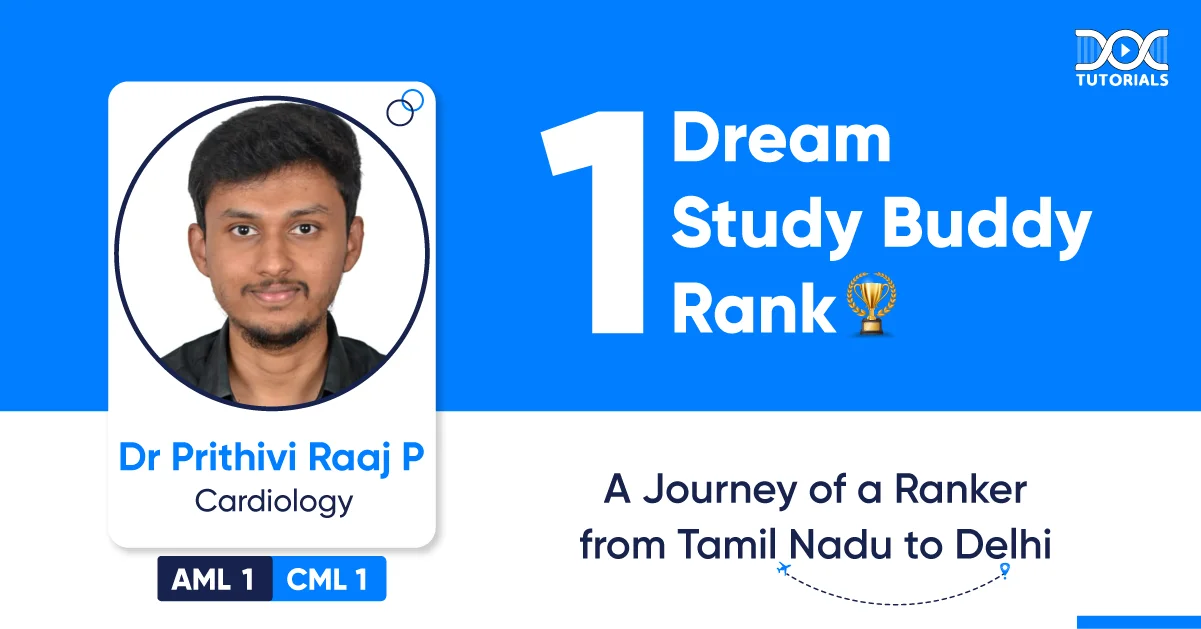
INI SS Topper: 1 Dream, 1 Study Buddy, 1 Rank – The Journey of Dr. Prithivi Raaj, CML 1 & (AIIMS) AML 1 in DM Cardiology
Achieving the top rank in a competitive exam like the INI SS DM Cardiology requires tireless dedication, a structured approach,…
-
INI SS Results: Merit List, Exam Insights, and What Comes Next
The INI SS results for October 2024 are just around the corner. This is a life-changing moment for thousands of…