Sabiston Textbook of Surgery: Why It’s the Ultimate Guide for MS General Surgery
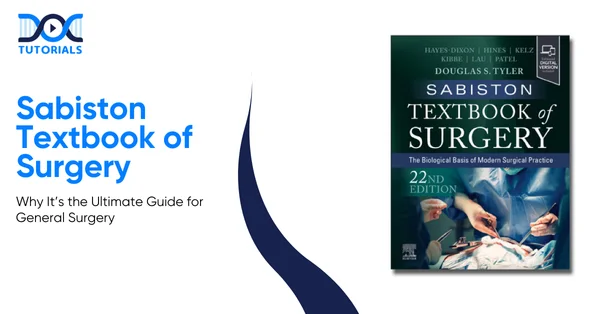
Sabiston Textbook of Surgery: The Biological Basis of Modern Surgical Practice is a go-to text that covers the breadth of the material necessary for certification as a surgeon. It is one of the oldest published textbooks for surgeons of all levels and provides expert guidance on every aspect of general surgery.
If you are an MS General Surgery resident looking for top-class study materials, the Sabiston Textbook of Surgery should be at the top of your list. Keep scrolling for all the details of the 22nd edition of this book.
What is the Sabiston Textbook of Surgery About?
The Sabiston Textbook of Surgery is where a surgeon finds basic answers regarding wound healing, fluids, and perioperative care, and detailed information about trauma, organ surgery, cancer, and robotic techniques. It includes 2,000+ images, tables, and easy-to-follow algorithms. The book generally costs ₹6,500 for the paperback and ₹13,000–₹24,000 for the hardcover.
The Sabiston Textbook of Surgery was first published in 1930 and has been continually updated since. Today, the latest version of the book is the 22nd edition.
The book begins with core topics that are essential in general surgery practice: wound healing, fluid and electrolyte management, nutrition, perioperative care, shock, and the basic molecular and cellular biology behind surgical disease.
It also covers complex topics like trauma and critical care systemic diseases (cardiothoracic, vascular, and endocrine), solid-organ surgery, oncologic surgery, transplantation, and subspecialty procedures.
With evolving times and with advancements in medical procedures, the new editions also integrate topics like simulation and training methodology, robotic techniques, and discussion of emerging tools such as AI and image-guided therapies. The book also includes more than 2,000 images and hundreds of quick-reference tables, boxes, and algorithms for easy but comprehensive learning.
The price of the book varies across editions and sites. The hardcover copy of this book can range from anywhere between ₹13,000 and ₹24,000. Meanwhile, the paperback version costs around ₹6500.
Why Do MS General Surgery Residents Choose the Sabiston Textbook of Surgery?
Residents turn to the Sabiston Textbook of Surgery for its clear linkage of theory to actual clinical practice and the “why” behind surgical decisions. It is a single-volume, comprehensive, expertly authored text that remains current with modern approaches like robotics and minimally invasive surgery. It has become one of the most relied upon and recommended references in exam preparation and daily surgical practice.
The book combines theoretical concepts and basic concepts with its practical and clinical application. This synthesis is valuable for residents who are required to integrate theory into an operative plan. It also explains the “why” behind certain practices and treatment management, helping residents gain a holistic understanding of not only what needs to be done but also why it is done.
Sebastian’s textbook serves as a long-term reference as a prep-text. Since this is a single-volume book acting as a comprehensive source, residents don’t need multiple volumes of general surgery books on varied topics. A big advantage is also the fact that it is written by experts in the clinical field, keeping the content trustworthy and relevant.
Over the years, the Sebastian textbook has become the most searched and recommended book, as it is a single, reliable, up-to-date text. Since it was published in 1930, and has been continually updated, its revised chapters include all modern innovations and hot topics like robotics and minimally invasive procedures. Therefore, it has an established brand reputation.
The textbook is also highly recommended to prepare for board and PG examinations.
What is the Table of Contents of the Sabiston Textbook of Surgery (22nd Edition)?
The 22nd edition of the Sabiston Textbook of Surgery is organised into eleven major sections involving surgical training, perioperative care, trauma, oncology, transplantation, and all core surgical systems. It provides a well-organised, comprehensive review of core and advanced knowledge in surgery for residents. The book provides an organised format to lay strong clinical and operative foundations systematically for the residents.
The textbook is divided into eleven detailed sections that cover important foundational and advanced aspects of surgical science. The following section gives an overview of the structured table of contents of the 22nd edition of the book.
| Section | Topic |
SECTION I: Surgical Training and Quality Control | Surgical Education: Past, Present, and Future |
| Surgical Simulation and New Ways to Optimise Performance | |
| Certification of Surgeon Competence | |
| Preoperative Risk Assessment and Alterations in the COVID-19 Era | |
| Social Determinants of Health and Their Impact on Surgical Outcomes | |
| Critical Assessment of Surgical Outcomes and Health Services Research | |
| Surgical Quality Improvement Programmes | |
| Patient-Reported Outcomes | |
| Safety in the Surgical Environment | |
| Advances and Training Considerations in Robotic Surgery | |
| Advances and Training Considerations in Laparoscopic Surgery | |
| Advances and Training Considerations in Endoscopy and Endoscopic Surgery | |
| Telehealth in Surgery | |
| Health Inequities and Disparities in Surgery | |
| Global Surgery | |
| Ethics and Professionalism in Surgery | |
| Surgeon Health: Ergonomics | |
| Surgeon Health and Well-Being | |
SECTION II: Perioperative Management SECTION II: Perioperative Management | Principles of Preoperative and Operative Surgery |
| Anaesthesiology Principles, Pain Management, and Sedation | |
| Optimising Surgical Outcomes: Prehabilitation and Rehabilitation | |
| Enhanced Recovery After Surgery (ERAS) | |
| Wound Healing | |
| The Evolving Role of the Microbiome in Surgical Practice | |
| Surgical Site Infections | |
| Surgical Complications: Overview and Grading | |
| Surgery in the Geriatric Patient | |
| Surgery in the Pregnant Patient | |
| Surgical Considerations in the Transgender Patient | |
| Surgical Palliative Care | |
| Advanced Analytics and Artificial Intelligence Applications in Surgery | |
SECTION III: Trauma and Critical Care | The Inflammatory Response |
| Shock, Electrolytes, and Fluid | |
| Metabolism and Nutrition in Surgical Patients | |
| Primary Soft Tissue Infections | |
| Management of Acute Trauma | |
| The Difficult Abdominal Wall | |
| Management of Vascular Trauma | |
| Management of Urologic Trauma | |
| Emergency Care of Musculoskeletal Injuries | |
| Emergency Care of Neurologic Injuries | |
| Management of Paediatric Trauma | |
| Burns | |
| The Outdoors—Venomous Bites and Environmental Exposure | |
| Management of Chronic Wounds | |
| Surgical Critical Care | |
| Moving Operating Room Procedures to the ICU | |
| The Surgeon’s Role in Disaster Management | |
SECTION IV: Transplantation and Immunology | Transplantation Immunobiology and Immunosuppression |
| Regenerative Medicine and Its Applications to Surgery | |
| Surgical Considerations in Transplant Patients and Portal Hypertension | |
| Kidney Transplantation | |
| Liver Transplantation | |
| Pancreas Transplantation | |
| Islet Transplantation | |
| Small Bowel Transplantation | |
| Heart Transplantation | |
| Lung Transplantation | |
| Soft Tissue Transplantation | |
| SECTION V: Surgical Oncology | Tumour Biology and Tumour Markers |
| Tumour Immunology and Immunotherapy | |
| Surgical Considerations in Cancer Patients | |
| Melanoma and Cutaneous Malignancies | |
| Sarcomas of the Soft Tissues, Retroperitoneum, and Bone | |
| Gastrointestinal Stromal Tumours (GIST) | |
| Benign Diseases of the Head and Neck | |
| Head and Neck Cancer | |
| Diseases of the Breast | |
| Plastic Surgical Considerations in Cancer Surgery | |
| Peritoneal Malignancy and HIPEC | |
| Surgeon’s Approach to Lymphadenopathy | |
| The Spleen | |
| SECTION VI: Endocrine Disorders | The Thyroid |
| Parathyroid | |
| The Adrenal Glands | |
| Pancreatic Neuroendocrine Tumours | |
| Neuroendocrine Neoplasms (Carcinoid Tumours) | |
| Multiple Endocrine Neoplasia Syndromes | |
| SECTION VII: Abdominal Wall Hernias | Preoperative Management of the Hernia Patient |
| Ventral Hernias | |
| Hernias of the Abdominal Wall: Atypical Locations | |
| Inguinal Hernias | |
| SECTION VIII: Alimentary Tract | Benign Oesophageal Disorders |
| Oesophageal Cancer | |
| The Acute Abdomen | |
| Stomach | |
| Gastric Cancer | |
| Biliary System | |
| The Liver | |
| Secondary Tumours of the Liver | |
| Small Intestine | |
| Exocrine Pancreas | |
| Pancreatic Cancer | |
| The Appendix | |
| Colon and Rectum | |
| Cancers of the Colon, Rectum, and Anus | |
| Benign Anorectal Disorders | |
| Acute Gastrointestinal Haemorrhage | |
| Morbid Obesity | |
| SECTION IX: Vascular Surgery | Hemostasis and Thrombosis |
| Contemporary Management of Carotid Disease | |
| Aortic Disease | |
| Peripheral Occlusive Disease | |
| Extremity Amputations: Indications and Outcomes | |
| Peripheral Aneurysmal Disease | |
| Visceral Ischaemic Syndromes | |
| Dialysis Access | |
| Venous Disease | |
| The Lymphatics | |
| SECTION X: Cardiothoracic Surgery | Lung, Chest Wall, Pleura, and Mediastinum |
| Acquired Heart Disease: Coronary Artery Disease | |
| Acquired Heart Disease: Valvular | |
| Congenital Heart Disease | |
| Pulmonary Embolism: Acute and Chronic | |
| Percutaneous Heart Procedures | |
| Extracorporeal Membrane Oxygenation (ECMO): Applications and Management | |
| SECTION XI: Subspecialty Considerations Relevant to the General Surgeon | Paediatric Surgery |
| Maternal–Foetal Surgery | |
| Hand Surgery | |
| Gynaecologic Surgery | |
| Urologic Surgery |
What is the Latest Edition of the Sabiston Textbook of Surgery?
The most recent 22nd edition of the Sabiston Textbook of Surgery has major updates and was released on 27 August 2025. It features new chapters on minimally invasive surgery, robotics, endoscopy, simulation, and AI, accompanied by videos and podcast-style resources. This edition is designed to match modern surgical training needs.
The Sabiston 22nd edition was officially released on 27th August 2025. Compared to the previous versions, this edition has introduced several important updates and modernisations in chapters that are relevant today for general surgery residency.
The following gives you a brief detail on what is newly added in the latest edition:
- New chapters in minimally invasive surgery, advanced endoscopic techniques, surgical simulation, and artificial intelligence (AI) applications.
- Additional detailed content on robotic surgery.
- Provides access to more than two dozen high-quality surgical procedures and technique videos.
- New podcast-style audio resources.
How to Use the Sabiston Textbook of Surgery Effectively for MS General Surgery?
The Sabiston Textbook of Surgery helps prepare for cases by explaining the basics of diseases, operative steps, and postoperative care. The videos, images, and quick-reference tables make revision easier and faster.
MS General Surgery students can benefit greatly from the Sabiston Textbook of Surgery by following a strategic plan throughout residency. Here are some ways in which you can use the textbook:
- Using it for Daily Reading
It is recommended that residency students do daily directed reading from one standard textbook or reference source during rotations. This means that residents should read the chapters in relation to the system they are rotating in.
- For Pre-Operative Case Preparation
Use the book to read about the diagnosis and procedure for pre-operative case preparation in a major surgical test. Before entering the OT, use Sabiston to:
- Understand the disease’s underlying mechanism
- Review standard operative steps
- Study complications and post-operative care
This makes you more confident and better prepared, especially in your first and second years of MS.
- Use Multimedia Content
The 22nd edition of this textbook also comes with images, two dozen surgical video clips, podcast-style audio resources, over 2,000 high-quality images, and hundreds of quick-reference tables, boxes, and algorithms.
Videos and podcast-style audio can be used for effective learning and comprehension. The algorithms, reference tables, and boxes can be used for exam-friendly revision.
Conclusion
The Sabiston Textbook of Surgery remains an essential and trusted reference for MS General Surgery and PG Residency students. With updated chapters, recent advances in surgery, and elaborate explanations, the support it provides to residents ranges from daily clinical work to case preparation and exam readiness. The 22nd edition further solidifies that with new content on robotics, minimally invasive techniques, and AI in surgery.
However, to thoroughly understand all the knowledge that this book has to offer, you need expert guidance and doubt-clearing sessions, which are offered by DocTutorials. We even provide concise, high-yield notes and video lectures that help you take your exam preparation to the next level.
Check out our MS General Surgery courses today!
FAQs about Sabiston Textbook of Surgery
- Is the Sabiston Textbook of Surgery enough for MS General Surgery residents?
Yes, Sabiston is one of the most comprehensive and reliable textbooks for MS General Surgery. It contains basic to advanced topics that serve as a strong basis for primary reference. Still, residents often use it in combination with lecture notes or quick-review guides for exams.
- Is it hard for beginners to read Sabiston?
Although detailed, the book explains the concepts clearly. For a first-year resident, some chapters could be a bit heavy; however, reading them slowly, along with clinical rotations, makes it much easier over time.
- Should I read Sabiston chapter by chapter?
Not necessarily. The best way is to read based on your rotation. For example, if you’re posted in GI surgery, focus on the stomach, liver, pancreas, and colorectal chapters.
- Is the new Sabiston edition very different from the others?
Yes. The updates on robotic surgery, minimally invasive procedures, AI in surgery, enhanced perioperative care, and new multimedia learning tools are all included in the 22nd edition. This makes it more aligned with modern surgical practice.
- Is Sabiston useful in preparing for exams?
Absolutely. Many of the questions on the exams are based on concepts covered in Sabiston. Using tables, algorithms, and summary boxes can help MS General Surgery residents revise quickly before the exams.
- What is the latest edition of Sabiston’s textbook of surgery?
Being one of the oldest published books of surgery for surgical residents, the latest 22nd edition continues to maintain the quality and provides the key information along with updated content and teaching pearls that are required to achieve the best outcome for patients.
- Is Sabiston helpful for Surgical Residents?
Yes, MS General Surgery residents rely heavily on Sabiston, as it is one of the most comprehensive textbooks in surgery. The book covers all the topics, from the basics to the advanced, providing a strong foundation for students. However, it is combined with lecture notes and quick-review guides before exams.
- What is the price of the Sabiston textbook of surgery, 21st edition?
The price of the 21st edition of Sabiston’s textbook of surgery is currently priced at ₹7,346. The book is completely written in english and published by Elsevier publications. After placing an order, the book is delivered within 7 to 10 days.
- What are the main updates in Sabiston’s 22nd edition?
The latest edition of Sabiston’s textbook of Surgery aligns with the current syllabus of surgical residency, which includes:
- New Chapters: The newly included chapters are Minimally invasive surgery, advanced endoscopic techniques, Surgical simulation and Artificial Intelligence applications.
- Updated Content: New and updated content has been added on robotic and fetal surgery.
- Digital Resources: Access to over two dozen high-quality video lectures and podcast-style audiobooks.
- What is the structure of Sabiston’s textbook of surgery?
The 22nd edition book is divided into 11 main parts, which cover the following:
- Trauma and Critical Care
- Surgical Oncology
- Transplantation and Immunology
- Core Systems (Cardiothoracic, Abdominal Wall, and Vascular), and other subspecialties
- Surgical Training and Quality Control
- Perioperative Management
This book is a great help for MS General Surgery residents.
Latest Blogs
-

NEET SS Exam 2024: Analysis, Key Dates, Counselling
The NEET SS 2024 exam kicked off on March 29, 2025. Over two days and two slots, candidates across 13…
-

INI SS Topper: 1 Dream, 1 Study Buddy, 1 Rank – The Journey of Dr. Prithivi Raaj, CML 1 & (AIIMS) AML 1 in DM Cardiology
Achieving the top rank in a competitive exam like the INI SS DM Cardiology requires tireless dedication, a structured approach,…
-
INI SS Results: Merit List, Exam Insights, and What Comes Next
The INI SS results for October 2024 are just around the corner. This is a life-changing moment for thousands of…