mbbs-curriculum Archives - Page 17 of 25 -

How to Become a Gynaecologist in India: Roles and Responsibilities

How to Become a Gynaecologist in India

Gynaecologists play a significant role in women’s health care, from adolescence through pregnancy and postpartum. A successful career in gynaecology is a long journey that requires academic dedication, hard work, and self-belief.

Whether you are a student of the 12th standard, a GNM (General Nursing and Midwifery) holder, or a medical professional seeking specialisation, you need to understand the entire process of how to become a gynaecologist.

Keep reading for a detailed insight.

Who are Gynaecologists?

Gynaecologists are doctors who focus on treating women’s reproductive organs. They diagnose, treat, and prevent diseases of the uterus, ovaries, breasts, and the endocrine system.

Gynaecologists are specialised medical practitioners concerned with the overall health of a woman’s reproductive organs, such as the uterus, ovaries, fallopian tubes, vagina, and breasts.

They treat conditions related to menstruation, infertility, infections, and reproductive organ cancers, and also offer preventive measures. Gynaecologists are also obstetricians, dealing with pregnancy, childbirth, and women’s overall life cycle from adolescence to menopause.

What are the Responsibilities of a Gynaecologist?

Gynaecologists support women’s sexual and reproductive health. They provide preventive care, diagnose diseases, and manage both medical and surgical gynaecological conditions. Whether for routine screenings or for managing more complex conditions, they support lifelong reproductive health.

A gynaecologist addresses all facets of women’s reproductive health, including preventive care and physical examinations. Some notable responsibilities of gynaecologists encompass:

  • Evaluating your risk for gynaecological diseases and cancers.
  • Managing gynaecological issues through medication and/or surgical procedures.
  • Advice on family planning (contraception and pregnancy preparation).
  • Identifying conditions associated with your reproductive organs, breasts, and sex hormones.
  • Providing preventive care, including Pap tests, cancer screenings, and vaccinations.
  • Conducting physical examinations such as breast, pelvic, and external genital exams.
  • Testing for sexually transmitted infections (STIs).

In addition, gynaecologists diagnose and manage conditions impacting your reproductive system. These may include:

  • Endometriosis
  • Menstrual cycle or menopause-related issues
  • Ovarian cysts
  • Pelvic inflammatory disease (PID)
  • Polycystic ovary syndrome (PCOS)
  • Cancer of the uterus, ovaries, or cervix
  • STIs
  • Uterine fibroids
  • They also treat any lumps, pimples, or boils in the vagina or on the vulva (external genitalia).

Additionally, a gynaecologist may manage certain conditions affecting the rectum, bladder, and urethra. However, they might refer you to a urologist or colorectal surgeon based on your symptoms.

How to Become a Gynaecologist in India Successfully?

To become a promising gynaecologist, one has to spend several years learning and gaining experience. Right from passing the NEET successfully to pursuing the postgraduate specialisation, every step enhances skills in women’s health.

Discussed below are the steps on how to become a gynaecologist:

  • Step 1: Complete Senior Secondary Education (PCB Stream)

Begin with Class 12, with Physics, Chemistry, and Biology (PCB) as main subjects. It is important to score at least 50% to be eligible for medical entrance examinations. A proper concept of biology and human physiology is required at this level itself.

  • Step 2: Clear the Entrance Examination, NEET-UG

Admission to MBBS courses in India is done based on the NEET UG exam result. The aspirants need to be adequately prepared, as competition is high and the rank will determine the college allotment through centralised counselling.

  • Step 3: Attain Your MBBS Degree

Qualify for NEET UG and then join an MBBS course in a recognised medical institution. The period of study is 5.5 years, with a one-year compulsory rotatory internship to interact with the relevant branch of medical science, including obstetrics and gynaecology, two sub-branches.

  • Step 4: Select Obstetrics and Gynaecology as a Branch for Post-Graduation

After MBBS, candidates need to appear in the NEET PG examination for admission to the three-year postgraduate MD or MS course in Obstetrics and Gynaecology, which includes academic training, clinical responsibilities, research, and a dissertation.

  • Step 5: Meet Residency Requirements and Clinical Training

During the postgraduate residency programme, the doctors receive hands-on training in managing pregnancy and delivery, gynaecology procedures, emergency care, and outpatient care. This phase is an important part of mastering the skills necessary to manage patients.

  • Step 6: Obtain Medical Registration and License

After completing post-graduation, register with the National Medical Commission (NMC) or the respective State Medical Council in order to legally practice as an efficient gynaecologist in India.

  • Step 7: Pursue Super-Specialisation or Fellowships (Optional)

To enhance expertise, gynaecologists may opt for advanced training such as DM, DrNB, DNB, M. Ch., or fellowship programmes in areas such as gynaecologic oncology, reproductive medicine, maternal-foetal medicine, or adolescent gynaecology.

  • Step 8: Commit to Continuous Learning and Professional Growth

Medicine demands lifelong learning. Attending conferences, workshops, and continuing medical education (CME) programs helps gynaecologists stay up to date with evolving techniques, guidelines, and innovations, ensuring long-term success in their careers.

FAQs about How to Become a Gynaecologist in India

  1. What is the duration required to become a gynaecologist in India?

In general, it takes nearly 9 to 10 years in order to qualify as a successful gynaecologist in India.

  1. Which subjects must be studied to become a gynaecologist after 12th grade?

To enrol in a gynaecology programme after the 12th grade, students need to have taken Physics, Chemistry, and Biology (PCB) as their primary subjects.

  1. What career opportunities are available for gynaecologists?

Career opportunities for gynaecologists encompass positions in hospitals, private clinics, IVF centres, research facilities, and educational institutions.

  1. Who is eligible to pursue a career in gynaecology?

To pursue a career as a gynaecologist in India, one requires Class 12 with Physics, Chemistry, and Biology, with at least an aggregate of 50% from a recognised board such as CBSE, ICSE, ISC, or PUC.

Furthermore, candidates need to have a valid score in NEET-UG, AIIMS, JIPMER, etc., or equivalent entrance exams to secure admission for their medical courses. The aspirant needs to pursue an MBBS or Diploma in Obstetrics and Gynaecology, followed by an MS in Obstetrics and Gynaecology to enhance learning and career prospects.

  1. In what ways can gynaecologists enhance their career advancement?

Gynaecologists can grow their careers by gaining experience through residency and pursuing fellowship training in specialised areas, such as fertility, adolescent gynaecology, or gynaecologic oncology.

They may also receive additional certifications as a result of advanced education and skill development. Continuous learning and specialisation boost the knowledge base, career prospects, and professional growth.

  1. Which colleges in India offer courses to become a gynaecologist?

Some of the leading medical colleges in India offering pathways to a career in gynaecology through MBBS and postgraduate programmes include AIIMS Delhi, Christian Medical College (CMC) Vellore, Maulana Azad Medical College, New Delhi, Kasturba Medical College (Manipal and Mangalore), St. John’s Medical College, Bangalore, and so on.

These medical colleges have a highly competitive level of entry and depend solely on the performance of the students in the NEET exam and counselling sessions.

  1. How do state quotas affect the cut-off for gynaecology admissions?

State quotas are a major determinant of cut-offs for gynaecology admissions, with almost a majority of seats in government medical colleges reserved for domicile candidates of that state.

This leads to relatively lower cut-off ranks for state candidates than for All India Quota seats. Also, many states offer preference or incentives to in-service or rural doctors, further influencing cut-off trends for postgraduate programmes in gynaecology.

  1. What is the salary of a gynaecologist in India?

The average annual salary for gynaecologists in India ranges from ₹18.6 lakhs to ₹20.6 lakhs, depending on experience. While the salary will be lower for beginners, for gynaecologists with experience exceeding 10 years, it can differ and may vary across metropolitan cities and hospitals.

  1. Is it difficult to become a gynaecologist?

Yes, becoming a reputable gynaecologist is both academically and clinically demanding, requiring many years of detailed medical education, hands-on training, and continuous learning. However, strong commitment, interest in women’s health, and clinical dedication make it a rewarding medical specialty.

  1. Do gynaecologists perform surgeries?

Yes, gynaecologists are able to perform both minor and major surgeries. Their activities include office practice, inpatient or laparoscopic surgeries such as Hysterectomy and Myomectomy, and Obstetric Care such as Cesarean Section and Assisted Deliveries.

Conclusion

Becoming a gynaecologist requires academic success, specialisation skills, and empathy. Right from the science stream after 12th class to MBBS, then PG, or even fellowships, each step defines how to become a gynaecologist who is skilled, trusted, and impactful.

At DocTutorials, we help medical aspirants by providing guidance and preparation tips for medical entrance examinations. We offer 3D animated video lectures, quick revision programs, MCQs, flashcards, and structured mentorship for a range of medical courses. 

Join DocTutorials today and explore our MBBS curriculum to excel in your medical career!

DocTutorials App Download Now

Latest Blogs

Can I Take NEET PG Coaching from MBBS 1st Year?

NEET PG Coaching from MBBS 1st Year

NEET PG (National Eligibility cum Entrance Test for Postgraduate) is a national-level test that MBBS students must pass to secure admission to postgraduate medical programs in India, such as MD, MS, and PG Diploma programs.

Once the MBBS is completed, all students who wish to specialise in a specific field require an excellent NEET PG score. This article covers all the essential information for NEET PG preparation during the first year of MBBS. Keep reading to learn more.

Why is the MBBS 1st Year a Great Time to Begin Preparation?

You can start NEET PG coaching from the 1st year of MBBS. Early preparation, when done wisely, helps focus on understanding concepts rather than just memorising for exams, without the pressure of studying MBBS subjects.

You can start NEET PG coaching from the 1st year of MBBS. In fact, this can be very helpful if done properly. Starting early does not mean studying all the time or putting pressure on yourself.

It simply means that while studying your MBBS subjects, you also keep NEET PG in mind. You focus on understanding concepts clearly rather than memorising them solely for exams. Starting preparation early has several benefits, such as:

  • You build strong basics from the beginning.
  • You learn concepts slowly and clearly.
  • You get more time for revision.
  • You feel more confident later.

How to Prepare for NEET PG in the MBBS 1st Year?

In your first year of MBBS, focus primarily on your college studies, as subjects such as Anatomy, Physiology, and Biochemistry form the foundation for NEET PG. Use standard textbooks, set realistic goals, study for short periods consistently, take breaks, and maintain proper sleep.

Here are a few tips for NEET PG preparation in MBBS 1st Year:

  1. Focus Mainly on MBBS Studies

The most important rule for a first-year student is to never ignore MBBS studies. Your college syllabus should always be your first priority. NEET PG preparation in the first year should go hand in hand with MBBS, not run counter to it. When you study Anatomy, Physiology, or Biochemistry properly for college, you are already preparing for NEET PG.

  1. Use Standard Textbooks

The importance of standard MBBS textbooks is quite high during the first year. They elaborate on subject matter and help construct proper ideas. Here are the standard textbooks for the 1st year MBBS:

SubjectBook TitleAuthors
AnatomySelf-Assessment and Review of AnatomyRajesh K. Kaushal
AnatomyNew Across: A Complete Review of Short SubjectsSaumya Shukla, Siddharth Dixit, Anurag Shukla, Khushi Shukla
AnatomyHuman AnatomyB.D. Chaurasia, Krishna Garg
AnatomyGrey’s Anatomy for StudentsRaveendranath Veeramani, Sunil Jonathan Holla, Parkash Chand, Sunil Chumber
AnatomyCunningham’s Manual of Practical AnatomyRachel Koshi
BiochemistrySelf-Assessment and Review of BiochemistryRebecca James Perumcheril
BiochemistryTextbook of Biochemistry for Medical StudentsD.M. Vasudevan, Sreekumari S., Kannan Vaidyanathan
BiochemistryBiochemistryU. Satyanarayana, U. Chakrapani
BiochemistryLippincott Illustrated Reviews: Biochemistry (South Asian Edition)Denise R. Ferrier; Ritu Singh, Rajeev Goyal
BiochemistryHarper’s Illustrated BiochemistryKathleen Botham, Peter J. Kennelly, Owen McGuinness, P. Anthony Weil, Victor Rodwell
PhysiologyPrinciples of PhysiologyDebasis Pramanik
PhysiologyReview of PhysiologySoumen Manna
PhysiologyCrisp Complete Review of Integrated Systems PhysiologyS. Krishna Kumar
PhysiologyGuyton and Hall Textbook of Medical Physiology (South East Edition)John E. Hall, Michael E. Hall; Mario Vaz, Anura Kurpad, Tony Raj
PhysiologyTextbook of PhysiologyA.K. Jain
  1. Set Realistic Goals that Match Your Limits

Do not plan too much within a short period. Trying to study many subjects at once may soon burn you out. The set goals should be practical and achievable so you can study without stress.

  1. Follow the SMART Goal Method

Make your goals specific, measurable, achievable, relevant, and time-bound (SMART). Clear goals bring direction to your study routine and prevent confusion. When you have the correct idea of what to study, it becomes easier and more manageable.

  1. Take Regular and Purposeful Breaks

Regular and purposeful breaks are beneficial because they allow your brain to rest and be better positioned to remember. Constant studying with no breaks may decrease concentration. Breaks in between sessions make your brain fresh and enhance productivity.

  1. Make Sleep a Non-Negotiable Habit

Sleep is essential for learning and memory. A well-rested mind understands and remembers better. Get enough sleep, 6-7 hours without interruption each day, and make it a part of your training.

  1. Use Limited and Reliable Study Resources

Learn with limited and trusted study materials. Excessive use of books or other platforms results in confusion. A better understanding with fewer resources is always more useful.

  1. Use Coaching Only for Concept Clarity

If you join NEET PG coaching in the first year, use it as a support tool, not a pressure point. Coaching is not about covering the syllabus; it should help you get a better grasp of the topics.

  1. Start MCQ Practice Slowly

MCQs are important for NEET PG, but in the first year, they should be used carefully. Solve basic MCQs related to the subjects you are currently studying. The goal is to understand:

  • How questions are framed
  • How concepts are applied
  1.  Study Regularly but for Short Hours

The first year does not necessitate long study hours. Even one to two focused hours daily are enough. Learning a bit each day helps build discipline and reduce pressure. Regularity is more important than the number of hours of study.

  1.  Avoid Comparing Yourself With Others

Comparing your progress with friends can increase stress and self-doubt. Everyone has a different pace. Focus on your own growth and try to improve a little by little each day.

  1.  Communicate When You Feel Overwhelmed

If you feel stressed or exhausted, talk to someone you trust. Sharing your feelings with a friend, senior, or mentor can help reduce mental burden. Asking for help is a sign of strength.

  1.  Use College Resources Effectively

Medical colleges are also a rich source of resources that can assist with NEET PG preparation. One of the greatest strengths is the teachers. They will be able to answer tough questions and clarify your queries.

The college library is useful too. It provides access to standard textbooks, reference books, and journals. Group discussions can be beneficial too. It gives you the opportunity to observe different thinking patterns and makes learning easier.

Common Mistakes to Avoid During NEET PG Preparation

Many students make mistakes when starting NEET PG preparation early, which can lead to unnecessary stress. Common errors include studying without a plan, skipping revisions, ignoring past questions, avoiding MCQs or tests, preparing in isolation, and constantly comparing progress with others.

Many students make mistakes when they start NEET PG preparation early. Awareness of these errors can help you avoid a lot of stress. Some common mistakes include:

  • Studying without a clear plan or direction
  • Not revising topics regularly
  • Ignoring the previous year’s questions
  • Avoiding MCQ practice and grand tests
  • Preparing in isolation without peer or mentor support
  • Trying to study too many subjects at the same time
  • Neglecting college examinations
  • Using too many books and resources
  • Constantly comparing progress with friends or seniors

FAQs about Can I take the NEET PG coaching from an MBBS 1st year?

  1. Is it too early to start NEET PG preparation in the MBBS 1st year?

No. If approached in a calm, structured way, with a strong focus on understanding basic concepts, early preparation can be helpful.

  1. How many hours should a first-year student study for NEET PG?
    One to two focused hours daily, along with regular MBBS academic studies, are more than sufficient at this stage.
  2. In the first year, should NEET PG coaching be the central focus?

No. The most important thing in the first year should always be core MBBS subjects and college academics.

  1. Are MCQs important in the first year?
    Yes, but the focus should be on basic MCQs that help understand and apply concepts rather than on scoring.
  1. Does starting early reduce stress later?
    Yes. Starting early helps build confidence gradually and significantly reduces pressure during the final preparation phase.
  1. What are the common challenges faced during NEET PG preparation, and how can they be overcome?
    Common challenges during NEET PG preparation include difficulty in time management, stress, and inconsistency. These can be managed with a structured study plan, proper guidance, a healthy routine, and regular breaks.
  1.  Is clinical exposure important during NEET PG preparation?
    Yes, clinical exposure helps apply theory to practice, improves clinical reasoning, and enhances understanding of patient management. It further benefits both NEET PG preparation and future practice.
  1. Can NEET PG preparation be started during MBBS?
    Yes, preparation can begin during MBBS. Starting early helps build strong concepts gradually and reduces pressure during internship.
  1. Who all are eligible for NEET PG counselling?
    Candidates must qualify for NEET PG, hold a valid MBBS degree, have medical registration, complete internship on time, and meet domicile or category requirements if applicable.
  1.  How many rounds of NEET PG counselling will be conducted?
    NEET PG counselling includes four rounds under the All India Quota (AIQ): Round 1, Round 2, the AIQ Mop-up Round, and the AIQ Stray Vacancy Round.

Conclusion

Starting NEET PG preparation in the 1st year of MBBS is a smart decision. This is the right time to build strong basic concepts, develop consistent study habits, and begin light, stress-free preparation.

NEET PG preparation requires a strategic approach. Rely on trusted textbooks and MCQ resources, practice regularly with mocks to build speed and confidence, and maintain proper sleep and rest to manage stress.

For a systematic approach, DocTutorials provides clear videos, a clinical Qbank, exam-centred notes, flashcards, and mind maps that guarantee understanding of complex medical concepts.

Join DocTutorials today and start your NEET PG preparation journey the right way!

DocTutorials App Download Now

Latest Blogs

Total MBBS Seats in India: State-wise NEET Seat Details

Total MBBS Seats in India

For many Indian students, becoming doctors is a dream. Becoming one takes you on a hardworking journey to crack one of India’s toughest entrance exams, i.e., NEET-UG. However, what’s hidden behind every NEET ranking is a major question: whether there are enough MBBS seats in India?

Let’s find your answer by exploring the current scenario, total seat allocation, counselling tips, and more. Keep reading to know more.

Download the Latest State-Wise MBBS Seat Matrix PDF

MBBS Seats in India 2026: Total Seat Distribution

Every medical student needs to understand the distribution of MBBS seats in India for the year 2026. The seats are divided between central counselling authorities and state counselling authorities in well-defined quotas.

The MBBS seats in India for the 2026 session will be allocated through the NEET-UG counselling process, organised at both the central and state levels.

The total number of MBBS seats has been roughly divided between government and private medical colleges, for which counselling is managed by the Medical Counselling Committee and the concerned states.

Among the total seats available in MBBS courses, 15% are under ‘All India Quota’ (AIQ), organised by MCC through ‘NEET 2026 counselling,’ whereas the remaining 85% are under ‘State Quota,’ organised by state counselling bodies. ‘All India Quota’ provides access at the national level, while ‘State Quota’ seats benefit domiciled students.

The following categories of seats are allotted through centralised MCC counselling:

  • 15% All India Quota (AIQ) seats of MBBS/BDS in all Government Medical and Dental Colleges across the states
  • 100% MBBS and BDS seats of Central Universities, including:
  • BHU (Banaras Hindu University): Open Category
  • AMU (Aligarh Muslim University): Open Category
  • 100% MBBS seats of AIIMS across India (All India Open Merit)
  • 100% seats of JIPMER (Puducherry and Karaikal campuses)
  • 15% AIQ seats of Delhi University (DU) and I.P. University
  • Jamia Millia Islamia: Open seats for Faculty of Dentistry
  • 15% AIQ seats of ESIC Medical Colleges
  • 100% MBBS seats in Deemed Universities
  • B.Sc. Nursing programmes in selected participating institutions (where applicable)

Total MBBS Seats in India: State-Wise Seat Distribution

As per NMC data for 2026, India has around 1.15 lakh MBBS seats across states and Union Territories. These seats are shared state-wise and play a key role in NEET counselling, especially for students applying under the State Quota.

The distribution of MBBS seats across Indian states and Union Territories reflects the country’s expanding medical education infrastructure. According to NMC-authorised data for 2026, India has over 1.15 lakh MBBS seats nationwide. However, those figures are indicative and may change over time.

The total number of seats available for the MBBS course in India in 2026 is allotted to each state and Union Territory, as permitted by the National Medical Commission. This is essential for the NEET counselling process, particularly for students aspiring to take admission in State Quota seats.

The table below indicates the state/UT-wise distribution of seats for the MBBS course in India for the year 2026:

Serial NumberState / Union TerritoryTotal MBBS Seats
1Andaman & Nicobar Islands114
2Andhra Pradesh6,785
3Arunachal Pradesh100
4Assam1,650
5Bihar2,995
6Chandigarh150
7Chhattisgarh2,255
8Dadra & Nagar Haveli177
9Delhi1,497
10Goa200
11Gujarat7,250
12Haryana2,185
13Himachal Pradesh920
14Jammu & Kashmir1,347
15Jharkhand1,055
16Karnataka12,545
17Kerala4,905
18Madhya Pradesh5,200
19Maharashtra11,671
20Manipur390
21Meghalaya200
22Mizoram100
23Nagaland100
24Odisha2,725
25Puducherry1,830
26Punjab1,850
27Rajasthan6,476
28Sikkim150
29Tamil Nadu12,050
30Telangana9,065
31Tripura400
32Uttar Pradesh12,475
33Uttarakhand1,350
34West Bengal5,676
Total1,15,988

Essential Tips for NEET 2026 MBBS Seat Allotment

NEET 2026 counselling is a stage that determines your future in the medical sector. Being informed, organised, and strategic during the seat allocation process works in your favour. Following the crucial guidelines diligently will lead you to success during the MBBS seat allotment in the examination.

The following are the most important tips to keep in mind for NEET 2026 MBBS seat allotment:

  • Stay in Touch with Official Notifications: Be sure to check the websites of MCC and state authorities for the latest updates on seats, changes to cut-offs, and the progress of rounds.
  • Utilise the State Domicile Benefits: If you are a resident doctor, take advantage of your state’s domicile to not only access the 85% state quota but also increase your chances of being selected.
  • Fill all of the Preferences that are Logically Supported: It is the key to selecting as many reputed colleges and course options as possible during the counselling process. This will help you avoid losing your opportunity of allotment simply because of having too limited preferences.
  • Prepare the Documents Well Before the Time: It is crucial to prepare and verify all necessary documents (such as NEET scorecard, domicile, category certificates, etc.) well before the counselling rounds start.
  • Watch Both Central and State Counselling Portals: Make it a habit to visit the MCC (AIQ) and the relevant state counselling websites, as important updates may be released simultaneously.
  • Know the Counselling Process Very Well: Understand counselling rounds, seat-upgradation rules, and exit options, so you can make the right decisions during the allotment.

FAQs about MBBS Seats in India in 2026

  1. What are the key factors influencing MBBS seat distribution in India?

The MBBS seat allotments are influenced by various factors. These include government policies like One District-One Medical College, NMC regulations to ensure merit-based admissions through NEET, fee regulations based on population in large states, reservation policies, and expansion trends.

All these contribute to shaping balanced progress despite intense competition with over 20 candidates for each seat.

  1. Will the number of MBBS seats in India increase in 2026?

Yes, the number of seats available in MBBS courses is expected to increase in 2026-27 compared to previous years.

The government continues to establish new medical colleges and expand the number of MBBS seats in public institutions in order to provide opportunities for an increasing number of aspirants.

  1. What is the total count of MBBS seats available in India for 2026?

According to the latest data, India has around 1,08,940 MBBS seats across government and private medical colleges. This figure encompasses government MBBS seats as well as those offered by private institutions through NEET 2026.

  1. What is the total number of MBBS seats available in government medical colleges through NEET 2026?

The estimated total of government MBBS seats for NEET 2026 is 55,688 throughout India.

  1. Are the AIIMS MBBS seats considered government seats?

Yes, all the seats in AIIMS MBBS are Government Seats and are granted through NEET UG through Centralised Counselling.

  1. How many government MBBS seats are available for general category students?

The number of government MBBS seat allocations for this general category varies around 40% to 45%. However, this depends on the reservation policies and distribution of the All India Quota.

  1. Does an increase in the number of available MBBS seats facilitate admission?

No, the cutoffs depend on the number of applicants and competition, not on the seat availability.

  1. Will admission possibilities be determined by the number of MBBS seats available?

Seat numbers usually provide an overall picture. However, your NEET rank is the final determinant. It is always better to aim for a score that is well above the cutoffs.

  1. Why is the increase in MBBS seats significant for NEET aspirants?

The expansion of MBBS seats in India provides NEET aspirants with enhanced opportunities to gain admission into both government and private institutions, a greater variety of options across different states, and a reduced reliance on pursuing MBBS degrees overseas.

  1. Which state offers the highest number of MBBS seats in India?

Tamil Nadu and Maharashtra, due to a high number of medical colleges and robust health infrastructure, are at the top for MBBS seats in India.

Conclusion

The nation’s medical education has transformed significantly, with MBBS seats in India crossing 1.29 lakhs for the 2026 academic session. Though this is an added benefit for aspiring students, the chances of acing the government MBBS exam remain highly competitive given the vast number of NEET candidates.

For added guidance in MBBS, DocTutorials can be your study partner. We offer CBME-based 3D animated video lectures and expert mentorship to help aspirants gain clarity over complex medical concepts.

Join DocTutorials today and explore our MBBS curriculum to excel in your medical career!

DocTutorials App Download Now

Latest Blogs

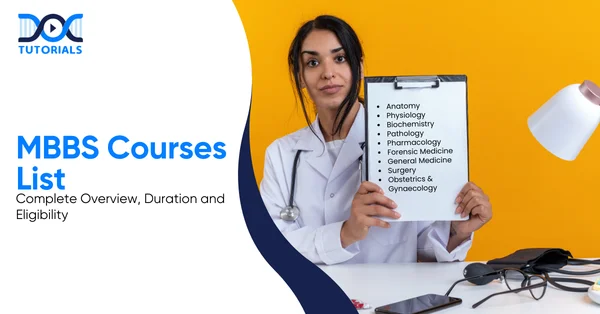
MBBS Courses List: Complete Overview, Duration, and Eligibility

MBBS Courses List

The MBBS programme (Bachelor of Medicine, Bachelor of Surgery) is the oldest undergraduate programme for aspiring medical professionals in India. This is a rigorous academic and clinical training programme that combines academic studies with clinical experiences.

The primary channel for admission to MBBS courses in India is the NEET (National Eligibility Cum Entrance Test), a national-level entrance examination conducted by the National Testing Agency.

Read on to explore the MBBS course details, including subjects, duration, and eligibility criteria in depth.

MBBS Course Overview Table

The Bachelor of Medicine and Bachelor of Surgery (MBBS) is a foundational undergraduate degree that certifies students as licensed medical professionals and physicians.

An MBBS degree is widely recognised internationally as a basic requirement for becoming a medical doctor or physician. The programme comprises 19 subjects of MBBS, and other core topics under each of them.

Here’s an overview table regarding the crucial MBBS course details:

ParameterDetails
Course NameMBBS (Bachelor of Medicine and Bachelor of Surgery)
Course Duration5.5 Years (4.5 years academic + 1 year compulsory internship)
LevelUndergraduate
Eligibility Criteria10+2 with Physics, Chemistry, Biology; Minimum 50% marks (40% for SC/ST/OBC)
Minimum Age17 years at the time of admission
Entrance ExamNEET-UG (National Eligibility cum Entrance Test)
Admission ProcessBased on NEET rank, followed by counselling
Course StructurePre-clinical, Para-clinical, Clinical subjects + internship
Regulatory BodyNational Medical Commission (NMC), India
Career OptionsGeneral Physician, Surgeon, Medical Officer, Postgraduate Studies (MD/MS)
Average Course Fee₹5 – ₹25 lakhs (varies by government/private/deemed institutions)

The MBBS Courses List: A Complete Guide

The MBBS courses list comprises an exhaustive list of all possible paths in medical education, from basic B.Sc. courses through advanced specialisations (MD/MS) and post-doctoral fellowships.

Below is the comprehensive list of medical undergraduate and postgraduate programs by speciality and duration. This guide is a roadmap for medical practitioners who want to progress from core medical training to highly specialised medical expertise.

Refer to the MBBS courses list tables below:

1. DM/M.Ch. (03 Years) Courses

S.No.CourseSubjectDepartmentDuration
1DMCardiac AnaesthesiologyAnaesthesiology3 Years
2DMCritical Care MedicineAnaesthesiology3 Years
3DMNeuroanaesthesia and Critical CareAnaesthesiology3 Years
4DMOnco-AnaesthesiaAnaesthesiology3 Years
5DMPain MedicineAnaesthesiology3 Years
6DMPaediatric AnaesthesiologyAnaesthesiology3 Years
7M.Ch.Plastic, Burns & Reconstructive SurgeryBurns & Plastic Surgery3 Years
8DMMetabolic MedicineBiochemistry3 Years
9DMCardiologyCardiology3 Years
10M.Ch.Cardiovascular and Thoracic SurgeryCardiothoracic and Vascular Surgery3 Years
11DMEndocrinologyEndocrinology3 Years
12DMForensic Radiology & Virtual AutopsyForensic Medicine & Toxicology3 Years
13DMGastroenterologyGastroenterology & Hepatology3 Years
14DMClinical Immunology & RheumatologyGeneral Medicine3 Years
15DMHospital Medicine & Critical CareGeneral Medicine3 Years
16DMInfectious DiseaseGeneral Medicine3 Years
17M.Ch.Minimal Access Surgery & General SurgeryGeneral Surgery3 Years
18M.Ch.Breast SurgeryGeneral Surgery3 Years
19DMClinical HaematologyMedical Oncology Haematology3 Years
20DMMedical OncologyMedical Oncology Haematology3 Years
21DMNeonatologyNeonatology3 Years
22DMNephrologyNephrology3 Years
23DMNeurologyNeurology3 Years
24M.Ch.NeurosurgeryNeurosurgery3 Years
25M.Ch.Gynaecological OncologyObst. & Gynaecology3 Years
26M.Ch.Joint Replacement & ReconstructionOrthopaedics3 Years
27M.Ch.Paediatric OrthopaedicOrthopaedics3 Years
28M.Ch.Spine SurgeryOrthopaedics3 Years
29M.Ch.Paediatric SurgeryPaediatric Surgery3 Years
30DMPaediatric GastroenterologyPaediatrics3 Years
31DMPaediatric NeurologyPaediatrics3 Years
32DMPaediatric Pulmonology & Intensive CarePaediatrics3 Years
33DMHaemato-PathologyPathology3 Years
34DMClinical PharmacologyPharmacology3 Years
35DMHigh Altitude MedicinePhysiology3 Years
36DMPulmonary Medicine, Critical Care & Sleep MedicinePulmonary Medicine3 Years
37DMInterventional RadiologyDiagnostic & Interventional Radiology3 Years
38M.Ch.Surgical GastroenterologySurgical Gastroenterology3 Years
39M.Ch.Head Neck Surgery & OncologyOtorhinolaryngology3 Years
40M.Ch.Surgical OncologySurgical Oncology3 Years
41M.Ch.Sports InjuryTrauma Surgery & Critical Care3 Years
42M.Ch.Trauma Surgery & Critical CareTrauma Surgery & Critical Care3 Years
43M.Ch.UrologyUrology3 Years
44DMVirologyMicrobiology3 Years
45M.Ch.Cosmetic GynaecologyObst. & Gynaecology

2. PG Courses (MD/MS/MDS)

S. No.Course TypeCourse NameDepartmentDuration
1MDMD AnaesthesiologyAnaesthesiology3 Years
2MDMD AnatomyAnatomy3 Years
3MDMD BiochemistryBiochemistry3 Years
4MDMD Community MedicineCommunity & Family Medicine3 Years
5MDMD Family MedicineCommunity & Family Medicine3 Years
6MDMD Dermatology, Venereology and LeprosyDermatology3 Years
7MDMD Diagnostic & Interventional RadiologyRadiology3 Years
8MDMD Emergency MedicineEmergency Medicine3 Years
9MSMS ENTENT3 Years
10MDMD Forensic Medicine and ToxicologyForensic Medicine & Toxicology3 Years
11MDMD General MedicineGeneral Medicine3 Years
12MSMS General SurgeryGeneral Surgery3 Years
13MDMD Geriatric MedicineGeriatric Medicine3 Years
14MDMD MicrobiologyMicrobiology3 Years
15MDMD Nuclear MedicineNuclear Medicine3 Years
16MD/MSMD/MS Obst. & GynaecologyObst. & Gynaecology3 Years
17MDMD OphthalmologyOphthalmology3 Years
18MSMS OrthopaedicsOrthopaedics3 Years
19MDMD PaediatricsPaediatrics3 Years
20MDMD PathologyPathology3 Years
21MDMD PharmacologyPharmacology3 Years
22MDMD Physical Medicine & RehabilitationPM&R3 Years
23MDMD PhysiologyPhysiology3 Years
24MDMD PsychiatryPsychiatry3 Years
25MDMD Respiratory MedicinePulmonary Medicine3 Years
26MDMD Radiation OncologyRadiation Oncology3 Years
27MDMD Transfusion MedicineTransfusion Medicine3 Years
28MDSMDS Oral and Maxillofacial SurgeryDentistry3 Years
29MDSMDS PeriodontologyDentistry3 Years
30MDSMDS PeriodonticsDentistry3 Years

3. M.Ch. (06 Years) Integrated Courses

S. No.Course NameDepartmentDuration
1M.Ch. Plastic, Reconstructive & Burns SurgeryBurns & Plastic Surgery6 Years
2M.Ch. Cardiovascular & Thoracic SurgeryCTVS6 Years
3M.Ch. Neuro SurgeryNeurosurgery6 Years
4M.Ch. Paediatric SurgeryPaediatric Surgery6 Years
5M.Ch. Trauma Surgery & Critical CareTrauma Surgery6 Years
6M.Ch. UrologyUrology6 Years

4. Post-Doctoral Fellowship (PDF) Courses

S. No.SubjectDepartmentDuration
1Gastro BiochemistryBiochemistry1 Year
2Breast ImagingRadiology1 Year
3Cross-sectional Body ImagingRadiology1 Year
4Gastro-RadiologyRadiology1 Year
5Paediatric RadiologyRadiology1 Year
6Musculoskeletal RadiologyRadiology1 Year
7Emergency Critical CareEmergency Medicine1 Year
8Emergency ToxicologyEmergency Medicine1 Year
9Paediatric EndocrinologyEndocrinology1 Year
10DiabetologyGeneral Medicine1 Year
11Lifestyle Disease ManagementGeriatric Medicine1 Year
12Infectious DiseasesMicrobiology1 Year
13CorneaOphthalmology1 Year
14Squint & OrthopticsOphthalmology1 Year
15Musculoskeletal & Tumour Bone BankingOrthopaedics1 Year
16Foot & Ankle SurgeryOrthopaedics1 Year
17Maternal & Foetal MedicineObst. & Gynaecology1 Year
18Molecular DiagnosticsPathology1 Year
19CytopathologyPathology1 Year
20Radiation Oncology (Head, Neck & Neuro)Radiation Oncology1 Year
21Radiation Oncology (Urogenital & Gyn)Radiation Oncology1 Year
22Apheresis Technology & Blood Component TherapyTransfusion Medicine1 Year
23Spine TraumaTrauma Surgery1 Year
24Sleep MedicinePsychiatry2 Years

5. Allied Health Sciences and Other Courses

S.No.Course / SubjectDepartmentDuration
1Anaesthesia TechnologyAnaesthesiology3+1 Year
2Dental HygieneDentistry3+1 Year
3Dental Operating Room AssistantDentistry3+1 Year
4Medical Laboratory Technology (BMLT)Microbiology3+1 Year
5Medical Radiology & Imaging Technology (BMRIT)Radiology3+1 Year
6Neuro Monitoring TechnologyOrthopaedics3+1 Year
7Nuclear Medicine TechnologyNuclear Medicine3+1 Year
8B. OptometryOphthalmology3+1 Year
9Orthopaedics TechnologyOrthopaedics3+1 Year
10Perfusion TechnologyCTVS3+1 Year
11Radiotherapy Technology (BRTT)Radiation Oncology3+1 Year
12Respiratory TherapyPulmonary Medicine3+1 Year
13Sleep Laboratory TechnologyPsychiatry3+1 Year
14Urology TechnologyUrology3+1 Year
15Medical BiochemistryBiochemistry3 Year
16Medical PharmacologyPharmacology3 Year
17Medical PhysiologyPhysiology3 Year
18Perfusion Technology (M.Sc.)CTVS2 Year
19MPH CourseCommunity & Family Medicine2 Year
20Ph.D.Ph.D. Cell

6. College of Nursing Courses

S. No.Course / SubjectDepartmentDuration
1B.Sc. Hons NursingCollege of Nursing3.5 + 0.5 Years
2M.Sc. Medical Surgical NursingCollege of Nursing2 Years
2.1Cardiothoracic and Vascular NursingCollege of Nursing2 Years
2.2Neurological NursingCollege of Nursing2 Years
2.3Orthopaedics NursingCollege of Nursing2 Years
2.4Oncology NursingCollege of Nursing2 Years
2.5Critical Care NursingCollege of Nursing2 Years
3M.Sc. Community Health NursingCollege of Nursing2 Years
4M.Sc. Psychiatric NursingCollege of Nursing2 Years
5M.Sc. Paediatric NursingCollege of Nursing2 Years
6M.Sc. Obstetrics and Gynecological NursingCollege of Nursing2 Years

What is the MBBS Course Duration?

The MBBS programme spans 5.5 years, divided into 4.5 years of rigorous academic and practical study followed by a mandatory one-year clinical internship.

The duration of the MBBS course in India has 2 components:

  • Academic Study: This is the main academic study period for the students. The period usually lasts for 5 years. The students will study a range of medical science topics, gaining a solid foundation for their clinical practice.
  • Compulsory Internship: After the completion of the academic curriculum, all MBBS graduates are required to complete a mandatory internship program. This internship usually lasts for 1 year.
  • Academic Study: 4.5 years (typical)
  • Internship: 1 year (mandatory)
  • Total Duration: 5.5 years (approximate)

What is the MBBS Eligibility Criteria?

Applicants must be at least 17 years old and hold a 10+2 qualification with Physics, Chemistry, and Biology, with a minimum of 50% marks (40% in the case of reserved categories).

Applying for the MBBS course in India requires meeting the eligibility criteria set by the National Medical Commission (NMC). The criteria help ensure that applicants have the necessary qualifications to pursue the course:

  • Academic Qualifications

The candidates must have passed a 10+2 or equivalent exam from a recognised board. The candidates must have had physics, chemistry, biology, biotechnology, and English as their core subjects.

The general candidates must obtain a minimum of 50% aggregate marks in PCB. The candidates belonging to SC, ST, or OBC communities must obtain a minimum of 40% marks, while the candidates belonging to the PwD category must obtain a minimum of 45% marks in PCB subjects.

  • Age Requirement

The applicants should be at least 17 years old as of 31st December of the year of admission. As per the latest guidelines from the NMC, there is no upper age limit for the NEET-UG, but this may change.

  • Entrance Examination Qualification

The qualifying NEET-UG is mandatory for admission to MBBS courses in all universities in India – government, private, and deemed. The final admission is based on the ranking in NEET and the participation in the counselling process conducted by MCC or the concerned authorities.

  • Nationality Criteria

Indian nationals, NRIs, OCIs, PIs, and Foreign Nationals can apply for MBBS courses. This is as per the rules and regulations of the respective universities.

How to Select the Right Medical Specialisation from the MBBS Courses List?

Deciding the right MBBS specialisation depends on your interests, career goals, job demand, and work-life balance. Exploring different fields and seeking guidance from seniors can help you make the right choice.

Choosing the right specialisation from the MBBS courses list is a crucial step in shaping a successful medical career. Here are some top factors to consider:

  • Personal Assessment: The first thing that you should do is think about the fields in the medical profession that excite you the most. The key to finding your perfect match is to know your strengths, your values, and your interests.
  • Explore Specialities and Subspecialties: Investigate the various medical specialities. Learn about the scope of practice, the type of patients, and the work environment for the different specialities.

Network with people in the field and utilise your clinical rotations to have direct experience with different specialities.

  • Market Demand: Assess the market demand for your specialities. The demand could be in your region and internationally. There are certain specialties that are always in high demand. These include Emergency Medicine, Radiology, and Obstetrics & Gynaecology.
  • Mentorship and Guidance: Seek guidance from mentors or senior physicians who can share insights regarding their choice of specialisation. This will provide a reality check regarding what one can expect in a certain field of specialisation.
  • Long-term Goals: You should also consider your career goals. Each field has different career paths based on your specialisation, and it is important that your goals match your field of interest.
  • Work-Life Balance: Certain fields, such as Surgery or Emergency Medicine, could be highly unpredictable and challenging, while others, including Dermatology or Radiology, are relatively more balanced. You must think about how your specialisation would affect your personal and professional life.

FAQs about the MBBS Courses List

  1. How much time does the MBBS course last in total in India?

The total course lasts for 5.5 years. This is followed by 4.5 years of academic education (consisting of 9 semesters) and 1 year of compulsory rotatory internship in a recognised hospital.

  1. Is the NEET-UG exam compulsory for admission to all medical colleges?

Yes. Whether you apply for Government, Private, or Deemed University (including AIIMS and JIPMER), the only requirement for you to have an MBBS seat in India is that you have to qualify for the NEET-UG Examination.

  1. Is there any maximum age limit for taking the NEET exam?

According to the 2026 guidelines, there is no age restriction for NEET-UG. However, the candidate should be at least 17 years old as of December 31st of the year of admission.

  1. Can NRI or Foreign National students apply for MBBS in India?

Yes. Candidates belonging to the categories of Non-Resident Indian, Overseas Citizen of India, and Foreign Nationals can be given admission, mainly through the 15% quota in private and deemed universities. They also need to be eligible for the NEET-UG exam.

  1. What is the “Compulsory Rotating Medical Internship”?

This is the 12-month internship training session after completing 4.5 years of academics. Students intern in departments such as Medicine, Surgery, Paediatrics, and Community Health to gain practical experience before they are licensed to practice.

  1. Which medical speciality after MBBS requires the shortest training path?

The Family Medicine profession has been considered the easiest in terms of training requirements, as it only takes a three-year training program after graduating from a medical school. It is also considered a relatively short training process compared to others.

  1. What is the most challenging course offered in the MBBS program?

Among the core medical sciences, Anatomy is often considered the most challenging, particularly in the first year of MBBS courses. This is due to the large number of terms involved in the subject and the significant number of hours spent in the dissection room.

  1. What subject is the most critical foundation in the MBBS course?

It is important to have a great command of basic knowledge in Anatomy, Physiology, Pathology, and Microbiology to have an insight into how different diseases develop and present in patients. This knowledge would help future doctors to diagnose and treat different medical conditions effectively.

  1. Which year in MBBS is generally the most challenging?

The final year of the MBBS course is considered the most challenging period in the medical course of a student. A student has to cope with the academic burden and the difficulty of managing their time effectively while on clinical rotations. This period can be the most challenging for a student, often requiring a test of their endurance and concentration abilities.

  1. Which countries have the most competitive admission processes into medical school?

The United States and Canada are arguably the most difficult places to gain admission into a medical school program. Both countries generally require applicants to complete an undergraduate degree before applying, adding years of preparatory study and making the admissions process highly competitive.

Conclusion

MBBS is an extensive career option that equips you with the knowledge and skills to become a qualified doctor. With proper planning and commitment, you can easily meet the eligibility criteria and navigate the admission process.

By carefully evaluating colleges and MBBS courses details, candidates can make informed decisions that align with their long-term professional goals. For more guidance, DocTutorials can be your study partner. We offer 3D & 2D animated videos and structured mentorship by experts, ensuring aspirants gain complete clarity on the subjects.
Join DocTutorials today and explore our MBBS curriculum to excel in your medical career!

DocTutorials App Download Now

Latest Blogs

How to Prepare for PG Entrance While Studying MBBS?

Studying NEET PG During MBBS

Studying for the PG entrance exam, along with the MBBS schedule, requires more than hard work; it requires planning and strategy. It requires a long-term plan that includes study strategies, planning, resources, and avoidance of pitfalls.

Continue reading to know how to prepare for the NEET PG entrance exam as you pursue the MBBS and how you can effectively plan, use resources, and balance both requirements.

Why Should You Start PG Preparation Early in MBBS?

Early PG preparation helps lower academic stress, enhances clarity of conceptual knowledge, and takes time to cover the syllabus. Preparing for NEET PG during MBBS, but more particularly, in the third year, forms a firm foundation towards competitive exams.

PG entrance exams are an integrated and application-based test of the entire MBBS syllabus. The early introduction allows students to repeat the subjects more than once, see the weak points, and prevent the last-minute rush. 

The third MBBS year is the most appropriate time since this is the year in which core paraclinical topics, such as Pathology, Pharmacology, and Microbiology, are introduced. Early preparation will also aid students to have an exam temperament, MCQ-based assessment familiarity and good revision habits.

What are the Study Strategies for NEET-PG During MBBS?

Preparation for NEET-PG must happen gradually. You may begin by building clear basics, balance studies with clinical work in later years, and focus mainly on revision and MCQs during internship.

A proper study plan is idea-based. Building strong fundamentals in MBBS subjects will pay dividends in PG exams. Strategies include:

Phase-Wise Preparation Strategies

A successful PG rank is constructed step-wise, starting with building the concept, transitioning to its consolidation, and lastly, high-yield revision. This section is divided into the roadmap for 3rd-year students, final-year students, and interns.

1. Phase 1: The Foundation (3rd Year)

The emphasis here must be on the basic clinical courses: Ophthalmology, ENT, Forensic Medicine, Toxicology, and PSM (Community Medicine). These are the subjects for the 3rd Professional exams.

  1. Goal: Study the theory and the video lectures, completely covering these three subjects.
  2. Strategy: Read solid textbooks or watch extensive video lectures. Complete the QBank on these particular subjects right after finishing the topic.
  3. Bonus: Provided there is enough time, begin to construct a foundation of Medicine and Surgery by gaining knowledge of the appropriate Anatomy and Pathology.

2. Phase 2: The Balancing Act (Final Year)

The final year is voluminous. Students will have to balance Medicine, Surgery, OBGYN, and Pediatrics with their ward postings.

  • Goal: Pass university exams based on good ideas and keep a watch on the trends of the PG.
  • Strategy: Do not attempt to work out the whole of the QBank on final year subjects at this point–you can never do so. Rather, emphasise on “Integrated Learning”. Read the appropriate chapter of Surgery when posted on this ward.

3. Phase 3: The Sprint (Internship)

This is the most intensive phase:

  1. Goal: Revise all 19 subjects and maximise MCQ practice.
  2. Strategy: Replacement of regular textbooks with Revision Notes and High-Yield Video lectures. The main emphasis is on Grand Tests (GTs).

Subject-Wise Approach to Studying

Different types of subjects have to be treated differently: pre-clinical subjects should be taught visually, para-clinical, and clinical through the lens of case-based learning. Individual approaches to methods of study increase retention.

1. Pre-Clinical (Anatomy, Physiology, Biochemistry)

These are the primary subjects:

  • Anatomy: Heavily relies upon visual memory. Make use of image questions and atlases.
  • Biochemistry: Focus on cycles and enzymes. Flowcharts are basic in this case.
  • Physiology: These are conceptual. When learnt, it hardly requires rote memorisation.

2. Para-Clinical (Pathology, Pharmacology, Microbiology)

These form the bridge subjects:

  • Pathology: The heart of medicine. Relate each of these diseases to its clinical presentation in Medicine.
  • Pharmacology: Learn to use mnemonics to aid memorisation; however, learn how the mechanism of action works.
  • Microbiology: Highly factual. Should be revised regularly with the help of flashcards.

3. Clinical (Medicine, Surgery, OBGYN, Pediatrics, etc.)

Approach: Read the theory and apply it immediately to a clinical case. When researching “Preeclampsia” in OBGYN, visualise a patient, what investigations are necessary and how things are handled step by step.

What are the Essential Study Resources for PG Preparation During MBBS?

Selecting the right study resources plays a crucial role in making PG entrance preparation structured and time-efficient. Along with standard MBBS textbooks and NCERT for core concepts, many aspirants use concise review books and subject-wise question banks to focus on high-yield topics.

The preparation efficiency is gained through the right books and materials. In addition to MCBS textbooks and NCERT in the basics, most aspiring students are using brief review series and Q-banks.

The table below lists representative books often recommended by NEET-PG toppers and experts:

SubjectRecommended Book/ResourceAuthor(s)
AnatomySelf-Assessment & Review of AnatomyRajesh Kaushal
PhysiologyReview of PhysiologySoumen Manna
BiochemistrySelf-Assessment & Review of BiochemistryRebecca James (review)
PharmacologyReview of PharmacologyGobind Rai Garg & Sparsh Gupta
MicrobiologyReview of Microbiology & ImmunologyRachna Chaurasia / Apurba Sastry
PathologyReview of Pathology & GeneticsSparsh Gupta & Devesh Mishra
MedicineComplete Review of Medicine for NBEDeepak Marwah
SurgerySurgery EssencePritesh Singh
Obstetrics/GynaeSelf-Assessment & Review of Obstetrics & GynaeSakshi Arora
PediatricsReview of Pediatrics & NeonatologyTaruna Ghai (or OP Ghai)

Beyond books, question banks and online courses can be invaluable. Reputed online platforms offer video lectures, Qbanks, and mock-test series aligned to NEET-PG. They help track progress and simulate exam conditions.

For classnotes and quick reviews, some students use digital flashcards or apps. Importantly, use previous years’ question papers to understand exam patterns and repeatedly practice similar MCQs.

How to Practice Tests and Mock Exams During PG Preparation?

Consecutive self-evaluation using time-bound mocks develops endurance and precision towards NEET-PG. Start with full-length tests on a weekly basis and then start taking more frequently as the exam approaches.

Self-assessment is an essential aspect of NEET-PG preparations. Mock exams simulate testing conditions and develop stamina in taking exams. Ideally, include at least a full-length mock/ past-paper attempt within a week, and on a day-to-day basis as the exam approaches. It is important to analyse after each test, point out weak areas, and review them.

The National Board of Examinations (NBE) offers an official sample test on their site that is free and that students should take at an early stage to get used to the interface. Besides official mocks, numerous coaching institutes provide online test series that are useful in terms of peer-level benchmarking.

Speed and accuracy are enhanced with practice in the long term. One of the tips is to practice simulation of sectional timing, thus learning how to manage sectional time. Always keep in mind that quality is important; train to learn by making mistakes instead of merely passing the tests.

How to Balance MBBS Curriculum with PG Preparation?

Balancing MBBS academics with PG prep is tough but achievable through synergy. Use MBBS exams as PG revision opportunities and relate clinical cases to exam patterns to improve retention. Time-block daily slots for classes and PG study, and maximise early internship months for intensive prep.

It can be a challenge to maintain academics in MBBS and prepare at the same time for a PG entrance exam. Use every MBBS subject exam as a revision of a PG subject. As an example, in the final year studying cardiology, it also touches on the related physiology and pharmacology that will be seen in NEET-PG.

Time-blocking is effective; establish rigid timetables of MBBS sessions and of daily review of the revision with the PG. In clinical postings, the ability to actively relate patient cases to exam patterns will enhance retention. Final-year and internship are more flexible; make the most out of the early months of internship as a full-time student of the PG.

Nevertheless, MBBS requirements should not be overlooked, as attendance and exam performance should not be negatively affected. Effective strategies include taking summary notes during MBBS lectures so they can be reviewed briefly for the PG review, and studying the parts progressively after the hospital rounds.

What are the Smart Tips to Prepare for NEET PG During MBBS?

Preparing for NEET PG is a long journey, so it’s important to study smart without burning out. Set realistic goals, take breaks, sleep well, and keep your resources limited. Focus on your own progress, avoid comparisons, and don’t hesitate to seek help when things feel overwhelming.

PG preparation is a marathon that can bring stress and burnout if not managed well. Common issues include information overload, inconsistent study pace, and exam anxiety. To combat these, follow these tips:

  • Set Realistic Goals: Do not overload the schedule with activities (e.g., attempting to cover 3 or 4 full subjects per week). Experts recommend the division of bigger goals into small daily or weekly objectives. The SMART strategy (Specific, Measurable, Achievable, Relevant, Time-bound) makes the goals clear and achievable.
  • Take Regular Breaks: Short, periodic breaks during study sessions enhance retention. As an example, it is better to work in 45-50-minute shifts with a 5-10-minute break that re-energises focus. Breaks are never wasted, as they refresh the brain.
  • Prioritise Sleep: Do not compromise on the quality of sleep. A relaxed mind (67 hours of sleep at night) consolidates memory and keeps concentration. Cramming at late hours might appear to be effective, but it can always backfire with exhaustion.
  • Limit Resources: Using too many courses or books may lead to confusion. Use a limited number of reliable sources to maintain consistency.
  • Avoid Comparison: Each student has a unique pace. Rather than judging your scores or progress against others, you should keep track of your advancements in order to remain motivated.
  • Seek Support: In case the stress becomes too overwhelming, address mentors or friends. Mental health can be maintained by studying in groups, discussing doubts, and even counselling.

FAQs about How to Prepare for PG Entrance while Studying MBBS

  1. How can I balance MBBS academics with PG preparation?

Approach MBBS exams as a time to do some PG revision and time-block to continue with further preparations.

  1. What role does an internship play in PG preparation?

The first few months of internship may be less demanding in clinical terms, which gives more time to focus on intensive PG study.

  1. How do I handle overlapping subjects between MBBS and PG exams?

Revise holistically through the integration of physiology, pathology, pharmacology and clinical subjects.

  1. Should I focus more on clinical or pre-clinical subjects for PG preparation?

Both matters—Both issues improve clinical problem-solving, which is intensively examined in the PG exams and strengthened by pre-clinical bases.

  1. How do I avoid burnout while preparing for PG during MBBS?

Make short pauses, work out, and do not work too hard; good study is better than hours spent studying.

  1. How many revision cycles are needed before appearing for the PG entrance exam?

Most aspirants should aim to revise the complete MBBS syllabus at least three to four times. Short notes, MCQs and question-based revision tend to be used by high-scoring candidates to revise the key subjects again and again to strengthen recall.

  1. Is understanding concepts more important than memorising facts for PG exams?

Yes. The key to success on the entrance to PG is conceptual understanding. These examinations are centred on clinical reasoning and application. Memorisation can only be effective when the underlying concepts are clear.

  1. Do short notes and flashcards really help in PG entrance preparation?

Absolutely. Flashcards and short notes have an effective power of revision, particularly in hectic academic schedules. They assist in rapid recall, memorisation, and are handy when one needs to revise at the last moment.

  1. When should I begin attempting grand tests during PG preparation?

Grand tests can be started from the final year of MBBS. During the initial stages, the aim must be to interpret errors and find areas of weakness, rather than scores. Frequent examinations contribute to building exam confidence and time management.

  1. How can I use semester breaks or vacations productively without spoiling my break?

Complete one difficult major subject like Pathology or Obstetrics and Gynaecology on vacation. Spend approximately four active hours in the morning, and reserve the rest of the day to your leisure. This relaxed approach improves understanding without affecting your holiday.

Conclusion

The PG preparation requires a strategic and consistent approach throughout the MBBS years. You must rely on authoritative books and MCQ resources, and practice extensively with mocks to build speed and confidence. It is also essential to maintain a balance; be healthy through proper sleep and rest time, and eliminate stress.

For added guidance in PG preparation, DocTutorials can be your study partner. We offer crisp videos, clinical Qbank, exam-focused notes, flashcards, and mind maps. This ensures students are well-prepared before exams and have complete clarity over complex medical concepts.

Join DocTutorials today and explore our NEET PG course to excel in your medical career!

DocTutorials App Download Now

Latest Blogs

How to Start NEET PG Preparation from Third Year MBBS?

NEET PG Preparation from third year MBBS

NEET PG is a national postgraduate medical entrance examination in India. Students who begin preparing in the third year of MBBS have the added advantage of a good head start. They have time to develop concepts gradually, integrate preparation with the undergraduate curriculum, and avoid the pressure of last-minute revision.

From a NEET PG perspective, a strong foundation laid at an early age, with organised note-taking and revision of MBBS material, can be highly beneficial for confidence and performance down the line.

Continue reading to learn how to start NEET PG preparation from the MBBS 3rd year!

Importance of Starting NEET PG Preparation from Third Year

Beginning NEET PG preparation in the third year of MBBS is crucial for long-term success. A solid background of conceptual knowledge and systematic note-taking throughout undergraduate education would help build a strong base for postgraduate entrance tests. Gradual preparation over multiple years reduces stress and prevents last-minute cramming.

In the third year of MBBS, students are introduced to core subjects such as Pathology, Pharmacology, and Microbiology, which are the fundamentals of NEET PG. Early preparation enables students to build ideas concurrently with classroom education.

Students can begin their preparation by taking systematic notes, incorporating MBBS content, and linking them to the NEET syllabus for postgraduate education. Every lesson learnt in the classroom can be reviewed from an entrance exam perspective using brief notes, schemes, or flashcards.

Early commencement also allows students to plan their preparation over two to three years rather than trying to complete the full syllabus in the last year. This incremental approach builds confidence and leaves ample time for revision closer to the examination.

How to Start Preparation for NEET PG from MBBS 3rd Year?

To start NEET PG preparation from the third year of MBBS, students need to develop a structured study plan, consult recommended study resources, and implement effective study techniques. 

Follow the steps below to start your NEET PG preparation from the MBBS 3rd year: 

  1. Develop a Structured Study Plan

NEET PG preparation requires an effective study programme. It is advised to divide the syllabus into manageable segments and set monthly and weekly goals, along with regular revision and rest time. Students should use a mix of textbooks, videos, and MCQ practice, making periodic adjustments based on their strengths and weaknesses.

Once students are familiar with the NEET PG syllabus and exam format, they should list all subjects and identify areas that need more focus. The plan of study will then be broken down into monthly/weekly objectives to be considered as part of a long-term study plan spanning semesters or academic years.

Key Components of an Effective Study Plan

  • Daily Schedule: Even an hour or two of NEET PG preparation allocated on a regular basis, in fixed daily hours, even on college days, can produce significant progress over time. Early mornings or late evenings are often effective study periods.
  • Subject Rotation: Switching between the other topics will prevent boredom and exhaustion. Finding a balance between pre-clinical and clinical subjects in a week fosters diversity.
  • Mock Tests and MCQs: The MCQs and weekly mock tests will help to examine improvement. It is important to conduct a post test analysis to ensure that weak areas are identified and corrected as soon as possible.
  • Dedicated Revision Time: Designating a particular time period dedicated to revision every week makes the revision time beneficial to retention through active recall and spaced repetition.
  • Flexibility: Academic schedules must be accommodated in study plans. Intensive study can be substituted by lighter revision activities during internal examinations or clinical postings.

Sample Study Framework

  • Pre-Clinical Phase (Early Third Year): Revision of Anatomy, Physiology, and Biochemistry with NEET PG orientation, alongside introductory third-year topics.
  • Para-Clinical Phase (Mid Third Year to Fourth Year): Focus on Pathology, Pharmacology, Microbiology, Preventive and Social Medicine, in line with the college teaching.
  • Clinical Phase (Final Year): Focus on Medicine, Surgery, Obstetrics and Gynaecology, Paediatrics, ENT and Ophthalmology, supported by clinical postings.
  • Revision Phase (Internship): Routine revision of the high-yield subjects, regular mock tests, and practice of questions from past years.

However, the individual study plans can differ, but the principles are somewhat the same. Be early, set attainable objectives, work with limited, trusted resources, and measure progress along the way.

  1. Refer from Recommended Study Resources

NEET PG preparation requires a balanced mix of standard textbooks for concepts and concise review books for quick revision. Practise MCQs from trusted question banks and simulate exam conditions using test series and past papers. Supplement learning with online lectures, flashcards, mnemonics, and collaborative study groups while sticking to limited, reliable sources to avoid confusion.

Using the right study materials is essential as far as NEET PG preparation is concerned. A well-balanced mixture of standard textbooks that explain concepts in an easy-to-follow format and short review books that provide revision is suggested. The major advice is to follow standard references and choose specific NEET review books to revise. Furthermore, use internet lectures, videos, and test series.

Here are a few tips to follow in this regard:

  • Choose the Right Mix: Combine comprehensive textbooks with concise review resources.
  • Practise MCQs: Use question banks from DocTutorials or other national-level sources.
  • Use Test Series & Past Papers: Mimic test conditions using collections such as “NEET Essence” as well as extensive test series.
  • Leverage Additional Review materials: First Aid for the USMLE (Indian edition) is widely used for quick revision.
  • Use Online Resources: Difficult areas can be cleared through video lectures and compressed revision modules.
  • Stick to Limited Sources: To avoid confusion, a single definitive book on a subject, class notes, and question banks should be used.
  • Use Study Aids: Memorisation is improved by flashcards, mnemonics, and charts (e.g. microbiology table, pharmacology pathway).
  • Engage in Collaborative Learning: Study groups and teaching peers reinforce understanding.
  1. Implement Effective Study Techniques

Active methods of learning are much better than passive reading. Active recall, spaced repetition, and self-regulated testing are some of the techniques that have been proven to be significant in aiding memory retention. Learning can be simplified by breaking down complex topics into small parts, diagrams and drafting brief notes.

The way you study may be just as important as what you study. Some tips for good study techniques include:

  • Active vs. Passive Learning: Passive reading is not effective; active strategies help to remember better.
  • Pomodoro Technique: Learn in small blocks of 25-50 minutes with a break of 5-10 minutes in between.
  • Spaced Repetition: Review topics at growing time intervals to build long-term memory.
  • Active Recall: On finishing, put the book aside and think and remember in the form of main points or MCQs to reinforce memory.
  • Notes and Flashcards: Write up notes and flashcards to read the material and facilitate revision.
  • Mnemonics and Organisation: Use one-liners in Pharmacology or pathways in Biochemistry; organise by subject.
  • Visual Aids: Use colour, charts, and diagrams to make correlations between related ideas.
  • Group Discussions: Teaching to peers demonstrates the areas of deficiency and consolidates knowledge.
  • Conceptual Understanding: Pay attention to the purpose of facts, but not rote learning.
  • Clinical Visualisation: Associate mechanisms with body effects or with clinical situations (to gain a better understanding).
  • Diagrams and Associations: Mental links should be built using ECG charts or histopathology images.
  • Teaching Others: Summarising one thing to another person is a test to understand and strengthen knowledge.
  • Exam-focused Study: Priority should be given to high-yield topics and clinical applications.
  • Case-based Practice: Solve clinical vignettes to improve reasoning abilities.
  • Daily MCQ Practice: Regular quizzes sharpen recall and exam readiness.
  • Consistent Revision: Daily reviews (briefly) boost long-term retention.

Balancing MBBS Academics with NEET PG Preparation

The MBBS course and NEET PG preparation should be considered complementary, not competing, priorities. NEET-oriented revision can be reinforced by classroom learning, and the conceptual understanding can be strengthened with the help of clinical exposure.

Balancing between MBBS academic life (lectures, practicals, tutorials, and internal assessments) and NEET PG studies is one of the biggest challenges. It is all about balancing and integration. Here’s what you can consider doing:

  • Use Class Learning for NEET Prep: The time after lectures should be devoted to reviewing that topic with MCQs for 10-15 minutes. In Microbiology, upon learning about infectious diseases, remember NEET-related facts or answer a question. This procedure makes every lecture a chance for revision.
  • Leverage Clinical Postings: Clinical rotations offer good opportunities to revise. For example, memorise the endocrine system’s physiology and clinical manifestations when attending to a diabetes patient. Use cases can serve as a bridge between theory and practice. Align the study with current postings.
  • Treat MBBS Exams as NEET Prep: Revision can be done by using internal exams and university tests. Often, questions overlap. The best approach will involve writing notes on all topics and checking them before college examinations.
  • Create a Weekly Timetable: Block study time of NEET PG even on those days when there is a heavy college workload. An example is to spend an hour before class on a hard topic, such as Pathology, or an hour after dinner on one of the topics covered by the day’s lectures.
  • Make Flexible Study Slots: Ward rounds or exams may occupy some of the days. During this time, use a light revision, maybe watch a lecture video in 2-3 minutes, or do 20 MCQs rather than reading a chapter. The idea is to stay on top of your syllabus without getting overwhelmed.

Common Challenges and Mistakes to Avoid for NEET PG Preparation

Some common challenges faced by students include procrastination, resource overload, and ignoring physical or psychological health. To avoid these pitfalls, discipline, realistic planning, and self-care should be maintained.

Here are the common challenges and mistakes that you must avoid when preparing for NEET PG during the MBBS 3rd year:

  • Procrastination and Inconsistency: Delaying study will result in a mad end-of-term rush. Fight the last-minute rush, be on schedule, and track progress with the help of study diaries or applications. Procrastination can be reduced using the Pomodoro method (as short and focused) since it makes the study periods appear less scary.
  • Over-reliance on Multiple Resources: New students end up reading too many books or coaching materials, thus consuming time. Rather, select a small number of trusted sources.
  • Neglecting Self-care: Some aspirants ignore sleep, exercise, and nutrition. Not caring for mental and physical health will undoubtedly cause burnout and poor performance.
  • Don’t Skimp on Sleep: Aim for 6–7 hours. Go on brief walks every day or perform some light exercises to rejuvenate your mind. Maintain a proper diet and drink adequate water. Short relaxation breaks are necessary.
  • Have a Fixed Mindset: Do not be demotivated when faced with setbacks. Rather, be in a good mood. Constantly congratulate yourself on minor accomplishments (completing a difficult chapter, making a higher mock score, etc.) to ensure personal motivation.
  • Lack of Focus on Weaknesses: Some students continue to revise what they are already familiar with and neglect the challenging sections. Always lean on mock test feedback and focus on weaker subjects.

FAQs about How to Start NEET PG Preparation from Third Year MBBS

  1. When should I start preparing for NEET PG during MBBS?

Ideally, start in the 3rd year of MBBS. At this point, you get clinical exposure, which you can combine with classroom learning and concise note-taking to create a solid base. 

  1. How do I balance clinical postings with PG prep?

Align your study with postings. E.g. when you are posted in surgery, revise surgical anatomy or do some MCQs. By doing so, you are using your clinical exposure to solidify your PG preparation.

  1. Which subjects should I prioritise in the MBBS third year?

Give emphasis on high-yield clinical topics (Medicine, Surgery, Paediatrics, Obstetrics & Gynaecology) whilst continuing to update on short subjects.

  1. How should I make notes for NEET PG?

Keep notes concise and exam-oriented. Pharmacology, Biochemistry, and short subjects are to be covered by the use of one-liners, flowcharts, and mnemonics, respectively. Flashcards are very good for memorisation.

  1. Can I balance college exams and NEET PG preparation together?

Yes. Correlate your PG preparation to the college curriculum. To take an example, when having an exam on Medicine, study NEET PG Medicine notes and MCQs at the same time.

  1. Can clinical postings help in PG preparation?

Absolutely. Use postings to connect theory with practice. For example, during the Paediatrics posting, revise neonatal topics and solve related MCQs. This makes learning more integrated.

  1. What’s the biggest mistake MBBS students make in third-year NEET PG preparation?

Focusing only on reading, without active recall. Passive reading feels productive but doesn’t stick. Always test yourself with MCQs or by recalling points after study.

  1. How many hours should I dedicate daily to PG preparation in the MBBS third year?

Students should devote 3 to 4 hours daily to their NEET PG preparation while balancing their MBBS exams and coursework. They should also focus on high-yield subjects with their current studies.

9. How many subjects should I cover in the MBBS third year for PG preparation?

As the third year is comparatively lighter, revise the second-year subjects on the weekends, along with the shorter subjects from the final year. This helps manage time and prepares students to avoid burnout during the final year of MBBS.

10. What mindset helps students while starting PG preparation in the MBBS third year?

Adopting a mindset focused on long-term and consistent effort prepares students for success in their final year and internship. The third year lays the foundation for the beginning of clinical subjects, which has a major weightage in PG preparation.

Conclusion

The third-year of MBBS would provide a strategic foothold in NEET PG preparations. This entails integrating the entrance exam preparation into the undergraduate course of study, developing concepts, and making a systematic plan that will help a student sail through the voluminous syllabus without any fear.

Regular practice, choosing resources wisely, frequent correction, and moderate self-care are the main secrets of continual improvement. With a disciplined approach, students can effectively utilise their third and fourth MBBS years to establish a strong foundation for NEET PG and future postgraduate training.

For students seeking structured guidance alongside self-study, platforms like DocTutorials can be used as supplementary tools during NEET PG preparation. They will get access to video lectures, concise notes, mentor support, mock tests, PYQs, and more that help take their preparation to the next level. Check out our NEET PG courses today!

DocTutorials App Download Now

Latest Blogs

When Do MBBS Students Start Their PG Preparation?

PG Prep Timing for MBBS Students

Cracking a PG seat among 70,000+ seats (as of 2024-2025) in India depends on how well you can balance studying for NEET PG alongside MBBS. They are both national-level entrance exams that can decide your future specialisation. With limited PG seats, starting early helps build strong concepts and keeps pressure under control in the later stages.

This guide covers when MBBS students should begin preparation for their PG, a year-wise preparation plan, and how to handle professional exams without becoming burned out. Read on for clear direction and a structured approach to planning your PG journey.

Overview of PG Entrance Exams in India

The NEET-PG is the primary test for MD, MS, and PG Diploma courses throughout India. Another major test is INI-CET (conducted by AIIMS) for PG admission (MD/MS, MDS, DM, MCh) at AIIMS, JIPMER, PGIMER, NIMHANS, SCTIMST, and other institutes.

MBBS graduates join PG studies through mostly national-level exams. The pattern has evolved to include long-stemmed clinical questions that test your ability to diagnose and manage a patient rather than simply identify a fact.

Each and every exam has its own pattern and eligibility requirements. The table below summarises the important PG entrance exams:

ExamConducting BodyPurpose / CoursesNo. of QuestionsDuration
NEET-PGNational Board of Examinations (NBE)For Admission to MD, MS and PG Diploma courses (all India). DNB seats also use NEET-PG ranks.200 MCQs (800 marks)3 hours 30 minutes
INI-CETAIIMS New Delhi (on behalf of INI colleges)MD/MS, MDS, DM, MCh Seats AIIMS (all branches), JIPMER, PGIMER, NIMHANS, SCTIMST. It is held twice a year.200 MCQs (200 marks)3 hours

Each exam includes a vast MBBS syllabus. Knowing the requirements of each exam is useful to build a study plan, but overall, it is necessary to get familiar with the MBBS subjects.

PG Preparation Timeline for MBBS Students: Year-by-Year

PG preparation during MBBS is best when planned year by year. The early years lay strong foundations, and the middle years are dedicated to MCQs and clinical links. In contrast, the final year,r together with internships, provides extra revision and mocks, helping students to be confident and exam-ready.

The MBBS course is divided into several phases (pre-clinical, para-clinical, clinical, and internship). Each phase offers opportunities to layer PG prep. Below is a year-wise plan:

  • 1st Year (Pre-Clinical) 

Primarily focus on basics (Anatomy, Physiology, Biochemistry). This forms the foundation for clinical medicine. You should be well-versed in these topics, as these often appear in PG questions.

In parallel, start the light prep for PGs, read standard textbooks, make fair notes, and solve some basic MCQs after each topic is read. Developing good foundations now makes the difficult concepts easy later on.

  • 2nd Year (Para-Clinical Part I)

The core subjects are Pathology, Microbiology, and Pharmacology. These are high-yielding for PG exams. Continue textbook learning in class, but start integrating short PG study sessions. After completing a topic, do 5-10 MCQs related to it to strengthen memory.

Link back to first-year topics (e.g. relate ways the body can react to illness; physiological pathways and the resulting mechanisms of disease). This develops clinical thinking at an early age.

By the end of the 2nd year, you should be done with all the basic sciences, and you should also start the habit of practising MCQs.

  • 3rd Year (Para-Clinical Part II)

In this phase, subjects such as ENT, Ophthalmology, and Preventive & Social Medicine (Community Medicine) come into play. The third year can often be a time to increase PG prep as the basic sciences are mostly done. In addition to mastering clinical lectures, turn up for PG-focused study.

Solve more MCQs, revise first- and second-year topics, and start relating theory to clinical cases. For example, if you are seeing a patient with a cataract, review the lens anatomy and physiology you learned earlier. Practically, schedule fixed times during which you should study PG material apart from college examinations.

  • 4th Year (Clinical Part)

Core clinical subjects come into full view. They include Medicine, Surgery, Paediatrics, Obstetrics & Gynaecology. For PG prep, this is the most intensive period of study; you should now prioritise revision of all subjects for PG, practising mock tests and questions daily.

Link clinical postings to PG study. Revise for first-year and second-year notes, as well as learning new clinical content. Use your spare time (early mornings and evenings) for topic-specific MCQs. The emphasis shifts to solidifying knowledge and improving test-taking speed.

  • Internship

This is the last phase before the PG examination and the MBBS degree. After you have finished your clinical duties for the day, spend as many hours as possible revising. An internship gives you more control over your time schedule, so make a study schedule outlining the daily activities you need to work on and the remaining areas of weakness.

The internship also reinforces clinical experience, which is helpful for scenario-based questions. This can be an intensive preparation phase in which you combine charitable clinical work with active learning, allowing you time to make the most of revision.

Each year of MBBS is important; the early years are years of grounding, and the final years are years of consolidation through exam-related practice.

What are the Effective Study Strategies for PG Exams?

Success in PG entrance exams involves not just working hard, but strategically building and getting involved in smart planning. Students can also maximise retention and minimise burnout by focusing on high-yield subjects, using high-quality resources, and maintaining a balanced routine.

Entrance test preparations cannot be achieved merely by hard work, but by some smart techniques. Key strategies include:

  • Plan and Prioritise

Divide the large syllabus into easily manageable parts. Make a schedule and focus on subjects that lead to high scores first, such as Medicine, Surgery, Pathology, OBG, etc. Set the daily and weekly targets to achieve and cover a particular number of chapters and solve a set number of MCQs.

  • Active Learning

Enhance memory with flashcards, concept maps, and group discussions. To establish some familiarity with the pattern of the exam, as well as to train active memory, start solving 5-10 MCQs/day at the start.

  • Quality Resources

Begin to think with the help of standard textbooks, Harrison, and Robbins, with guides about (PG) specific. Video lectures and integrated test series from reputable platforms help cover MBBS subjects and provide specialised learning.

  • Regular Revision

Introduce spaced repetition to defeat forgetting. Review topics two weeks after reading them the first time and periodically. Short notes and digital tools are suitable for making short reviews effective, ensuring the long-term retention of volatile information.

  • Mock Tests and PYQs

Simulate exam conditions regularly. Solving questions from previous years and doing mock tests help improve time management skills and identify weak areas. Critically analyse each and every mistake to improve the speed and accuracy of the answers, increasing the frequency of the test as the exam approaches.

  • Balance Your Study Routine

Avoid burnout by studying in focused blocks of 25-50 minutes using the Pomodoro technique. Engage in moderate exercise and rest. It is better to have a regular, moderated routine rather than occasional marathons.

Why Should You Start PG Preparation Early?

Early preparation for the PG exam is beneficial. When you start revising and practising MCQs during MBBS (instead of waiting till internship), you reinforce your learning and reduce the pressure. Early study provides you with more time to revise the vast syllabus multiple times, build your foundation concepts, and help you gain confidence.

Starting early helps you master your subjects well, practice frequently, and take the exam calmly. Having extra months or years of steady prep time means less stress later – no cramming and uncovered gaps.

Many aspirants do, in fact, start early. News reports note that more than half of medical students begin PG prep in their first year of study, reflecting intense competition. Integration of some PG-focused study can even create an advantage in the initial years.

Early preparation also helps in spreading out the burden on your shoulders; you can study a bit every week without losing out on the performance of your MBBS exams.

Ultimately, early preparation creates a deeper understanding and smoother revision closer to the date of the exam

How to Manage Your MBBS Academics with PG Preparation?

Balancing between MBBS academics, clinical work, and PG preparation requires formulating a structured plan and flexibility at the same time. With a weekly schedule, attainable daily targets, proper utilisation of the free time, and regular assessment, the students will be able to prepare without exhaustion.

Managing MBBS coursework, clinical rotations, and PG study requires discipline and planning. Follow these guidelines:

  • Maintain a Weekly Timetable: Organise your time for each week by setting aside time for lecture, clinical duties, study and rest. During a busy clinical day, use light-mode studies, such as revision, and on a less busy day, invest in longer, more intensive study time.
  • Set Realistic Daily Goals: Break your study objectives into small tasks to be done on a day-to-day basis. Prioritise tasks: if a university exam or a significant clinical task is approaching, allocate more hours to it and adjust PG prep accordingly. Keeping flexible hours helps prevent burnout and ensures you don’t miss the college exams.
  • Use Free Hours Wisely: Early mornings, late evenings and weekends can be utilised. Even 1–2 hours daily adds up. Medical students often find it hard to juggle clinical postings, final-year academics, and NEET-PG preparation; hence, effective scheduling (such as studying while travelling or taking short breaks) is essential.
  • Communicate and Seek Guidance: Discuss with seniors or mentors who have been through PG exams. They will be able to prescribe effective study practices. Discuss your PG goals with family and friends in order to support your schedule. In case you fail to attend a scheduled study session, make an adjustment rather than feel discouraged.
  • Monitor Progress and Adjust: Review your preparation plan regularly. In case a subject is lagging, give it more time. Stay adaptable; the plan you prepared at the beginning may require changes as you progress through MBBS and become clearer about your strengths and weaknesses.

What are the Common Mistakes to Avoid During PG Preparation?

The path to PG success is riddled with pitfalls, from resource overload to neglecting health. These are some of the most frequent mistakes to watch out for, including letting your attention drift away to clinical postings or depending on rote learning. By preventing these common pitfalls, you have a high chance of earning yourself a high rank.

All MBBS students who wish to pursue PG have preventable errors that can bring down their entire preparation if not checked. 

Thinking about these pitfalls at a young age will help you study more efficiently, maintain a healthy balance, and increase your chances of attaining a solid PG rank. Here are common mistakes to avoid:

1. Resource Hoarding

Do not purchase all the apps and books you find. It is often better to use only one main source and believe it.

2. Neglecting Clinical Postings

Nothing can replace the experience of listening to a heart murmur or palpating an enlarged spleen in a real patient. Clinical postings provide hands-on learning that builds essential practical skills, as medical exams assess not just theory but also real-world clinical competence.

3. Reading Without Testing

Passive reading provides an illusion of competence. One may feel like knowing the topic, but freeze seeing a twisted MCQ. You will have to answer problems every day.

4. Burnout

Being too intense in the 1st year leads to burnout and loss of interest by the 3rd year. Maintain a hobby. Sleep well. The brain requires rest to consolidate memory.

FAQs about When Do MBBS students Start their PG Prep?

  1. When is the ideal time for MBBS students to begin NEET-PG preparation?

Most experts recommend preparing for PG during the second or third year of MBBS, when the basic sciences are more or less clear and then the clinical subjects start taking shape.

  1. Is there a specific MBBS year considered best for PG preparation?

There is no fixed rule, but the third year is often considered the most practical phase to step up PG-focused study alongside regular MBBS academics.

  1. Should PG preparation start as early as the first year of MBBS?

The first year is best used to build strong concepts, understand core subjects, make clear, detailed notes, and solve light MCQs, which later help with structured PG preparation.

  1. Can starting too early negatively affect preparation?

Yes, jumping into intense pg study too early can result in burnout. However, the progressive development of concepts from the ground up is beneficial and supports long-term retention.

  1. Is an internship a good time to focus seriously on PG exams?

Absolutely. An internship is often used for intensive, full-length revision, mainly by students who have worked throughout their MBBS studies.

6. How much time should I dedicate to PG preparation during MBBS?

One should gradually increase intensity from the first year to the final year/internship. While a dedicated, full-time study of 12-14 hours is common for dropouts, an MBBS student aiming for a good PG rank should focus on a consistent, high-quality, 3–4 hours daily, starting from the third year.

7. Should I start PG preparation only after deciding my speciality?

Not necessarily. PG exams test all subjects, so you should prepare broadly first. You can narrow down to your preferred speciality during the internship or after securing a PG seat.

8. Can PG preparation during MBBS help in clinical postings?

Absolutely. PG preparation sharpens your clinical reasoning, making you more confident in patient care and viva exams.

9. Should I use standard textbooks or PG guidebooks during MBBS?

In the first two years, focus on standard textbooks for concepts. From the third year onwards, supplement with PG guidebooks and MCQ banks for exam practice.

10. How to start preparing for NEET PG from scratch?

To begin NEET PG preparation, candidates should familiarise themselves with the syllabus and exam pattern and create a study plan aligned with the respective year. Solving previous years’ questions and taking guidance from seniors can be helpful in the initial phase.

Conclusion

PG preparation has no definite starting point and begins with a student’s goals, clarity, and ability to balance MBBS academics. Some students do well by starting early, building up concepts in the first or second year, while others prefer to really accelerate their efforts during the final year and internship.

For extra guidance, DocTutorials can be your academic companion. We offer crisp videos, clinical Qbank, exam-focused notes, flashcards, and mind maps to ensure aspirants are well-prepared before their exam.

Join DocTutorials and explore our NEET PG course to excel in your medical career!

DocTutorials App Download Now

Latest Blogs

FMT Notes for MBBS: Complete Syllabus, High-Yield Topics, and Exam-Focused Guide

FMT Notes | DocTutorials

FMT, also known as Forensic Medicine and Toxicology, is an essential subject that MBBS students study in the 3rd year. FMT teaches students to apply forensic medical knowledge to legal cases, while in Toxicology, students are taught about toxic elements, their properties, fatal doses, detection methods, and autopsy results.

Here, a budding doctor is taught about their medico-legal responsibilities and the medical and legal consequences of a criminal case. This article explores the necessity of FMT as a subject in medicine, its objectives, and essential topics. Read on to know more.

FMT Syllabus in MBBS and Important Topics

The high-yielding topics in Forensic Medicine and Toxicology include Medical Jurisprudence and Ethics, Acts Related to Medical Practice, Legal Procedure, Identification, Forensic Psychiatry, Erectile Dysfunction and Sterility, Virginity, Pregnancy, and Delivery, etc.

Go through the following table to learn about the essential topics in Forensic Medicine and Toxicology:

TopicsSub-Topics
Medical Jurisprudence and Ethics• Functions of MCI
• Professional Misconduct and Penal Erasure
• Functions of SMC
• Difference between Professional Negligence and Infamous Misconduct
• Res Ipsa Loquitur
• Consent: Types, Exceptions, Age of Consent, Informed Consent, False Consent
• Defenses against Negligences 
Legal Procedure• Courts of Law
• Inquest
• Exceptions to Oral Evidence
• Duties of a Doctor in the Witness Box 
• Capital Punishment 
• Homicide 
• Type of Evidence and Witness 
• Difference between Dying Declaration and Dying Deposition 
Identification• Intersex 
• Cephalic Index 
• Age Determination by Dentition, X-rays, and Mandible 
• Gustafson’s Method
• MLI of age 
• Dactylography
• Autopsy
• Exhumation
• MLI of scar and tattoo marks 
Forensic Psychiatry• Impulse
• Hallucination 
• Delusion
• Difference between Psychosis and Neurosis 
• Lucid Interval 
• Schizophrenia 
• Testamentary Capacity
• Somnambulism 
• Section 84 IPC 
Erectile Dysfunction and Sterility• Surrogate Mother 
• Artificial Insemination 
• Vaginismus 
• Impotence Sterility, Frigidity, Quod 
• Causes of Erectile Dysfunction and Sterility in males and females 
Acts Related to Medical Practice • Transplantation of Human Organ Act, 1994
• The Mental Healthcare Act, 2017
• Protection of Children from Sexual Offences Act, 2012
• Medical Termination of Pregnancy Act, 1971
• Consumer Protection Act, 1986
Sexual Offences • Section 375 IPC
• Punishment for rape 376 IPC
• Sodomy or Buggery 
• Exhibitionism, Frotteurism, or Toucherism
• Seminal Strains Test 
• Examination of a rape victim or survivor 
• Sexual paraphilias type 
• Tribadism or Lesbianism 
• Classification of Sexual Offences 
• Locard’s Exchange Principle 
Virginity, Pregnancy, and Delivery• Hymen
• The difference between a true virgin and a false virgin 
• The difference between a nulliparous and a parous uterus 
• Superfecundation, superfetation, and their MLI 
• Presumptive, probable, and positive signs of pregnancy
Asphyxia • Diatom test 
• Sexual Asphyxia 
• Lynching 
• Cafe Coronary Syndrome 
• Causes or Classification of Asphyxia Deaths
• Difference between hanging and strangulation
• Post-Mortem examination of a drawing case
Injuries • Contusion
• Abrasion
• Ectopic or Migratory Bruise 
• Bullet Types 
• Laceration
• Extradural or Epidural Hematoma 
• Components of gunpowder 
• Intracranial hemorrhages
• Fabricated or forged wounds
• Wound Ballistics 
• Burns 
• Heat Hyperpyrexia or heat stroke 
• Joule burn 
• Grievous hurt, Section 320 IPC
• Skull fractures
• Difference between pugilistic attitude and rigor mortis 
Toxicology • Classification of poison
• Vitriolage 
• Hydragyrism 
• Sui
• Alphos Poisoning 
• Organophosphorus compounds poisoning
• Chronic Arsenic Poisoning
• Section 284 IPC
• Snake Poisoning 
• Widmark’s formula 
• Section 85 IPC
• LSD
• Date rape drugs 
• Phossy jaw, or Lucifer’s jaw, or Glass jaw 
• Signs and Symptoms of Ophitoxemia 
Death or Thanatology• Sudden death 
• Cadaveric Spasm 
• Order of Putrefaction 
• Rigor Mortis or Stiffness of Death 
• Heat Stiffening 
• Cause, manner, and mode of death 
• Tache noire 
• Mummification
• Brain Stem death 
Infanticide or Child Abuse • Cause of infant death 
• Hydrostatic test 
• Difference between liveborn, deadborn, and stillborn fetuses 
• Shaken baby syndrome or infantile whiplash syndrome
Others • Transportation injuries 
• Post-Mortem Artifacts 
• Confirmatory Tests for blood 
• Medico-legal application of blood groups 
• Precipitin Methods

What are the Objectives of FMT in MBBS?

The main objective of FMT in MBBS is to provide students with a deep knowledge of medico-legal issues and essential medical procedures intertwined with the law. 

The objective of FMT in MBBs is discussed in the following section:

  • Complete knowledge of medical ethics and law in the context of medical practice and code of conduct.
  • Deals with medico-legal facets of medicine. 
  • Teaches students to be more vigilant in drawing legally proper conclusions in sensitive medico-legal cases. 
  • Teaches students to handle criminal cases properly. 
  • Provides students with adequate knowledge of the administration, medico-legal procedures, medical laws, and the relevant requirements. 
  • To instill a deep awareness of the legal system and the quality of careful observation needed to analyse criminal cases properly. 

Why is FMT Necessary for MBBS?

The study of FMT is essential in MBBS because of the medico-legal obligations, forensic pathology, toxicology, application of law, and related ethical practice.

Go through the following section to learn about the various reasons why FMT is required to study in the MBBS curriculum:

  • Toxicology Significance: Deals with various toxic elements, poisons, and their detection methods, treatment, and autopsy methods.
  • High-Yield Subject: Carries high weightage in the competitive exams owing to its factual nature and is highly relevant in clinical practice.
  • Practical Skills: Helps budding doctors learn to prepare injury certificates, age certificates, and manage medico-legal cases.
  • Application of Law to Medicine: It bridges medicine and legal administration, aiding legal inquiries.
  • Ethical Practice: Helps students inculcate medical ethics, the code of conduct, and the legal aspects of medicine.
  • Medico-Legal Obligations: Teaches the doctors in the legal aspects, such as proper handling of evidence, legal documentation, and reporting of crimes.
  • Forensic Pathology: Deals with the study of death, post-mortem changes in the body, and medico-legal autopsies.
  • Clinical Forensic Medicine: It covers aspects like proper injury identification, sexual offences, abuse, and age estimation.

FAQs about FMT Notes for MBBS 

  1. What is FMT in MBBS?

FMT stands for Forensic Medicine and Toxicology, which deals with criminal cases and the administration of justice related to the cases. This subject teaches budding doctors about medico-legal responsibilities, ethics, and the proper code of conduct. 

  1. Are pre-made FMT notes suitable for exams?

Pre-made FMT notes from reliable websites and coaching institutions are helpful for learning. The notes include 3D diagrams, flowcharts, and flashcards, which are very reliable for exams and quick revision.

  1. What are the recommended books for reference for FMT?

The recommended books in FMT include:

  • The Essentials of Forensic Medicine and Toxicology: K.S Narayan Reddy and O.P. Murty
  • Review of Forensic Medicine and Toxicology: Gautam Biswas.

Conclusion

Although not extensive, FMT has a profound impact on the medical profession because it deals with criminal cases, and verdicts largely depend on forensic evidence. Hence, a medico must be vigilant and fair in forensic medicine and toxicology. A good understanding of the laws, along with periodic revision, makes the subject easier to learn and to score well in exams. 

To gain detailed insights into essential topics and associated notes, join DocTutorials and learn better with our animated lectures, full syllabus coverage, and hard copy notes. Apart from this, personalised guided mentorship also makes learning easier by equipping learners with the right study strategies. Join DocTutorials today and explore our MBBS curriculum to excel in your medical career!

DocTutorials App Download Now

Latest Blogs

PSM Notes for MBBS: Complete Community Medicine Guide with Syllabus & High-Yield Topics

PSM Notes

Preventive and Social Medicine (PSM), or Community Medicine, is a branch of medical science that trains MBBS students to view disease occurrence through a population-wide perspective.

It involves understanding of diseases by explaining their causes, spread, and nature through social, environmental, economic, and behavioral factors. With well-organised PSM topics, syllabus concepts, and notes, complex health concepts can become scoring topics. 

Keep reading to know more about a detailed PSM syllabus and high-yield topics!

PSM Notes, Syllabus, and High-Yield Topics for MBBS

The MBBS PSM syllabus includes topics of behavioural sciences, epidemiology, biostatistics, nutrition, national programmes, etc. It is aimed at helping students who want to focus on concept-heavy, exam-relevant areas tested in university exams, NEET PG, INI, and CET.

The PSM syllabus has different sections that contribute to the prevention, promotion, and rehabilitation of healthcare. The following is a detailed and exam-oriented outline:

1. Behavioral Sciences

  • Social and behavioural sciences: Definition and scope
  • Culture, society, and health
  • Role of family in health and disease
  • Health behaviour and illness behaviour
  • Social organisation and community participation
  • Measurement of socio-economic status (BG Prasad, Kuppuswamy scales)
  • Questionnaire and interview schedule design
  • Pre-testing and validation of questionnaires
  • Attitudes: Definition and components
  • Attitude formation and attitude change methods
  • Measurement of attitudes

2. Health Education

  • Definition and principles of health education
  • Objectives of health education
  • Health education methods (individual, group, mass)
  • Audiovisual aids (audio, visual, audiovisual)
  • Communication: Types and barriers
  • Skills of effective communication
  • Methods of overcoming resistance in communities
  • Planning a health education programme
  • Information, Education, and Communication (IEC) strategies
  • Evaluation of health education activities
  • Health talks on hygiene, sanitation, clean water, and dental hygiene

3. Environment

  • Housing and standards of housing
  • Physical environment inside and outside the home
  • Family environment
  • Sources of water supply
  • Criteria for safe water (national and WHO standards)
  • Methods of water purification at the household level
  • Solid and liquid waste disposal
  • Air pollution: Causes and effects
  • Greenhouse effect and ozone depletion
  • Noise pollution and radiation hazards
  • Vectors of disease
  • Methods of vector control
  • Insecticides and insecticide resistance

4. Biostatistics

  • Definition and need for biostatistics in medicine
  • Types of data
  • Frequency distribution
  • Measures of central tendency (mean, median, mode)
  • Measures of dispersion
  • Proportions, ratios, rates
  • Probability
  • Normal distribution
  • Standard error
  • Confidence interval
  • Tests of significance
  • Alpha and beta error
  • Bias and random error
  • Sample size calculation
  • Sampling methods
  • Random sampling and cluster sampling (EPI)
  • Vital statistics
  • Census and demographic indicators

5. Epidemiology

  • Definition and scope of epidemiology
  • Uses of epidemiology
  • Measures of morbidity and mortality
  • Incidence and prevalence
  • Crude rates and standardised rates
  • Fertility rates
  • Person-years
  • Sources of epidemiological data
  • Concept of causation
  • Bradford Hill criteria
  • Natural history of disease
  • Levels of prevention
  • Screening: Definition and uses
  • Screening vs diagnostic tests
  • Sensitivity and specificity
  • Positive predictive value
  • Epidemiological study designs
  • Cross-sectional studies
  • Case-control studies
  • Cohort studies
  • Randomised controlled trials

6. Nutrition

  • Role of nutrition in health and disease
  • Macronutrients: Carbohydrates, proteins, fats
  • Micronutrients: Vitamins and minerals
  • Daily nutritional requirements
  • Balanced diet
  • Protein Energy Malnutrition (PEM)
  • Micronutrient deficiency disorders
  • Nutritional problems in India
  • Assessment of nutritional status
  • Growth charts
  • Nutritional programmes in India
  • Salt fortification
  • Food adulteration: Definition and detection

7. Maternal & Child Health (MCH)

  • Magnitude of maternal and child health problems in India
  • Maternal morbidity and mortality
  • Infant and under-five mortality
  • Antenatal, intranatal, and postnatal care
  • Breastfeeding: Benefits and practices
  • Weaning and complementary feeding
  • High-risk mothers and children
  • Eligible couple: Definition
  • Eligible couple protection rate
  • Family planning methods
  • Spacing methods
  • Terminal methods
  • Emergency contraception
  • National Population Policy

8. Rehabilitation

  • Definition of rehabilitation
  • Types of rehabilitation
  • Impairment, disability, and handicap
  • Assessment of post-polio residual paralysis
  • Individual-based rehabilitation
  • Community-based rehabilitation

9. Epidemiology of Communicable & Non-Communicable Diseases

A. Communicable Diseases

  • Malaria
  • Tuberculosis
  • Leprosy
  • HIV/AIDS and STDs
  • Diphtheria, pertussis, tetanus
  • Poliomyelitis
  • Measles, mumps, rubella
  • Chickenpox
  • Acute respiratory infections
  • Diarrhoeal diseases
  • Viral hepatitis
  • Kala-azar
  • Arboviral diseases
  • Filariasis
  • Plague
  • Intestinal infestations

B. Non-Communicable Diseases

  • Hypertension
  • Diabetes mellitus
  • Coronary heart disease
  • Rheumatic heart disease
  • Cancers
  • Obesity
  • Blindness
  • Road traffic accidents

C. Other High-Yield Topics

  • Epidemic investigation steps
  • Immunity
  • National immunisation schedule
  • Cold chain
  • Disease surveillance

10. Important National Health Programmes

  • Reproductive and Child Health (RCH) programme
  • Universal Immunisation Programme
  • National Family Welfare Programme
  • National Iodine Deficiency Disorders Control Programme
  • Tuberculosis control programme
  • National Malaria Control Programme
  • Filariasis and Kala-azar control
  • HIV/AIDS and STD control
  • Nutrition programmes (ICDS)
  • Programme evaluation methods

11. Occupational Health

  • Occupational environment
  • Health hazards of industrial workers
  • Health hazards of agricultural workers
  • Occupational lung diseases
  • Occupational skin diseases
  • Occupational cancers
  • Industrial toxic substances
  • Prevention of occupational diseases
  • Workmen’s Compensation Act
  • Employees’ State Insurance Act

12. Health Administration

  • Organisation of health services in India
  • Primary health care: Principles and components
  • Health care delivery system
  • District hospital, CHC, PHC structure
  • Functions of health workers
  • School health programme
  • Health resource management
  • Voluntary and international health agencies
  • Disaster management: Natural and man-made

13. Health Economics

  • Need for health economics
  • Cost of healthcare
  • Cost-effectiveness analysis
  • Cost-benefit analysis
  • Cost-utility analysis

14. Geriatrics

  • Health problems of the elderly
  • Social issues in the geriatric population
  • Welfare organisations for the elderly

15. Counselling

  • Definition and need for counselling
  • Counselling in HIV/AIDS
  • Counselling in family planning
  • Counselling in sexuality and reproductive health

Quick Reference Table for PSM Topics

This table summarises the MBBS PSM syllabus and the areas most frequently tested in exams. It helps students prioritise topics while revising PSM notes.

Here is the organised table for the MBBS PSM syllabus:

SectionMajor Topics CoveredHigh-Yield Areas for Exams
Behavioral SciencesSocial & behavioral sciences, culture, family role, SES measurement (BG Prasad, Kuppuswamy), questionnaire design.SES scales comparison, attitude components, behavior change methods, and questionnaire validation.
Health EducationPrinciples, methods (individual/group/mass), AV aids, IEC strategies, programme evaluation.Principles of health education, communication barriers, and evaluation steps.
EnvironmentHousing, water supply, waste disposal, pollution, vectors, and insecticides.Safe water standards, vector control methods, insecticide resistance, and pollution effects.
BiostatisticsData types, central tendency, dispersion, probability, Normal distribution, sampling, tests of significance.Mean vs. median, confidence intervals, bias vs. error, sampling methods, vital statistics.
EpidemiologyMorbidity/mortality, incidence/prevalence, screening (sensitivity/specificity), study designs (Cohort, Case-control).Incidence vs. prevalence, Bradford Hill criteria, screening tests, RCTs.
NutritionNutrients, PEM, micronutrient deficiencies, Growth Charts, nutrition programmes, food adulteration.PEM classification, vitamin deficiencies, growth charts, and salt fortification.
MCH & Family PlanningANC-PNC care, breastfeeding, family planning, and the National Population Policy.IMR/MMR, family planning methods (Pearl Index), high-risk pregnancy, and the eligible couple rate.
RehabilitationImpairment, disability, handicap, and community-based rehabilitation.Definitions/Distinctions, disability models, and post-polio assessment.
CDs & NCDsCommunicable/Non-communicable diseases, epidemic investigation, Immunisation schedule, surveillance.TB, Malaria, HIV, Diabetes, Hypertension, Epidemic investigation steps.
National Health ProgrammesRCH, TB (NTEP), ICDS, programme evaluation.Specific objectives, strategies, and indicators for each programme.
Occupational HealthHazards, industrial toxins, prevention, ESI Act, Workmen’s Compensation Act.Occupational lung diseases (Pneumoconiosis), ESI Act provisions.
Health AdministrationPHC, district health system, school health, and Disaster Management.PHC principles, health team functions, triage in disaster management.
Health EconomicsHealthcare costs, economic evaluation methods.Cost-effectiveness vs. Cost-benefit analysis.
GeriatricsElderly health problems, social issues, and welfare services.Geriatric syndromes, social support systems.
CounsellingPrinciples, HIV/AIDS, reproductive health, and ethical issues.Counselling steps (GATHER approach), confidentiality, and ethical issues.

Why is PSM important in MBBS?

PSM is the core of primary healthcare and the health management system in MBBS. Medical students must learn to control diseases, have a thorough knowledge of community health factors, follow national health programs, and achieve a good rank in NEET PG and INI CET.

The significance of PSM in MBBS goes far beyond the theory exams. Let’s discuss why it is given a cardinal place in medical studies in detail:

  • Foundation of Preventive Healthcare: PSM focuses on disease prevention at the levels of primary, secondary, and tertiary prevention, thus decreasing the cases of morbidity and mortality before the occurrence of complications.
  • Understanding Health Beyond Hospitals: PSM points out the impact of living conditions, sanitation, nutrition, education, and occupation on health, which are crucial to understand to achieve an inclusive healthcare in the nation.
  • Indispensable for Public Health Planning: Epidemiology and biostatistics equip students with the skills necessary to understand data, identify disease patterns, and plan interventions.
  • Direct Relevance to National Health Priorities: The understanding of national health programmes makes clinical practice correspond to India’s public health system.
  • High-yield for Competitive Exams: PSM is a source of a major number of questions in NEET PG and INI, CET, mainly from epidemiology, biostatistics, and national programmes.

FAQs about PSM Notes in MBBS

1. Is PSM difficult for MBBS students?

PSM has a lot of topics to study, but it is not a difficult subject in MBBS. The key is to understand the concepts instead of memorising them.

2. What is the best way to study PSM?

Follow the PSM notes that are well-structured, practice the diagrams, and solve the previous year’s questions.

3. Is PSM important for NEET PG?

Yes, PSM is important for NEET PG since a lot of questions are asked from epidemiology, biostatistics, and national programmes.

Conclusion

PSM equips MBBS students with the ability to think beyond the scope of clinical medicine and grasp the concept of health from a population’s perspective. Though the syllabus is vast, it becomes manageable and high scoring with the help of a structured plan for preparation and regular revision of the concepts.

A concise PSM notes further facilitates quick recall and exam-focused learning, thus making PSM an indispensable and interesting part of the MBBS journey. To break down this vast topic, DocTutorials can be your study partner.
With 3D, animated lectures, complete syllabus coverage, and guided mentorship, DocTutorials enables students to establish the connection between public health concepts and their real-world applications. Join DocTutorials and explore our MBBS curriculum today!

DocTutorials App Download Now

Latest Blogs

Pharmacology Notes for MBBS: Syllabus, High-Yield Topics, and Exam-Focused Guide

Pharmacology Notes

Pharmacology is one of the core subjects in MBBS, serving as a bridge between the basic sciences and clinical practice. As one of the most important subjects in MBBS, pharmacology can be challenging for some students, as they have to grapple with numerous concepts.

Well-organised pharmacology notes come to the rescue by focusing on the most important points and enabling quick, efficient revision. This article explains the importance of pharmacology in MBBS, major areas of the syllabus, and high-yield topics that can help you study smart.

Keep reading to know more.

Pharmacology Notes, Syllabus, and High-Yield Topics for MBBS

This section provides a detailed breakdown of the MBBS pharmacology syllabus by systems, with an emphasis on the topics that yield the highest scores. It represents a student manual on pharmacology points to prioritise when preparing for the exam and in clinical applications.

The following is a structured overview of the pharmacology syllabus in MBBS, along with the focal points that students should focus on while making or revising pharmacology notes:

1. General Pharmacology

This part is the conceptual centre of the whole subject. Almost all questions related to drugs, directly or indirectly, require an understanding of the principles taught in this section. The key topics to be learnt are:

  • Drug absorption, distribution, metabolism, and excretion (ADME)
  • Pharmacokinetics and pharmacodynamics
  • Dose-response relationships
  • Drug receptors and signal transduction
  • Therapeutic index and drug safety
  • Adverse drug reactions (ADR)
  • Drug interactions
  • Pharmacogenetics and pharmacogenomics
  • Drug development and clinical trials

Students are expected to focus on pharmacokinetics equations, receptor theory, types of antagonism, and ADR classifications. These concepts are often tested in both direct MCQs and clinical-scenario-based questions.

2. Autonomic Nervous System & Peripheral Nervous System

Pharmacology of the ANS and PNS is usually chosen as a favourite test area because it involves mechanisms, clinical use, and side effects of drugs. Some of the most important topics under this section are:

  • Neurohumoral transmission
  • Sympathetic nervous system: Sympathomimetics, Sympatholytics
  • Parasympathetic: Cholinergics, Anticholinergics, Ganglion stimulants and blockers
  • Skeletal muscle relaxants
  • Local anaesthetics

Examiners often test the mechanisms, especially receptor selectivity, and clinical use of atropine, adrenaline, beta-blockers, and organophosphates.

3. Cardiovascular System (CVS)

Pharmacology of the CVS is a clinically deep topic of great significance for exams and practice. The main focus areas of the cardiovascular system are:

  • Drug therapy of hypertension, shock, angina, and cardiac arrhythmias
  • Renin angiotensin system
  • Diuretics
  • Coagulants and anticoagulants, antiplatelet drugs
  • Hypo-lipidemics

Students are advised to know how to classify the antihypertensives and anticoagulants, their mechanisms, adverse effects, and contraindications. Clinical correlations like drug choice in comorbid conditions are often questioned.

4. Central Nervous System (CNS)

The study of the pharmacology of the CNS can be extensive and overwhelming, but well-structured pharmacology notes will make it more manageable. The key is to get familiar with:

  • General principles: Neurotransmitters, definition, and common transmitters
  • Drug therapy of various CNS disorders like epilepsy, depression, Parkinson’s disease,
  • schizophrenia, neurodegeneration, etc.
  • Pharmacotherapy of pain
  • General anaesthetics
  • Drugs for arthritides & gout

Comparisons of typical versus atypical antipsychotics, antidepressant mechanisms, and antiepileptic drug side effects are of great significance.

5. Autacoids and Related Drugs

This section is about pharmacologically modulated endogenous mediators. Among the major topics are:

  • Histamine and antihistaminics
  • Prostaglandins, leukotrienes, thromboxane, and PAF
  • Substance P, bradykinin

NSAIDs, COX inhibitors, and antihistamines are commonly tested due to their extensive use in clinical practice.

6. Gastrointestinal and Respiratory Pharmacology

If studied systematically, these topics can be relatively scoring:

  • Emetics and antiemetics
  • Drugs for constipation and diarrhoea
  • Drug treatment of peptic ulcer
  • Drug therapy of bronchial asthma
  • Pharmacotherapy of cough

Proton pump inhibitors, antiemetics, and asthma drug step-wise management are common exam favourites.

7. Endocrine Pharmacology

Endocrine drugs require a clear understanding of the concepts, as they are complicated by feedback mechanisms and effects that persist for a long time. The key topics to be learnt are:

  • Antidiabetic drugs
  • Thyroid and antithyroid drugs
  • Corticosteroids
  • Sex hormones and contraceptives

Insulin preparations, oral hypoglycaemic agents, and steroid adverse effects are the most frequent topics of the questions.

8. Chemotherapy (Antimicrobials and Anticancer Drugs)

This one is yet another significant section of pharmacology, which is tested the most and offers the potential to score well in the exams if prepared well. Important topics include:

  • General principles of antimicrobial chemotherapy, rational use of antibiotics
  • Chemotherapeutic agents – Penicillins, cephalosporins, fluoroquinolones, macrolides,
  • aminoglycoside, tetracyclines, chloramphenicol, and polypeptide antibiotics, etc.
  • Chemotherapy of tuberculosis, leprosy, and UTI
  • Chemotherapy of parasitic infection
  • Chemotherapy of fungal infections
  • Cancer Chemotherapy

Mechanisms of resistance, drug combinations, and adverse effects of antitubercular and anticancer drugs are extremely high-yielding.

9. Miscellaneous

A few important miscellaneous topics include:

  • Immunomodulators
  • Drug therapy of glaucoma and cataract
  • Treatment of poisoning

Why is Pharmacology Important in MBBS?

Pharmacology is relevant to areas such as rational prescribing, clinical decision-making, patient safety, ethical practice, and its significance in clinical postings and competitive exams such as NEET PG and INI CET.

Pharmacology stands on the pillar that supports a rational medical practice. Only pharmacological principles guide every treatment decision in clinical medicine; hence, this subject is indispensable beyond merely passing exams.

Let’s discuss in detail why it is important in MBBS:

  • Foundation of Rational Drug Therapy: Pharmacology instils rational prescribing, as students learn to select the right drug, dose, and duration for a single patient, thereby minimising the occurrence of adverse drug reactions and treatment failure.
  • Essential for Clinical Practice: Pharmacological principles are the mainstay of clinical decisions regarding treatment; thus, the subject matter is very important during clinical postings and internships.
  • Integration with Clinical Subjects: Pharmacology has a close relationship with Medicine, Surgery, Paediatrics, Obstetrics and Gynaecology, Psychiatry, and Anaesthesia, in which standard drug groups are frequently referenced across these specialties.
  • High Yield for Competitive Exams: The subject is of great importance in NEET PG and INI CET, with most questions focusing on mechanisms of action, adverse effects, drug interactions, and clinical scenarios.
  • Improves Patient Safety: Knowledge of contraindications, drug toxicity, and use in special populations aids in preventing medication errors and thus contributes to safer medical practice.
  • Promotes Ethical Prescribing: Pharmacology helps maintain the responsible use of drugs by patients through ethical prescribing and pharmacovigilance, which facilitates accountability in patient care.

FAQs about Pharmacology Notes for MBBS

1. Is pharmacology difficult for MBBS students?

Pharmacology is a vast subject containing many concepts, rather than being difficult. Students who focus on understanding the mechanisms of action rather than memorising drug names usually find it easy and interesting.

2. How should I study pharmacology effectively?

One should start studying pharmacology with general concepts and then move to the system-wise topics. Better results can be achieved by using flowcharts, tables, and clinical correlations. It is also important to revise pharmacology regularly by using concise notes.

4. Is pharmacology important for NEET PG?

Absolutely! Pharmacology is one of the major contributors to the question pool in NEET PG, INI CET and the questions are mostly in the form of clinical scenarios and drug-based decision-making.

5. How many revisions are needed for pharmacology?

You are advised to do at least three to four revisions of pharmacology. The first time is for learning, the second time is for mid-term preparation, the third time is for final preparation, and the last time is for a quick glance at high-yield pharmacology notes.

Conclusion

Pharmacology is a fundamental subject in MBBS, with a significant impact on the rational prescribing of drugs and safe clinical practice. The pharmacology syllabus is broad, but the subject becomes increasingly more scoring and manageable with a good understanding of pharmacology notes and periodic concept-oriented revisions.

DocTutorials has designed its content in a highly structured way for MBBS students, with 3D-animated lectures covering the entire syllabus, hard-copy notes, and guided mentorship that make learning easy.
Join DocTutorials today and explore our MBBS curriculum to excel in your medical career!

DocTutorials App Download Now

Latest Blogs

NEET PG Online Live Power Pack
DocTutorials App Download Now