neet-pg Archives - Page 4 of 20 -

Zollinger-Ellison Syndrome: Causes, Symptoms, and Treatment
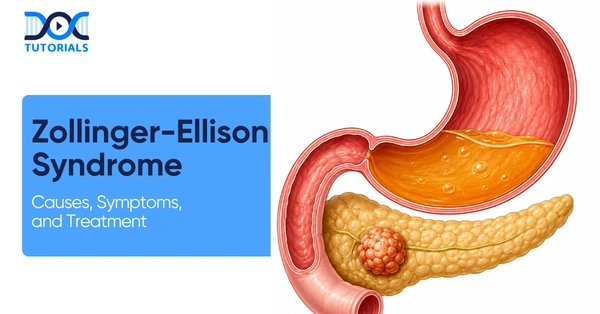
Zollinger Ellison Syndrome

Not all digestive health conditions are common or identifiable. One such rare yet important condition is Zollinger-Ellison Syndrome, where the body produces excessive stomach acid due to specific tumours known as gastrinomas, usually found in the pancreas or duodenum.

Zollinger-Ellison Syndrome is uncommon, affecting only about 0.5 to 3 people per million each year. It is most often diagnosed in individuals between the ages of 20 and 50 and is slightly more common in men than in women. Despite its rarity, understanding this condition is crucial, especially for those working in the medical field. Keep reading to know more.

What is Zollinger-Ellison Syndrome?

Zollinger-Ellison Syndrome (ZES) is a rare disorder caused by gastrin-secreting tumours located in the pancreas or duodenum. This results in the formation of severe ulcers, reflux, and other digestion-related complications.

The Zollinger-Ellison Syndrome (ZES) is a rare disorder in which tumours known as gastrinomas produce excessive amounts of a hormone called gastrin. Another name for this condition is pancreatic ulcerogenic tumour syndrome.

They are a type of neuroendocrine tumour which are normally found in the pancreas or the duodenum (top part of the small intestine). Of all gastrinomas, 60% are cancerous. These tumours stimulate cells that release gastrin, which in turn stimulates the stomach to produce gastric acid. This excess acid leads to ulcers, acid reflux, and other digestive problems.

This may result in chronic diarrhoea in aggressive peptic ulcer disease in severe cases. Treatment is symptom-based, although in some cases, surgical removal of the tumours can provide a cure. However, tumours can recur.

What are the Causes of Zollinger-Ellison Syndrome?

ZES is caused by gastrin-producing tumours that may arise due to genetic conditions like Multiple Endocrine Neoplasia type 1 or occur randomly. These tumours increase gastrin levels, leading to excess acid secretion and ulcer formation.

Here are the important causes of Zollinger Ellison Syndrome leading to gastrin-secreting tumours:

  • Genetic Factors

In certain instances, Zollinger-Ellison Syndrome is linked to a hereditary condition called Multiple Endocrine Neoplasia type 1 (MEN1). MEN1 is associated with tumour development in endocrine glands, including the pancreas. Nearly 25–30% of ZES cases are associated with MEN1, indicating a strong genetic influence.

  • Sporadic Cases

The majority of ZES cases are observed to manifest randomly, with no known family history of cases. These are called sporadic cases. While the exact cause is not yet established, gastrinoma formation is believed to be influenced by genetic mutation in conjunction with environmental factors.

  • Pathophysiology

In terms of the underlying mechanism, Zollinger-Ellison Syndrome is attributed to excess production of gastrin by gastrinoma tumours.

Gastrin stimulates parietal cells in the stomach to secrete hydrochloric acid. This hypergastrinemia leads to increased acid secretion, which damages the lining of the stomach and intestines. This may cause peptic ulcers, bleeding and perforation (in severe cases).

What are the Symptoms of Zollinger-Ellison Syndrome?

Zollinger-Ellison syndrome may cause abdominal pain, heartburn, diarrhoea, nausea, and unexplained weight loss. Severe cases may lead to ulcers, fat in your stools, and health problems caused by the presence of high acid levels in your body.

There are instances where Zollinger Ellison syndrome may show no symptoms at all. When they occur, symptoms of Zollinger-Ellison syndrome are as follows:

  • Blood in vomit or stool
  • Persistent burning or gnawing stomach ache
  • Feeling tired
  • Fatty or oily stools
  • Constant heartburn
  • Indigestion, especially after consuming fatty meals
  • Poor appetite
  • Nausea and vomiting
  • Unexplained weight loss

Symptoms vary depending on the size and number of tumours. Larger gastrinomas produce more gastrin, leading to higher acid levels and more intense symptoms of peptic ulcer disease.

If the tumours spread (metastasise), especially to the liver, they may lead to liver cancer. Symptoms of liver involvement may include:

  • Itchy skin
  • Jaundice
  • Yellow discolouration of the whites of the eyes and mucous membranes

What is the Diagnosis of Zollinger-Ellison Syndrome?

Diagnosis involves clinical assessment, serum gastrin fasting levels, and other diagnostic methods such as secretin stimulation. Imaging and biopsy are used to identify and determine the nature of tumours.

Diagnosis of Zollinger-Ellison Syndrome (ZES) takes a progressive and systematic approach in order to identify it accurately:

  • Clinical Evaluation and History Taking

The physician starts by assessing your symptoms, medical history, and any family history of endocrine diseases such as MEN1. Detailed questions are asked about digestive issues, their frequency, and how long they have been present to build a clear clinical picture.

  • Blood Testing for Gastrin Levels

To measure hormone levels, a fasting serum gastrin test is performed. Although a high level of gastrin is an important measure, above 1,000 pg/mL is only strongly suggestive in cases when the gastric pH is low (less than 2). The Chromogranin A (CGA) test is also employed to aid in the diagnosis since it reveals the presence of neuroendocrine tumour activity.

  • Secretin Stimulation Testing

This specialised test is used to differentiate Zollinger-Ellison Syndrome from other causes of elevated gastrin levels. After administering secretin, a rise in gastrin levels greater than 120 pg/mL supports the diagnosis of ZES.

  • Advanced Imaging

Various forms of imaging are used in order to find out and locate any existing tumours. In many cases, the abdominal CT (computed tomography) scan is used first, whereas the MRI (magnetic resonance imaging) is used for detailed imaging of small tumours. These imaging tools help detect lesions that may not be visible through routine methods.

  • Tissue Diagnosis through Biopsy

A biopsy is important to confirm the diagnosis. The immunohistochemistry (IHC) panels and lymph node biopsies are some of the ways used to identify the characteristics of the tumours and distinguish them as benign or malignant.

  • Genetic Evaluation

If MEN1 is present, then genetic tests are done to confirm the diagnosis. It also aids in identifying family members who are at risk and formulating management plans accordingly.

What are the Treatment Options of Zollinger-Ellison Syndrome?

Treatment involves the use of various medications and procedures, such as proton pump inhibitors, surgical procedures, and medications. Treatment in the early stages helps to alleviate the symptoms and avoid possible complications.

Zollinger-Ellison Syndrome is managed mainly by addressing the tumours and reducing excessive acid secretion. In most cases, doctors prioritise treating the tumours first. The treatment options include:

1. Preventing Tumour Growth

The following strategies are used to control or slow the development of tumours:

  • Chemotherapy, which slows tumour growth.
  • Surgical removal of gastrinomas from the liver to prevent further spread
  • Embolisation is a procedure to block blood flow to tumours.
  • Introduction of therapeutic drugs into the tumour to control its activity.

2. Reducing Gastrin Production

Physicians can also prescribe hormonal drugs like octreotide. The drug is used to treat symptoms by decreasing gastrin secretion and to control hormonal effects.

3. Reducing Acid Levels

Excess acid needs to be managed to treat ulcers and reduce symptoms. Treatment mainly includes proton pump inhibitors (PPIs), which are drugs used to inhibit the production of acid. These drugs work by blocking the activity of proton pumps in acid-secreting stomach cells.

Common examples of PPIs include:

  • Esomeprazole (Nexium)
  • Omeprazole (Prilosec)
  • Lansoprazole (Prevacid)
  • Pantoprazole (Protonix)
  • Rabeprazole (Aciphex)

For patients with long-term Zollinger-Ellison Syndrome, pantoprazole delayed-release tablets may be used as an ongoing treatment option. Lowering stomach acid levels allows peptic ulcers to heal more effectively and reduces symptom severity.

4. Surgery

Surgical intervention may be considered, although it can be challenging. Gastrinomas are often small and difficult to locate. A surgeon may successfully remove a single tumour, but surgery becomes more complex if multiple tumours are present or if the disease has spread to the liver.

According to the National Organisation for Rare Disorders, complete removal of a gastrinoma is successful in approximately 20–30% of cases. If complications such as peptic ulcers arise, surgery may also be required to:

  • Repair perforations in the stomach or duodenal wall
  • Remove blockages caused by ulcers
  • Control or stop internal bleeding

In rare and severe situations, removal of the stomach may be considered as a last-resort treatment option.

FAQs about Zollinger-Ellison Syndrome

  1. What is the best treatment for Zollinger-Ellison syndrome?

Zollinger-Ellison syndrome is mainly treated with medications known as proton pump inhibitors (PPIs). These medications are regarded as the first-line medication since they can efficiently suppress excessive acid secretion in the stomach.

PPIs work by blocking the activity of tiny acid-producing pumps located in the stomach lining, thereby reducing acid levels and helping relieve symptoms.

  1. What are the first signs of Zollinger-Ellison syndrome?

Some common early symptoms of Zollinger-Ellison syndrome include abdominal pain, nausea, vomiting, unexplained weight loss, and diarrhoea. If properly managed, ulcers can be effectively controlled. But in case it is left untreated, complications can develop.

  1. What causes Zollinger-Ellison syndrome?

Zollinger-Ellison syndrome is caused by tumours known as gastrinomas, which typically develop in the pancreas or the duodenum. These tumours produce large amounts of the hormone gastrin, leading to excessive stomach acid production.

  1. What foods are good for Zollinger-Ellison syndrome?

Since Zollinger-Ellison syndrome leads to increased stomach acid due to gastrin-secreting tumours, diet can help manage symptoms alongside medical treatment.

Low-acid and high-alkaline foods like vegetables and whole grains can be useful in lowering levels of acid and enhancing comfort in the digestive system.

  1. How serious is Zollinger-Ellison syndrome?

Zollinger-Ellison syndrome may be severe and even life-threatening. For instance, a gastrinoma may block the duodenum, which can lead to rupture. Additionally, the tumour may spread to other organs, particularly the liver, increasing the severity of the disease.

  1. What is the best test for Zollinger-Ellison syndrome?

The most effective initial screening test for Zollinger-Ellison syndrome is the fasting serum gastrin test. Ideally, this test is performed when the patient is not taking acid-reducing medications, although it can still be used as a preliminary screening tool even if such medications are being taken.

  1. What is the survival rate of Zollinger-Ellison syndrome?

The survival rate is highly dependent on the spread of the tumours. Patients whose gastrinomas have not metastasised to the liver have an approximate 20-year survival rate of 95%. In contrast, those with liver metastases have an average 10-year survival rate of around 15%, even after undergoing surgery to remove tumours.

  1. At what age do ZES usually start?

Zollinger-Ellison syndrome is a rare disorder which is largely diagnosed among people aged between 20 and 60 years. It is usually characterised by the formation of one or more tumours of the duodenum, pancreas, or nearby lymph nodes.

  1. Is Zollinger-Ellison syndrome cancerous?

In many cases, gastrinomas associated with Zollinger-Ellison syndrome can be cancerous. Recent statistics indicate that approximately 60% of these tumours are cancerous, and by the time they are discovered, they might have extended to other body parts.

However, cases linked to MEN1 are less likely to be cancerous initially, while other forms may carry a higher risk of malignancy.

  1. What should you avoid eating with Zollinger-Ellison syndrome?

People with Zollinger-Ellison syndrome should avoid foods that trigger or increase acid production. This includes spicy foods, citrus fruits, and caffeinated drinks. Avoiding these items can help minimise discomfort and reduce symptom severity.

Conclusion

Zollinger Ellison Syndrome is a serious and rare disorder which may result in excess stomach acid and severe problems without proper management. Although it may feel daunting when you are actually diagnosed, knowing the condition and how to treat it can help you manage it with confidence.

For additional guidance, DocTutorials can be your study companion. We offer crisp videos, clinical Qbank, exam-focused notes, flashcards, and mind maps. This helps ensure aspirants gain complete clarity over complex medical topics.

Join DocTutorials today and explore our NEET PG course to excel in your medical career!

NEET PG Online Live Power Pack
DocTutorials App Download Now

Latest Blogs

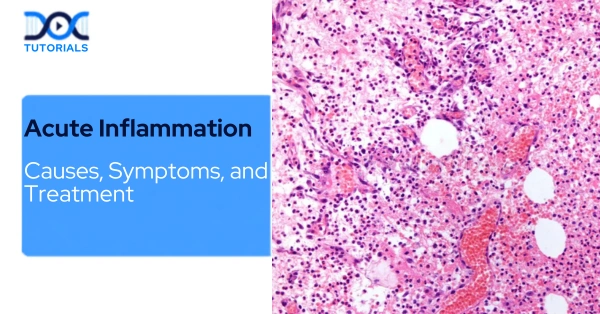
Acute Inflammation: Causes, Symptoms, and Treatment

Acute-Inflammation

Acute inflammation is a fundamental pathological response that protects the body against harmful stimuli. It plays a critical role in removing injurious agents and initiating tissue repair, and supporting recovery and wound healing.

For those in the healthcare field or aspiring medical professionals, gaining a clear understanding of the causes, symptoms, and treatment of acute inflammation is essential for delivering effective patient care and doing well in exams. Keep reading to know more.

What is Acute Inflammation?

Acute inflammation is the body’s immediate protective response to injury or infection, marked by redness, swelling, and pain. It helps eliminate harmful agents and initiates tissue healing.

Acute inflammation is a direct and adaptive reaction of the body to harm, infection, or tissue damage, and is commonly characterised by the typical features of redness, swelling, and pain. It is the initial defence against harmful stimuli, such as pathogenic microorganisms and chemical irritants.

This response is triggered when the immune system releases pro-inflammatory cytokines and other mediators that rapidly localise to the affected site to eliminate the injurious agent and initiate tissue repair and healing.

What are the Causes Of Acute Inflammation?

Acute inflammation can be triggered by physical injuries, chemical exposure, infections, or allergens, all of which cause tissue damage and activate the immune response.

Acute inflammation can arise as a result of any factor leading to tissue damage or cell injury. These causes may be classified into physical, chemical and biological agents. Physical causes involve trauma like cuts, burns or insect bites. Chemical causes involve exposure to toxic substances, drugs, or environmental pollutants. Biological causes include infections from microorganisms such as bacteria, viruses, and parasites.

Additionally, others can be allergic, such as to certain foods, environmental influences, or animal contact. This leads to the excessive activation of the immune system and the development of acute inflammation.

What are the Risk Factors of Acute Inflammation?

The typical risk factors of acute inflammation are infections, physical trauma, tissue damage, chemical irritants, immune response, and internal irritants that may trigger or intensify the inflammatory process.

Acute inflammation is a temporary immune response to sudden tissue damage or exposure to pathogens. It is a defence process that prevents harm and promotes healing and is clinically characterised by the presence of redness, heat, swelling, and pain.

Below are some common risk factors associated with acute inflammation:

  • Infections

Invasion by pathogenic microorganisms such as bacteria, viruses, and fungi can activate the immune system, leading to an acute inflammatory response aimed at eliminating the infectious agents.

  • Physical Trauma

Any form of physical injury, including cuts, burns, fractures, sprains, frostbite, or penetration of foreign bodies (e.g., splinters), may cause immediate tissue damage, triggering inflammation.

  • Tissue Damage/Necrosis

Cell death caused by ischemia (reduced blood supply), hypoxia, or direct physical injury leads to the release of intracellular components, which act as inflammatory signals.

  • Chemical Irritants

The tissues may be damaged as a result of exposure to dangerous chemicals, toxins, acids or environmental pollutants and may trigger an inflammatory cascade.

  • Immune Reactions

Even without direct injury or infection, hypersensitivity reactions (allergies) and autoimmune responses can stimulate inappropriate or excessive inflammatory activity.

  • Internal Irritants

Dead tissue, immune complexes, or substances produced within the body can act as irritants and keep inflammation active in a specific area.

What are the Symptoms of Acute Inflammation?

Acute inflammation symptoms are identified by five classical signs, such as redness, swelling, heat, pain, and loss of function, each reflecting underlying physiological changes in the body.

Acute inflammation is characterised by 5 classical clinical signs, each reflecting underlying physiological changes:

  1. Redness (Rubor): This happens because of the vasodilation and the raised blood flow (hyperemia) in the affected region, giving it a visibly red appearance.
  2. Swelling (Tumour): Arises from an excess accumulation of fluid in the body tissues known as oedema, characterised by the increased permeability of the blood vessels.
  3. Heat (Calor): Resulting from an increase in blood flow and the metabolism rate at the site of inflammation, leading to an elevation of the local temperature.
  4. Pain (Dolour): Occurs due to the discharge of inflammatory mediators like prostaglandins and bradykinin, which stimulate nerve endings, resulting in tenderness, throbbing, or burning sensations.
  5. Loss of Function (Functio Laesa): Indicates partial or total impairment of functionality caused by pain, swelling, and structural damage.

How is Acute Inflammation Diagnosed?

Diagnosis involves a combination of medical history, physical examination, and diagnostic tests such as blood investigations and imaging to confirm inflammation and identify its cause.

Diagnosis of acute inflammation is a mix of clinical assessment, physical examination, and pertinent diagnostic studies. Upon examining the patient’s medical history, recent trauma, and medications, the doctor performs a complete physical examination to assess the 5 classical signs of acute inflammation: redness, swelling, heat, pain, and loss of function.

Depending on the severity and nature of symptoms, other diagnostic tests can be prescribed, such as blood tests, allergy tests, ultrasound, CT (computed tomography) scans, MRI (magnetic resonance imaging), or biopsy.

The laboratory results tend to show increased levels of inflammatory markers, including C-reactive protein (CRP), erythrocyte sedimentation rate (ESR), and plasma viscosity (PV). After considering every clinical and diagnostic evidence, the doctor makes the diagnosis and develops a treatment plan.

What are The Treatment Options for Acute Inflammation?

Treatment focuses on relieving symptoms and addressing the underlying cause through medications like NSAIDs and corticosteroids, along with supportive care when needed.

Acute inflammation is treated depending on the cause. A doctor may focus on eliminating the root cause, managing the symptoms, or sometimes both at the same time.

For example, if the inflammation is due to a bacterial or fungal infection, the doctor may prescribe antibiotics or antifungal medications. Some of the typical treatments that specifically address inflammation include:

  • Nonsteroidal Anti-Inflammatory Drugs (NSAIDs)

Nonsteroidal anti-inflammatory drugs (NSAIDs) are the most common in relieving pain, swelling, fever, and other discomforts related to inflammation. Nevertheless, they fail to treat the underlying cause of the condition.

These drugs act by inhibiting some body enzymes which encourage inflammation. Common examples include naproxen, ibuprofen, and aspirin. They can be readily obtained over the counter and online. Nevertheless, they should be used with caution and under the guidance of a doctor or pharmacist, as they may cause side effects.

Acetaminophen, commonly known as paracetamol or Tylenol, helps reduce pain but does not directly decrease inflammation. This allows the inflammatory process to continue supporting the body’s natural healing.

  • Corticosteroids

Corticosteroids comprise a group of steroid hormones, such as cortisol, which affect the body functions associated with inflammation. They are used to manage conditions such as asthma, allergic reactions, dermatitis, IBD, systemic lupus, hepatitis, arthritis, and temporal arteritis.

These medications are available in different types, including tablets, injections, inhalers, creams, and ointments. However, the prolonged use of these medications poses certain health risks. Therefore, it is advisable that they are taken on prescription.

  • Immunosuppressants and Chronic Inflammation Management

When inflammation becomes chronic, treatment approaches may differ based on the condition. Some drugs are designed to inhibit the immune system’s response. These medications are useful in managing symptoms of conditions such as psoriasis and rheumatoid arthritis, as well as other autoimmune diseases.

But since they suppress the immune system, they may render the body more susceptible to infections. Immunosuppressant drugs are also essential for individuals who have undergone organ transplant surgery, as they prevent the body from rejecting the new organ. Such individuals need to take extra precautions to avoid infections.

FAQs about Acute Inflammation

  1. What are 5 symptoms of acute inflammation?

Acute inflammation is clinically defined as the presence of five signs: rubor (redness), calor (heat), tumour (swelling), dolour (pain), and functio laesa (loss of function).

  1. What is a common cause of acute inflammation?

Acute inflammation usually happens as a natural response of the body to infection or injury. For example, if you come down with a cold or cut your finger, your body triggers an inflammatory response that directs immune cells to the injury site to start the healing process.

  1. What are the 4 stages or cellular events of acute inflammation?

The four stages of inflammation are: initiation (alarm bells ring), amplification (immune cells rush in), destruction (removal of damaged tissue and pathogens), and resolution (healing and restoring balance). This is the natural process of your body reacting to some injury or infection.

  1. What does acute inflammation feel like?

Acute inflammation is typically painful, reddish, swollen, and warm with or without stiffness or restricted motion in the area. It may be uncomfortable or intense, but it is typically short-term and improves within a few days as healing occurs.

  1. How long is acute inflammation?

Acute inflammation is usually temporary, lasting a few days. When a wound becomes warm, red, painful, and swollen, it is a clear sign that inflammation is occurring.

  1. What is the difference between acute and chronic inflammation?

Acute inflammation is an immediate, temporary reaction to trauma or disease (takes days), which is marked by redness, swelling, and pain in order to facilitate healing.

Chronic inflammation, on the other hand, is a slow, long-term response that can last months or years, often occurring when the immune system fails to eliminate a threat, leading to tissue damage and diseases such as diabetes or arthritis.

  1. Are antibiotics always needed for acute inflammation?

No, acute inflammation does not necessarily require antibiotics. Antibiotics are only used to treat inflammation that is a result of bacterial infections.

  1. Can acute inflammation turn into chronic inflammation?

Yes, acute inflammation can turn into chronic inflammation if the initial trigger is not resolved, if the immune response fails to shut off, or if there are repeated episodes of acute inflammation. While acute inflammation lasts a few days, this transition occurs when the immune system continues to send white blood cells to the site, causing damage over months or years.

  1. Does exercise help with acute inflammation?

Yes, exercise is an effective, non-pharmacological agent which can be used to control inflammation, but its impact relies on its intensity and regularity.

Moderate-intensity exercise is generally anti-inflammatory, reducing systemic inflammatory markers like CRP, whereas intense, prolonged exercise can temporarily increase inflammation.

  1. What foods can reduce acute inflammation?

To reduce acute inflammation, focus on a diet rich in omega-3 fatty acids, antioxidants, and polyphenols, such as fatty fish, berries, leafy greens, nuts, and olive oil. Key anti-inflammatory foods include turmeric, avocados, green tea, peppers, and dark chocolate. A Mediterranean-style diet is highly effective for reducing inflammation.

Conclusion

Acute inflammation pathology is a fundamental concept in medicine, representing the body’s immediate and protective response to injury, infection, or harmful stimuli. Fortunately, all symptoms can be managed effectively with appropriate diagnoses and timely interventions, which may vary depending on the cause.

For every NEET PG aspirant, developing a strong understanding of topics such as acute inflammation and related pathological processes is vital for exam preparation and clinical decisions in real-world practice.

DocTutorials will assist you in this journey through expert-guided video lectures, Quick Revision Programs (QRPs), and high-yield study materials, all designed to help you pass your exams and emerge as a successful future medical professional. Learn more about Doctutorials’ NEET PG course and take a step towards your dream!

NEET PG Online Live Power Pack
DocTutorials App Download Now

Latest Blogs

DocTutorials vs Other Coaching Apps: Why V6 is the Ultimate NEET PG Game-Changer 

Preparing for the NEET PG exam is tough. Finding the right coaching platform should not be a struggle. With many options available today, you might naturally feel overwhelmed. You have older, well-known brands, and then you have DocTutorials. Which one should you pick for your medical career? In this blog, we compare DocTutorials with other standard coaching platforms to help you make a smart choice. 

The Big Difference: What Makes the New V6 Update Stand Out? 

While other apps provide standard videos and tests, DocTutorials has launched the V6 update. This is a massive game-changer. It is not just about basic study material; it is about how you interact with it. With V6, you get smart features like Video Timestamped Comments, allowing you to leave personal notes exactly where you need them. You also get Consolidated Notes and the ability to Highlight and Annotate your MCQ explanations. Other platforms are still catching up to these tools. 

DocTutorials V6 vs Other Coaching Apps 

Feature DocTutorials V6 Other Coaching Apps 
Learning Approach System-Based Learning Isolated Subject Learning 
Video Notes Timestamped comments Standard static notes 
QBank Features Highlight and annotate Basic text answers 
Motivation Daily Goals & Streaks No tracking features 

DocTutorials Core Strengths: Built for Smart NEET PG Prep 

System-Based Learning: A Clinical Approach 

Your foundation is strong, but V6 connects it all. System-Based Learning does not replace your 19 subjects; it integrates them. For example, in the Cardiovascular System, you learn Anatomy, Physiology, Pathology, Pharmacology, Medicine, Surgery, OBGYN, and Radiology in one seamless flow. Since PG exams are highly clinical, this trains you to think exactly like a doctor. You revise smarter, not harder, without jumping blindly between subjects. 

Learn With Better Video Lectures 

Most apps have video classes. But DocTutorials offers crisp, focused lectures taught directly by top medical educators. You get comprehensive Syllabus Videos, Previous Year Question recall discussions, and Integrated MCQ videos. This combination makes learning complex topics incredibly simple for every student. 

Faculty-Reviewed QBank V6 

Practicing good questions is the secret to a high rank. The V6 QBank provides over twelve thousand MCQs and Image-Based Questions. It even includes new Video-Based MCQs. While others give you simple answers, DocTutorials lets you create custom tests and bookmark tough questions. 

Quick Revision Program (QRP V6) 

When the final exam is near, you do not have time for long videos. The QRP V6 gives you crisp, short revision videos. It helps you quickly recall every important subject. Other apps have heavy revision tools, but QRP is famous for being fast. 

Visual Learning & Motivation: Streaks and Mind Maps 

To remember drugs and formulas, you need visual help. DocTutorials offers interactive Flashcards designed for active recall. You also get topic-wise Mind Maps to simplify complex subjects. Moreover, the new V6 update introduces Daily Goals & Streaks. You can set and track your daily study targets. Maintaining your streak keeps you highly motivated and strictly disciplined throughout your long preparation journey. 

Study Materials Comparison Guide 

Study Material DocTutorials V6 Other Coaching Apps 
Flashcards Interactive and shareable Basic or not included 
Mind Maps Topic-wise and synced Rarely available 
Revision Notes Consolidated V6 notes Lengthy PDF files 
Test Series Real exam interface Basic web interface 

Real Exam Test Series & Expert Mentorship 

The test series on DocTutorials mimics the actual NEET PG exam perfectly. You get Grand Tests and Topic-wise Mini Tests. After the test, you get detailed faculty analysis. This helps you fix mistakes quickly. Furthermore, studying alone can be stressful. DocTutorials gives you direct access to WhatsApp mentorship groups. Top medical faculty will guide you, answering your doubts directly. With V6, it easily beats older competition. 

Frequently Asked Questions (FAQs) 

  1. Is DocTutorials good for NEET PG? 

Yes, it is one of the absolute best platforms with expert faculty. 

  1. What is System-Based Learning in V6? 

It integrates all 19 subjects around organ systems for clinical understanding. 

  1. How do Goals & Streaks help me? 

They help you track daily study targets and keep you motivated. 

  1. How many questions are in QBank V6? 

It has over twelve thousand carefully reviewed clinical questions. 

  1. Are there mind maps available for students? 

Yes, subject-wise mind maps are included for very easy revision. 

  1. How does the QRP V6 help me? 

It provides short, focused videos for very quick final revision. 

  1. Does DocTutorials have previous year questions? 

Yes, it covers ninety-five percent of past exam questions. 

  1. Does the app offer student mentorship? 

Yes, top faculty will guide you directly via WhatsApp groups. 

  1. Are active recall flashcards included? 

Yes, highly interactive flashcards are there to boost your memory. 

  1. Is the test series like the real exam? 

Yes, it perfectly mimics the real NEET PG computer interface. 

NEET PG Online Live Power Pack
DocTutorials App Download Now

Latest Blogs

NEET PG 2027 Exam Guide: Important Dates, Application Process, Fees & Preparation Plans  


The NEET PG 2027 is a critical milestone for MBBS graduates across India who are aiming to secure a seat in MD, MS, or PG Diploma courses. Conducted every year by the National Board of Examinations in Medical Sciences (NBEMS), this exam demands focus, consistency, and the right study materials. 

If you are planning to take the NEET PG Exam 2027, starting early gives you a massive advantage. To give your preparation a solid structure, check out the DocTutorials NEET PG Online Powerpack and NEET PG Power Pack. These carefully designed packages offer high-yield study materials and mock tests that mirror the real exam, helping you stay ahead of the competition.  

Here is a complete, easy-to-read guide for your 2027 prep journey. 

Who Can Apply for NEET PG 2027? 

Before you start worrying about the syllabus, make sure you meet the basic eligibility criteria set by NBEMS: 

  • Medical Degree: You must have a recognized MBBS degree or a provisional pass certificate approved by the National Medical Commission (NMC).  
  • Valid Registration: A permanent or provisional registration certificate from the NMC or your respective State Medical Council is mandatory.  
  • Internship Cut-off: You must complete your compulsory one-year rotatory internship on or before the cut-off date. Based on recent trends, this is usually set between July and September of the exam year. 
  • Age Limit: There is no upper age limit to apply for the exam. 

NEET Post Graduate 2027 Important Dates 

While the NBEMS has not released the official 2027 calendar yet, we can easily predict the timeline by looking at the NEET PG 2026 schedule. In 2026, the application process began in early July, with the exam taking place on August 30.  

Here are the tentative dates for 2027 to help you plan your revision strategy: 

Important Event Expected Timeline for 2027 
Official Information Bulletin Release Early July 2027 
Online Application Form Starts Early July 2027 
Last Date to Apply Online Last Week of July 2027 
Admit Card Download Mid-August 2027 
NEET PG Exam Date Late August 2027 

How to Apply for NEET Post Graduate 2027? 

The entire application process is conducted online. When the registration window opens, follow these simple steps to fill out your form without any stress:  

  1. New Registration: Visit the official NBEMS website (natboard.edu.in). Click on the “NEET-PG” tab and select “New Registration.” Fill in your basic details like name, date of birth, mobile number, and email ID to generate your User ID and Password.  
  1. Complete the Form: Log in using your new credentials. Fill in your personal details, academic history, and MBBS marks accurately. 
  1. Select Test City: Choose your preferred states and cities for the exam. Remember, NBEMS has clarified that city allocation is not always on a first-come, first-served basis, but applying early is still a good habit. 
  1. Upload Documents: Upload scanned copies of your passport-size photograph, signature, and left thumb impression. Make sure they meet the official size guidelines. 
  1. Pay the Application Fee: Pay the required fee online using UPI, net banking, or a card. Finally, submit the form and print the confirmation page for your records. 

Documents You Need to Keep Ready 

Keep digital copies of the following documents in a separate folder on your laptop before you begin the application: 

  • Recent passport-size photograph (clear, not older than 3 months)  
  • Scanned signature and left thumb impression 
  • Valid Photo ID proof (Aadhar Card, PAN Card, Voter ID, Passport, or Driving License) 
  • MBBS Degree or Provisional Pass Certificate  
  • NMC or State Medical Council Registration Certificate  
  • Internship Completion Certificate 

Exam Fee Category Wise 

The application fee must be paid online during the form submission. Here is the fee structure based on recent examination cycles: 

Student Category Expected Application Fee 
General, OBC, and EWS ₹ 3,500 
SC, ST, and PwD ₹ 2,500 

Note: The fee is usually non-refundable. Double-check all entered information, especially your category and contact details, before hitting the payment button. 

Frequently Asked Questions (FAQs) 

1. What is the expected date for the NEET PG 2027 exam? 

Based on the 2026 schedule, the exam is expected to be held in late August 2027. 

2. What is the official website for NEET PG registration? 

All official updates, registration, and admit cards are handled at natboard.edu.in.  

3. Is there an age limit for appearing in NEET PG? 

No, there is no upper age limit for candidates writing the exam. 

4. How many times can I attempt the NEET PG exam? 

There is no cap on the number of attempts. You can take the exam as many times as you need. 

5. What is the mode of the examination? 

The exam is a Computer-Based Test (CBT) conducted in a single shift.  

6. Can I apply if I haven’t finished my internship yet? 

Yes, as long as you complete your mandatory one-year internship before the official cut-off date (usually around August or September of the exam year).  

7. How are the test centers allocated? 

You will be asked to provide your preferences. However, center allocation is done by NBEMS, and early application does not guarantee your first-choice city.  

8. Can I change my category or exam city after final submission? 

Usually, NBEMS provides a short “edit window,” but critical fields like your name, nationality, test city, and email ID cannot be changed. Fill out the form carefully! 

9. What happens if I upload an unclear photograph? 

NBEMS has strict image guidelines. If your photo or signature is blurry or edited, your application may be rejected.  

10. How long does it take for the results to be announced? 

Results are typically declared within 3 to 4 weeks after the exam date.  

The Smart Way to Secure Your Seat 

The secret to cracking this exam isn’t just studying harder, it’s studying smarter.You need to know exactly which high-yield topics to focus on, how to tackle clinical scenarios, and how to manage your time during the 180-question test. This is where having a structured, focused guide makes all the difference. 

Instead of getting lost in a sea of notes, checking out the DocTutorials NEET PG Online Power Pack or the NEET PG Power Pack can give your daily routine a clear, actionable direction. They provide you with concise video lectures, targeted test series, and practical mock exams that actually reflect current paper patterns. It’s about building confidence, not just collecting study materials. 

Choose Your Winning Blueprint: DocTutorials Elite Prep Plans 

Option 1: NEET PG Online Live Power Pack 

Best for: Students who need strict discipline, real-time mentorship, and a structured daily routine. 

  • Discipline & Habit Building: Follow a pre-defined academic calendar with 100+ interactive live sessions to ensure you finish the syllabus long before exam day. 
  • The “No-Excuses” Testing Window: Take 3 daily bite-sized tests. They are only available during a specific window. This builds ultimate consistency. 
  • Direct Access to Elite Mentors: Never stay stuck. Get real-time doubt clearing during live classes and VIP access to dedicated WhatsApp/Telegram groups for daily strategic guidance. 
  • Ultra-High-Yield Final Revision: Walk into the exam with confidence using our C.P.R. (Critical Points Recap) classes 1–2 months before the exam, designed to lock in highly volatile facts. 

Option 2: NEET PG Power Pack 

Best for: Autonomous learners who want ultimate flexibility and a comprehensive, on-demand ecosystem. 

  • Study on Your Exact Terms: Master all 19 subjects at your own pace with our all-new, crisp V6 Syllabus Videos and 240+ Quick Revision Program (QRP) videos. 
  • Target & Destroy Weaknesses: Utilize a massive 12,000+ clinical-case-based QBank. Create custom modules tailored to your weakest subjects and use detailed analytics to track your exact progress. 
  • Rapid Visual Recall: Reinforce your memory on the go using interactive flashcards and smart mind maps—perfect for retaining tricky drugs, formulas, and triads. 
  • Real Exam Simulation: Master your time management and eliminate exam anxiety with 60+ Grand Tests and special INI-CET pattern exams that perfectly mimic the real interface. 

Take a breath, map out your months, and equip yourself with tools that genuinely make your journey smoother. Explore DocTutorials Plans Today. 

NEET PG Online Live Power Pack
DocTutorials App Download Now

Latest Blogs

From Hating Online Classes to INI CET Rank 323: Dr Hemanth’s Story 

When preparing for PG medical exams, most students just lock themselves inside a quiet room and stare at a laptop screen for ten to twelve hours every single day. While online coaching feels very comfortable since you can just sit at home, it carries a very huge risk. The complete lack of real human interaction can easily kill your daily motivation. It is very easy to lose your focus when nobody is around to monitor your studying, and the endless mobile phone distractions can easily waste an entire week of preparation. 

Dr Hemanth from Kerala understood this exact problem very early on. After finishing his MBBS from PSG Institute of Medical Sciences and Research, he knew his own mindset perfectly well. He knew that if he stayed back at home, he would really struggle to concentrate on his heavy syllabus. He realized he genuinely needed the strict discipline of a proper offline physical classroom to force himself to sit in one place and focus. 

That brilliant self-realization paid off perfectly. Dr Hemanth secured a superb rank of 323 in the highly tough INI CET exam. His amazing journey as a face to face batch student at the DocTutorials Trivandrum center is the perfect example of finding the right study environment and following a strict daily routine. Let us look closely at exactly how he used the offline classes and the platform to achieve his big medical dream. 

Choosing the Physical Classroom Over a Digital Screen 

When it was time to start preparation, Dr Hemanth made a very clear choice. While many of his friends preferred online coaching apps, he packed his bags and joined the DocTutorials offline learning center in Trivandrum. He made this choice because he deeply wanted direct one to one interaction. He wanted to sit in a real class and listen to his teachers in person. 

Sitting in a physical class naturally forces you to pay attention. For Dr Hemanth, being surrounded by serious batchmates motivated him to listen completely and not waste any precious time. 

For seven whole months, he followed a completely robotic routine. Every single morning, he woke up, traveled to the exact same building, sat in the same chair, and attended lectures. This simple, fixed daily habit removed all his exam stress. He did not have to worry about what to study each day because the offline schedule guided him perfectly. It built an unstoppable rhythm that carried him all the way to the exam day. 

Conquering the Heaviest Medical Subjects 

Medical preparation often feels like a daily battle against your own memory. Pharmacology is especially famous for this exact struggle. You learn a complicated drug name on Monday, and by Wednesday afternoon, it is completely gone. Dr Hemanth felt this immense pressure until he sat in Dr Nilesh’s class.  

Instead of standing at the front and reading boring presentations, Dr Nilesh turned the classroom into a highly engaging space. He shared clever memory tricks, funny stories, and great clinical jokes. Because he was actually laughing and enjoying the session, Dr Hemanth naturally locked those difficult drug classifications into his permanent memory. On the final exam day, he easily recalled those exact classroom jokes to solve very tough questions. 

Want to hear the full story from Dr Hemanth in his own words? Watch his complete interview right here: 

Obstetrics and Gynecology brought a completely different kind of fear. When Dr Hemanth saw that his timetable dedicated six whole days purely to OBG, he felt a genuine panic. The syllabus looked like an impossible mountain to climb. But Dr Gayatri stepped into the room and completely changed his mindset. Coming from the prestigious AIIMS Delhi, she knew exactly how the central examiners designed their papers. She did not skip the important topics, but she skillfully filtered out the content that students do not really need for competitive exams.  

She focused the class purely on the core clinical facts that actually mattered. She took a massive, terrifying subject and broke it down into highly logical pieces. Because of her clear guidance, Dr Hemanth walked into the exam hall feeling totally confident to tackle almost every single OBG question. 

Teachers Who Treated Students Like Friends 

The biggest advantage of studying at the DocTutorials Trivandrum offline learning center was the real bond he built with his teachers. Even though the faculty members came from all over India and spoke different languages like Hindi or Malayalam, they made sure to connect perfectly with every single student in the room. They were incredibly easy to approach for any doubts you had. 

Dr Rajiv Dhawan taught ENT exactly like an older brother rather than a strict college professor. He kept the classroom mood extremely positive. He was fun, cracked lots of jokes, and made the learning process deeply interactive. When your teacher treats you like an equal friend, you naturally want to pay much closer attention to their words. 

For a tricky subject like Preventive and Social Medicine where health guidelines change constantly, Dr Rajasi was a true lifesaver. She gave the class a very concise workbook full of short bullet points that were very easy to read and revise.  

The Power of Late Night MCQ Sessions 

The DocTutorials Trivandrum center went far beyond just taking regular daytime classes. The faculty members knew very well that students naturally lose their energy in the late evenings. After a long day of taking heavy notes, your brain simply wants to shut off completely. To fight this dangerous evening laziness, the center organized special nighttime multiple choice question discussions. 

These intense night classes focused entirely on highly specific and important topics. For Dr Hemanth, these evening sessions were pure gold. Sitting with his batchmates late at night to solve tough clinical cases kept his mind incredibly sharp. It helped him check his own memory daily. If he knew the answer, his confidence grew. If he made a silly mistake during these night sessions, he instantly knew exactly which topic he was forgetting and needed to revise the very next morning. 

How DocTutorials Helped Him Complete His Journey 

Beyond the physical classroom, the complete DocTutorials ecosystem played a massive role in his daily preparation. Having all his resources in one place made his studies incredibly smooth. Here is exactly how the specific platform features helped him secure his amazing rank: 

The Colorful Workbooks: Instead of writing everything from scratch, he used the beautifully designed DocTutorials colored workbooks provided at the center. They were very concise and had more than enough content to clear the exam. They were extremely easy to read, which allowed him to revise heavy subjects rapidly. 

The Customized Question Bank: The exact moment his offline classes ended, he opened the DocTutorials app. He used the customized question bank to solve questions based purely on what was taught that day. This brutal daily testing exposed his weak spots instantly and helped him identify his weak areas before they became big problems. 

Perfectly Balanced Grand Tests: Many students are terrified of taking full mock exams, but Dr Hemanth started early. He found the DocTutorials grand tests to be of a really good standard. They were moderately tough, perfectly mirroring the exact difficulty level of the real exam. He took two to three full tests every single month to build his stamina. 

The Special RDx Series: He heavily utilized the special RDx series for INI CET. The RDx tests were of excellent quality and revolved perfectly around the actual exam topics. Watching the detailed test and discussion videos helped him understand exactly how to approach clinical scenarios, leading to a massive improvement in his overall scoring ability. 

Trusting Primary Notes for the Final Victory 

During the final few months of preparation, most medical students completely panic. They abandon their original books and start running behind random rapid revision videos from different places. Dr Hemanth stayed incredibly calm and completely ignored this trap. He made a very smart choice to stick only to DocTutorials as his primary source of preparation. Because he had spent seven whole months reading those exact colored workbooks, his visual memory was perfectly set. He completely trusted his main notes and revised them as much as possible. 

He also realized early on that the INI CET exam has a unique pattern. Knowing this exact testing pattern, he dedicated extra time to thoroughly revising his first and second year topics. This specific strategy gave him a massive advantage over the entire competition. 

Conclusion 

A top medical rank is never a result of pure luck. It is built through months of silent dedication and smart choices. Dr Hemanth proved that you do not need complicated strategies to secure a great rank. 

He simply knew his own mindset well enough to choose a real physical classroom over the lonely isolation of online learning. The DocTutorials Trivandrum center provided the exact learning environment he needed. The complete DocTutorials ecosystem proved incredibly useful for his entire preparation. The highly engaging offline classes, colorful workbooks, customized question banks, and perfectly balanced mock tests gave him everything required to succeed in one single place. 

He trusted his teachers completely and followed his daily routine for seven whole months without taking a single day off. That beautiful consistency is exactly what helped him claim the Orthopedics seat of his dreams. His inspiring story is a powerful reminder that stepping into a real classroom and working hard every single day is still the absolute best way to build a great medical career. 

Crack INI CET With Ease Using DocTutorials  

NEET PG Online Live Power Pack
DocTutorials App Download Now

Latest Blogs

Smart Study Tips That Helped Dr Mythili Secure INI CET – AIR 219 

It is the most frustrating feeling in the world. You study for hours, give a Grand Test, and get a decent score. You study even harder for the next one, expecting a massive jump in your performance. But your score drops. You try again, and it drops even further. 

Most medical students panic when this happens. They assume they are forgetting everything. They start questioning their entire INI CET study plan and blindly rush to buy new books or change their primary resources. 

Dr Mythili from Government Medical College Trivandrum faced this exact nightmare. In her very first mock test, she impressively answered 130 questions correctly. But instead of going up, her scores started falling. They dropped to 128, and by January, she was only able to answer 122 questions correctly. 

But instead of giving up, she completely changed how she approached her exams. A few months later, she crushed the INI CET exam and secured a brilliant All India Rank of 219. 

In a recent interview, Dr Mythili explained what went wrong and how she fixed it. If your scores are stuck and you need a realistic and practical INI CET study plan, here is exactly what she did. 

Want to hear the full incredible story directly from Dr Mythili? Watch her complete interview right here:

Escaping the PDF Trap with Offline Discipline 

Today, many medical students struggle with massive information overload. It is incredibly easy to collect thousands of random PDF files and save endless digital folders on your tablet. But collecting too many messy files just leads to total mental exhaustion. You quickly end up spending more time sorting your folders than actually reading the subjects. 

Dr Mythili knew she was not the kind of person who could stare at a tablet all day without losing focus. She needed physical books, a strict routine, and a proper classroom environment. This is exactly why she chose to join the offline face to face batch at the DocTutorials Trivandrum center. 

For her, the physical classroom provided ultimate consistency. When you have a fixed timetable that forces you to sit in a class from morning to evening, you cannot procrastinate. You cannot pause the teacher to scroll through social media. You are forced to engage, listen, and learn actively. 

More importantly, she heavily credited the DocTutorials colored workbooks as her absolute lifesaver. Instead of constantly writing messy notes, she had everything beautifully organized in one physical book. She completed the exam revisions using just these workbooks. She completely refused to touch another source, proving that reading one source thoroughly is much better than checking ten different digital files. 

The Grand Test Nightmare: Falling From 130 to 122 

The biggest turning point in her INI CET study plan came from her experience with mock exams. When Dr Mythili took her very first Grand Test (GT) a month after her classes started, the result was amazing. She answered 130 questions perfectly. For a beginner, reaching the 130 mark is a huge confidence booster. Naturally, she expected her scores to keep rising. She thought her next exam would easily cross 140. 

But in the next GT, her total dropped to 128. In the test after that, it dropped again. By January, just weeks before the main exam, she was totally stuck at exactly 122 correct answers. 

Being stuck at exactly 122 correct answers is a very risky place. It shows you know the basics, but you just keep repeating the exact same errors. Many students handle this problem by simply taking even more mock exams, hoping their luck will magically improve. Dr Mythili did the exact opposite. 

Stop Giving Tests and Start Analyzing 

When she realized she was stuck, Dr Mythili made a very brave decision. She completely stopped giving Grand Tests for two entire weeks. 

Instead of forcing herself to solve new questions, she went back and opened every single old test she had taken. She stopped looking at the final score and started performing a deep analysis of her actual mistakes. She categorized every single wrong answer. She checked if she was getting questions wrong because she forgot a simple fact or if she was entirely misunderstanding the core concept. 

This careful review showed a huge hidden flaw. She noticed she kept getting answers wrong in part three and part four of the exam. Her actual medical knowledge was not the issue. Her mental energy was the problem. By the time she reached the second half of the paper, she was losing her attention and making silly mistakes. 

Using this detail, she went back to taking full practice exams with a totally fresh mindset. She forced herself to stay extremely focused during the final two parts of the paper. The result was amazing. In that very next test, her score jumped from a stuck 122 all the way to 154 correct answers. 

This huge jump of over thirty marks happened purely because she stopped rushing blindly and finally took the time to understand her own mind. 

Mastering the Heaviest Clinical Subjects 

You cannot secure an All India Rank 219 by only being good at short subjects. You must conquer the massive clinical giants. Dr Mythili relied completely on the DocTutorials expert faculty to break down these terrifying subjects into easy, digestible pieces. 

Conquering ObGyn with Dr Gayatri: Obstetrics and Gynecology is an absolute monster of a subject. The syllabus is endless, and the guidelines are highly complex. Dr Mythili specifically highlighted how Dr Gayatri made this vast subject feel incredibly small and easy to manage. 

The classes were perfectly structured into three days for Obstetrics and three days for Gynecology. The colored workbooks simplified the most difficult topics. Dr Gayatri used visual charts and simple pictures to lock the topics permanently into the visual memory of the students. It became so easy that Dr Mythili found it almost impossible to forget the concepts. 

Mastering PSM with Dr Rajasi: Preventive and Social Medicine is famous for being the most unpredictable subject in the entire medical curriculum. No matter how much you read a textbook, the INI CET test will ask about a brand-new rule or a recent health program update. 

Dr Mythili completely skipped this problem by following Dr Rajasi. Instead of searching for updates across the internet, she relied on the daily facts posted by her teacher in their Instagram and WhatsApp study groups. Every single new rule was given directly to the students the very next day. This constant daily reading meant Dr Mythili never felt the fear of missing out on highly important new updates right before the exam. 

The Massive ENT Transformation Sometimes, a single great teacher can turn your absolute worst subject into your highest scoring weapon. For Dr Mythili, that subject was ENT. 

Before attending the DocTutorials classes, ENT was her weakest subject. When she practiced MCQs, she was only getting four or five questions correct out of eleven. But after attending the classes by Dr Rajiv Dhawan, her understanding completely shifted. The complex anatomy and surgical procedures were taught in such a simplified manner that her accuracy improved rapidly. She went from answering only four correct answers to consistently scoring ten or eleven corrects in every single block. 

Building Pathology with Dr Vandana Puri: Pathology is the core foundation of modern medicine. If your Pathology is weak, your Medicine and Surgery will automatically suffer. Dr Mythili knew this and started following Dr Vandana Puri all the way back in her final year of MBBS. 

She consistently participated in the daily Pathology quizzes. Even when she got very low scores at the start, she never gave up. That daily practice with vital exam topics, along with the beautiful colored workbook, made Pathology feel so much easier to revise during the final stressful months. 

Building the Ultimate Timetable with RDx 

As the exam date gets closer, the biggest question every student face is how to schedule their revision. You have nineteen subjects, limited days, and a massive amount of panic. 

Dr Mythili solved this problem by using the DocTutorials RDx test series as her timetable. She did not waste time trying to build the perfect schedule on paper. She simply looked at the RDx schedule and followed it blindly. 

If the RDx schedule demanded a specific subject, she sat down and revised that exact subject using her colored workbooks. Then she took the RDx tests. But the real magic happened the very next day. She consistently attended the live discussion videos for the exam. This active review process immediately highlighted any small voids in her memory and allowed her to fix the concepts right on the spot. 

Smart Revision Using QRP Videos 

When you are doing your final revision, trying to watch full length main videos is a massive waste of time. You already know the basics, you just need a quick refresh of the high yield points. 

Dr Mythili was extremely smart about her time management. She heavily utilized the Quick Revision Program videos on the DocTutorials app. If she felt she was forgetting a specific concept in Radiology or Medicine, she did not open the massive main videos. She directly opened the short, highly targeted QRP videos. She watched the exact topic she was weak at, cleared her doubt instantly, and went straight back to her workbooks. This highly targeted approach saved her hundreds of hours. 

Get the exact study plan Dr Mythili used on the DocTutorials app right here. (USP) 

The Conclusion 

A falling mock test score is never a permanent failure. It is simply a clear signal from your brain telling you that your current strategy needs a serious upgrade. 

Dr Mythili proved that you do not need ten different mobile apps, a massive library of reference books, or endless random notes to secure a top medical rank. By trusting DocTutorials as her sole learning platform, she found the perfect combination of structured classroom discipline, beautiful colored workbooks, and targeted online tools to break her score plateau. 

Do not run blindly from one mock test to another. Stop, review your errors, understand your own errors, and build an INI CET study plan based on deep self-analysis. Let DocTutorials guide your preparation, trust your primary notes, and go claim the central institute seat you truly deserve. 

NEET PG Online Live Power Pack
DocTutorials App Download Now

Latest Blogs

From Rank 16000 to Rank 25: The INI CET Preparation Strategy by Dr Avi Goyal 

Many medical students believe in a massive myth. They think top rankers are just born smart. They assume that toppers have perfect memories, never struggle with basic concepts, and clear tough exams effortlessly. We only see their final victory and completely ignore the painful failures they faced along the way. 

When you sit in a reading room staring at a terrible mock test score, it is very easy to feel like you are not good enough. You look at the huge syllabus, realize how much you have already forgotten, and start accepting that maybe an average rank is your absolute limit. 

Dr Avi Goyal from Maulana Azad Medical College proves this is completely false. Her journey to securing All India Rank 25 in the INI CET exam was not a magical overnight success. It is a story of pure hard work, heavy setbacks, and a stubborn refusal to quit. 

Her very first INI CET result was heartbreaking. She secured a rank of 16000. For anyone dreaming of a seat in a premier government institute, a five-digit rank feels like the end of the road. But instead of giving up, she put her head down and started to work. She brought her rank to 9000 in NEET PG, pushed it to 2000 in the next INI CET, and finally secured an unbelievable Rank of 25 in INI CET May 2026. 

If you are tired of getting average mock scores and want a proven INI CET preparation strategy to break into the top 50, you need to read this. In an exclusive interview, Dr Avi revealed her exact preparation blueprint. Here is how she conquered the toughest medical entrance exam. 

The Danger of Switching Study Materials 

In today’s digital age, medical students suffer from a severe fear of missing out. The moment a friend mentions a new book, a trending PDF, or a different coaching faculty, panic sets in. You immediately start wondering if your own notes are missing critical high yield points. 

Whenever you score poorly in a practice test, the first instinct is always to blame the resources. Dr Avi admitted that she faced this exact same temptation. Whenever her preparation felt stagnant, she desperately wanted to switch her study sources. But she quickly realized a harsh truth that completely changed her path. 

When she got questions wrong, she went back to her original notes and found the exact answers sitting right there on the page. She was getting them wrong not because her notes were bad, but because she had not revised them properly. 

Her biggest advice for every student is to completely trust your main study source. The moment you start switching between different notes, you confuse your visual memory. In the final exam, your brain relies heavily on remembering exactly where a concept was written on your page. Choose one reliable resource and read it ten times, instead of reading ten completely different books just one time. 

Want to hear the full story from Dr Avi Goyal in her own words? Watch her complete interview right here

Why You Must Attempt More Questions 

There is a huge debate among aspirants about the perfect number of questions to attempt. Because the INI CET exam has a negative marking system, many students play a highly conservative game. They only mark options they are completely confident about, hoping their accuracy will save them. 

Dr Avi recognized that playing it safe is the fastest way to lose your rank. The INI CET exam uses topics you already know, but makes the choices so confusing that you are almost never completely sure of the right answer. 

In her final exam, out of 200 questions, she attempted a staggering 197. She left only three questions blank. When the final scorecard arrived, the brilliance of this strategy was clear. She got 161 questions correct and 36 questions wrong. 

Getting 36 questions wrong sounds terrifying. Most students would panic at that number. But because she pushed her total attempts so high, the massive volume of correct answers completely swallowed the negative penalties, resulting in an incredible net positive score. To win this exam, you have to build the courage to take calculated risks. You must trust your intuition and mark the answer, because leaving thirty questions blank automatically throws you out of the top rank competition. 

How DocTutorials Built Her Strongest Subject 

There is a massive trend where students completely skip reading proper concepts and jump straight into memorizing short, condensed notes. While concise notes are great for the last month of revision, using them to build your core foundation is a deadly mistake. 

The central institutes do not ask direct repeat questions anymore. They test your deep clinical understanding. Dr Avi knew she needed a rock-solid foundation in her core basic sciences, especially in complex subjects like Pathology. Reading massive textbooks like Robbins is essential, but it is also incredibly exhausting and difficult to retain. 

To solve this, she relied heavily on the DocTutorials platform, specifically highlighting the Pathology lectures by Dr Vandana Puri. Instead of struggling alone with dense paragraphs, Dr Avi used the video lectures to simplify the hardest topics. 

Dr Vandana Puri’s beautiful schematic diagrams and engaging storytelling approach completely transformed the subject for her. Dr Avi said this amazing teaching style felt like she was being spoon fed the hardest disease topics. Since the core ideas were taught so visually and simply, Pathology went from a terrifying subject to her absolute best scoring section. When a great teacher builds your basics early in your preparation, answering tricky clinical questions becomes completely easy. 

The Step by Step INI CET Preparation Strategy 

Dr Avi did not study randomly. She followed a highly logical progression that focused on active learning rather than passive reading. Here is her exact phase by phase plan that you can replicate. 

Phase of Preparation The Strategy The Outcome 
Phase 1: Start With PYQ’s Before reading any heavy theory, solve the previous year questions first. Treat them as a guide to understand exactly what the examiners care about. Helps you identify the core high yield topics, so you do not waste time reading irrelevant textbook chapters. 
Phase 2: Retrograde Topic Revision Instead of reading notes cover to cover, read specific topics purely based on the MCQs you solve and the mistakes you make. Forces your brain to stay active and directly connects theoretical knowledge to practical exam applications. 
Phase 3: Deep Concept Building Focus intensely on building clear basics using expert video lectures and detailed notes, completely avoiding short notes in the beginning. Develops the exact clinical intuition required to eliminate heavily twisted options in the real exam. 
Phase 4: The Low Frequency Test Schedule Take at least one or two Grand Tests every month. Spend the rest of the time thoroughly reviewing every single mistake. Prevents severe mental burnout and ensures that you are actually learning from your errors instead of just collecting scores. 
Phase 5: Single Source Lockdown Completely block out the noise. Refuse to buy new books or downloading new PDFs. Stick entirely to your primary notes and revise them endlessly. Builds an unbreakable visual memory that helps you recall information instantly under immense exam pressure. 

The Grand Test Strategy and Deep Analysis 

If you listen to popular advice, you will hear people telling you to take a Grand Test every single week. Some even suggest taking two tests a week as the exam approaches. 

Dr Avi tried this aggressive approach and quickly dropped it. She realized that sitting for a three hour exam is mentally draining, and simply looking at your final rank teaches you nothing. Instead, she chose a strategy of extreme quality over quantity. She limited herself to taking a Grand Test just once or twice a month. 

The magic was not in the test itself, but in what she did afterward. She spent hours executing a deep analysis of her paper. She reviewed her gray areas, understood why she picked the wrong option, and analyzed her own intuition. The real exam checks if you can spot wrong choices when facing a completely new question. You only build this specific skill by deeply studying your past mistakes, not by just taking fifty mock tests without ever reviewing them. 

You Are So Much Closer Than You Think 

The most emotional part of Dr Avi journey is her message to the students who are currently stuck right outside the winning circle. After the results dropped, she received hundreds of messages from students who secured ranks between 500 and 3000. 

These are the ranks that hurt the most. You miss your dream clinical seat with just a fraction of a mark.  

But Dr Avi, having been exactly at that 2000 rank mark herself, has a very powerful reminder for you. If you are scoring in that range, you are right on the absolute verge of winning. The heavy lifting is done. The concepts are in your brain. All you need is just a few more months of polishing and consistency. Giving up now means walking away from the finish line just when you are about to cross it. 

The Conclusion 

Securing a top rank in INI CET is not reserved for born geniuses. It is reserved for those who refuse to let a bad mock score destroy their confidence. 

Dr Avi Goyal proved that you could bounce back from a rank of 16000 to secure Rank 25. If you build your basics deeply, trust your single study source, and execute this INI CET preparation strategy consistently, you can claim the seat you truly deserve. 

To help you build this exact level of conceptual clarity, DocTutorials provides you with top tier faculty, highly visual video lectures, and a deeply analytical testing platform. We ensure your core foundation is so strong that no twisted option can ever trap you. 

As Dr Avi beautifully summarized at the end of her interview, “The story is yours, so make sure you write it amazingly”  

Keep your head down, revise your notes, and go claim the seat you truly deserve. 

NEET PG Online Live Power Pack
DocTutorials App Download Now

Latest Blogs

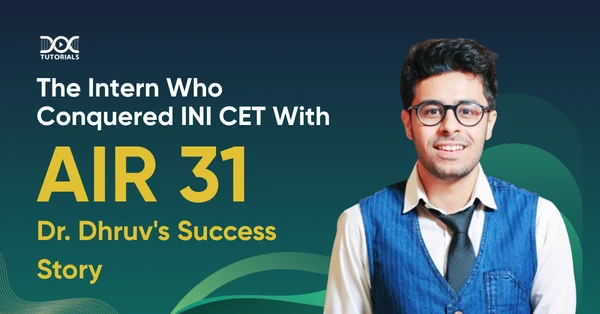
How to Crack INI CET in First Attempt: The Strategy of AIR 31 Dr Dhruv Wadhwa 

Every medical student in India knows the absolute sting of scoring well but still getting a terrible rank. You walk out of the exam hall, calculate your score, and happily expect a rank that guarantees a top government seat. But when the results come out, so many students have scored high that your rank drops down by thousands. 

This exact heartbreak happened to Dr Dhruv Wadhwa during his NEET UG days. As a student of the COVID batch, his marks were great, and he confidently expected a rank somewhere between 1500 and 2000. Instead, because everyone scored unusually high that year, his actual rank crashed down to 8000. Because of that rank, he missed out on a government medical college seat. He took admission at HIMS Delhi instead, but he never forgot that early disappointment. 

Want to hear the full story from Dr Dhruv Wadhwa in his own words? Watch his complete interview right here: 

From his second year of MBBS, he made a silent promise to himself. He wanted to wipe out that old setback and finally see a genuine smile of pride on his parents faces. 

Years later, when it was finally time for his INI CET exam, Dr Dhruv did not just clear it. He completely crushed it. He secured an unbelievable All India Rank 31 right alongside his hectic internship, proving that past failures do not dictate your future. 

If you are a medical student struggling to balance ward duties with your books, and you are constantly searching for how to crack INI CET in first attempt, this is your exact blueprint. Here is how Dr Dhruv turned his ultimate setback into a top 50 rank. 

Why Mugging Up Notes Fails 

When students start preparing for central institute exams, they often make a massive strategic error. They look at the huge syllabus and panic. To finish everything quickly, they start surface level reading. They memorize basic one liners, skip the deep physiology concepts, and jump straight into heavy clinical subjects like Medicine and Surgery. 

Dr Dhruv realized very early that INI CET simply does not reward surface-level reading. This exam would love to test your foundation. If you try to mug up a clinical diagnosis without understanding the core Pathology or Pharmacology behind it, the twisted exam options will trap you instantly. 

According to Dr Dhruv, the top five absolute high yield subjects for INI CET are Anatomy, Physiology, Pharmacology, Pathology, and PSM. The central institutes love testing the first and second year subjects deeply. You cannot fake your way through them. You need extreme conceptual clarity, and reading simple bullet points will never be enough. 

Turning Low Scores Into Motivation 

The biggest turning point in any first attempt preparation is how you handle failure during your practice tests. 

When Dr Dhruv started solving the question bank for the first time, his scores were terrible. He got a huge number of questions wrong. For most students, this is the exact moment they close the app, feel deeply depressed, and stop studying for three days. 

But Dr Dhruv flipped his mindset. He took those low scores as a direct challenge. He accepted that his reading was too surface and decided to change his entire approach. Instead of running away from the questions, he set a brutal daily target for himself. He committed to solving 100 to 150 questions every single day, mixing the regular question bank with custom modules. He stopped caring about how many he got wrong and focused purely on learning the deep concepts behind every single mistake. 

How DocTutorials Helped Him to Secure Rank 31 

To execute this intense preparation, Dr Dhruv did not jump between ten different resources. He relied on the DocTutorials ecosystem to build his concepts step by step. Here is exactly how he used the platform to his massive advantage. 

1. The RDx Series Challenge: Long before his actual exam, Dr Dhruv started attempting the RDx series right from its first season in 2024. At first, he thought a 20-question test would be easy. But the moment he saw the questions, he realized they were on a completely different level. They required deep integration of two or three different subjects just to eliminate the wrong options. 

More importantly, he heavily utilized the video explanations provided by the DocTutorials expert faculty. Sometimes reading a text solution is not enough to clear a tough doubt. Watching top teachers break down the exact logic of a complex clinical scenario made learning incredibly easy for him. 

2. The Fill in the Blanks Hack for Pediatrics: Pediatrics is a massive subject and studying it during a tiring internship feels impossible. Dr Sandeep Sharma completely solved this problem for Dr Dhruv. Instead of passively watching videos, he used the DocTutorials Pediatrics workbook. This workbook uses a unique fill in the blanks format. 

This simple two-way interaction forced Dr Dhruv to stay completely alert while watching the lectures. It was so engaging that he would literally eat his dinner while watching the videos without losing his focus. Because Dr Sandeep Sharma beautifully highlighted all the high yield points and previous year topics, Dr Dhruv managed to complete the entire heavy subject of Pediatrics in just two to three days. 

3. System by System Medicine Integration: Medicine terrifies almost every medical student because the syllabus has no visible end. Dr Dhruv conquered it by following Dr Rahul Rajeev. Instead of reading randomly, he went purely system by system. He completed a system, solved the entire question bank for it, and then linked it side by side with Pathology and Pharmacology. 

He also aggressively used the short, high impact update videos. For example, when the new stroke guidelines were released just before the exam, Dr Rahul explained the massive update in a simple 15-minute video. Dr Dhruv watched it, locked the concept, and moved forward instantly. 

4. The Monday Med Quizzes: Dr Dhruv loved testing himself. When Dr Rahul started the Monday Med Quizzes in the DocTutorials WhatsApp groups, Dhruv took it as a personal challenge among his friends. He studied hard over the weekend, logged in sharp at 9 PM on Monday, and answered 10 intense medicine questions in just 50 seconds. He won the quiz, earned a Littmann stethoscope as the prize, and used that exact same stethoscope throughout his clinical duties. This constant gamification kept his preparation highly exciting. 

The Phase-by-Phase Study Plan 

Dr Dhruv built a preparation routine that was incredibly structured. Here is the exact phase by phase plan you can adapt for your own first attempt success. 

Phase of Preparation The Strategy The Outcome 
Phase 1: Building the Foundation Focus heavily on the core basic sciences Anatomy, Physiology, Pathology, and Pharmacology. Read them deeply instead of doing surface level reading. Secures the most high yield section of the INI CET exam and builds a solid base for Medicine and Surgery. 
Phase 2: The Daily MCQ Discipline Solve exactly 100 to 150 questions every single day using the regular QBank and custom modules, regardless of how low the initial score is. Removes the fear of getting answers wrong and builds the exact pattern recognition needed for the final exam day. 
Phase 3: Active Learning Use active learning tools like the fill in the blanks workbook for video lectures to prevent sleeping during study hours. Allows massive subjects like Pediatrics to be completed rapidly in just a few days even while working in the hospital. 
Phase 4: The Grand Test Routine Take one Grand Test every single week starting from the second half of the internship. Do it on Sundays or immediately post night duty. Builds ultimate mental stamina. Taking tests when extremely tired mimics the actual exhaustion of the real exam day. 
Phase 5: High Level Integration Use the RDX series tests to practice deep clinical questions that force you to integrate three different subjects to find one answer. Develops the critical skill of option elimination, which is the only way to survive the toughest bouncers in central institute exams. 

Staying Motivated During a Tough Internship 

Cracking INI CET while doing your internship requires an unbelievable level of mental toughness. You will have days where you come back from a brutal 24-hour shift with zero energy left in your body. 

Dr Dhruv survived this exhaustion by having a very clear emotional anchor. Every time he felt like quitting, he remembered his ultimate goal simply seeing his parents smile. That distant dream pushed him to open his books even when his body was screaming for sleep. He forced himself to sit and write mock tests even on his post night duty days. 

He took around 15 to 20 full Grand Tests during his preparation. By the time his actual exam approached, his scores had drastically improved. In the very last mock test he gave before the real INI CET, he secured a rank between 20 and 30. That result gave him the ultimate confidence that his deep conceptual strategy was finally working. 

When exam day arrived, the paper was incredibly tough. But because the DocTutorials mock tests had already trained him for that exact high-level difficulty, he remained completely calm, eliminated the wrong options logically, and walked out of the hall knowing he had given his absolute best. 

The Conclusion 

A past failure in an entrance exam does not define your future potential. It only defines your starting point. 

Dr Dhruv Wadhwa proved that you do not need multiple attempts or years of isolated preparation to secure a rank 31 in INI CET. If you focus strictly on building strong basics, solve questions aggressively every single day, and take your mock tests seriously during your internship, you can clear this exam in your very first attempt. Stop running away from low scores and start treating them as your biggest learning opportunities. 

To make this journey easier, DocTutorials helps you to build clear concepts and streamline your daily practice. Our structured video lectures and targeted tests give you the exact edge you need for a flawless final revision. 

Stay consistent, push through the exhaustion, and your dream rank is absolutely possible. All the very best. 

NEET PG Online Live Power Pack
DocTutorials App Download Now

Latest Blogs

From a Weak Foundation to INI CET Rank 54: The Inspiring Story of Dr Sredha 

Dr Sredha Rank 54

It is a silent fear that haunts thousands of medical students across the country. What happens when your early years of medical college were completely disrupted by a COVID pandemic? For a huge group of medical graduates, their first and second year subjects like Anatomy, Physiology, Biochemistry, and Pharmacology were taught through a computer screen. Practical sessions were skipped, clinical wards were closed, and building a strong foundation felt almost impossible. 

When it is finally time to prepare for a highly competitive postgraduate entrance exam, that weak foundation comes back to haunt you. You open a question bank, look at a complex clinical scenario, and realize your basic concepts are simply not there. 

This was the exact reality for Dr Sredha RS. Her early medical college years were severely affected by the pandemic. By the time she finished her internship, she realized she had forgotten almost everything she had learned. She had to build her base completely from scratch. 

Yet, against all odds, she secured an unbelievable All India Rank 54 in the INI CET examination. 

Her massive comeback story proves that you do not need a perfect undergraduate record to secure a top rank. You just need the right mentorship, a solid strategy to rebuild your basics, and extreme consistency. If you feel like your foundation is too weak to crack a central institute, here is the exact roadmap Dr Sredha used to turn her biggest weakness into her absolute strength. 

The Danger of Having Weak Basics 

The most common mistake students make when they realize their basic sciences are weak is panicking. The immediate reaction is to buy a huge pile of books or revision notes that only list high yield facts. Most of the aspirants just try to mug up these short notes and pray they will somehow remember them inside the exam hall. 

But INI CET is not an exam of simple memory. It is an exam of deep clinical integration. The exam will test your Medicine knowledge by twisting a basic Pharmacology or Pathology concept. If your core understanding is missing, reading revision notes blindly will not work. 

Dr Sredha understood this reality very early in her preparation. She knew that trying to mug up facts without understanding the background concept was a massive waste of time. She accepted that her foundation was weak, and she decided to fix the root cause rather than looking for a quick fix. 

As she said in her own words: 

“My MBBS first and second year were in the COVID era. I did not have a base. I had forgotten almost everything I studied. I had to start again and make a good foundation.” 

Stop Changing Your Study Material 

Many students fail because they keep changing their study materials. They watch videos from one platform, read notes from a different coaching center, and solve questions from a third app. This creates immense confusion and makes revision impossible. 

The biggest turning point for Dr Sredha was her decision to trust one single source completely. After finishing her internship, she joined the DocTutorials offline face to face batch in Trivandrum. She used the physical classroom to force herself into a disciplined routine. Being surrounded by serious students gave her a highly competitive environment, and the ability to clear doubts with the faculty directly during breaks kept her momentum alive. 

But she did not stop at the classroom. She perfectly combined her offline classes with the DocTutorials app to execute a brutal multiple choice question solving strategy. 

Want to hear the full story from Dr Sredha RS in her own words? Watch her complete interview right here: 

How DocTutorials Helped Her Rebuild from Scratch 

To secure Rank 54, Dr Sredha relied heavily on the expert faculty at DocTutorials to simplify the most terrifying subjects. She used a highly strategic approach to conquer her weak areas. 

1. Turning Pharmacology from a Nightmare to a Strength: Pharmacology is arguably the most volatile subject in the entire medical syllabus. For Dr Sredha, it was her absolute weakest subject. But this changed completely when she started attending Dr Nileshraj classes. Instead of giving her a massive list of drugs to mug up, Dr Nilesh started every class from pure basics.  

He taught the core mechanism of action so clearly that she could logically guess the answer even if she forgot the drug name. Combined with his brilliant teaching, the subject Dr Sredha once feared became one of her strongest assets. 

2. Making Pediatrics Extremely Simple: Every medical student knows the frustration of trying to memorize developmental milestones in Pediatrics. It is confusing, dry, and incredibly hard to retain. Dr Sandeep Sharma completely eliminated this struggle for her. He simplified the complex concepts so beautifully that they stuck in her memory effortlessly. Even better, his entire Pediatrics workbook was less than 100 pages. Instead of reading bulky textbooks, she could revise the entire subject rapidly using just his concise workbook. 

3. The Interactive Pathology:  Dr Sredha actually used to wait eagerly for her Pathology classes. Dr Vandana made the subject incredibly easy by teaching everything from the absolute basics. But her biggest help was the constant quizzes. She held live quizzes right inside the classroom and posted new questions in their WhatsApp and Telegram groups every few days. Even when Dr Sredha did not have the time to open her heavy Pathology books, simply solving these quick group quizzes helped her recollect everything perfectly. 

4. Turning Travel Time Into Study Time: Dr Sredha had to travel two hours every single day to attend her classes. Instead of wasting that precious time listening to music or sleeping, she used it strategically. She opened the DocTutorials app on her phone and watched the Quick Revision Program videos. These short five-minute videos are packed with high yield facts. By utilizing her travel time for the QRP videos, she managed to cover massive amounts of revision without spending any extra energy at home. 

The Easiest Way to Review Grand Tests 

A top rank is never achieved without taking mock tests seriously. Dr Sredha built a very systematic approach to her Grand Tests (GTs). 

When she started her serious preparation in August, she took just one GT per month. Her goal was not to score high, but simply to get used to the long exam format. By January, she increased it to two GTs a month. In March, she increased the frequency further, and by April, she was taking a mock test on alternate days. 

But taking a GT is only half the battle. Reviewing the mistakes is where the real rank is built. Dr Sredha admitted that she felt extremely lazy when it came to reviewing tests. Reading long paragraphs of text explanations for 200 questions was exhausting for her. 

This is exactly where the DocTutorials app gave her a massive advantage. Most of the INI CET mock tests on the app feature full video explanations by the expert faculty. Instead of reading boring text, she simply watched her favorite teachers explain exactly why an option was wrong. It saved her hours of time and made the review process incredibly easy and engaging. 

She also heavily relied on the RDx Series during her final phase. This series focuses purely on core topics. She specifically recalled a moment from her exam where a direct question on the management of neonatal hypoglycemia appeared. Dr Sandeep Sharma had specifically predicted and discussed this exact topic during the RDX discussions, allowing her to secure those marks effortlessly. 

The Master Plan 

Dr Sredha treated her preparation like a structured protocol. Here is the exact phase by phase blueprint you can copy for your own study plan. Preparing for a postgraduate medical exam is an emotional rollercoaster. It is a long, isolating journey, and motivation is never constant. 

Many students believe that top rankers study perfectly for ten hours every single day without fail. Dr Sredha completely destroyed this myth. She openly admitted that she had terrible days where she could not even bring herself to open a single book. 

Her secret was not perfect motivation. Her secret was absolute resilience. She printed a picture of AIIMS Delhi and stuck it on the wall right in front of her study table. Whenever she felt exhausted, she looked at that picture to remind herself why she started. She accepted that having a bad day is completely normal and happens to every single medical student. 

The true hallmark of a champion is what you do the morning after a bad day. You do not sit and feel guilty about wasting time. You simply wake up, sit back at your desk, and start studying again. That relentless ability to bounce back is what ultimately secures a top 100 rank. 

The Conclusion 

Having weak basics from your MBBS days is not the end of the road. It just means you need to change your approach and study much smarter. 

Dr Sredha RS proved that with the right mentors, a logical approach to mock tests, and the refusal to give up after a bad day, anyone can conquer the INI CET. Stop trying to mug up endless lists. Go back to your basics, understand the core concepts, and practice aggressively. 

To make this journey easier, trust DocTutorials to build your clear concepts and streamline your daily practice. Their structured video lectures and targeted tests give you the exact edge you need for a flawless final revision. 

Embrace your weak subjects, stay persistent through your worst days, and your dream college is waiting for you. All the very best. 

NEET PG Online Live Power Pack
DocTutorials App Download Now

Latest Blogs

Cracking INI CET: The MCQ Strategy That Got Dr Sairaj Rank 8 

Dr Sairaj rank -8

There is a very common myth in the medical community that you need to crack your postgraduate entrance exam on your very first try to be considered a truly brilliant student. But the reality of medical exams in India is completely different. These exams test your emotional endurance and your persistence just as much as they test your clinical knowledge. 

Dr Sairaj Mane proved this reality by securing a massive All India Rank 8 in the highly competitive INI CET exam. What makes his story incredibly inspiring is that this was his third attempt after finishing his internship. His journey is the perfect example of how studying smartly, analyzing your mistakes, and staying fiercely consistent will eventually bring you to the absolute top of the list. 

Securing a single digit rank in an exam that sees thousands of the brightest minds competing for limited seats is no accident. Dr Sairaj did not rely on luck, and he certainly did not try to read textbooks all day. He used a highly calculated, practical approach to his preparation. 

If you are a medical student tired of reading endless notes and not seeing your mock test scores improve, grab a notebook. Here is the exact strategy, the mindset shift, and the daily study setup Dr Sairaj used to conquer the exam. 

Want to hear the full story from Dr. Sairaj Mane in his own words? Watch his complete interview right here:  

Why Just Reading Notes Fails 

The biggest trap medical aspirants fall into during their preparation phase is the illusion of reading. When you sit at your desk with a fresh highlighter and a massive textbook, reading feels incredibly productive. You spend ten hours flipping pages, and you go to sleep feeling like you have conquered the syllabus. 

The problem with only reading notes is that everything seems important. Your brain simply stops actively thinking. You never realize your actual weak areas until you sit for a test and all four options look exactly the same. 

Dr Sairaj realized early in his journey that just mugging up facts was not going to work for a tricky exam like the INI CET. The exam does not just test your memory anymore. It tests your ability to apply a concept to a twisted clinical scenario. He knew he needed a system that actively exposed his weak points and forced him to understand the core mechanism of a disease. 

As he said in his own words: 

“Mugging up things did not work out well for me. The real game is all about building strong concepts”   

The MCQ First Approach 

The biggest change for Dr Sairaj was stepping away from basic reading. He shifted his focus to solving multiple choice questions (MCQs) every single day. He adopted a daily routine known as the retrospective study method. 

Many students divide their day by keeping 80 percent of their time for reading notes and only 20 percent for solving questions. Dr Sairaj completely flipped this rule. He maintained a strict ratio for his daily schedule. If he read theory for three hours, he would strictly spend six solid hours solving MCQs. 

Why is this so effective? Because solving questions is a diagnostic tool. When you are reading notes, your brain assumes it knows everything. But when you are forced to choose the right answer among four very similar options, your true preparation level is exposed. 

By solving questions for six hours a day, he found out exactly which concepts he was repeatedly forgetting. Every time he made a mistake, he went backward. He opened his notes to clear that specific concept. This retrospective method meant he was only spending time reading the exact things he did not know, rather than wasting hours rereading things he had already mastered. 

Furthermore, he noted that aggressively solving MCQs automatically leads to multiple revisions without you even realizing it. Every time you solve a mixed subject test, you are forcing your brain to recall old information, keeping it completely fresh for exam day. 

How DocTutorials Helped His Journey 

To execute this heavy MCQ strategy and build his core concepts, Dr Sairaj trusted the DocTutorials platform. He used a very smart mix of recorded video lectures, daily testing tools, and specialized revision series to stay on track and save massive amounts of time. 

1. Falling in Love with Weak Subjects: Every medical student has that one subject they absolutely hate. For Dr Sairaj, Biochemistry was his weakest link. It is a notoriously dry subject filled with volatile cycles and complex enzymes that most students simply try to cram at the last minute. But after watching Dr Priyansh Jain Biochemistry video lectures on DocTutorials, his entire mindset shifted. The focus on clear, logical concepts helped him completely fall in love with the subject, and it eventually became his absolute favorite. 

He also relied heavily on the Medicine faculty to build his clinical base. He specifically pointed out Dr Rahul Rajeev and his ability to brilliantly simplify the CVS and CNS modules. When expert teachers make your core concepts clear, you stop relying on pure memory. You can logically figure out the right answer directly inside the exam hall. 

2. Building Discipline with the Daily Dose: When you are studying alone for months, maintaining discipline is the hardest part. To keep his brain constantly engaged, Dr Sairaj made the DocTutorials Daily Dose tests an absolute rule in his routine. 

The app provided him with 10 fresh questions in the morning, 10 in the afternoon, and 10 in the evening. This constant, low pressure testing provided a much-needed adrenaline rush throughout the day. Taking these small tests helped him constantly brush up on volatile topics he might have otherwise forgotten. This daily habit ensured he never lost touch with his older subjects while focusing on new ones. 

3. Smart Final Month Revision with RDx: In the last month of preparation, time is your most precious asset. You cannot afford to spend an hour reading a long text explanation for every single mock test question you get wrong. 

During the critical final weeks for the INI CET, Dr Sairaj focused entirely on the DocTutorials RDx Series. The RDx is specifically designed to push students to their maximum potential. But the biggest advantage for him was the online video solutions provided for these tests. Instead of reading detailed text explanations, he just watched the video solutions. This saved him massive amounts of time and allowed him to catch the exact thought process of the faculty, teaching him how to eliminate wrong options instantly. 

The Exact Study Plan 

Dr Sairaj used a highly systematic approach to his studies. He treated his preparation like a clinical protocol. Here is the exact blueprint you can copy for your own study plan. 

The Mindset Shift and the 20th Notebook 

A major concern for many students is how to manage their exam preparation while doing a busy internship. Dr Sairaj offered a very realistic view on this. He noted that out of the entire year, only two to three months of hospital postings are genuinely exhausting. For the remaining months, the postings usually last around four to five hours a day. 

His advice is simple. Do not wait for a perfectly free day to start studying, because that day will never come. You have to steal time. Whenever you get a free hour in the hospital, open your phone and watch a video lecture or solve a quick block of questions. Starting from day one of your internship is the key to staying ahead. 

For people who feel stuck at a certain score, his biggest advice is to strictly limit your study material. Whatever source you have chosen, stick to it with total faith and ensure you revise it at least two to three times. Changing books in the middle of your preparation is a guaranteed way to confuse your memory. 

But the most critical piece of advice Dr Sairaj shared is the absolute necessity of creating a 20th Notebook. 

Medical PG preparation usually requires making individual notebooks for all 19 subjects. But the 20th Notebook is different. This is a highly customized, personal notebook filled only with the tiny details, volatile facts, and specific concepts that you personally get wrong in your daily tests. It should not contain basic concepts that you already know. 

When the actual exam is just four to seven days away, opening huge textbooks or your main subject notes will only create a huge mess and cause extreme panic. You simply cannot read everything in a week. Your 20th Notebook should be fully ready for those final seven days. Because it contains only your specific weaknesses, revising it ensures you will not lose silly marks on the things you tend to forget the most. It becomes your ultimate exam savior. 

The Conclusion 

Securing Rank 8 in one of the toughest medical exams in the country does not happen by accident, and it certainly is not restricted to first attempt candidates. It is the direct result of shifting your entire focus from blind reading to active MCQ solving. 

Dr Sairaj Mane proved that persistence always wins. If you want to replicate his incredible success, you need to change your daily habits. Stop trying to memorize every single line in your textbook. Focus heavily on understanding the core concepts. To make this journey easier, trust DocTutorials to build your clear concepts and streamline your daily practice. Our structured video lectures and targeted tests give you the exact edge you need for a flawless final revision.  

Use the right video lectures, take your daily mock tests seriously, and stay persistent through all your attempts. Your top rank is waiting for you to claim it. All the very best. 

Want to hear the full story from Dr Sairaj Mane in his own words? Watch his complete interview right here: [Interview Link] 

NEET PG Online Live Power Pack
DocTutorials App Download Now

Latest Blogs

NEET PG Online Live Power Pack
DocTutorials App Download Now