fmge preparation Archives - Page 5 of 6 -

FMGE Exam Study Plan: Strategies and Exam Pattern

FMGE Exam Study Plan | DocTutorials

The Foreign Medical Graduate Examination (FMGE) is a crucial step for Overseas Citizens of India (OCI) and Indians who gained their first medical degree from a foreign university and are looking to practice medicine in India.

With the exam around the corner, particularly for applicants aiming for the January 2026 session, your preparation needs to be top-notch, focused, and goal-oriented. Fortunately, with proper FMGE study plans and utilisation of effective resources, you can confidently excel in this exam.

Keep reading for a detailed insight.

FMGE Exam Pattern 2026: An Overview

Here is a concise summary of the FMGE 2026 exam format:

  • Exam Mode: Computer-Based Test (CBT)
  • Structure: The exam consists of two sections (Part A and Part B) covering 19 medical subjects, from pre-clinical to clinical.
  • Total Questions: 300 Multiple Choice Questions (MCQs)
  • Duration: 5 Hours (2.5 hours for Part A and 2.5 hours for Part B)
  • Marking Scheme: +1 mark for each correct answer; no negative marking for wrong answers
  • Minimum Marks for Qualification: 150 out of 300 (50%)

How to Create the Most Effective FMGE Study Plan?

The Foreign Medical Graduate Examination (FMGE) is not a measure of how much you can study, but how smartly you can prepare and implement what you have already studied in your MBBS.

Here is how you can create the best study plan for FMGE:

  • Familiarise Yourself with the Exam Inside Out

Prior to planning, get to know the FMGE pattern—300 MCQs split across two sessions with no negative marking. Know subject-wise weightage as per NBE guidelines to maximise your efforts. Don’t divide equally across all 19 subjects; concentrate more where marks are high.

  • Create a Realistic and Targeted Study Schedule

The syllabus of FMGE is enormous, so don’t approach it blindfolded. Split your preparation into unambiguous blocks of time. For a 2-month study plan for FMGE, spend the first two weeks on high-yield topics such as Medicine, Surgery, PSM, OBG, and Pharmacology.

The subsequent two weeks should be utilised for completing other subjects such as Pathology, Microbiology, Anatomy, and Physiology. Spend daily hours learning and revising clinical and non-clinical subjects, MCQ practice, and more.

  • Start Practising MCQs Early and Daily

Every topic studied must be followed by an MCQ application. FMGE tests your ability to recall and apply, not just memorise. Use question banks and old question papers to solve at least 100 MCQs a day, in total.

  • Use Limited, Trusted Resources Only

Avoid the pitfall of jumping between too many FMGE study materials. Pick one credible source and stick to it. For better results, take assistance from experts and go through their structured video lectures, short notes, PYQs, and Grand Tests based on the FMGE pattern. Make sure that you do not burden yourself.

  • Prioritise Revision from Day One

Never delay revision in the last few weeks. Revise as soon as you start studying. Keep short notes, one-liners, and flashcards for quick recall. Set up every day’s review sessions and attempt to cover the whole syllabus at least two to three times before the exam.

Active revision strategies and monitoring progress from time to time are your best ideals to gain success. If you are following a 3-month study plan for FMGE, this will offer you enough buffer time to revise at least three times.

  • Top Your Practice with Grand Tests and Mock Practice

Begin trying full-length grand tests from the 5th week. Provide a minimum of 3 tests a week in real exam duration. Analyse each error thoroughly and revisit weak topics at once. This assists in time management, endurance, and enhances confidence in dealing with exam pressure.

Utilise test analysis tools to track your progress and make changes accordingly. Having a 4-month study plan for FMGE allows you even more time to deeply practice and analyse mock test performances.

  • Do Not Ignore Previous Year Questions (PYQs)

Previous Year Questions (PYQs) are very important. FMGE exam repeats ideas and patterns; hence, solving the papers of the last 5 years will make you familiar with them. Practice PYQ as a part of your weekly routine, particularly in the last month.

  • Find and Brush Up Weak Spots

Use Grand Test performance, MCQ results, and self-assessment to pinpoint subjects or chapters where you lack confidence. Dedicate extra time to those areas without ignoring your strengths.

  • Simulate the Real Exam Environment

Develop your mindset to work under FMGE-type situations. Try mock tests in two 150-question sessions with prescribed breaks, much like on test day. This will develop stamina and polish your timing tactics—particularly when to skip, when to guess, and when to proceed.

  • Balance Mindset, Rest, and Health

Smart study schedules also involve resting. Sleep for 6–8 hours to hold on to memory and prevent burnout. Eat properly, drink enough fluids, and take physical breaks. Above all, be mentally resilient.

Do not panic and avoid social media diversion too much, as these are red flags during exams. Have faith in your study plan, irrespective of whether it is a 3-month study plan or a 6-month study plan for FMGE.

FAQs about FMGE Exam Study Plan

  1. How many hours should I study for FMGE?

To prepare effectively for FMGE, aim for around 800–1000 hours of study over 6–12 months. This means studying 4–6 focused hours daily, which totals about 120–180 hours in 30 days.

  1. How can I improve my clinical skills while preparing for FMGE?

Make use of case-based learning, participate in virtual clinical workshops, and discuss various clinical scenarios with peers in order to enhance application-based knowledge.

  1. What are the best online resources to include in an FMGE study plan?

Some of the best resources you can include in your study plan for FMGE preparation are topic-specific video lectures, topic-wise multiple choice questions (MCQs), previous years’ question papers (PYQs), and mock tests.

  1. What are the common mistakes to avoid when making an FMGE preparation?

Some common blunders you can avoid during exam preparation are skipping a study plan, avoiding revisions, not studying complicated topics, taking too much strain, reading without practising MCQs, reading from too many books, improper time management, and so on.

  1. Which subjects should I focus on for FMGE preparation?

Concentrate on Preventive and Social Medicine (PSM), Medicine, Surgery, Pharmacology, Pathology, and Microbiology, since they are very important and often come up in exams.

  1. How should I design my study schedule for FMGE exam preparation?

A daily FMGE study plan should mainly focus on rapid revisions using bookmarks and notes. You should also attend full-length mock tests every 2-3 days to improve time management. Moreover, you can also use FMGE study material like concise notes and previous year’s MCQs flashcards, and apps for last-minute brushing up.

  1. What is the exam pattern of the FMGE examination?

The FMGE exam pattern generally consists of two papers, each with 150 MCQs, for a total of 300 marks. This exam is a computer-based test (CBT), with 2.5 hours allocated for each paper.

The exam is conducted in English, and there is no negative marking for incorrect answers.

  1. What is the cutoff for the FMGE examination?

The qualifying marks under the FMGE exam pattern are 50% or above. This exam is generally conducted by the National Boards of Examination (NBE). Students are usually required to score at least 150 marks to qualify for the exam.

  1. Is six months enough to prepare for the FMGE exam?

Yes, a 6-month study plan for FMGE can be enough if the preparation is well planned and consistent. Following a structured timetable, focusing on high-yield topics, practising MCQs regularly, and revising frequently can help students cover the syllabus and perform well in the FMGE.

  1. Should I prioritise theory or practical questions for FMGE preparation?

An in-depth understanding of theory provides the foundation, while practising clinical and scenario-based questions ensures that you can easily apply knowledge effectively.

Therefore, balancing theory with practical problem-solving improves accuracy, decision-making, and overall performance on the FMGE examination.

Conclusion

FMGE can be a challenging exam, but it’s not impossible to crack. Hundreds of thousands of candidates pass it each year with careful planning, discipline over resources, and focused practice. Time management, clear thinking, and confidence are crucial to the final results.

With only 3–5 months remaining for the FMGE 2026, January session, it’s time to concentrate, weed out distractions, and leave your 100%. Adhere to your FMGE study plans and seek assistance from a reliable ally like DocTutorials, where we offer study materials, question banks, PYQs, video lectures, doubt-clearing sessions, and more.

Join DocTutorials today and explore our FMGE course to excel in the exam.
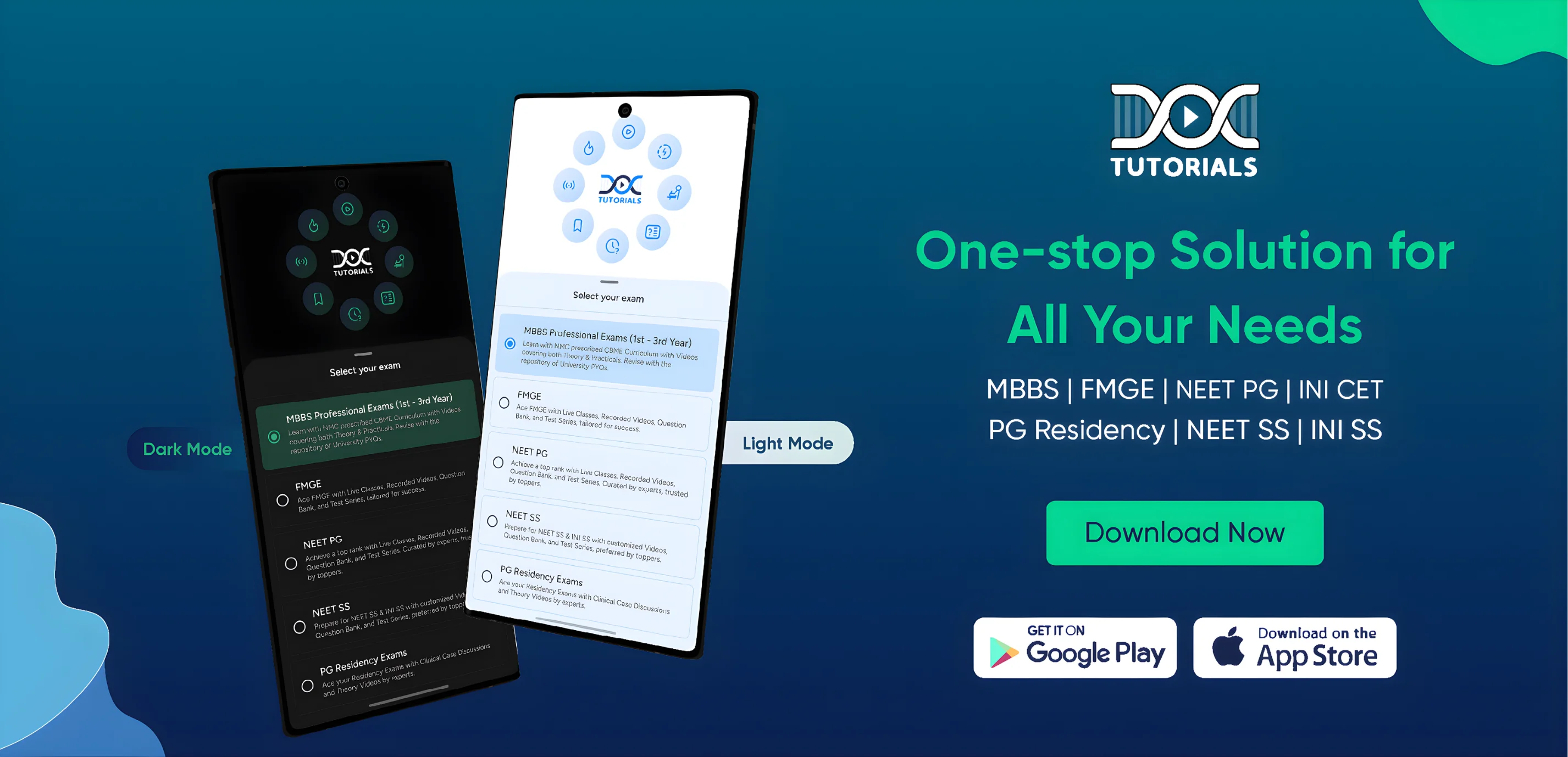
DocTutorials App Download Now

Latest Blogs

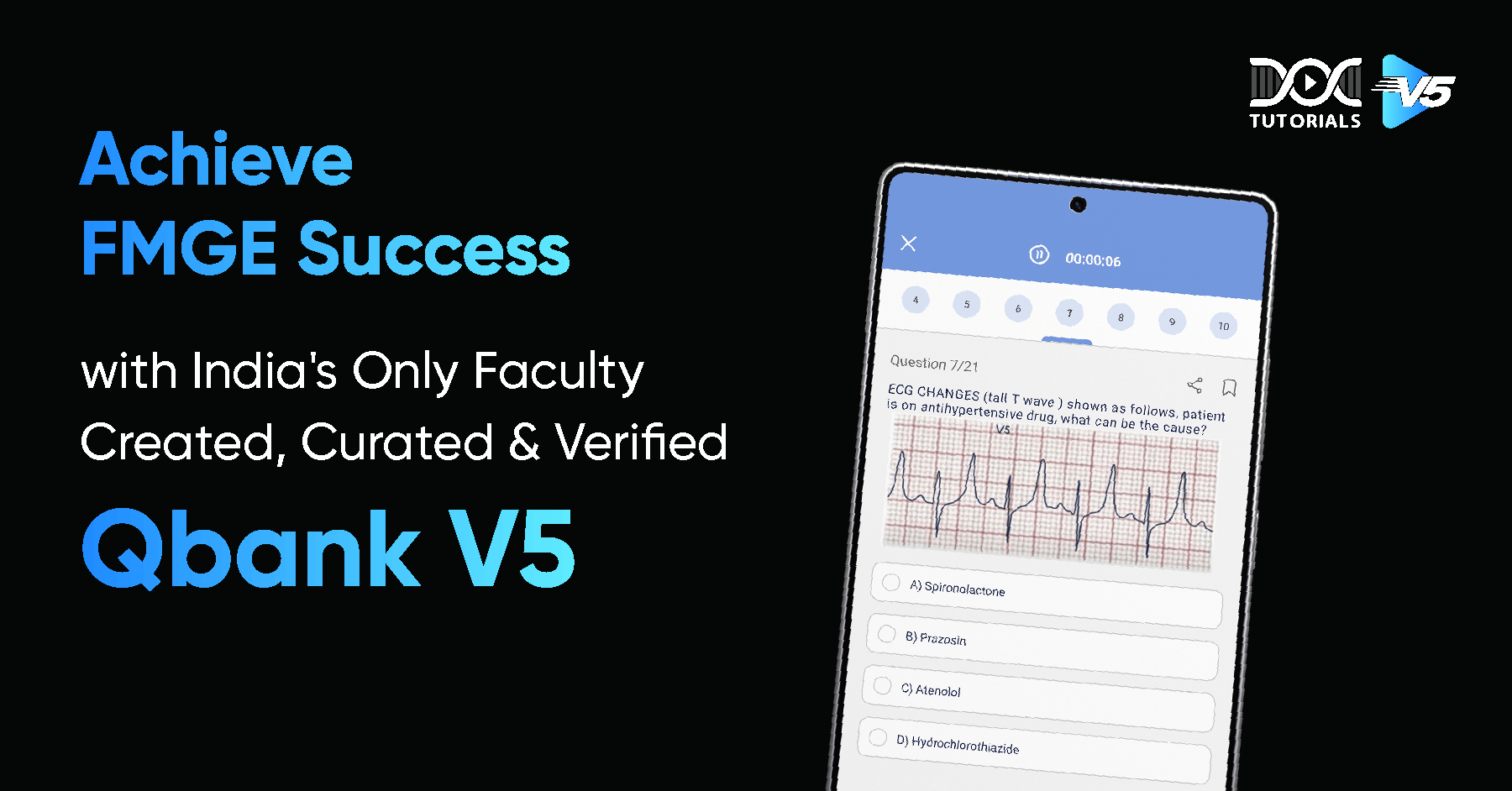
Achieve FMGE Success with “V5 Qbank”

FMGE V5Qbank

Successfully clearing the FMGE is one of the toughest challenges for foreign medical graduates who are planning to practice in India. This assertion isn’t merely ours; it’s backed by data from the National Board of Examination (NBE). In June 2023, the FMGE pass rate was around 10.20%, while for December 2023, it rose to around 20.57%.

Multiple factors can contribute to this low pass rate, including an extensive syllabus, challenging questions, not knowing the importance of subjects, incomplete preparation, insufficient practice, or ineffective study strategies. No matter what the factor is, the question remains: Do you aim to be like those who successfully cleared the FMGE, or risk becoming part of the majority who didn’t?

FMGE V5 Qbank: Must-Have Study Material

Our FMGE V5 Qbank is one of the essential study materials that you need to clear the exam. This is crafted specifically for foreign medical graduates like you to help you prepare effectively for the upcoming FMGE exam 2024. With this, you can clear the exam confidently.

It helps streamline your FMGE preparation process and enhances your chances of success. It ensures you’re in the top percentile of students who can clear the FMGE exam easily. Here’s why it stands out:

1. FMGE Previous Year Questions [PYQs] & High Probability Questions

The V5 Qbank we provide includes a collection of previous year’s FMGE exam questions [PYQs] and high probability questions for the upcoming exam. With all these questions, you can gain valuable insights into the FMGE exam pattern.

Practicing these questions can help you become familiar with the exam format and weightage of subjects, and boost your confidence and performance on the exam day.

“Solving DocTutorials FMGE Qbank is one of the major preparation steps towards clearing your exam. Addition of this Qbank into my exam preparation strategy boosted my confidence and helped me understand the type of questions that can come in the final exam,” – Dr Bheem, one of the FMGE Power Pack subscribers.

2. 8,000+ Questions – Test Your Knowledge

Put your knowledge to the test with our FMGE question bank, which helps you sharpen your subject knowledge and makes it easy to clear the exam. Our V5 Qbank is India’s only Qbank that boasts more than 8,000 MCQs and IBQs, covering all 19 FMGE subjects comprehensively.

A wide range of questions from our Qbank covers fundamental concepts to advanced topics, making every question assess your understanding and proficiency. With our FMGE V5 Qbank, you can identify the areas for improvement with precision and make your exam preparation more targeted and effective.

“DocTutorials Qbank is one of the best things I have come across for my FMGE preparation. It has multiple questions that put my knowledge to the test and helped me realize the subjects in which I need improvement. With it, my revision process became structured and efficient.” – Dr. Ranjan, one of the FMGE Qbank subscribers.

3. By Experts for Doctors

Each member of our faculty team boasts over 20 years of experience in guiding and mentoring medical students like yourself. This wealth of expertise ensures that our V5 Qbank delivers unrivaled quality and precision.

One of the best things about our FMGE Qbank is that it is created, curated, and verified by expert faculty. All our faculty team boasts 20+ years of experience in teaching, guiding, and mentoring medical students like you. This wealth of experience ensures that our Qbank offers the utmost quality and accuracy of questions.

With this resource, you are not just preparing for the exam – you are equipping yourself with the depth and breadth of knowledge essential for FMGE success.

“I feel confident enough that with this Qbank by my side, I’ll make my FMGE dream come true. It is the only FMGE Qbank that is perfectly created and verified by experts, evident in every question I came across. Thanks to DocTuorials for providing such effective study material,” – Dr. Rohit, one of the FMGE Power Pack subscribers.

4. Real-Life Clinical Case Scenario-Based Questions

“The integration of real-life clinical case scenario-based questions is one of the most interesting features that sets our V5 Qbank apart from others. These questions make you apply theoretical knowledge to practical situations, solidifying your understanding of core and key concepts.

“Qbank with inclusion of real-life clinical questions is what I’m looking for. This Qbank will be my new favourite study material to boost my FMGE exam preparation.” – Dr. Sunny Marshal, one of the FMGE [Make Your Own Plan] subscribers.

5. Custom Module

With our V5 Qbank, you can generate customized tests. This allows you to learn at your own unique learning pace and preferences. This feature can allow you to strengthen and improve subjects that need your focus. Maximize your chances of success with our custom module Qbank.

“Generating my own test on topics and subjects that need my focus is unbelievable.” – Dr. Sagar, one of the FMGE Power Pack subscribers.

6. Bookmarking Feature

Our V5 Qbank allows you to bookmark challenging or important FMGE questions for later review and clarification. This resource lets you clarify your doubts and understand the topic better.

Become FMGE Topper with Our Qbank

V5 Qbank is the primary resource your hands should be on as it consists of 8,000+ questions, including previous years’ FMGE exam questions and high probability questions for the upcoming FMGE exam. Practice experts created questions that are aligned with the latest exam pattern and help you achieve success.

Eligibility Criteria for the NEET PG Exam

Below are the eligibility criteria for the NEET PG exam according to the National Testing Agency (NTA):

  • Qualification: Students need an approved MBBS degree from the Medical Council of India and MCI registration. 
  • Internship: The candidate needed to finish the internship part no later than June 30th 2025.
  • Registration: Applicants need a provisional or permanent MBBS registration license.
  • Students pursuing their DNB (Diplomate of National Board) course must finish it prior to seeking entry into the system.
  • Students who enrolled in DNB broad speciality courses from January 2019 onward do not qualify for the 2025 admissions.

Eligibility Criteria for Foreign-based Medical Graduates

To practice medicine in India, nationals or Overseas Citizens of India must take the Foreign Medical Graduate Examination (FMGE) under the 2002 Screening Test Regulations from the National Board of Examinations. 

  • Every candidate must enrol with the NMC or their relevant medical council and finish their internship by June 30, 2025. 
  • Foreign Medical Graduates must show their FMGE Pass certificate and registration certificate on exam day.

Eligibility Criteria for Foreign Nationals

  • Foreign medical students need not apply for the National Medical Commission temporary permit to take the NEET-PG exam. Foreign nationals do not need NMC registration to participate in NEET-PG. 
  • After paying the required fee, NMC gives students temporary registration that lasts through their postgraduate study at a single medical college.
  • Student eligibility depends on enrollment with their home country’s medical authority and approval of basic medical training by the local medical board.
NEET PG Online Live Power Pack
DocTutorials App Download Now

Latest Blogs

FMGE Exam Dates – Timing, Centres, and Eligibility Certificate

FMGE Exam Dates

If you are an Indian citizen who earned a medical degree abroad, your path to practicing medicine back home runs directly through the FMGE. Conducted twice a year (in June and December) by the National Board of Examinations in Medical Sciences (NBEMS), this mandatory screening test is your key to securing a medical license in India.  

With the FMGE June 2026 session successfully concluded on June 28, and the results were officially released on July 7, the focus has now shifted from exam preparation to post-result procedures. Here are the most important upcoming dates and milestones you need to track as you move forward in the process: 


EventDate
Availability of the Information BulletinApril 21, 2026,
Online Submission of Application FormApril 21, 2026, to May 11, 2026
Date of ExaminationJune 28, 2026
Declaration of Result July 07, 2026 

You can also download the official FMGE June 2026 session notification for complete details.

Click here to download the FMGE June 2026 Results 

Anyone with an MBBS degree from outside India must take this license exam. To make sure everything goes smoothly, candidates taking the FMGE test need to know the date, time, eligibility certificate, and exam venues.

When is the FMGE December 2026 Exam? 

While the exact date for the FMGE December 2026 session has not yet been announced by the National Board of Examinations in Medical Sciences (NBEMS), the online registration window is expected to open soon. 

This mandatory screening test—which is required for Indian citizens with foreign medical degrees who wish to practice medicine in India—will be conducted as a computer-based test (CBT) across two shifts.  

Here is what you can expect from the upcoming exam cycle: 

  • Application & Corrections: Once registrations open, candidates must apply online. If you miss uploading proper paperwork or make a mistake, NBEMS will provide official “edit windows” on specific dates to let you correct your application.  
  • Results & Guidelines: When the grading is complete, the final results will be published in a PDF format on the official website. For comprehensive rules on eligibility, the exam setup, and marking schemes, candidates should carefully read the official NBEMS Information Brochure as soon as it is published. 

What does the FMGE Eligibility Certificate Mean? 

If you are a medical graduate from another country and want to take the FMGE exam, you must have an FMGE eligibility certificate. The application period for this certificate will begin soon. Applicants must show that they meet the requirements, such as having an approved medical degree, finishing or planning to finish their internship, and sending in the required documents. You don’t need to apply again if you’ve already done so and are waiting for approval. Just check your email from the National Medical Commission (NMC) for developments.

Make sure that all the paperwork is correct and that it is sent in by the deadline. Keep in mind that no applications will be accepted after the submission date. That’s why it’s important to finish the process on time to avoid any problems or delays.

What Time does the FMGE Exam Start?

Candidates need to know when each part of the FMGE exam will take place in order to organise their time well. Each segment of the FMGE exam has a set start time and length. Below is the timetable for the FMGE Part A and B exams:

PartDurationStart TimeEnd Time
Part A150 minutes9:00 AM11:30 AM
Part B150 minutes2:00 PM4:30 PM

All candidates must be in their own examination centres on time for both parts A and B of the FMGE exam.

When is the FMGE Exam 2026? 

The FMGE is a vital licensing exam for foreign medical graduates wishing to practice medicine in India. Held twice a year in June and December, the exam requires candidates to track several critical deadlines. These milestones include application openings, correction windows, admit card releases, exam days, and result announcements. 

To help you stay on schedule, here are the detailed timelines for both the upcoming June 2026 session and the tentative schedule for the December 2026 session. 

Important Events Official Dates 
Online Application Process Starts April 21, 2026 
Application Process Ends May 11, 2026 
Correction Window May 21 – June 10, 2026 (Images) 
Admit Card Release Date June 24, 2026 
Date of Examination June 28, 2026 
Announcement of Result July 07, 2026 

Since NBEMS has not released the official bulletin for the FMGE 2026 December session yet, these dates are highly expected timelines based on historical exam patterns. 

Important Events Speculative Dates 
Online Application Process Starts Expected in October 2026 
Application Process Ends Expected in late October/early November 2026 
Correction Window Expected in November 2026 
Admit Card Release Date Expected in mid-December 2026 
Date of Examination Expected in late December 2026 
Announcement of Result Expected by late January 2027 

Note: FMGE 2026 December session dates are tentative, students should keep an eye on the official natboard.edu.in website for the final schedule later this year. 

What are the FMGE Exam Centres that Have Been Chosen for June 2026?

The FMGE exam takes place in a number of major cities across India. Candidates can choose their favourite city when they register; however, the final exam centre is chosen based on seat availability. Here are some places that people often choose:

  • Chennai
  • NCR Delhi
  • Kolkata
  • Mumbai
  • Hyderabad
  • Bangalore
  • Guwahati
  • Bhopal 
  • Chandigarh
  • Ahmedabad

What do You Need to do to Get Ready for the FMGE Exam in 2026?

If you want to do well in the FMGE, being organised and diligent can really help. Here are some useful and well-organised recommendations to help you get ready for your exam:

Know the Syllabus and Put it in Order of Importance

Start by carefully going over the FMGE syllabus, which covers clinical, preclinical, and paraclinical topics. You need to pay attention to all the subjects, such as anatomy, physiology, medicine, surgery, and others. Give each subject the right amount of time based on how important it is and how comfortable you are with it.

Make a Plan for Studying that is Organised

Make a study plan for each week and month that includes both reviewing what you’ve learnt and learning new things. You can improve your memory by adding short, focused study periods and lengthier revision blocks. Set weekly goals for yourself, such as mastering a certain subject or finishing certain chapters.

Use Past Years’ Question Papers to Practice

Work through old FMGE question papers to become used to the topics that come up again and again and the kinds of multiple-choice questions that are on the test. Going over old papers can help you feel more sure of yourself because you’ll grow used to the pattern and level of difficulty you can expect.

Take Practice Tests Often

Take practice tests that are timed, broken down into sections, and have the same number of questions as the real test. You can look at your performance after each mock test to see where you did well and what you need to work on. Use the results of these tests to improve how you study and how you manage your time.

Stay up to Date with Official News

Check the National Board of Examinations (NBE) official website often for news on changes to exam dates, registration procedures, or the way exams are given. Knowing about changes to deadlines or procedures will help you make sure you don’t miss any important stages when you register or get ready.

Use the Best Study Materials You Can Find

Use up-to-date, trustworthy textbooks and digital materials that closely follow the FMGE syllabus. DocTutorials and other coaching services offer resources, professional advice, and practice questions that are specifically designed to help you pass the FMGE.

Keep Revising Regularly

Plan regular review sessions that focus on important themes and areas that need work. To make last-minute reviews easier before the test day, try making short notes and quick-reference tools.

Candidates can confidently, systematically, and clearly prepare for the FMGE 2026 by using these tactics together. This will help them get ready to practice medicine in India. Keep in mind that being consistent and flexible is just as vital as working hard.

FAQs About FMGE Exam Dates

  1. How many questions are on the FMGE test?

The FMGE consists of 300 multiple-choice questions split into two parts of 150 questions each, with a scheduled break between. Each part is strictly divided into three 50-minute sections (50 questions each). You must complete them sequentially, and you cannot return to a section once its 50-minute timer expires. 

  1. How long should you study for the FMGE exam?

Candidates should study for the FMGE for between 800 to 1,000 hours, which is usually spaced out over 6 to 12 months. A daily schedule of 4 to 6 hours of intense study is best. This method suggests that students should try to study and practice for 120 to 180 hours in a single month.

  1. How can I find out where my FMGE 2026 exam will be held?

Log in to nbe.edu.in, go to the FMGE area, and download your admission card to find out where you will take the FMGE exam. The hall ticket will have the address and time you need to report to your designated exam centre.

  1. Can I edit my FMGE application after submission? 

Yes, NBEMS provides correction windows after the FMGE application submission. During this period, candidates can edit or correct specific details in their application form as permitted by NBEMS guidelines.

  1. What documents should I carry to the exam centre? 

Candidates must carry a printed copy of the admit card, a valid government-issued photo ID, and any additional documents specified in the admit card instructions to the examination centre.

  1. Can I choose my FMGE exam shift?

No, candidates cannot choose their exam shift. The exam shift is allotted by NBEMS, and candidates must strictly follow the date, time, and schedule mentioned on their admit card.

  1. What is the difficulty level of FMGE 2025?

FMGE 2025 was medium to tough, based on the overall standard and pattern of questions asked in the examination.

  1. Can I appear in FMGE without an eligibility certificate?

No, candidates cannot appear for the FMGE without an eligibility certificate. Unless specifically exempted under NBEMS rules, possessing a valid eligibility certificate is mandatory to apply for and appear in the examination.

  1. How can I get the eligibility certificate for FMGE 2026?

The FMGE 2026 eligibility certificate is mandatory for foreign medical graduates appearing in the FMGE December screening test. Candidates must apply for it through the official NMC portal.

  1. What should I do if I don’t get my preferred exam centre?

FMGE exam centres have limited seats and are allotted on a first-come, first-served basis. If your preferred centre is unavailable, NBE will allot the nearest possible alternative. Candidates must report on time, as rescheduling the exam is not permitted.

Conclusion

FMGE is the initial step for international medical graduates who want to work in India. People who are going to take the FMGE exam should keep up with the exam dates so they can plan and prepare properly. DocTutorials can help you with this by giving you resources, helping you make study plans, and giving you professional guidance. Sign up for our online FMGE coaching to get full help.

DocTutorials App Download Now

Latest Blogs

FMGE Exam Pattern: Marking Scheme, Mark Distribution, and Question Pattern

FMGE Exam Pattern

Foreign medical graduates willing to start their medical career in India must qualify for the FMGE exam. If you are appearing for this exam, you must know the FMGE pattern 2026. It helps candidates with exam preparation, time management, and other aspects.

The exam pattern includes multiple parameters like the mode of exam, number of questions, duration of exam, and more. To familiarise candidates with the FMGE question pattern, the NBE (National Board of Examinations) will release a Demo test in 2026 for the June session.

You can also learn about the FMGE pattern from coaching platforms like DocTutorials. Our guidance not only helps you understand the exam pattern but also helps you secure the best score.

Keep reading to learn more!

What is the FMG New Pattern in 2026?

The highlights of the FMGE pattern 2026 are represented in the table below:

Feature of the ExamDetails
Exam NameFMGE (Foreign Medical Graduate Examination)
Frequency of ExamTwo times a year, in June and December
Directed byNBE (National Board of Examinations)
Exam LanguageEnglish
Exam ModeComputer-based (Online)
Question TypeMCQs (Multiple Choice Questions)
Full Marks300
Total Number of Questions300
Pass Marks 150
Negative MarkingNot Applicable
Duration2 hours and 30 minutes for each paper (Paper A and B)

What are the Major Changes in the FMGE Exam Pattern in 2026?

The NBE has made a significant change in the FMGE pattern in 2026. Here they are:

  • All three sections (A, B, and C) of the FMGE question paper will contain 50 questions each, and the time limit for each section will be 50 minutes only.
  • Each portion of the FMGE question paper will now have several time-bound sections.
  • Candidates cannot modify or review the answers of one section once the allotted time for that section has expired.
  • It is necessary to complete all the questions of a section before proceeding to the next section.

What is the Marking Scheme of FMGE?

The FMGE marking scheme is crucial for planning an effective exam strategy. Here’s how it works:

  • The weightage of each question is 1 mark
  • Each paper contains 150 questions, so the total marks are 300
  • You can attempt all the answers even if you are not sure, as there is no negative marking
  • You will get one mark for each correct answer
  • Candidates must score a minimum of 150 marks out of the total 300 marks
  • You cannot opt for any re-checking or re-evaluation of the answer sheets

What is the Marks Distribution in FMGE?

The FMGE exam syllabus is divided into 3 parts: pre-clinical and para-clinical, and clinical subjects. The approximate marks distribution is discussed below:

  1. Pre and Para-Clinical Subjects
SubjectApproximate Marks
Anatomy17
Biochemistry13
Physiology13
Microbiology13
Pathology13
Forensic Medicine10
Pharmacology13
  1. Clinical Subjects
SubjectApproximate Marks
Surgery & Allied Subjects32
Medicine & Allied Subjects33
Paediatrics15
Obstetrics and Gynaecology30
Ophthalmology15
ENT15
Community Medicine30

How does the FMGE Question Paper Pattern Help You Prepare for the Exam?

Understanding the FMGE exam pattern is crucial for shaping a focused and practical preparation approach. Analysing the exam format not only optimises your study techniques but also enhances your confidence and performance on test day. Here’s how to make the most of this knowledge:

  • Strategic Preparation

A deep understanding of the FMGE exam pattern allows you to organise your preparation efficiently. Knowing the distribution of questions across pre-clinical, para-clinical, and clinical subjects will enable you to plan structured revision schedules, allocate effort according to weightage, and avoid overlooking lower-yield subjects.

  • Develop a Targeted Study Plan

Recognising how many marks are assigned per subject lets you strategically prioritise high-weightage topics. By aligning your study plan with the exam’s subject-wise marks distribution, you can balance strengthening weaker areas with reinforcing your existing strengths, making your preparation more goal-oriented and systematic.

  • Time Management

Thoroughly reviewing the FMGE pattern informs you about the total available time, the breakdown per section, and transition rules (you cannot return to completed sections). 

This enables you to practice managing time efficiently, develop strategies for each 50-minute section, and ensure you can answer all questions within the strict timeframes on the actual exam.

  • Mental Preparation

Familiarity with the structure and flow of the exam helps reduce anxiety and build self-assurance. It prepares you mentally for the format, question types, and sequencing, eliminating surprises and allowing you to maintain focus even under pressure. This calmness enhances clarity while answering and directly benefits your performance on exam day.

  • Mock Test Performance

Regularly practising full-length mock tests crafted to mirror the real FMGE exam pattern conditions you for the experience. It highlights adaptive needs, gauges your progress, and helps you adapt your approach, ensuring you’re exam-ready and able to skillfully handle any pacing or pattern challenges.

FAQs About FMGE Exam Pattern

  1. What is the purpose of the FMGE exam?

All Indian medical graduates who have earned their MBBS from a foreign university are required to take the FMGE exam. Clearing this exam is mandatory to become eligible for registration and to practice medicine in India.

  1. How hard is it to crack the FMGE exam?

The FMGE exam is tough, but with consistent focus and regular practice, many candidates successfully clear it on their first try.

  1. What is the maximum number of attempts for the FMGE exam?

There is no restriction on FMGE attempts. You can try as many times as needed, but passing is required to obtain your medical practice license in India.

  1. Which subjects offer the best scoring opportunities in the FMGE exam?

Subjects such as Community Medicine, Medicine, General Surgery, Obstetrics & Gynaecology, and Paediatrics generally have higher weightage and feature more straightforward questions, making them ideal for maximising your FMGE score.

  1. What is the mark distribution in FMGE? 

Each MCQ in FMGE carries 1 mark, making the total 300 marks. The exam has two parts: Part A with 100 MCQs covering pre-clinical and para-clinical subjects (Anatomy, Physiology, Biochemistry, Microbiology, Pathology, Pharmacology, and Forensic Medicine), and Part B focusing on clinical subjects.

  1. Who is the competent authority to release the exam pattern of FMGE?

The National Board of Examinations in Medical Sciences (NBEMS) is the competent authority responsible for releasing the FMGE exam pattern, including details about subjects, question distribution, marking scheme, and duration.

  1. How is the FMGE 2026 exam pattern divided?

The FMGE 2026 exam is divided into two parts, each further split into three sections (A, B, and C). Each section contains 50 questions with 50 minutes allotted, ensuring structured timing and coverage of all subjects.

  1. What is the duration of the FMGE 2026 exam?

The total duration of FMGE 2026 is 5 hours, with 2.5 hours allocated to each part (Part A and Part B).

  1. Which subject is the most scoring in FMGE?

In FMGE, the most scoring subjects are Community Medicine, Medicine, General Surgery, Obstetrics & Gynaecology, and Paediatrics. These subjects carry higher weightage and generally have straightforward questions, so strong preparation in them can significantly boost your overall score.

  1. What is the minimum passing score as per the FMGE Exam Pattern 2026?

Candidates must score at least 150 out of 300 marks (50%) to clear FMGE 2026. Achieving this minimum score is mandatory to pass and become eligible for medical registration in India.

Conclusion

Thoroughly understanding the FMGE exam pattern gives you a strategic advantage, tailored preparation, efficient time management, and greater confidence on exam day. 

For structured guidance and expert mentoring throughout your FMGE journey, DocTutorials offers comprehensive study plans, high-yield resources, and realistic mock tests. We help you convert your preparation into outstanding results.

Join DocTutorials and explore our FMGE course to excel in your medical journey!

DocTutorials App Download Now

Latest Blogs

FMGE Exam News: Stay Updated and Pursue Your Dream Career in Medicine

FMGE Exam News

FMGE is a crucial milestone for Indian candidates and Overseas Citizen of India (OCI) students who have completed their medical education outside India and now wish to practice in the country. 

Being up to date with FMGE news, especially regarding the pattern changes in the exam, dates, and Supreme Court decisions, is a prerequisite for every FMGE candidate. With changing updates from the National Board of Examinations (NBE) and the latest legal and administrative changes, keeping abreast of the current FMGE news today is not only useful—it’s essential. 

The FMGE June 2026 exam was held on June 28, 2026. Below is the complete schedule of the June 2026 session: 

EventDate
Availability of the Information BulletinApril 21, 2026
Online Submission of Application FormApril 21, 2026, to May 11, 2026
Date of ExaminationJune 28, 2026
Declaration of Result July 07, 2026 

You can download the official FMGE June 2026 Result here.Please Update the June 2026 results) 

Check Results Now 

Let’s explore the latest FMGE news, containing updates regarding exam dates, announcements, and other critical information for aspiring candidates.

FMGE Exam 2026: Latest News and Important Dates

The latest information regarding the FMGE (Foreign Medical Graduate Examination) 2026 includes key dates for the application process, test, and issue of admit cards. Here’s a list of the latest and most important updates that every candidate must know:

  • Online Application Window: The official online application process for the FMGE June 2026 session ran from April 21, 2026, to May 11, 2026. 
  • Edit Application: The official correction window for candidates to edit their applications was open from May 16 to May 18, 2026. 
  • Final Selective Edit Window: NBEMS opened a special edit window from May 21 to June 10, 2026, for changing deficient photographs, signatures, or thumbprints before the examination. 
  • Test City Allotment: The official test city allotment information was released on June 17, 2026. 
  • Release of Admit Card: Admit cards for the FMGE 2026 were officially available for download on June 24, 2026. Candidates downloaded and printed their hall tickets for entry into the examination hall. 
  • FMGE Exam June 2026 Session: The FMGE 2026 examination was officially conducted on June 28, 2026, in two sessions of 2 hours and 30 minutes each. 
  • Result Declaration: The results of the FMGE June 2026 examination were officially declared ahead of schedule on July 7, 2026. 

Note: These are the official dates as per the completed NBEMS timeline. You can check the official NBE website to get any further updates regarding individual scorecards or documentation procedures. 

FMGE Exam 2026: Highlights

Here are the overall highlights of the upcoming FMGE examination 2026:

EventDetails
Exam NameForeign Medical Graduates Examination
Mode of the ExaminationComputer-based Test (CBT)
Conducting BodyNational Board of Examinations (NBE)
Exam FrequencyTwice a year
Subjects CoveredAnatomy, Biochemistry, Pharmacology,
Pathology, Physiology, Forensic Medicine, Microbiology, and Community Medicine
Official Websitehttps://natboard.edu.in/ 
Exam FeesThe application fee for the FMGE 2026
is set at ₹5,250. Furthermore, an 18% GST
amounting to ₹945 is applicable.
Consequently, the overall fee for the
FMGE 2026 form is ₹6,195.
Total Marks300
Total Questions300 multiple-choice questions (MCQs)
Exam Duration2 hours and 30 minutes
Marking Scheme1 mark for each correct answer
No negative marking

FMGE 2026: Exam Pattern

Here is the news regarding the examination pattern of the FMGE exam 2026: 

ParticularsDetails
Total Questions300 multiple-choice questions.
Pre-clinical SubjectsAnatomy, Biochemistry, Physiology
Para-clinical SubjectsPathology, Microbiology, Pharmacology,
Forensic Medicine, Social and
Preventive Medicine (SPM)
Clinical SubjectsGeneral Medicine, Paediatrics, Orthopaedics, Ophthalmology, Obstetrics and
Gynaecology, ENT (Ear, Nose, Throat), Surgery, Radiology, Dermatology, Anaesthesia, Psychiatry
Examination Duration2.5 hours (150 minutes)
Mode of ExaminationOnline (Computer-Based Test)
Marking PatternCorrect Answer: +1 marks 
Incorrect Answer: No negative marking

Note: By staying active on social media like Twitter, students can receive periodic updates on FMGE’s recent news. These include announcements regarding the registration process, admit cards, application deadlines, etc. 

FMGE Subjects Weightage 2026: Total Questions 

Here is a detailed overview of the FMGE marks distribution for 2026 across various subjects. While there may be minor fluctuations, it typically remains within a certain range:

SubjectExpected Questions
Anatomy17
Biochemistry17
Physiology17
Pathology13
Pharmacology13
Forensic Medicine10
Microbiology13
Medicine33
Psychiatry5
Dermatology and STD5
Radiotherapy5
General Surgery32
Anaesthesiology5
Orthopaedics5
Radiodiagnosis5
Paediatrics15
Otorhinolaryngology15
Community Medicine30
Obstetrics and Gynaecology30

FMGE Exam News: Step-by-Step Application Process 

Here is the step-by-step process to apply for the FMGE 2026: 

Step 1: Keep an Eye Out for Notifications

If you are following the NBE processes, keep an eye out for the FMGE 2026 notification on the NBE’s official website. It will include the detailed date of registration, eligibility requirements, and crucial details about the examination.

Step 2: Go to the Registration Portal

After the notice has been released and registration is opened, go to the FMGE (on the NBE Official Website) page and click on the application portal.

Step 3: Creating a User Account

If you are using an account for the first time, you will need to create an account using a valid email address and mobile number. If you have used the account previously, just log in!

Step 4: Filling Out the Application Form

Fill in your correct personal information, educational details, contact number, email, and home address, and details regarding the application as per your official documentation.

Step 5: Document Upload

Upload your latest passport-size photo, signature, ID proof, degree certificate, and an eligibility certificate (if required) in the format specified by NBE.

Step 6: Payment of Application Fee

After filling out your application, you will need to pay the registration fee amount online with your debit/credit card or net banking option. Do not forget to save the payment confirmation; you will need it as proof of payment.

Step 7: Double-check and Submit

Once you are done, double-check your details and documents, then click “Final Submit”.

Step 8: Download Confirmation and Print

Once you have submitted your application, download the confirmation page and print a copy of the completed application form.

Step 9: Download Exam Admit Card

Once the admit cards are released by the NBE, go to the NBE Portal, log in, and download the admit card. Do not forget to check the exam centre details!

Step 10: Continue to Check the Website

Continue to check the website regarding your application status, correcting error(s) if applicable, and in case of any changes in the exam.

FAQs on FMGE Exam 2026 

  1. What is the FMGE Exam 2026 exam date? 

The FMGE June 2026 examination was held on Saturday, 28th June 2026. 

  1. What is the FMGE exam cut-off?

For FMGE 2026, the passing score is the same as before. Students must score 150 out of 300 to pass.

  1. What is the distribution of marks for FMGE 2026?

The FMGE 2026 exam will cover 100 marks for pre-clinical and para-clinical subjects altogether, while allocating 200 marks to clinical subjects. 

  1. Will the FMGE exam be postponed again? 

The FMGE examination is anticipated to take place in July 2026. However, there have been no updates concerning any postponement of the exam.

  1. Who is required to take the FMGE?

Any Indian national or Overseas Citizen of India (OCI) who has obtained their MBBS (or an equivalent degree) from a foreign medical institution and wishes to practice medicine in India.

6. Who is eligible to appear for the FMGE exam?

Indian citizens or Overseas Citizens of India (OCI) who have obtained their primary medical degree from a foreign medical institution recognised by the relevant authority are eligible to apply for FMGE.

7. How often is the FMGE conducted?

The FMGE is generally held twice annually, usually in the months of June and December, as per the official schedule released by NBEMS.

8. What is the exam pattern of FMGE?

FMGE is conducted in computer-based mode and includes 300 multiple-choice questions, divided into two separate sections. The examination does not include negative marking.

9. What is the passing criteria for FMGE?

To qualify for FMGE, candidates are required to secure a minimum of 150 marks out of 300, which equals 50% of the total score.

10. Can FMGE be reattempted if a candidate fails?

Yes, candidates are allowed to reappear for the FMGE without any restriction on the number of attempts, provided they meet the eligibility requirements.

Conclusion

The Foreign Medical Graduate Examination (FMGE) 2026 is not just a medical exam—it’s a stepping stone to realising your dream of becoming a licensed medical practitioner in India. Since legal decisions, test schedules, and policies keep changing, staying updated with the latest FMGE news is essential.

From FMGE news latest notifications to Supreme Court updates and Twitter notifications, each piece of information matters. Hence, wise preparation, strategic planning, and awareness are the vital ingredients to crack this exam. 

If you are studying for FMGE 2026, DocTutorials is your ideal partner. With our advanced study materials, video lectures, mock tests, and strategy sessions specifically designed for FMGE, you can stay ahead in your preparation. 

Best of luck!

DocTutorials App Download Now

Latest Blogs

FMGE Exam Admit Card: All You Need to Know

FMGE Exam Admit Card

If you are an overseas medical graduate looking to pursue a career in medicine in India, you must know the essential details about the FMGE admit card. This card is more than just a hall ticket—it’s the official confirmation of your eligibility to appear for one of the most critical exams for a medical career.

Organised by the National Board of Examinations in Medical Sciences (NBEMS), the FMGE ensures that only the best candidates obtain the license to practice in India. Read on to learn more about the FMGE 2026 admit card and its significance in the exam, as well as your medical career.

FMGE 2026 Admit Card & Exam Date Overview 

Before you can sit for the Foreign Medical Graduate Examination, securing your hall ticket is mandatory. Below is a complete, quick-reference guide covering the official FMGE Exam 2026 admit card release dates, exam schedules, and the official NBEMS login details you need to download your document.  

Key Details & Important Events  Official Information & Dates  
 Official FMGE Website  natboard.edu.in  
Admit Card Issuing Authority  National Board of Examinations in Medical Sciences (NBEMS)  
FMGE Admit Card Release Date (June 2026)  June 24, 2026 (Tentative)  
FMGE Exam Date (June 2026 Session)  June 28, 2026  
FMGE Admit Card Release Date (Dec 2026)  To Be Announced  
FMGE Exam Date (Dec 2026 Session)  To Be Announced  
Required Login Credentials  NBEMS User ID and Password  
Mandatory Documents for Exam Entry  Printed Admit Card along with a Valid Original Government ID  
Official FMGE Helpdesk Number  +91 7996165333  
Official Communication Portal  Accessible via candidate login on natboard.edu.in  

Note: The National Board of Examinations in Medical Sciences (NBEMS) does not send admit cards by post or email. You must actively log in to the official portal, download your FMGE hall ticket in PDF format, and print a hard copy to carry to your designated exam center. 

What is Mentioned on the FMGE Exam Admit Card 2026?

All information pertaining to the exam, along with the candidate’s information, is included on the FMGE admit card. The FMGE 2026 admit card encompasses various pieces of information, which are outlined below:

  • Candidate’s name
  • Candidate’s roll number
  • Date of birth of the candidate
  • Candidate’s Photograph and Signature 
  • Disability status (if applicable)
  • Candidate’s category
  • Exam time
  • Subject for the examination
  • Name of parent or guardian
  • Language of the exam
  • Examination venue details
  • Registration ID
  • Instructions for examination day

When Will the FMGE 2026 Admit Card Be Released? 

The National Board of Examinations in Medical Sciences (NBEMS) officially issued the FMGE 2026 admit cards for the June session on June 24, 2026. Candidates were able to log in and download their hall tickets directly from the official website prior to the exam day. Here is the timeline of how the admit card release and exam day unfolded: 

EventDate
FMGE Exam Date 2026June 28, 2026
FMGE Admit Card Release Date 2026June 24, 2026 
Result Deceleration DateJuly 07, 2026 

What are the Steps to Download the FMGE Exam Admit Card 2026?

Students who have completed their FMGE exam registration successfully can download their admit cards from the official website of the National Board of Examinations (NBE). Discussed below are the simple steps to download the admit cards:

Candidates can follow the steps outlined below to download the FMGE 2026 hall ticket:

Step 1: Navigate to the official NBE website – https://natboard.edu.in/ 

Step 2: Go to the “FMGE” section

Step 3: Log in using your User ID and password

Step 4: Click on “Download FMGE 2026 admit card”

Step 5: Review the FMGE 2026 admit card for any errors

Step 6: Download the admit card

Step 7: Print and keep two hard copies of the FMGE admit card 2026

Candidates should verify the information on their FMGE 2026 admit card prior to downloading it. If any errors are found in the details, they must reach out to the appropriate authorities at NBE to have the mistakes corrected before the examination. 

Any issues or mismatches in these details may result in the candidate not being allowed to sit for the exam.

FMGE Exam Admit Card 2026: Photograph Details

Candidates need to paste a current passport-sized photograph on their FMGE exam admit card. Check the photograph information in the table below:

CriteriaSpecifications
Quality The image should be printed on
high-quality paper and have a
minimum resolution of 600 dpi.
BackgroundThe photograph should feature a
white background, and at least 75% of the
candidate’s face must be visible in
the photograph. Candidates should
keep a normal expression in the
photograph and avoid wearing caps, stethoscopes, goggles, jewellery, and similar items.
Size35X45 mm

FMGE Exam Hall Ticket 2026: Necessary Guidelines

Candidates must follow all the FMGE admit card instructions to ensure a smooth and hassle-free experience on examination day. Here are the basic instructions that students should remember: 

  • NBEMS does not send the admit cards to candidates; candidates need to download the admit card from the official website.
  • Candidates have to paste a current photograph in the designated spot on the printed admit card.
  • COVID E-Pass as required by the authorities or exam instructions.
  • Candidates who do not have the correct admit card and photo identification will not be permitted to sit for the examination.
  • Candidates need to print multiple copies of the admit card, just in case.
  • Students need to get to the exam centre much earlier than the reporting time to avoid being late and panicking.
  • Candidates must read all instructions on the admit card, be careful not to make a mistake and lose the chance to sit the exam.
  • Students must bring a current photo ID (unexpired) from the list provided below:
    • Voter ID
    • PAN card
    • Driving License
    • Aadhaar card
    • Passport
  • Candidates should visit the exam centre ahead of the test date to understand where it is and how to get there.
  • Mobile phones, smart watches, calculators, and any electronic devices are strictly not permitted in the exam hall.
  • Candidates should be punctual on the exam day.

FAQs About FMGE Admit Card 2026

  1. When will the FMGE 2026 admit card be issued to students?

The admit card for the FMGE June 2026 session was released on June 24, 2026.  NBEMS officially announced the date in its information bulletin. 

  1. Where can I get a duplicate of my FMGE admit card if I misplace mine?

You can retrieve a duplicate of the admit card only from the official NBE website. The procedure for downloading the FMGE admit card will be the same. 

  1. What photo should I attach to my FMGE admit card? 

Candidates need to attach a recent passport-sized photograph to the FMGE exam admit card. The photograph must be no older than six months and should clearly display their name along with the date it was captured.

  1. What should I do if I find an error on my FMGE 2026 admit card?

In case there is any error in your FMGE admit card (e.g., name mistake, unclear photograph, missing details, etc.), immediately contact the NBE team at fmgehelpdesk@nbe.edu.in or call +91-7996165333 (Monday to Friday, 9:30 AM to 6:00 PM) to address the problem.

  1. Can I print my FMGE admit card in black and white? 

You must take a colour printout on A4 paper to the examination centre; no exceptions.

  1. Does the name on the photo ID need to match the FMGE Admit Card? 

Yes, the name on your photo ID must be an exact match with the name on your FMGE Admit Card. If your name has changed due to marriage, divorce, or legal reasons, you must present the relevant document (Marriage Certificate, Divorce Decree, or Legal Name Change Document) at the exam centre.

  1. How will I get my FMGE admit card?

You can download your FMGE admit card by logging in to the official website https://natboard.edu.in/ using your username and password. After logging in, select “Download Admit Card” once seat allotment is complete, and keep checking the website for official notifications.

  1. What details are mentioned on the FMGE 2026 Admit Card?

The FMGE 2026 Admit Card contains candidate details, exam date, exam centre, reporting time, and important instructions that must be followed on the day of the examination.

  1. Is the FMGE 2026 Admit Card mandatory for exam entry? 

Yes, the FMGE 2026 Admit Card is mandatory. Candidates without a valid admit card will not be allowed to enter the examination centre under any circumstances.

  1. Can I carry a digital copy of the admit card to the exam centre?

No, candidates must carry a printed colour copy of their FMGE 2026 admit card. Digital copies, screenshots, or photos on phones will not be accepted under any circumstances.

Conclusion

The FMGE admit card is not just a card—it’s your ticket to sit for the FMGE examination in order to become a licensed medical practitioner in India. Download your FMGE hall ticket in time, verify each and every detail, and adhere to all instructions of the exam day meticulously. 

With DocTutorials, you can now enhance your preparation for this exam. Our handpicked question banks, comprehensive video lectures, past years’ papers, and expert guidance can optimise your preparation and help you score excellent marks. 

Join DocTutorials today and explore our FMGE course to excel in your medical career!

DocTutorials App Download Now

Latest Blogs

FMGE Syllabus: Important Topics to Cover and Subject-wise Marks Distribution

FMGE Syllabus

According to the official National Board of Examinations in Medical Sciences, the FMGE syllabus 2026 has been released. You can find the syllabus in the official information brochure of the FMGE, published by the NBE (National Board of Examinations). Candidates appearing for the FMGE exam 2026 must check the syllabus to stay updated with what they need to learn.

The syllabus of the FMGE includes all the topics covered in the undergraduate medical degree course. This year, the first session of the exam will be held on July 26. If you are appearing for the FMGE exam, go through the syllabus in detail. You can also seek expert guidance from reputed coaching platforms like DocTutorials.

We provide in-depth study materials and guidance to help you cover the FMGE exam syllabus. Here’s more about the syllabus!

A Detailed Overview of the FMGE Syllabus 2026

The syllabus of the FMGE exam contributes to a crucial part of your preparation. Without knowing the syllabus, you cannot prepare for the exam. Thus, it is necessary to download the FMGE syllabus PDF from the NBEMS website

Here is a tabular representation of the entire syllabus to help the medical graduates prepare for their FMGE exam 2026. 

Subject Topics
Physiology Cardiovascular System
Kidney
Central Nervous Systems
Respiratory System
General Physiology
Gastrointestinal Tract
Endocrine Glands
Body fluids – Blood
Nerve and Muscle
Skin and Body Temperature
Reproduction
Special Senses
PathologyNutritional and Other Disorders
Haematology
Cell Injury
Immunopathology
Inflammation and Repair
Genetic Disorder
Cardiovascular Pathology
Infectious Diseases
Lymphoreticular System / Spleen
Endocrine Pathology
Circulatory Disturbances
Growth Disturbances and Neoplasia
Respiratory Pathology
Pathology of Kidney and Urinary Tract
Diseases of the Breast
Hepato-Biliary Pathology
Neuropathology
Ocular Pathology
Musculoskeletal System
Dermato-Pathology
Reproductive System (Male & Female)
PharmacologyDrugs Affecting Blood and Blood Formation
Respiratory System
General Pharmacology
Autonomic Nervous System
Diuretics
Chemotherapy
Clinical Pharmacology and Rational Drug Use
Autocoids and Related Drugs
Cardio-vascular System
Toxicology
Endocrine Pharmacology
Central Nervous System
Gastro-intestinal System
Drugs in Anaesthetic Practice
Psychopharmacology
PaediatricsPaediatric Emergencies
Endocrinology
Gastroenterology
Vital Statistics
Neonatology
Respiratory System
Nephrology
Growth & Development
Nutrition
Infections
Genetics
PsychiatryBehavioural Sciences
Different Psychoses: Clinical Features, Diagnosis, and Management
Schizophrenia
Personality Disorder
Mania and Depression
Anxiety Disorders and Hysteria
Drug Abuse
Historical Aspects and Diagnosis & Treatment of Mental Illness
Conduction of Mental Status Examination
Dementia
Clinical Features, Diagnosis, and Management of Psychiatric Disorders of Childhood and Adolescence
Alcoholism
Psychiatric Emergencies
AnaesthesiaLocal Anaesthesia
Anatomy of the Upper Airway
Physiology of Respiration O2/CO2 Transport
Methods of Oxygen Therapy
Cardiopulmonary Resuscitation Basic, Use
of Simple Ventilators
Pre-operative Evaluation/Pre-medication
Anaesthetic Agents, Stages of Anaesthesia
Principles and Mechanisms of Administration of General Anaesthetics, Balanced Anaesthesia
IPPV, Endotracheal Intubations
Role of an Anaesthesiologist in Acute and Chronic Relief
Muscle Relaxants 8. Spinal/Epidural Anaesthesia
Monitoring
ICU: The Role of an Anaesthesiologist in the ICU
Shock
Blood Transfusion and Fluid Electoral Balance
AnatomyAmino Acids, Peptides, and Proteins
Lipids
Vitamins
Cell and Sub-cellular Structures
Hydrogen Ion Concentration, Acids, Bases, Buffers, Handerson-Haselbach Equation
Liver Functions
Lipid Metabolism
Purine and Primidine Metabolism
Isotopes and Their Application
Carbohydrates
Biological Oxidation
Tissue Biochemistry
Nutrition and Energy Metabolism
Digestion and Absorption from the GI Tract
Nuclear Acids
Biochemical Genetics and Protein
Enzymes
Intermediary Metabolism
Carbohydrate Metabolism
Protein and Amino Acid Metabolism
Minerals
Biosynthesis
BiochemistryMedical Certifications & Medico-legal Reports, including Dying Declaration
Medico-legal Autopsies
Injuries Due to Physical Agents & their Medico-legal Importance
Examination of an Injury Case
Dowry Death
Pregnancy and Delivery
Death
Changes after Death
Inquest by Police, Magistrate, and Coroner
Identification
Forensic Psychiatry
Medical Jurisprudence
Court procedures
Examination of Mutilated Human Remains
Mechanical Injuries and Wounds
Asphyxial Death
Death Due to Malnutrition, Neglect, and Battered Babies
Seminal Stains
Courts of India
Virginity, Sexual Offences, Sexual Perversions
Legitimacy
Toxicology
Infanticide
Biological fluids
MicrobiologyGeneral Microbiology
Systemic Virology
Clinical and Applied Microbiology
Immunology
General Virology
Bacteriology
Mycology
Parasitology
General surgery Medical Certifications & Medico-legal Reports, including Dying Declaration
Medico-legal Autopsies
Injuries Due to Physical Agents & their Medico-legal Importance
Examination of an Injury Case
Dowry Death
Pregnancy and Delivery
Death
Changes after Death
Inquest by Police, Magistrate, and Coroner
Identification
Forensic Psychiatry
Medical Jurisprudence
Court procedures
Examination of Mutilated Human Remains
Mechanical Injuries and Wounds
Asphyxial Death
Death Due to Malnutrition, Neglect, and Battered Babies
Seminal Stains
Courts of India
Virginity, Sexual Offences, Sexual Perversions
Legitimacy
Toxicology
Infanticide
Biological fluids
Orthopaedics Cold Orthopaedics
Neuro-Muscular Disorder
Bone and Joint Tuberculosis
Injuries of the Spine: Vascular Injuries
Traumatology
Injuries to Bones and Joints
Injuries of the Lower Extremity
Regional Conditions
Physical Medicine and Rehabilitation
Radio DiagnosisRespiratory System
Excretory System
Obstetrics and Gynaecology
Cardiovascular System
Central Nervous System
Skeletal System
Gastrointestinal System
Forensic medicineMedical Certifications & Medico-legal Reports, including Dying Declaration
Medico-legal Autopsies
Injuries Due to Physical Agents & their Medico-legal Importance
Examination of an Injury Case
Dowry Death
Pregnancy and Delivery
Death
Changes after Death
Inquest by Police, Magistrate and Coroner
Identification
Forensic Psychiatry
Medical Jurisprudence
Court procedures
Examination of Mutilated Human Remains
Mechanical Injuries and Wounds
Asphyxial Death
Death Due to Malnutrition, Neglect, and Battered Babies
Seminal Stains
Courts of India
Virginity, Sexual Offences, Sexual Perversions
Legitimacy
Toxicology
Infanticide
Biological fluids
RadiotherapyPrinciples of Radiotherapy
Radiotherapy and Chemotherapy in Commonly Seen Cancers
Principles of Chemotherapy
Prevention and Early Diagnosis of Cancer
Common Radiation Reactions and Management
Principles of Nuclear Medicine
Radioisotopes in Diagnosis and Therapy
Obstetrics and GynaecologyAnatomy of the Female Reproductive Tract
Family Planning
Normal Puerperium
Physiology of Conception
Development of the Foetus and Placenta
Diagnosis of Pregnancy
Medical Termination of Pregnancy
Normal Labour
Maternal Changes in Pregnancy
Breast Feeding
Care of Newborn
Antenatal Care
Abnormal Obstetrics
MedicineClinical Methods in the Practice of Medicine
Common Symptoms of the Disease
Nutrition/Exposure to Physical & Chemical Agents
Haematology
Infections
Geriatrics
Respiratory System
Emergency Medicine
Neurological System
Nephrology & Urinary System Connected to Tissue Disorders
Gastrointestinal Tract
Endocrine System
Cardio-Vascular System

FMGE Syllabus Marks Distribution

The FMGE syllabus is based on the Indian MBBS curriculum. There are three main phases of the syllabus: pre-clinical, clinical, and para-clinical subjects. 

While preparing for the exam, it is essential to know about the FMGE syllabus marks distribution in detail. Here is a tabular representation for the same:

Pre & Para Clinical Subjects (100 marks)

SubjectMarks
Physiology17
Biochemistry17
Anatomy17
Forensic Medicine10
Pharmacology13
Microbiology13
Pathology13

Clinical Subjects (Total 200 Marks)

SubjectMarks
General Surgery & Allied Subjects
General Surgery32
Anaesthesiology5
Orthopaedics5
Radiodiagnosis5
Paediatrics15
Ophthalmology15
Otorhinolaryngology15
Obstetrics & Gynaecology30
Community Medicine30
Medicine & Allied Subjects
Medicine33
Psychiatry5
Dermatology & STD5
Radiotherapy5

Note: The marks distribution can change slightly, but usually stays within this range. 

FAQs about FMGE Syllabus

  1. What is the FMGE marking scheme?

The FMGE carries a total of 300 marks, with each correct answer earning one mark. There’s no negative marking for incorrect or unanswered questions. You need at least 150 marks to pass.

  1. What are the different sections of the FMGE syllabus 2026?

The FMGE syllabus is divided into pre-clinical (Anatomy, Physiology, Biochemistry), para-clinical (Pathology, Microbiology, Pharmacology, Forensic Medicine, SPM), and clinical (Medicine, Surgery, OBGYN, Paediatrics, Ophthalmology, ENT, and more) subjects.

  1. What is the marking scheme of the FMGE exam 2026?

The FMGE 2026 marking scheme awards one mark for each correct answer, with no negative marking for wrong or unattempted questions. The exam totals 300 marks, and the qualifying score is 150.

  1. How do I prepare for FMGE 2026?

To prepare for FMGE 2026, practice MCQs daily, focusing on clinical subjects. Revise volatile topics such as Pharmacology, Biochemistry, and Microbiology, and take mock tests regularly to simulate exam-day conditions and improve speed, accuracy, and confidence.

  1. Where can I download the FMGE Syllabus 2026?

Candidates can download the FMGE 2026 syllabus from the official NBEMS website: nbe.edu.in. The syllabus covers all subjects from the MBBS curriculum required for the screening test.

  1. How many questions are asked in the Clinical section of the FMGE syllabus?

The Clinical section of the FMGE syllabus contains 200 questions, making it the most important section of the exam. Strong preparation in clinical subjects is crucial to achieving a passing score.

  1. Is there any negative marking in the FMGE exam pattern?

No, the FMGE exam does not have negative marking. Candidates are not penalised for incorrect answers, so only correct responses contribute to the total score.

  1. How is the FMGE subject-wise weightage decided?

The FMGE subject-wise weightage is based on the MBBS curriculum, with greater emphasis on clinical subjects to evaluate candidates’ practical knowledge, clinical reasoning, and readiness for medical practice in India.

  1. What is the ideal revision timeline based on weightage?

For FMGE preparation, allocate 60% of your revision time to clinical subjects and 40% to preclinical and paraclinical subjects. Use revision tools and resources from your FMGE preparation course to focus efficiently on high-weightage topics.

  1. Can I skip a section and come back to it later in FMGE 2026?

No, FMGE 2026 follows a time-bound format, so candidates must complete each section within the allotted time. Skipping a section or revisiting it later to modify answers is not allowed.

Conclusion

Understanding the FMGE syllabus thoroughly is the foundation for any successful exam strategy. Staying consistent and systematic in covering each section of the syllabus is essential. This is where you need DocTutorials. 

We offer a professional guide for FMGE aspirants, featuring video lectures that cover the entire syllabus, concise revision modules, and more. Our study materials include an extensive MCQ and IBQ question bank based on previous exams, as well as regular grand and mock tests that closely simulate the FMGE pattern.

Our Quick Revision Programme ensures you retain high-yield topics. Moreover, our mentorship and faculty-led doubt-clearing sessions help address weak areas and fine-tune your preparation for the real exam.

DocTutorials App Download Now

Latest Blogs

All You Need to Know About FMGE Exam 2026: Your Complete Guide

FMGE Exam

Indian medical graduates who have finished their studies overseas and want to practise medicine in India must appear for the FMGE exam. It is not only a licensing exam, but an assessment of your expertise and preparedness to meet India’s healthcare demands.

Individuals appearing for the FMGE exam 2026 should seek professional guidance from experts, such as DocTutorials, to increase their chances of success.  You can get the knowledge and understanding of what you need to succeed in your FMGE journey from our specialised courses and knowledgeable faculty. 

You can also download the official FMGE June 2026 session notification for complete details.

Click here to download the FMGE July 2026 Results PDF 

The FMGE June 2026 exam was held on June 28, 2026, and the results were out on July 7, 2026. Here’s a timeline of the key events: 

EventDate
Availability of the Information BulletinApril 21, 2026,
Online Submission of Application FormApril 21, 2026, to May 11, 2026
Date of ExaminationJune 28, 2026
Declaration of Result July 07, 2026 

Here’s more information about the FMGE exam, including its importance, syllabus, pattern, mark distribution, and other details.

What is the Purpose and Importance of the FMGE Exam?

The FMGE exam full form is the Foreign Medical Graduate Examination. It was started by the National Board of Examinations (NBE) in 2002 under the Screening Test Regulations. This examination is a screening test for the Indian and Overseas Citizen of India (OCI) graduates who have earned their primary medical degree from an overseas university.

The primary objective of this exam is to ensure that all prospective physicians meet the medical requirements established by Indian authorities before they begin practising here.

Indian and OCI nationals with foreign MBBS degrees who wish to register with the Medical Council of India (MCI) either permanently or provisionally must take the FMGE exam. Successful applicants may also register with State Medical Councils or the National Medical Commission (NMC).

The FMGE exam takes place twice a year, usually in June and December, ensuring flexibility and opportunities for aspirants.

What is the Application Procedure for the FMGE Exam?

The FMGE exam for the June session will take place on June 28, The results were announced on July 07, 2026, and the application window was open from April 21, 2026, to May 11, 2026. 

Here is a detailed procedure to apply for the FMGE exam:

Step 1: Visit the official website www.fmge.nbe.gov.in and register as a new user.

Step 2: After registration, log in using your User ID and password.

Step 3: Click on “Go to Application” to start the application process.

Step 4: Fill out the application form with accurate personal and academic details.

Step 5: Upload the required documents, including your scanned photograph and signature, in the specified format.

Step 6: Pay the application fee of ₹6,195 online (includes GST).

Step 7: Carefully review all entered details—only limited corrections are allowed later.

Step 8: Submit your completed application form.

Step 9: Download and print the confirmation page for future reference.

What is the Question Pattern of the FMGE Exam?

The FMGE examination is conducted in an online, computer-based format and focuses exclusively on Multiple Choice Questions (MCQs). Here’s what candidates need to know:

FeatureDetails
Number of Papers2 (Part A & B)
FMGE Exam Time Duration150 minutes per paper (Total 300 minutes)
Number of Questions300 (150 each in Part A and B)
Total Marks300
LanguageEnglish
Type of QuestionsMCQs
Marking Scheme+1 for correct answer, no negative marking
Minimum Passing Criteria150 out of 300 (50%)
Note: As per the recent update, the 150 questions are split into three 50-minute sections (A, B & C). You have to finish 50 questions in those 50 minutes. You can’t jump forward or go back once the time is up.” 

What is the FMGE Exam Marks Distribution and Syllabus?

The exam content is aligned with the MBBS curriculum in India as prescribed by the MCI/NMC. The syllabus covers all pre-clinical, para-clinical, and clinical subjects.

Here’s a breakdown of FMGE exam marks distribution:

Pre & Para Clinical Subjects (Total 100 Marks)

  • Anatomy: 17 marks
  • Physiology: 17 marks
  • Biochemistry: 17 marks
  • Microbiology: 13 marks
  • Pathology: 13 marks
  • Pharmacology: 13 marks
  • Forensic Medicine: 10 marks

Clinical Subjects (Total 200 Marks)

  • Medicine: 33 marks
  • Psychiatry: 5 marks
  • Dermatology & STD: 5 marks
  • Radiotherapy: 5 marks
  • General Surgery: 32 marks
  • Anaesthesiology: 5 marks
  • Orthopaedics: 5 marks
  • Radiodiagnosis: 5 marks
  • Paediatrics: 15 marks
  • Ophthalmology: 15 marks
  • Otorhinolaryngology (ENT): 15 marks
  • Obstetrics & Gynaecology: 30 marks
  • Community Medicine: 30 marks

A balanced preparation across all subjects, with special emphasis on high-yield areas, will significantly enhance your chances of success.

Who is Eligible for the FMGE Exam?

Here are the eligibility criteria for the FMGE exam:

  • Indian Citizens or Overseas Citizens of India (OCI).
  • Must possess a primary medical qualification from a recognised foreign medical institution (verified by the Indian Embassy).
  • Must have the eligibility certificate (if required) as per MCI/NMC guidelines.
  • Completion of MBBS from countries where licensing exams are not required for practice is exempted from the FMGE.

Applications without the required credentials will be summarily rejected.

FAQs About FMGE Examination

  1. Are there any limits to the number of attempts for the FMGE exam?

No, currently there is no cap on the number of attempts for the FMGE exam. Eligible candidates can appear for the exam as many times as needed until they qualify. Each attempt requires completing the application process and paying the exam fee.

  1. Is there an age limit to appear for the FMGE exam?

No, there is currently no upper or lower age limit for taking the FMGE exam. Any eligible Indian or Overseas Citizen of India (OCI) graduate who meets the academic and documentation requirements is eligible to apply, regardless of age.

  1. How and when is the FMGE pass certificate issued after qualifying?

After qualifying, candidates must collect the FMGE pass certificate in person from the National Board of Examinations (NBE) office. The certificate is typically issued 2-3 months after the declaration of results. This certificate is crucial for subsequent registration with the National Medical Commission (NMC) or State Medical Councils.

  1. Are MBBS degrees from all countries accepted in India?

An MBBS degree from any country is valid in India if the medical college where you studied is included in the World Health Organisation (WHO) international directory of medical schools. This listing is essential for foreign medical graduates who wish to practice medicine in India, as it ensures their qualifications meet the standards recognised by Indian authorities.

  1. What is the passing score for FMGE?

To pass the FMGE exam, candidates must score at least 150 out of 300 marks. The exam does not have negative marking, so incorrect answers do not lead to any deduction in the total score.

  1. How many times is FMGE conducted in a year?

The Foreign Medical Graduate Examination (FMGE) is conducted twice a year by NBEMS, usually once in June and once in December, allowing candidates two opportunities annually to qualify for medical practice in India.

  1. How do I prepare for FMGE?

To prepare for FMGE, focus on quick revision notes for faster recall during the final month. Practice MCQs daily with an emphasis on conceptual clarity rather than quantity. Additionally, stay updated with official NBE notifications and follow reliable educator platforms for accurate guidance.

  1. What is the pattern of FMGE 2026?

FMGE is an English-medium, computer-based test consisting of 300 multiple-choice questions divided equally into two papers (150 questions each). There is no negative marking

Crucial Update: Each 2.5-hour paper is split into three strict, time-bound sections. You get exactly 50 minutes to answer 50 questions per section, and you cannot skip ahead or return to a previous section once the timer runs out. 

  1. What is the weightage for FMGE 2026?

In FMGE 2026, pre-clinical and para-clinical subjects together carry 100 marks, while clinical subjects have a weightage of 200 marks. This distribution ensures greater emphasis on clinical knowledge while maintaining balanced assessment across all medical subjects.

  1. What is the highest-scoring subject in FMGE?

Among FMGE subjects, Medicine carries the highest weightage with 33 marks, followed closely by Surgery (32 marks), Obstetrics & Gynaecology (30 marks), and Community Medicine (30 marks), making these subjects crucial for maximising the overall FMGE score.

Conclusion

For effective FMGE exam preparation, thoroughly review the MBBS syllabus and dedicate extra effort to areas where you feel less confident. Practice with previous years’ FMGE questions to understand common trends and essential concepts. Create a study schedule that includes ample time for revision and consider joining structured coaching classes or mock test series to strengthen your exam strategy.

DocTutorials offers a comprehensive FMGE course, expert-led classes, mock tests, and interactive sessions. Choosing a reliable resource like us can significantly boost your performance, provide clarity on challenging topics, and keep you updated with the latest guidelines.

DocTutorials App Download Now

Latest Blogs

FMGE Question Paper 2026: Syllabus, Question Formats, Exam Mode, Preparation Tips, and More

FMGE Question Paper

Are you an Indian medical graduate abroad, willing to crack the FMGE 2026? Well, you are not alone in this competition—thousands of aspiring doctors strive to clear this crucial screening test. The Foreign Medical Graduate Examination (FMGE) is your ticket to a medical license in India. 

Given its huge syllabus and the toughness, having a strategic FMGE preparation plan is crucial. Fortunately, with proper resources like the FMGE previous year’s question papers, FMGE question banks, and a smart study plan, you can confidently achieve success in this exam.   

FMGE Jan 2026 Paper Analysis

FMGE Jan 2026 exam overview and recall session covering paper difficulty, subject-wise analysis, image-based and clinical questions, pattern changes, and expert faculty insights to help students assess performance and prepare ahead.

Keep reading to get a clear idea of the FMGE question paper pattern, along with a subject-wise breakdown, preparation strategies, and more.  

What is FMGE?

The Foreign Medical Graduate Examination (FMGE) is a national-level screening test organised by the National Board of Examinations in Medical Sciences (NBEMS). It is compulsory for every Indian citizen and Overseas Citizen of India (OCI) who has completed their MBBS degree outside India to clear this exam before practicing medicine in India.

Conducted twice a year, mainly in June and December, FMGE is a computer-based test (CBT) that ensures the candidate is up to the standard of Indian medical education. Knowing about the FMGE 2026 exam is more crucial than ever, considering that it will shortly be replaced by the National Exit Test (NExT).

It will help students develop a solid foundation, which will be beneficial for their NExT preparation. 

FMGE Exam Pattern 2026: An Overview

Here’s a brief overview of the FMGE 2026 exam pattern:

  • Mode of Exam: Computer-Based Test (CBT)  
  • Total Questions: 300 Multiple Choice Questions (MCQs)  
  • Duration: 5 Hours (Part A and Part B, 2.5 hours each)  
  • Time-Bound Sections: Each 2.5-hour part is further divided into three strict sections (50 questions in 50 minutes); candidates cannot skip ahead or return to a previous section once the timer expires.  
  • Marking Scheme: +1 for each correct answer; no negative marking  
  • Qualifying Marks: 150 out of 300 (50%)  
  • Division: The exam is divided into two parts (Part A and Part B) and deals with 19 medical subjects, ranging from pre-clinical to clinical. 

Click here to get a sample FMGE paper PDF

FMGE Syllabus 2026: Comprehensive Subject-Wise Breakdown

The FMGE 2026 syllabus follows the MBBS course curriculum set by the National Medical Commission (NMC), which comprises pre-clinical, para-clinical, and clinical subjects. Let’s check them out in detail:

  1. Pre-Clinical Subjects (Basic Sciences)

These are the basic subjects taught in the first half of MBBS. Although their weightage is lower, missing them can be problematic. Hence, make your preparation accurate. The major subjects involved are: 

  • Anatomy
  • Biochemistry
  • Physiology
  1. Para-Clinical Subjects

These subjects are associated with clinical practice and account for a moderate number of questions. They include: 

  • Pathology
  • Forensic Medicine
  • Pharmacology
  • Microbiology
  1. Clinical Subjects (Major Weightage)

These subjects are the major contributors to your marks and have a direct application in clinical practice and patient care. The clinical subjects comprise:

  • General Medicine
  • General Surgery
  • Obstetrics and Gynaecology
  • Ophthalmology
  • Paediatrics
  • Dermatology
  • ENT
  • Radiology
  • Orthopaedics
  • Psychiatry
  • Anaesthesia

Covering the syllabus for FMGE is not sufficient to sit for the test; you need to understand the question patterns thoroughly. Furthermore, you can consider practicing the FMGE question bank book within the scheduled time to get a better idea of the exam scenario.   

Explore our comprehensive FMGE question bank to enhance your preparation. 

Click Here to Download FMGE Last Year’s Question Paper

Subject-Wise Question Allocation: FMGE Question Paper

The FMGE question paper consists of 300 questions in total, covering a combination of pre-clinical, para-clinical, and clinical subjects. Following is a distribution of questions for each subject: 

SubjectNumber of Questions to Answer
Anatomy17
Biochemistry17
Physiology17
Pathology13
Pharmacology13
Forensic Medicine10
Microbiology13
Medicine33
Psychiatry5
Dermatology and STD5
Radiotherapy5
General Surgery32
Anaesthesiology5
Orthopaedics5
Radiodiagnosis5
Paediatrics15
Otorhinolaryngology15
Community Medicine30
Obstetrics and Gynaecology30
Ophthalmology15

Preparation Strategies for FMGE Exam 2026

To attain success in the examination and crack the FMGE test, it’s essential to follow a well-framed study plan that covers all the above-mentioned subjects. Discussed below are some effective study tips:

  • Familiarise Yourself with the FMGE Marks Distribution 

Start by determining the mark allocation for each subject. Clinical topics, including medicine, surgery, PSM, OBGYN, and community medicine, comprise more than 60–70% of the exam. Spend 70% of your preparation time on these. Short topics such as psychiatry, radiology, and anaesthesia can be revised in a matter of days.

  • Study Thoroughly and Revise Through Crisp Notes

Do not rely on bulky textbooks anymore. Instead, revise using short notes, one-liners, flashcards, and utilise smart FMGE study materials. Concentrate on major concepts and high-yield chapters instead of memorising a huge number of topics.

  • Practice FMGE Previous Year Question Papers Every Day

Practice the FMGE last 5 years’ question papers to identify question trends. Solving them assists you in identifying recurring topics and improving your MCQ speed and accuracy. In addition, use FMGE PYQ PDFs or genuine FMGE previous year question paper guides for this.

  • Attempt Mock Tests 

Take a minimum of 2–3 mock tests under simulated exam conditions well before the actual examination. This enhances time management skills, lessens exam stress, and helps develop confidence. After every mock test, go through your performance and monitor areas of improvement.

  • Keep a Mistake Diary for Last-Minute Revision

After each mock test or PYQ session, jot down wrong or tricky questions in a separate notebook. This is your reference revision tool for the final few days, preventing you from committing the same mistakes.

  • Take Breaks, Sleep Well, and Remain Positive

Do not underestimate the strength of a rested, calm mind. Make sure you are sleeping nearly 7 to 8 hours daily, drinking plenty of water, and taking regular breaks. An alert mind learns and holds information way more effectively than one that’s stressed.

  • Set Up a Realistic and Systematic Study Plan

Prepare a comprehensive study plan way before the exam. Utilise calendars, performance trackers, and exclusive FMGE study materials to strengthen your preparation. Alternate between clinical and non-clinical topics, and make self-assessment a part of your daily practice.

  • Utilise Technology

Utilise digital tools such as mobile applications and online sites for quizzes, video lectures, questionnaires, FMGE previous question papers, and progress tracking. You can get in touch with DocTutorials for detailed study materials tailored for FMGE aspirants.

  • Stay Updated with FMGE Guidelines

Look for any new updates from NBEMS on exam date, format, or syllabus revision changes. Staying informed beforehand can prevent last-minute shocks.

Click Here to Download FMGE Last 10 Years Question Papers

FAQs About FMGE Question Paper

  1. What is the structure of the question paper for the FMGE exam?

The FMGE features two papers with 150 multiple-choice questions each (300 minutes total), awarding one mark per correct response with no negative marking. 

2026 Update: Each paper is strictly divided into three 50-minute blocks of 50 questions. You cannot skip ahead or go back once a block’s timer runs out. 

  1. How can I download FMGE question papers?

To download FMGE previous year question papers, visit the official website www.natboard.edu.in, select the FMGE exam tab, and log in using your credentials. Once logged in, you can access and download the available past question papers.

  1. Is there any negative marking in the FMGE exam?

No, there is no negative marking in the FMGE examination. Hence, each student should attempt every single question. 

  1. What is the ideal duration for FMGE preparation?

A focused study period of 4 to 6 months is sufficient if you adhere to a structured schedule. However, starting earlier is advantageous.

  1. How can you enhance your FMGE preparation by utilising insights from previous exam questions?

Engaging with past-year FMGE questions enables you to pinpoint key topics, recognise prevalent question formats, and assess the exam’s difficulty. This practice hones your problem-solving abilities and helps you adjust your study approach, ultimately increasing both confidence and performance.

  1. What type of questions will there be in FMGE 2026?

All questions in FMGE 2026 are multiple-choice questions (MCQs), each with four options, of which only one is correct. Candidates must select the correct answer to earn marks.

  1. What is the syllabus for FMGE 2026? 

The FMGE 2026 syllabus covers all MBBS subjects, including pre-clinical, para-clinical, and clinical studies. Each subject carries weightage as specified in the official bulletin, ensuring a comprehensive assessment of medical knowledge.

  1. How is the FMGE computer-based format different from the paper-and-pencil format? 

The computer-based format differs only in the mode of presentation and response recording. Questions are displayed on a screen, and candidates select answers electronically, unlike paper-and-pencil exams, where answers are marked on a physical sheet.

  1. Can I take the FMGE exam from any computer?

No, candidates must take the exam on a pre-assigned workstation at the testing centre they selected during registration and scheduling. Using any other computer or location is not permitted.

  1. During FMGE, can I move back and forth between the questions?

Yes, candidates can navigate between questions within a section using the Review Screen. However, they cannot move between the two sections.

Conclusion

FMGE is more than just another examination—it’s the final hurdle in your dream of finally becoming a licensed doctor in India.  With thousands of aspirants showing up for the exam each year, your preparation should be focused, smart, competitive, and resourceful. 

Hence, apart from studying, attending lectures, group studies, video classes, etc., focus on solving FMGE question papers of previous years. 

This is where DocTutorials comes into play. Whether it’s pre-compiled FMGE previous year question papers, well-framed study materials, structured question banks, or expert-led lectures and mentorship, we have guided thousands of students in their FMGE journey. 

Check out our FMGE guide today!

DocTutorials App Download Now

Latest Blogs

FMGE Mock Test: Effective Exam Tips for Success

FMGE Mock Test

Hundreds to thousands of medical students in India struggle to clear the Foreign Medical Graduate Examination (FMGE) every year. However, this is not due to a lack of hard work, but rather the lack of implementing innovative strategies. 

The FMGE is not a test of simple memorisation; rather, it is a test of acute clinical judgment and decision-making. That is why FMGE mock tests are the key to achieving high scores. Preparing for the FMGE exam cleverly requires many effective strategies, and online demo-free FMGE mock tests are one of them. 

Ready to boost your preparation? Continue reading to discover more about these tests and how to leverage them strategically. 

Why Should You Enroll for the FMGE Mock Test?

Mock tests offer a significant advantage for candidates who want to strengthen their preparation in key areas of the FMGE exam syllabus where they are underprepared or feel less confident. 

Taking a well-organised and demo FMGE test series will enable them to become familiar with the exam pattern and questionnaire. Additionally, this could help students manage their time more effectively.

How Can You Benefit From Mock Tests in Your FMGE Preparation?

FMGE mock tests can serve as a crucial element for your success in the exam when utilised properly. Integrating mock tests into your study routine provides numerous advantages. Here are the key reasons why students should participate in FMGE demo tests or mock tests: 

  • Familiarise with Real Exam Situation: Mock tests are like a demo of the actual FMGE format, timing, and syllabus. This alleviates exam-day tension by familiarising you with the pressure and interface well in advance.
  • Practice Under Timed Conditions: Attempting questions within the same 150-minute time frame conditions your mind to think quickly, make decisions under stress, and complete the exam within the time without panicking.
  • Sharpen Speed and Accuracy: Through successive practice, you enhance your power of speed and accuracy in solving questions, which is most important in clearing a competitive, time-bound exam like the FMGE.
  • Identify and Focus on Your Weaker Areas: Accurate analysis of tests enables you to identify your low-scoring subjects or topics. This allows you to make smarter revisions by dedicating more time to what actually needs revision.
  • Get Instant Feedback with Solutions: The majority of exemplary mock tests give instant feedback with solutions and explanations. This strengthens your learning and helps you avoid repeating the same mistakes.
  • Develop Exam Strategy: Mock testing regularly shows you how to pace yourself per section, when to skip or guess, and develop a general plan that suits you best.
  • Reduce the Probability of Making Errors: Many applicants lose marks due to minor mistakes. Repeated practice in exam-type settings keeps you on your toes and mindful, reducing these errors.
  • Develop Confidence Over Time: As your scores on mock tests increase, your confidence level will tend to increase down the line. This can be a major motivator as the actual exam date approaches.
  • Monitor Your Improvement and Development: Taking NBE FMGE mock tests periodically provides you with a clear understanding of the trends in your performance. It helps in determining how much ground you have covered and what additional efforts are needed to reach the passing mark.

Click Here to Apply for FMGE Mock Test Online

What are the Essential Tips and Tricks for FMGE Preparation?

Apart from attempting the FMGE mock test, there are several tips you should follow in order to achieve better outcomes in the examination. These include:

  • Master the Complete Syllabus Without Selectivity

Avoid falling into the trap of selective learning. Skipping one topic might cost you valuable marks. The FMGE syllabus is enormous and encompasses all pre-clinical, para-clinical, and clinical topics. A targeted approach to reading the entire syllabus, even the topics you’re weaker at, ensures you do not leave behind any gaps in knowledge. 

  • Make a Well-Structured Study Plan

With the magnitude of the FMGE syllabus, a strategic, time-framed plan is necessary. Plan your study schedule by setting daily, weekly, and monthly goals, allocating specific time for each subject.

Tackle tough subjects first and ensure that your plan includes a minimum of two revision phases before the exam. This will keep you organised and prevent last-minute anxiety.

  • Use High-Quality and Exam-Focused Study Material

Utilise concise, exam-focused resources created by subject matter experts. DocTutorials provides well-organised video lectures, clinically integrated education, and question banks tailored for FMGE candidates. This provides distinctive insight into how the topic is presented in the real exam.

  • Take Notes and Revise Regularly

Taking down important points while studying assists in quicker recall and clearer understanding. The notes serve as a rapid revision tool, particularly when there is limited time before the exam. Try to revise critical topics such as pharmacology, biochemistry, and microbiology periodically for seamless memorisation and long-term retention.

  • Work Hard on Topics You’re Weak At

Most students commit the error of concentrating solely on their well-prepared areas. To crack the FMGE exam, you should have well-rounded competence in all subjects. Identify your weak areas early on and allocate extra time to strengthen your learning curve. 

  • Practice Previous Year Questions (PYQs)

Solving previous question papers is a smart and effective approach to grasp the exam pattern, identify regularly asked questions, and understand question framing. It makes you align your preparation with actual exam trends.

Platforms like DocTutorials offer you access to years of PYQs along with explanations, which will enable you to look at trends and minimise surprises on the exam day.

  • Practice Work on MCQ Solving Techniques

Since the FMGE is a comprehensive MCQ-based exam, it is essential to master the art of solving MCQs. Study techniques such as the elimination technique, reading smartly and efficiently, and solving high-confidence questions first. Developing robust conceptual clarity can be immensely helpful in solving trickier questions.

  • Time Management During Preparation and the Exam

Devote fixed study hours daily, maintain a balance between learning, practice, and revision, and adhere to a schedule and make variations according to your progress. When actually taking the exam, allocate your time smartly so that you can avoid a last-minute rush on challenging questions.

  • Form a Study Group or Discussion Forum

Learning with fellow students allows for knowledge sharing, exposure to diverse perspectives, and a deeper understanding of the concepts. Besides, seeking assistance on doubts and tricky topics from other candidates or experts can make learning more engaging and easier to remember. 

  • Seek Expert Mentorship and Guidance

A mentor can assist you in developing a tailored plan and staying on track. They can advise you on what to learn, how to tackle challenging subject matter, and when to adjust your pace. Mentorship also assists with motivation, focus, and making decisions at the last minute.

FAQs on FMGE Mock Test

  1. Is a free FMGE mock test available online for everyone?

Yes, some educational platforms provide FMGE mock tests online for free. However, various websites do not permit free access to these assessments and require candidates to purchase a full or partial subscription in order to utilise the resources.

  1. How often should a candidate take the FMGE demo tests?

A candidate nearing the completion of the FMGE syllabus can begin by taking one mock test per week. Gradually, as the exam date approaches, they can increase the frequency to 2-3 mock tests each week to improve their exam preparation.

  1.  How many questions are there in the FMGE mock test?

The FMGE mock test consists of 150 multiple-choice questions, matching the pattern of the actual FMGE examination.

  1. What is the minimum score needed to pass the FMGE?

To successfully clear the FMGE, candidates must achieve at least 150 marks out of a total of 300. This score is the minimum requirement for obtaining medical registration with the Medical Council of India (MCI).

  1. What kind of questions are there in FMGE mock tests?

FMGE mock tests are a replica of the actual FMGE examinations, in which questions will be multiple-choice questions (MCQ) with four options, including one correct answer.

  1. Can mock tests help enhance my FMGE score?

Yes, students who take mock tests periodically can enhance not only their knowledge but also their exam-based skills, such as timing, question selection, accuracy, and speed.

  1.  Is there negative marking in the FMGE mock test?

No, there is no negative marking in either the FMGE mock test or the actual exam, so candidates are encouraged to attempt all questions.

  1.  How do I register for the FMGE mock test?

You can register through reliable mock test platforms, most of which offer free sign-up along with access to full-length tests, performance tracking, and detailed analysis.

  1.  What is the best way to use FMGE mock tests for preparation?

Attempt a full-length mock test weekly under exam-like conditions, analyse your performance carefully, identify weak areas, and revise accordingly. 

  1. Can I get into Medical PG after clearing the FMGE?

Yes. After clearing FMGE, you become eligible to appear for the NEET PG exam, through which you can apply for postgraduate medical courses in India.

Conclusion

FMGE mock tests make you exam-ready by subjecting you to real-time stress, strengthening the topics you’re underprepared in, and fine-tuning your plan. Don’t just work hard and study; instead, practice smart. 

Register at DocTutorials, perform your mock tests, and confidently crack the FMGE 2026. Get access to our FMGE course and practice our questions before undergoing a FMGE mock test online. Success in the FMGE examination depends on a systematic plan that should be developed well in advance. 

Join DocTutorials today and excel in your medical career!

DocTutorials App Download Now

Latest Blogs

NEET PG Online Live Power Pack
DocTutorials App Download Now