fmge Rank Predictor Archives - Page 3 of 5 -

FMGE Exam Admit Card: All You Need to Know

FMGE Exam Admit Card

If you are an overseas medical graduate looking to pursue a career in medicine in India, you must know the essential details about the FMGE admit card. This card is more than just a hall ticket—it’s the official confirmation of your eligibility to appear for one of the most critical exams for a medical career.

Organised by the National Board of Examinations in Medical Sciences (NBEMS), the FMGE ensures that only the best candidates obtain the license to practice in India. Read on to learn more about the FMGE 2026 admit card and its significance in the exam, as well as your medical career.

Exclusive for FMGE October 2026 aspirants. Get the DocTutorials FMGE Revision Booster Plan ₹7,500 just for ₹1. Use code: DilseDT

FMGE 2026 Admit Card & Exam Date Overview 

Before you can sit for the Foreign Medical Graduate Examination, securing your hall ticket is mandatory. Below is a complete, quick-reference guide covering the official FMGE Exam 2026 admit card release dates, exam schedules, and the official NBEMS login details you need to download your document.  

Key Details & Important Events  Official Information & Dates  
 Official FMGE Website  natboard.edu.in  
Admit Card Issuing Authority  National Board of Examinations in Medical Sciences (NBEMS)  
FMGE Admit Card Release Date (October 2026)  October 27, 2026  
FMGE Exam Date (October 2026 Session)  October 31, 2026
FMGE Admit Card Release Date (Dec 2026)  To Be Announced  
FMGE Exam Date (Dec 2026 Session)  To Be Announced  
Required Login Credentials  NBEMS User ID and Password  
Mandatory Documents for Exam Entry  Printed Admit Card along with a Valid Original Government ID  
Official FMGE Helpdesk Number  +91 7996165333  
Official Communication Portal  Accessible via candidate login on natboard.edu.in  

Note: The National Board of Examinations in Medical Sciences (NBEMS) does not send admit cards by post or email. You must actively log in to the official portal, download your FMGE hall ticket in PDF format, and print a hard copy to carry to your designated exam center. 

What is Mentioned on the FMGE Exam Admit Card 2026?

All information pertaining to the exam, along with the candidate’s information, is included on the FMGE admit card. The FMGE 2026 admit card encompasses various pieces of information, which are outlined below:

  • Candidate’s name
  • Candidate’s roll number
  • Date of birth of the candidate
  • Candidate’s Photograph and Signature 
  • Disability status (if applicable)
  • Candidate’s category
  • Exam time
  • Subject for the examination
  • Name of parent or guardian
  • Language of the exam
  • Examination venue details
  • Registration ID
  • Instructions for examination day

When Will the FMGE 2026 Admit Card Be Released? 

The National Board of Examinations in Medical Sciences (NBEMS) is expected to release the FMGE 2026 admit card for the October session on October 27, 2026. Candidates should regularly check the official NBEMS website for the latest updates regarding the admit card release. Candidates were able to log in and download their hall tickets directly from the official website prior to the exam day. Here is the timeline of how the admit card release and exam day unfolded: 

EventDate
FMGE Exam Date 2026October 31, 2026
FMGE Admit Card Release Date 2026October 27, 2026 
Result Declaration DateBy November 30, 2026

What are the Steps to Download the FMGE Exam Admit Card 2026?

Students who have completed their FMGE exam registration successfully can download their admit cards from the official website of the National Board of Examinations (NBE). Discussed below are the simple steps to download the admit cards:

Candidates can follow the steps outlined below to download the FMGE 2026 hall ticket:

Step 1: Navigate to the official NBE website – https://natboard.edu.in/ 

Step 2: Go to the “FMGE” section

Step 3: Log in using your User ID and password

Step 4: Click on “Download FMGE 2026 admit card”

Step 5: Review the FMGE 2026 admit card for any errors

Step 6: Download the admit card

Step 7: Print and keep two hard copies of the FMGE admit card 2026

Candidates should verify the information on their FMGE 2026 admit card prior to downloading it. If any errors are found in the details, they must reach out to the appropriate authorities at NBE to have the mistakes corrected before the examination. 

Any issues or mismatches in these details may result in the candidate not being allowed to sit for the exam.

FMGE Exam Admit Card 2026: Photograph Details

Candidates need to paste a current passport-sized photograph on their FMGE exam admit card. Check the photograph information in the table below:

CriteriaSpecifications
Quality The image should be printed on
high-quality paper and have a
minimum resolution of 600 dpi.
BackgroundThe photograph should feature a
white background, and at least 75% of the
candidate’s face must be visible in
the photograph. Candidates should
keep a normal expression in the
photograph and avoid wearing caps, stethoscopes, goggles, jewellery, and similar items.
Size35X45 mm

FMGE Exam Hall Ticket 2026: Necessary Guidelines

Candidates must follow all the FMGE admit card instructions to ensure a smooth and hassle-free experience on examination day. Here are the basic instructions that students should remember: 

  • NBEMS does not send the admit cards to candidates; candidates need to download the admit card from the official website.
  • Candidates have to paste a current photograph in the designated spot on the printed admit card.
  • COVID E-Pass as required by the authorities or exam instructions.
  • Candidates who do not have the correct admit card and photo identification will not be permitted to sit for the examination.
  • Candidates need to print multiple copies of the admit card, just in case.
  • Students need to get to the exam centre much earlier than the reporting time to avoid being late and panicking.
  • Candidates must read all instructions on the admit card, be careful not to make a mistake and lose the chance to sit the exam.
  • Students must bring a current photo ID (unexpired) from the list provided below:
    • Voter ID
    • PAN card
    • Driving License
    • Aadhaar card
    • Passport
  • Candidates should visit the exam centre ahead of the test date to understand where it is and how to get there.
  • Mobile phones, smart watches, calculators, and any electronic devices are strictly not permitted in the exam hall.
  • Candidates should be punctual on the exam day.

FAQs About FMGE Admit Card 2026

  1. When will the FMGE 2026 admit card be issued to students?

The admit card for the FMGE October 2026 session will be released on October 27, 2026. NBEMS officially announced the date in its information bulletin. 

  1. Where can I get a duplicate of my FMGE admit card if I misplace mine?

You can retrieve a duplicate of the admit card only from the official NBE website. The procedure for downloading the FMGE admit card will be the same. 

  1. What photo should I attach to my FMGE admit card? 

Candidates need to attach a recent passport-sized photograph to the FMGE exam admit card. The photograph must be no older than six months and should clearly display their name along with the date it was captured.

  1. What should I do if I find an error on my FMGE 2026 admit card?

In case there is any error in your FMGE admit card (e.g., name mistake, unclear photograph, missing details, etc.), immediately contact the NBE team at fmgehelpdesk@nbe.edu.in or call +91-7996165333 (Monday to Friday, 9:30 AM to 6:00 PM) to address the problem.

  1. Can I print my FMGE admit card in black and white? 

You must take a colour printout on A4 paper to the examination centre; no exceptions.

  1. Does the name on the photo ID need to match the FMGE Admit Card? 

Yes, the name on your photo ID must be an exact match with the name on your FMGE Admit Card. If your name has changed due to marriage, divorce, or legal reasons, you must present the relevant document (Marriage Certificate, Divorce Decree, or Legal Name Change Document) at the exam centre.

  1. How will I get my FMGE admit card?

You can download your FMGE admit card by logging in to the official website https://natboard.edu.in/ using your username and password. After logging in, select “Download Admit Card” once seat allotment is complete, and keep checking the website for official notifications.

  1. What details are mentioned on the FMGE 2026 Admit Card?

The FMGE 2026 Admit Card contains candidate details, exam date, exam centre, reporting time, and important instructions that must be followed on the day of the examination.

  1. Is the FMGE 2026 Admit Card mandatory for exam entry? 

Yes, the FMGE 2026 Admit Card is mandatory. Candidates without a valid admit card will not be allowed to enter the examination centre under any circumstances.

  1. Can I carry a digital copy of the admit card to the exam centre?

No, candidates must carry a printed colour copy of their FMGE 2026 admit card. Digital copies, screenshots, or photos on phones will not be accepted under any circumstances.

Conclusion

The FMGE admit card is not just a card—it’s your ticket to sit for the FMGE examination in order to become a licensed medical practitioner in India. Download your FMGE hall ticket in time, verify each and every detail, and adhere to all instructions of the exam day meticulously. 

With DocTutorials, you can now enhance your preparation for this exam. Our handpicked question banks, comprehensive video lectures, past years’ papers, and expert guidance can optimise your preparation and help you score excellent marks. 

Join DocTutorials today and explore our FMGE course
DocTutorials App Download Now

Latest Blogs

FMGE Exam News: Stay Updated and Pursue Your Dream Career in Medicine

FMGE Exam News

FMGE is a crucial milestone for Indian candidates and Overseas Citizen of India (OCI) students who have completed their medical education outside India and now wish to practice in the country. 

Being up to date with FMGE news, especially regarding the pattern changes in the exam, dates, and Supreme Court decisions, is a prerequisite for every FMGE candidate. With changing updates from the National Board of Examinations (NBE) and the latest legal and administrative changes, keeping abreast of the current FMGE news today is not only useful—it’s essential. 

Exclusive for FMGE October 2026 aspirants. Get the DocTutorials FMGE Revision Booster Plan ₹7,500 just for ₹1. Use code: DilseDT

Important Update for FMGE Aspirants 

The National Board of Examinations in Medical Sciences (NBEMS) has announced multiple updates, introducing several positive changes to make the FMGE process smoother, fairer, and more student-friendly. 

More Exam Attempts: An additional FMGE will be conducted on 31st October 2026. Starting this year, the exam will be held three times a year (Dec/Jan, April/May, and August/September) instead of just twice. 

Balanced Question Paper: The difficulty of the exam is being adjusted to include more straightforward questions. The new paper format will follow a ratio of 30% Low, 50% Moderate, and 20% Difficult questions. 

Lower Examination Fees: The examination fee for the FMGE October 2026 session has been revised and reduced to provide relief to candidates. The total payable registration amount is now set at ₹4,650, which includes a base examination fee of ₹3,940.68 and an 18% GST charge of ₹709.32. Applicants can remit this fee through the official online payment gateway using UPI, credit cards, or debit cards during the application submission window.

Extra Time During the Exam: To ensure aspirants don’t lose time during biometric attendance, an extra one minute per section will be added (up to a maximum of three minutes per shift). 

The FMGE Oct 2026 exam was scheduled for Oct 31, 2026. Below are the important dates to note.

Here you can check the official notification for FMGE Oct 2026 Exam.Know complete details about exam date, application schedule and important instructions issued by NBEMS.

FMGE October 2026: Official Timeline 

Important Events Speculative Dates 
Online Application Process Starts September 11, 2026 (5 PM)
Application Process Ends September 25, 2026 (11.55 PM)
Correction Window Oct 3 to Oct 19, 2026
Informing the test cityOctober 20, 2026
Admit Card Release Date October 27, 2026
Date of Examination October 31, 2026 
Announcement of Result By November 30, 2026 

Note: Students should keep an eye on the official natboard.edu.in website for the final detailed schedule and registration window later this year. 

Let’s explore the latest FMGE news, containing updates regarding exam dates, announcements, and other critical information for aspiring candidates.

FMGE Exam 2026: Latest News and Important Dates

The latest information regarding the FMGE (Foreign Medical Graduate Examination) 2026 includes key dates for the application process, test, and issue of admit cards. Here’s a list of the latest and most important updates that every candidate must know:

  • Online Application Window: September 11, 2026, to September 25, 2026.
  • Edit Application: October 03, 2026 to October 19, 2026.
  • Final Selective Edit Window: October 21, 2026.
  • Test City Allotment: October 20, 2026.
  • Release of Admit Card: October 27, 2026.
  • Exam Date: The FMGE 2026 examination is scheduled to be conducted on October 31, 2026, in two sessions of 2 hours and 30 minutes each.
  • Result Declaration: By November 30, 2026. 

Note: These are the official dates as per the completed NBEMS timeline. You can check the official NBE website to get any further updates regarding individual scorecards or documentation procedures. 

FMGE Exam 2026: Highlights

Here are the overall highlights of the upcoming FMGE examination 2026:

EventDetails
Exam NameForeign Medical Graduates Examination
Mode of the ExaminationComputer-based Test (CBT)
Conducting BodyNational Board of Examinations (NBE)
Exam FrequencyThree times a year
Subjects CoveredAnatomy, Biochemistry, Pharmacology,
Pathology, Physiology, Forensic Medicine, Microbiology, and Community Medicine
Official Websitehttps://natboard.edu.in/ 
Exam Fees₹4,650 (₹3,940.68 + ₹709.32 GST)

(UPI / Credit Card / Debit Card)
Total Marks300
Total Questions300 multiple-choice questions (MCQs)
Exam Duration2 hours and 30 minutes
Marking Scheme1 mark for each correct answer
No negative marking

FMGE 2026: Exam Pattern

Here is the news regarding the examination pattern of the FMGE exam 2026: 

ParticularsDetails
Total Questions300 multiple-choice questions.
Pre-clinical SubjectsAnatomy, Biochemistry, Physiology
Para-clinical SubjectsPathology, Microbiology, Pharmacology,
Forensic Medicine, Social and
Preventive Medicine (SPM)
Clinical SubjectsGeneral Medicine, Paediatrics, Orthopaedics, Ophthalmology, Obstetrics and
Gynaecology, ENT (Ear, Nose, Throat), Surgery, Radiology, Dermatology, Anaesthesia, Psychiatry
Examination Duration2.5 hours (150 minutes)
Mode of ExaminationOnline (Computer-Based Test)
Marking PatternCorrect Answer: +1 marks 
Incorrect Answer: No negative marking

Note: By staying active on social media like Twitter, students can receive periodic updates on FMGE’s recent news. These include announcements regarding the registration process, admit cards, application deadlines, etc. 

FMGE Subjects Weightage 2026: Total Questions 

Here is a detailed overview of the FMGE marks distribution for 2026 across various subjects. While there may be minor fluctuations, it typically remains within a certain range:

SubjectExpected Questions
Anatomy17
Biochemistry17
Physiology17
Pathology13
Pharmacology13
Forensic Medicine10
Microbiology13
Medicine33
Psychiatry5
Dermatology and STD5
Radiotherapy5
General Surgery32
Anaesthesiology5
Orthopaedics5
Radiodiagnosis5
Paediatrics15
Otorhinolaryngology15
Community Medicine30
Obstetrics and Gynaecology30

FMGE Exam News: Step-by-Step Application Process 

Here is the step-by-step process to apply for the FMGE 2026: 

Step 1: Keep an Eye Out for Notifications

If you are following the NBE processes, keep an eye out for the FMGE 2026 notification on the NBE’s official website. It will include the detailed date of registration, eligibility requirements, and crucial details about the examination.

Step 2: Go to the Registration Portal

After the notice has been released and registration is opened, go to the FMGE (on the NBE Official Website) page and click on the application portal.

Step 3: Creating a User Account

If you are using an account for the first time, you will need to create an account using a valid email address and mobile number. If you have used the account previously, just log in!

Step 4: Filling Out the Application Form

Fill in your correct personal information, educational details, contact number, email, and home address, and details regarding the application as per your official documentation.

Step 5: Document Upload

Upload your latest passport-size photo, signature, ID proof, degree certificate, and an eligibility certificate (if required) in the format specified by NBE.

Step 6: Payment of Application Fee

After filling out your application, you will need to pay the registration fee amount online with your debit/credit card or net banking option. Do not forget to save the payment confirmation; you will need it as proof of payment.

Step 7: Double-check and Submit

Once you are done, double-check your details and documents, then click “Final Submit”.

Step 8: Download Confirmation and Print

Once you have submitted your application, download the confirmation page and print a copy of the completed application form.

Step 9: Download Exam Admit Card

Once the admit cards are released by the NBE, go to the NBE Portal, log in, and download the admit card. Do not forget to check the exam centre details!

Step 10: Continue to Check the Website

Continue to check the website regarding your application status, correcting error(s) if applicable, and in case of any changes in the exam.

FAQs on FMGE Exam 2026 

  1. What is the FMGE Exam 2026 exam date? 

The FMGE October 2026 examination will be held on Oct 31, 2026. 

  1. What is the FMGE exam cut-off?

For FMGE 2026, the passing score is the same as before. Students must score 150 out of 300 to pass.

  1. What is the distribution of marks for FMGE 2026?

The FMGE 2026 exam will cover 100 marks for pre-clinical and para-clinical subjects altogether, while allocating 200 marks to clinical subjects. 

  1. Will the FMGE exam be postponed again? 

The FMGE examination is anticipated to take place in October 2026. However, there have been no updates concerning any postponement of the exam.

5. Who is required to take the FMGE?

Any Indian national or Overseas Citizen of India (OCI) who has obtained an MBBS degree (or an equivalent qualification) from a foreign medical institution and wishes to practise medicine in India.

6. What are the eligibility criteria for FMGE??

Indian citizens or Overseas Citizens of India (OCI) who have obtained their primary medical degree from a foreign medical institution recognised by the relevant authority are eligible to appear for FMGE.

7. How often is the FMGE conducted?

The FMGE is generally held thrice annually, usually in the months of Dec/Jan, April/May and August/September, as per the official schedule released by NBEMS.

8. What is the exam pattern of FMGE?

FMGE is conducted in computer-based mode and includes 300 multiple-choice questions, divided into two separate sections. The examination does not include negative marking.

9. What is the passing criteria for FMGE?

To qualify for FMGE, candidates are required to secure a minimum of 150 marks out of 300, which equals 50% of the total score.

10. Can FMGE be reattempted if a candidate fails?

Yes, candidates are allowed to reappear for the FMGE without any restriction on the number of attempts, provided they meet the eligibility requirements.

Conclusion

The Foreign Medical Graduate Examination (FMGE) 2026 is not just a medical exam—it’s a stepping stone to realising your dream of becoming a licensed medical practitioner in India. Since legal decisions, test schedules, and policies keep changing, staying updated with the latest FMGE news is essential.

If you are studying for FMGE 2026, DocTutorials is your ideal partner. With our advanced study materials, video lectures, mock tests, and strategy sessions specifically designed for FMGE, you can stay ahead in your preparation. 

Best of luck!

DocTutorials App Download Now

Latest Blogs

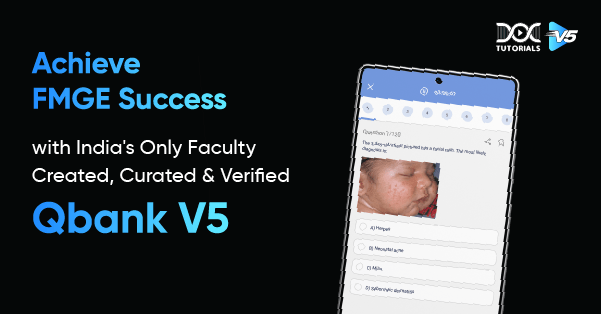
Achieve FMGE Success with “V5 Qbank”

FMGE V5Qbank

Successfully clearing the FMGE is one of the toughest challenges for foreign medical graduates who are planning to practice in India. This assertion isn’t merely ours; it’s backed by data from the National Board of Examination (NBE). In June 2023, the FMGE pass rate was around 10.20%, while for December 2023, it rose to around 20.57%.

Multiple factors can contribute to this low pass rate, including an extensive syllabus, challenging questions, not knowing the importance of subjects, incomplete preparation, insufficient practice, or ineffective study strategies. No matter what the factor is, the question remains: Do you aim to be like those who successfully cleared the FMGE, or risk becoming part of the majority who didn’t?

Exclusive for FMGE October 2026 aspirants. Get the DocTutorials FMGE Revision Booster Plan ₹7,500 just for ₹1. Use code: DilseDT

FMGE V5 Qbank: Must-Have Study Material

Our FMGE V5 Qbank is one of the essential study materials that you need to clear the exam. This is crafted specifically for foreign medical graduates like you to help you prepare effectively for the upcoming FMGE exam 2024. With this, you can clear the exam confidently.

It helps streamline your FMGE preparation process and enhances your chances of success. It ensures you’re in the top percentile of students who can clear the FMGE exam easily. Here’s why it stands out:

1. FMGE Previous Year Questions [PYQs] & High Probability Questions

The V5 Qbank we provide includes a collection of previous year’s FMGE exam questions [PYQs] and high probability questions for the upcoming exam. With all these questions, you can gain valuable insights into the FMGE exam pattern.

Practicing these questions can help you become familiar with the exam format and weightage of subjects, and boost your confidence and performance on the exam day.

“Solving DocTutorials FMGE Qbank is one of the major preparation steps towards clearing your exam. Addition of this Qbank into my exam preparation strategy boosted my confidence and helped me understand the type of questions that can come in the final exam,” – Dr Bheem, one of the FMGE Power Pack subscribers.

2. 8,000+ Questions – Test Your Knowledge

Put your knowledge to the test with our FMGE question bank, which helps you sharpen your subject knowledge and makes it easy to clear the exam. Our V5 Qbank is India’s only Qbank that boasts more than 8,000 MCQs and IBQs, covering all 19 FMGE subjects comprehensively.

A wide range of questions from our Qbank covers fundamental concepts to advanced topics, making every question assess your understanding and proficiency. With our FMGE V5 Qbank, you can identify the areas for improvement with precision and make your exam preparation more targeted and effective.

“DocTutorials Qbank is one of the best things I have come across for my FMGE preparation. It has multiple questions that put my knowledge to the test and helped me realize the subjects in which I need improvement. With it, my revision process became structured and efficient.” – Dr. Ranjan, one of the FMGE Qbank subscribers.

3. By Experts for Doctors

Each member of our faculty team boasts over 20 years of experience in guiding and mentoring medical students like yourself. This wealth of expertise ensures that our V5 Qbank delivers unrivaled quality and precision.

One of the best things about our FMGE Qbank is that it is created, curated, and verified by expert faculty. All our faculty team boasts 20+ years of experience in teaching, guiding, and mentoring medical students like you. This wealth of experience ensures that our Qbank offers the utmost quality and accuracy of questions.

With this resource, you are not just preparing for the exam – you are equipping yourself with the depth and breadth of knowledge essential for FMGE success.

“I feel confident enough that with this Qbank by my side, I’ll make my FMGE dream come true. It is the only FMGE Qbank that is perfectly created and verified by experts, evident in every question I came across. Thanks to DocTuorials for providing such effective study material,” – Dr. Rohit, one of the FMGE Power Pack subscribers.

4. Real-Life Clinical Case Scenario-Based Questions

“The integration of real-life clinical case scenario-based questions is one of the most interesting features that sets our V5 Qbank apart from others. These questions make you apply theoretical knowledge to practical situations, solidifying your understanding of core and key concepts.

“Qbank with inclusion of real-life clinical questions is what I’m looking for. This Qbank will be my new favourite study material to boost my FMGE exam preparation.” – Dr. Sunny Marshal, one of the FMGE [Make Your Own Plan] subscribers.

5. Custom Module

With our V5 Qbank, you can generate customized tests. This allows you to learn at your own unique learning pace and preferences. This feature can allow you to strengthen and improve subjects that need your focus. Maximize your chances of success with our custom module Qbank.

“Generating my own test on topics and subjects that need my focus is unbelievable.” – Dr. Sagar, one of the FMGE Power Pack subscribers.

6. Bookmarking Feature

Our V5 Qbank allows you to bookmark challenging or important FMGE questions for later review and clarification. This resource lets you clarify your doubts and understand the topic better.

Become FMGE Topper with Our Qbank

V5 Qbank is the primary resource your hands should be on as it consists of 8,000+ questions, including previous years’ FMGE exam questions and high probability questions for the upcoming FMGE exam. Practice experts created questions that are aligned with the latest exam pattern and help you achieve success.

Eligibility Criteria for the NEET PG Exam

Below are the eligibility criteria for the NEET PG exam according to the National Testing Agency (NTA):

  • Qualification: Students need an approved MBBS degree from the Medical Council of India and MCI registration. 
  • Internship: The candidate needed to finish the internship part no later than June 30th 2025.
  • Registration: Applicants need a provisional or permanent MBBS registration license.
  • Students pursuing their DNB (Diplomate of National Board) course must finish it prior to seeking entry into the system.
  • Students who enrolled in DNB broad speciality courses from January 2019 onward do not qualify for the 2025 admissions.

Eligibility Criteria for Foreign-based Medical Graduates

To practice medicine in India, nationals or Overseas Citizens of India must take the Foreign Medical Graduate Examination (FMGE) under the 2002 Screening Test Regulations from the National Board of Examinations. 

  • Every candidate must enrol with the NMC or their relevant medical council and finish their internship by June 30, 2025. 
  • Foreign Medical Graduates must show their FMGE Pass certificate and registration certificate on exam day.

Eligibility Criteria for Foreign Nationals

  • Foreign medical students need not apply for the National Medical Commission temporary permit to take the NEET-PG exam. Foreign nationals do not need NMC registration to participate in NEET-PG. 
  • After paying the required fee, NMC gives students temporary registration that lasts through their postgraduate study at a single medical college.
  • Student eligibility depends on enrollment with their home country’s medical authority and approval of basic medical training by the local medical board.
DocTutorials App Download Now

Latest Blogs

FMGE Exam Study Plan: Strategies and Exam Pattern

FMGE Exam Study Plan | DocTutorials

The Foreign Medical Graduate Examination (FMGE) is a crucial step for Overseas Citizens of India (OCI) and Indians who gained their first medical degree from a foreign university and are looking to practice medicine in India.

With the exam around the corner, particularly for applicants aiming for the January 2026 session, your preparation needs to be top-notch, focused, and goal-oriented. Fortunately, with proper FMGE study plans and utilisation of effective resources, you can confidently excel in this exam.

Keep reading for a detailed insight.

Exclusive for FMGE October 2026 aspirants. Get the DocTutorials FMGE Revision Booster Plan ₹7,500 just for ₹1. Use code: DilseDT

FMGE Exam Pattern 2026: An Overview

Here is a concise summary of the FMGE 2026 exam format:

  • Exam Mode: Computer-Based Test (CBT)
  • Structure: The exam consists of two sections (Part A and Part B) covering 19 medical subjects, from pre-clinical to clinical.
  • Total Questions: 300 Multiple Choice Questions (MCQs)
  • Duration: 5 Hours (2.5 hours for Part A and 2.5 hours for Part B)
  • Marking Scheme: +1 mark for each correct answer; no negative marking for wrong answers
  • Minimum Marks for Qualification: 150 out of 300 (50%)

How to Create the Most Effective FMGE Study Plan?

The Foreign Medical Graduate Examination (FMGE) is not a measure of how much you can study, but how smartly you can prepare and implement what you have already studied in your MBBS.

Here is how you can create the best study plan for FMGE:

  • Familiarise Yourself with the Exam Inside Out

Prior to planning, get to know the FMGE pattern—300 MCQs split across two sessions with no negative marking. Know subject-wise weightage as per NBE guidelines to maximise your efforts. Don’t divide equally across all 19 subjects; concentrate more where marks are high.

  • Create a Realistic and Targeted Study Schedule

The syllabus of FMGE is enormous, so don’t approach it blindfolded. Split your preparation into unambiguous blocks of time. For a 2-month study plan for FMGE, spend the first two weeks on high-yield topics such as Medicine, Surgery, PSM, OBG, and Pharmacology.

The subsequent two weeks should be utilised for completing other subjects such as Pathology, Microbiology, Anatomy, and Physiology. Spend daily hours learning and revising clinical and non-clinical subjects, MCQ practice, and more.

  • Start Practising MCQs Early and Daily

Every topic studied must be followed by an MCQ application. FMGE tests your ability to recall and apply, not just memorise. Use question banks and old question papers to solve at least 100 MCQs a day, in total.

  • Use Limited, Trusted Resources Only

Avoid the pitfall of jumping between too many FMGE study materials. Pick one credible source and stick to it. For better results, take assistance from experts and go through their structured video lectures, short notes, PYQs, and Grand Tests based on the FMGE pattern. Make sure that you do not burden yourself.

  • Prioritise Revision from Day One

Never delay revision in the last few weeks. Revise as soon as you start studying. Keep short notes, one-liners, and flashcards for quick recall. Set up every day’s review sessions and attempt to cover the whole syllabus at least two to three times before the exam.

Active revision strategies and monitoring progress from time to time are your best ideals to gain success. If you are following a 3-month study plan for FMGE, this will offer you enough buffer time to revise at least three times.

  • Top Your Practice with Grand Tests and Mock Practice

Begin trying full-length grand tests from the 5th week. Provide a minimum of 3 tests a week in real exam duration. Analyse each error thoroughly and revisit weak topics at once. This assists in time management, endurance, and enhances confidence in dealing with exam pressure.

Utilise test analysis tools to track your progress and make changes accordingly. Having a 4-month study plan for FMGE allows you even more time to deeply practice and analyse mock test performances.

  • Do Not Ignore Previous Year Questions (PYQs)

Previous Year Questions (PYQs) are very important. FMGE exam repeats ideas and patterns; hence, solving the papers of the last 5 years will make you familiar with them. Practice PYQ as a part of your weekly routine, particularly in the last month.

  • Find and Brush Up Weak Spots

Use Grand Test performance, MCQ results, and self-assessment to pinpoint subjects or chapters where you lack confidence. Dedicate extra time to those areas without ignoring your strengths.

  • Simulate the Real Exam Environment

Develop your mindset to work under FMGE-type situations. Try mock tests in two 150-question sessions with prescribed breaks, much like on test day. This will develop stamina and polish your timing tactics—particularly when to skip, when to guess, and when to proceed.

  • Balance Mindset, Rest, and Health

Smart study schedules also involve resting. Sleep for 6–8 hours to hold on to memory and prevent burnout. Eat properly, drink enough fluids, and take physical breaks. Above all, be mentally resilient.

Do not panic and avoid social media diversion too much, as these are red flags during exams. Have faith in your study plan, irrespective of whether it is a 3-month study plan or a 6-month study plan for FMGE.

FAQs about FMGE Exam Study Plan

  1. How many hours should I study for FMGE?

To prepare effectively for FMGE, aim for around 800–1000 hours of study over 6–12 months. This means studying 4–6 focused hours daily, which totals about 120–180 hours in 30 days.

  1. How can I improve my clinical skills while preparing for FMGE?

Make use of case-based learning, participate in virtual clinical workshops, and discuss various clinical scenarios with peers in order to enhance application-based knowledge.

  1. What are the best online resources to include in an FMGE study plan?

Some of the best resources you can include in your study plan for FMGE preparation are topic-specific video lectures, topic-wise multiple choice questions (MCQs), previous years’ question papers (PYQs), and mock tests.

  1. What are the common mistakes to avoid when making an FMGE preparation?

Some common blunders you can avoid during exam preparation are skipping a study plan, avoiding revisions, not studying complicated topics, taking too much strain, reading without practising MCQs, reading from too many books, improper time management, and so on.

  1. Which subjects should I focus on for FMGE preparation?

Concentrate on Preventive and Social Medicine (PSM), Medicine, Surgery, Pharmacology, Pathology, and Microbiology, since they are very important and often come up in exams.

  1. How should I design my study schedule for FMGE exam preparation?

A daily FMGE study plan should mainly focus on rapid revisions using bookmarks and notes. You should also attend full-length mock tests every 2-3 days to improve time management. Moreover, you can also use FMGE study material like concise notes and previous year’s MCQs flashcards, and apps for last-minute brushing up.

  1. What is the exam pattern of the FMGE examination?

The FMGE exam pattern generally consists of two papers, each with 150 MCQs, for a total of 300 marks. This exam is a computer-based test (CBT), with 2.5 hours allocated for each paper.

The exam is conducted in English, and there is no negative marking for incorrect answers.

  1. What is the cutoff for the FMGE examination?

The qualifying marks under the FMGE exam pattern are 50% or above. This exam is generally conducted by the National Boards of Examination (NBE). Students are usually required to score at least 150 marks to qualify for the exam.

  1. Is six months enough to prepare for the FMGE exam?

Yes, a 6-month study plan for FMGE can be enough if the preparation is well planned and consistent. Following a structured timetable, focusing on high-yield topics, practising MCQs regularly, and revising frequently can help students cover the syllabus and perform well in the FMGE.

  1. Should I prioritise theory or practical questions for FMGE preparation?

An in-depth understanding of theory provides the foundation, while practising clinical and scenario-based questions ensures that you can easily apply knowledge effectively.

Therefore, balancing theory with practical problem-solving improves accuracy, decision-making, and overall performance on the FMGE examination.

Conclusion

FMGE can be a challenging exam, but it’s not impossible to crack. Hundreds of thousands of candidates pass it each year with careful planning, discipline over resources, and focused practice. Time management, clear thinking, and confidence are crucial to the final results.

With only 3–5 months remaining for the FMGE 2026, January session, it’s time to concentrate, weed out distractions, and leave your 100%. Adhere to your FMGE study plans and seek assistance from a reliable ally like DocTutorials, where we offer study materials, question banks, PYQs, video lectures, doubt-clearing sessions, and more.

Join DocTutorials today and explore our FMGE course to excel in the exam.

DocTutorials App Download Now

Latest Blogs

All You Need to Know About FMGE Exam 2026: Your Complete Guide

FMGE Exam

Indian medical graduates who have finished their studies overseas and want to practise medicine in India must appear for the FMGE exam. It is not only a licensing exam, but an assessment of your expertise and preparedness to meet India’s healthcare demands.

Individuals appearing for the FMGE exam 2026 should seek professional guidance from experts, such as DocTutorials, to increase their chances of success.  You can get the knowledge and understanding of what you need to succeed in your FMGE journey from our specialised courses and knowledgeable faculty. 

NBEMS has released the official FMGE 2026 October session bulletin. Click here to download the PDF.

Since NBEMS has not released the official bulletin for the FMGE 2026 October session yet, these dates are highly expected timelines based on historical exam patterns.  

Exclusive for FMGE October 2026 aspirants. Get the DocTutorials FMGE Revision Booster Plan ₹7,500 just for ₹1. Use code: DilseDT

FMGE October 2026: Expected Timeline 

Important Events Speculative Dates 
Online Application Process Starts September 11, 2026 (5 PM)
Application Process Ends September 25, 2026 (11.55 PM)
Correction Window Oct 03 to Oct 19, 2026
Informing the test cityOctober 20, 2026
Admit Card Release Date October 27, 2026
Date of Examination October 31, 2026
Announcement of Result By November 30, 2026 

Note: NBEMS recently announced a preponement of the examination cycle, confirming an additional FMGE session to be held on October 31, 2026 (and shifting to a thrice-a-year exam model). Students should keep an eye on the official natboard.edu.in website for the final detailed schedule and registration window later this year. 

Important FMGE Schedule Update: From 2026, NBEMS has committed to conducting the FMGE three times a year, with examination windows in December/January, April/May, and August/September. In addition, another FMGE examination is scheduled for October 31, 2026; this examination was earlier scheduled for January 9, 2027.

Here’s more information about the FMGE exam, including its importance, syllabus, pattern, mark distribution, and other details.

What is the Purpose and Importance of the FMGE Exam?

The FMGE exam full form is the Foreign Medical Graduate Examination. It was started by the National Board of Examinations (NBE) in 2002 under the Screening Test Regulations. This examination is a screening test for the Indian and Overseas Citizen of India (OCI) graduates who have earned their primary medical degree from an overseas university.

The primary objective of this exam is to ensure that all prospective physicians meet the medical requirements established by Indian authorities before they begin practising here.

Indian and OCI nationals with foreign MBBS degrees who wish to register with the Medical Council of India (MCI) either permanently or provisionally must take the FMGE exam. Successful applicants may also register with State Medical Councils or the National Medical Commission (NMC).

What is the Application Procedure for the FMGE Exam?

The FMGE exam for the October session will take place on October 31st 2026. 

Here is a detailed procedure to apply for the FMGE exam:

Step 1: Visit the official website www.fmge.nbe.gov.in and register as a new user.

Step 2: After registration, log in using your User ID and password.

Step 3: Click on “Go to Application” to start the application process.

Step 4: Fill out the application form with accurate personal and academic details.

Step 5: Upload the required documents, including your scanned photograph and signature, in the specified format.

Step 6: Pay the application fee of ₹6,195 online (includes GST).

Step 7: Carefully review all entered details—only limited corrections are allowed later.

Step 8: Submit your completed application form.

Step 9: Download and print the confirmation page for future reference.

What is the Question Pattern of the FMGE Exam?

The FMGE examination is conducted in an online, computer-based format and focuses exclusively on Multiple Choice Questions (MCQs). Here’s what candidates need to know:

FeatureDetails
Number of Papers2 (Part A & B)
FMGE Exam Time Duration150 minutes per paper (Total 300 minutes)
Number of Questions300 (150 each in Part A and B)
Total Marks300
LanguageEnglish
Type of QuestionsMCQs
Marking Scheme+1 for correct answer, no negative marking
Minimum Passing Criteria150 out of 300 (50%)
Note: As per the recent update, the 150 questions are split into three 50-minute sections (A, B & C). You have to finish 50 questions in those 50 minutes. You can’t jump forward or go back once the time is up.” 

What is the FMGE Exam Marks Distribution and Syllabus?

The exam content is aligned with the MBBS curriculum in India as prescribed by the MCI/NMC. The syllabus covers all pre-clinical, para-clinical, and clinical subjects.

Here’s a breakdown of FMGE exam marks distribution:

Pre & Para Clinical Subjects (Total 100 Marks)

  • Anatomy: 17 marks
  • Physiology: 17 marks
  • Biochemistry: 17 marks
  • Microbiology: 13 marks
  • Pathology: 13 marks
  • Pharmacology: 13 marks
  • Forensic Medicine: 10 marks

Clinical Subjects (Total 200 Marks)

  • Medicine: 33 marks
  • Psychiatry: 5 marks
  • Dermatology & STD: 5 marks
  • Radiotherapy: 5 marks
  • General Surgery: 32 marks
  • Anaesthesiology: 5 marks
  • Orthopaedics: 5 marks
  • Radiodiagnosis: 5 marks
  • Paediatrics: 15 marks
  • Ophthalmology: 15 marks
  • Otorhinolaryngology (ENT): 15 marks
  • Obstetrics & Gynaecology: 30 marks
  • Community Medicine: 30 marks

A balanced preparation across all subjects, with special emphasis on high-yield areas, will significantly enhance your chances of success.

Who is Eligible for the FMGE Exam?

Here are the eligibility criteria for the FMGE exam:

  • Indian Citizens or Overseas Citizens of India (OCI).
  • Must possess a primary medical qualification from a recognised foreign medical institution (verified by the Indian Embassy).
  • Must have the eligibility certificate (if required) as per MCI/NMC guidelines.
  • Completion of MBBS from countries where licensing exams are not required for practice is exempted from the FMGE.

Applications without the required credentials will be summarily rejected.

FAQs About FMGE Examination

  1. Are there any limits to the number of attempts for the FMGE exam?

No, currently there is no cap on the number of attempts for the FMGE exam. Eligible candidates can appear for the exam as many times as needed until they qualify. Each attempt requires completing the application process and paying the exam fee.

  1. Is there an age limit to appear for the FMGE exam?

No, there is currently no upper or lower age limit for taking the FMGE exam. Any eligible Indian or Overseas Citizen of India (OCI) graduate who meets the academic and documentation requirements is eligible to apply, regardless of age.

  1. How and when is the FMGE pass certificate issued after qualifying?

After qualifying, candidates must collect the FMGE pass certificate in person from the National Board of Examinations (NBE) office. The certificate is typically issued 2-3 months after the declaration of results. This certificate is crucial for subsequent registration with the National Medical Commission (NMC) or State Medical Councils.

  1. Are MBBS degrees from all countries accepted in India?

An MBBS degree from any country is valid in India if the medical college where you studied is included in the World Health Organisation (WHO) international directory of medical schools. This listing is essential for foreign medical graduates who wish to practice medicine in India, as it ensures their qualifications meet the standards recognised by Indian authorities.

  1. What is the passing score for FMGE?

To pass the FMGE exam, candidates must score at least 150 out of 300 marks. The exam does not have negative marking, so incorrect answers do not lead to any deduction in the total score.

  1. How many times is FMGE conducted in a year?

The Foreign Medical Graduate Examination (FMGE) is conducted three times a year by the National Board of Examinations in Medical Sciences (NBEMS). In 2026, the examination is being conducted in January, June, and October, providing foreign medical graduates with three opportunities during the year to qualify for medical practice in India.

  1. How do I prepare for FMGE?

To prepare for FMGE, focus on quick revision notes for faster recall during the final month. Practice MCQs daily with an emphasis on conceptual clarity rather than quantity. Additionally, stay updated with official NBE notifications and follow reliable educator platforms for accurate guidance.

  1. What is the pattern of FMGE 2026?

FMGE is an English-medium, computer-based test consisting of 300 multiple-choice questions divided equally into two papers (150 questions each). There is no negative marking

Crucial Update: Each 2.5-hour paper is split into three strict, time-bound sections. You get exactly 50 minutes to answer 50 questions per section, and you cannot skip ahead or return to a previous section once the timer runs out. 

  1. What is the weightage for FMGE 2026?

In FMGE 2026, pre-clinical and para-clinical subjects together carry 100 marks, while clinical subjects have a weightage of 200 marks. This distribution ensures greater emphasis on clinical knowledge while maintaining balanced assessment across all medical subjects.

  1. What is the highest-scoring subject in FMGE?

Among FMGE subjects, Medicine carries the highest weightage with 33 marks, followed closely by Surgery (32 marks), Obstetrics & Gynaecology (30 marks), and Community Medicine (30 marks), making these subjects crucial for maximising the overall FMGE score.

Conclusion

For effective FMGE exam preparation, thoroughly review the MBBS syllabus and dedicate extra effort to areas where you feel less confident. Practice with previous years’ FMGE questions to understand common trends and essential concepts. Create a study schedule that includes ample time for revision and consider joining structured coaching classes or mock test series to strengthen your exam strategy.

DocTutorials offers a comprehensive FMGE course, expert-led classes, mock tests, and interactive sessions. Choosing a reliable resource like us can significantly boost your performance, provide clarity on challenging topics, and keep you updated with the latest guidelines.

DocTutorials App Download Now

Latest Blogs

FMGE 2026 December Exam Date: Fees, Process & Rules

FMGE 2026 December Exam Date

The FMGE 2026 December Exam is an excellent opportunity for foreign medical graduates who aim to get qualified for medical practice in India. The exam, conducted by the National Board of Examinations in Medical Sciences, ensures that international MBBS graduates meet the required professional standards before being allowed to proceed to internships or licensure. The December session, 2026, will involve steps such as online registration, fee payment, document upload, and a correction window, which the candidates will have to follow meticulously. 

As per the tentative schedule, the FMGE 2026 December exam is expected to be held in the 3rd week of December 2026, giving candidates time to prepare effectively. In this guide, we will cover the fees, process, rules, and important details related to the FMGE 2026 December exam. Read on for a detailed analysis!

What is FMGE?

The Foreign Medical Graduate Examination (FMGE) is a mandatory screening test for Indian citizens and OCIs who have a foreign MBBS degree and want to get a licence to practise medicine in India.

The Foreign Medical Graduate Examination (FMGE) is a test of knowledge at a national level held in India, designed for natives of India and OCIs who completed their MBBS outside India and wish to practise medicine in their home country. FMGE, started in 2002, is not an admission test for medical colleges but rather a licensing exam that allows obtaining a registration certificate from the National Medical Commission (NMC) or State Medical Councils. Usually, the test is held twice a year, typically in June and December. There is no restriction on the number of times a candidate can take the FMGE test.

FMGE 2026 Overview

This compulsory Computer-Based Test (CBT), organised by the National Board of Examinations in Medical Sciences (NBEMS), is made up of 300 Multiple Choice Questions (MCQs) divided into two sections. The test does not have any negative marking, and it requires that candidates attain a minimum score of 150 (50%) to be called qualified.

FMGE 2026 is a very significant test for Indian students and OCIs who have completed their MBBS abroad and want to practise medicine in India. The examination is held by the National Board of Examinations (NBE) twice a year. It is conducted in English, and all details are given on the official NBE website.

Here is a detailed overview:

ParticularsDetails
Exam NameFMGE
Full FormForeign Medical Graduate Examination (FMGE)
Conducting BodyNational Board of Examination (NBE)
Exam LevelNational level
Application ModeOnline
Exam ModeOnline (Computer-based) mode
Exam FrequencyTwice a year
CategoryMedical exam
Exam Fee₹6,195 (INR 5,250/- + 18% GST)
Exam DurationPart A – 150 minutesPart B – 150 minutes
Total Marks300
Total Questions300
Marking Scheme+1 mark for the right answer,
Zero negative marks for the wrong answer
Minimum Score150
Passing Percentage50%
Language/Medium of ExamEnglish
Number of Test Cities50
Official Websitenbe.edu.in
Contact DetailsHelpline no – 022 61087595;
Email ID – fmgehelpdesk@natboard.edu.in

What are the FMGE 2026 December Session Dates?

It is anticipated that the online application procedure will begin in the second week of October 2026, and the admit cards will be made available to candidates in the second week, with the examination being tentatively scheduled for the third week of December 2026.

Candidates must adhere to the official timeline strictly in order to ensure that they complete all necessary procedural steps within the allotted time. The following dates are based on the tentative schedule:

EventTentative Date
Online Application/Registration Starts2nd week of October 2026
Last Date for Application Submission4th week of October 2026
Application Edit Window Opens (First)1st week of December 2026
Availability of Admit Card2nd week of December 2026
Exam Date (Tentative)3rd week of December 2026
Result Declaration3rd week of January 2027

What are the Eligibility Criteria for the FMGE 2026 Application Process?

To be eligible, an applicant needs to be either Indian or an Overseas Citizen of India (OCI), hold a degree of Bachelor of Medicine and Bachelor of Surgery (MBBS) from a medical college abroad, and prove that they have completed their medical course before the cut-off date, which will be declared by the NBEMS.

Not all candidates are permitted to sit for the FMGE. Only those who satisfy the stringent eligibility requirements set forth by the NBEMS can proceed with the application process. Reviewing these criteria carefully is the first crucial step. 

Check them out below:

CriterionRequirement Details
Academic QualificationPossession of an MBBS degree or an equivalent primary medical qualification, officially recognised.
Institution LocationThe medical qualification must be acquired from a medical college or university located outside of India.
Course CompletionCandidates must have completed their primary medical course before the specified cut-off date announced in the official notice.
Citizenship StatusApplicants must be either an Indian Citizen or an Overseas Citizen of India (OCI).

How to Fill the FMGE 2026 Online Application?

The process requires sequential steps: online registration, accurate submission of the application form with uploaded documents in the prescribed format, payment of the mandatory ₹7080/- fee via the online portal (which is non-refundable), and finally, taking a printout of the completed form for reference.

The registration process for FMGE 2026 is entirely online and comprises several major steps:

  • Step 1: Official Website Visit: Access the dedicated NBEMS/FMGE portal on the official website.
  • Step 2: New User Registration: Fill in the first registration form so as to obtain your unique User ID and Password.
  • Step 3: Credential Receipt: The login credentials (User ID and Password) will be provided to the candidate via email to the registered address and mobile number through SMS.
  • Step 4: Application Form Completion: Using the provided credentials, open the website and complete the application form in a detailed and accurate manner.
  • Step 5: Document Upload: Upload the candidate’s latest photograph, signature, left thumb impression, and the necessary educational/identity documents after scanning, and make sure that the documents are in the correct size and format.
  • Step 6: Test City Selection: Choose the preferred examination city from the list of available options provided in the form.
  • Step 7: Application Fee Payment: Proceed to pay the required examination fee using the online payment gateway.
  • Step 8: Final Printout: After successful payment (and confirmation of the transaction ID), take a printout of the fully submitted application form for future reference.

Application Fee for FMGE 2026:

  • The FMGE 2026 application fee is to be paid through an online mode.
  • One may utilise Net Banking or a Debit/Credit card for fee payment.
  • The FMGE 2026 registration fee, once paid, will not be refunded.
  • The complete charge will be ₹7080 (₹6000 for the exam + ₹1080 for GST).

Documents Required For the FMGE 2026 Application Form

You must gather all your documents before you start. Having everything ready saves your time. It also helps prevent common mistakes. Ensure your documents are in the correct file size and format.

Here are the documents you need to upload for your FMGE 2026 application:

  • Photo
  • Signature
  • Left Thumb Impression
  • Proof of Birth
  • Medical Qualification
  • Eligibility Certificate
  • Passport
  • ID Proof

The FMGE 2026 registration document list is strict. Always double-check every file you upload.

What is the FMGE 2026 Exam Pattern?

It is a 5-hour-long comprehensive test for 300 marks, divided into two parts, covering three phases of the MBBS curriculum (Pre-clinical, Para-clinical, and Clinical subjects) to evaluate the candidate’s knowledge with the minimum passing requirement of 150 marks.

The FMGE 2026 exam format gives the details of the framework and the layout of the exam for foreign medical graduates who want to work in India. Knowing the pattern of the exam is very helpful for the candidates to prepare well and take the exam with confidence.

FeatureDetails
Total Marks300
Total Questions300 MCQs (Multiple Choice Questions)
Marking Scheme+1 mark for every correct answer
Negative MarkingNo (This is a significant advantage; candidates should attempt all questions)
Exam Duration5 hours (divided into two sessions of 2.5 hours each)
Qualifying StandardA minimum score of 150 out of 300 marks (50%)
Subjects CoveredAll subjects are taught during the MBBS curriculum (Pre-clinical, Para-clinical, and Clinical).

Key Subject Areas in the FMGE 2026 Syllabus

The FMGE 2026 syllabus explores in detail the MBBS curriculum in its entirety and is in line with the core professional knowledge that is essential for medical practice in India. It spans over pre-clinical (e.g. Anatomy, Physiology), para-clinical (e.g. Pathology, Pharmacology), and clinical (e.g. Medicine, Surgery) subjects.

The FMGE 2026 syllabus covers a vast expanse of medical knowledge, aligned with the essential requirements for medical practice in ​‍​‌‍​‍‌​‍​‌‍​‍‌India. Here is a detailed overview:

Subject CategorySample Topics Included
AnatomyGeneral Anatomy, Elements of Anatomy, Regional Anatomy, Embryology, Human Genetics, Radiological Anatomy, Surface Anatomy, Sectional Anatomy, etc.
PhysiologyGeneral Physiology, Body fluids, Nerve and Muscle, Kidney, Skin and Body temperature, Reproduction, Respiratory System, Special Senses, Cardiovascular System, etc.
PathologyCell Injury, Immunopathology, Genetic Disorder, Haematology, Musculoskeletal System, Neuropathology, Respiratory Pathology
PharmacologyDiuretics, Cardio-vascular System, Toxicology, Chemotherapy, Central Nervous System
Forensic MedicineCourts of India, Death, Court Procedure, Changes after Death, Examination of Mutilated Human Remains

What are the Top FMGE 2026 Preparation Tips?

Right preparation for the FMGE test requires a methodical approach that focuses on the knowledge of the examination scheme, giving major clinical subjects (like Medicine and Surgery) the highest priority, engaging in intensive practice through mock tests, and at the same time using only a few standard, trustworthy, and authentic sources for study material.

Adopting a disciplined and well-planned way of working is what will lead to success in the FMGE 2026. This includes:

  • Master the Exam Blueprint: Know in detail the FMGE Exam Pattern, especially the subject weightage and the ‘No Negative Marking’ feature of the test.
  • Strategic Time Management: Creating a well-thought-out study plan will not only allow a student to work efficiently but also give them an opportunity to put more effort and time into the subjects that are difficult or have more weightage.
  • Rigorous Practice: Take regular mock tests and solve previous year question papers under timed conditions. This is essential to assess preparedness, improve speed, and refine test-taking strategies.
  • Rely on Standard Resources: Stick to and revise from the standard, credible textbooks and resources for each subject, avoiding reliance on too many varied sources.
  • Stay Informed: Always stay updated by browsing through the NBEMS official website regularly to check if there are any new notices, changes in the examination pattern, or cut-off dates.

By following these FMGE preparation tips, candidates will be better equipped to tackle the exam.

FAQs about FMGE 2026 December Exam Date

  1. When will the FMGE 2026 December exam be conducted?

The FMGE 2026 December exam is expected to be held in the 3rd week of December 2026. The exact date will be announced once NBEMS releases the official notification.

  1. When is the FMGE 2026 December admit card to be released?

The admit card for the FMGE 2026 December session will probably be released in the 2nd week of December 2026. It needs to be downloaded from the official NBEMS website by the candidates.

  1. What is the exam pattern for FMGE 2026?

FMGE 2026 consists of 300 multiple-choice questions divided into Parts A and B. No negative marking is done, and to pass, candidates must get at least 150 marks out of 300.

  1. What subjects are included in the FMGE 2026 syllabus?

The syllabus covers the topics of MBBS like Anatomy, Physiology, Pathology, Pharmacology, and Clinical disciplines. The topics are based on the medical standards required for practice.

  1. What are the eligibility criteria for FMGE 2026?

Those candidates who are Indian citizens or OCIs and possess an MBBS degree from a foreign medical college are eligible for FMGE. Also, they should complete their medical course before the cut-off date.

  1. What are the FMGE passing criteria?

To pass the FMGE, candidates need to score at least 150 marks out of 300 in the exam. The passing marks are divided across two parts of the exam.

  1. When can I apply for the FMGE 2026?

The application process starts 2-3 months before the exam date. The exam is held in June and December.

  1. How many times can I attempt FMGE?

There is no limit on the number of attempts for FMGE 2026 Exam. You can take it until you pass.

  1. What is the passing mark for FMGE 2026?

Students must score at least 150 out of 300 marks to pass in the FMGE 2026 exam.

  1. How many attempts can we give for FMGE?

There is currently no limit on the number of attempts for the FMGE (Foreign Medical Graduate Examination), allowing candidates to retake the exam as many times as needed until they pass, though new NMC guidelines which might introduce future restrictions like a 3-year/6-attempt limit.

Conclusion

The FMGE​‍​‌‍​‍‌​‍​‌‍​‍‌ 2026 December exam is indeed the turning point for foreign medical graduates to start their careers in India. It has a well-organised format, straightforward eligibility requirements, and an extensive syllabus covering all the core subjects of MBBS, thus making sure that the candidates are up to the national standards for medical practice. If you prepare with the right tactics, keep tabs on NBEMS notifications, and follow the application process carefully, your chances of success increase significantly. 

As the exam is tentatively scheduled for the 3rd week of December 2026, now is the ideal time to organise your study plan and gather all required documents. With a disciplined approach and constant effort, candidates will be able to clear FMGE 2026 and move forward confidently to get their medical licence in ​‍​‌‍​‍‌​‍​‌‍​‍‌India. 

For any additional help regarding your FMGE preparation, DocTutorials offers animated video lectures, hard-copy notes, mock tests, and more, enabling you to ace the exam on your first attempt. 

FMGE preparation simplified by DocTutorials!

DocTutorials App Download Now

Latest Blogs

FMGE Exam Dates, Eligibility, and Registration

FMGE Exam Dates

Preparing to practice medicine in India after completing an MBBS abroad requires more than just academic dedication; it demands clearing one of the most important qualifying exams in the country, the FMGE 2026.

It is also worth noting that the candidates must be vigilant and attentive to every key detail if they want their application and preparation journey to be successful. In this article, we will cover the FMGE 2026 exam dates, eligibility, registration process, and result details to help you prepare with confidence.

Keep reading for a detailed insight.

What is the Foreign Medical Graduate Examination (FMGE)?

The FMGE is a mandatory screening test conducted by the NBEMS for Indian citizens and OCIs with foreign medical degrees to assess their competence for registration with the National Medical Commission (NMC).

The Foreign Medical Graduate Examination (FMGE) is a mandatory screening test for Indian citizens, Overseas Citizens of India (OCIs), and foreign nationals (with specific eligibility) who possess a primary medical qualification awarded by an institution outside India. The National Board of Examinations in Medical Sciences (NBEMS) conducts the FMGE.

It is used to compare the knowledge and skills of these graduates with those of Indian medical graduates and thereby assess their eligibility for registration with the National Medical Commission (NMC) or State Medical Councils (SMCs).

This exam is conducted in a computer-based mode and is generally open for registration twice a year, in June and ​‍​‌‍​‍‌​‍​‌‍​‍‌December.

FMGE 2026 Key Highlights

The FMGE 2026 is a national-level, online (CBT) medical exam conducted twice a year by the NBE, with a total of 300 MCQs worth 300 marks and a fee of 6,195

The Foreign Medical Graduate Examination (FMGE) 2026 is a must for every doctor with a medical degree from abroad who aims to obtain registration to practice medicine in India. The following are the basic details that outline the hallmarks, dates, and importance of the test:

ParticularsDetails
Exam NameFMGE
Full FormForeign Medical Graduate Examination (FMGE)
Conducting BodyNational Board of Examination (NBE)
Exam LevelNational level
Application ModeOnline
Exam ModeOnline (Computer-based) mode
Exam FrequencyTwice a year
CategoryMedical exam
Exam Fee6,195
Exam Duration(Part A – 150 minutes) (Part B – 150 minutes) 
Total Marks300
Total Questions300
Marking Scheme+1 mark for the right answer,
Zero negative marks for the wrong answer
Language/Medium of ExamEnglish
Number of Test Cities50
Official Websitenbe.edu.in
Contact DetailsHelpline no – 022 61087595;
Email ID – fmgehelpdesk@natboard.edu.in

FMGE 2026 Exam Dates

The June session exam is scheduled for June 28, 2026, with the application window details and results date yet to be announced.

The FMGE 2026 exam dates are important for international medical graduates who want to practice in India. The planned exam dates for FMGE 2026 are provided here, helping candidates to organise their exam preparation efficiently. The exam is held twice a year:

For June Session

EventDates
Availability of the application formApril 21, 2026 
End date to submit the applicationMay 11, 2026 
The correction window opensMay 16, 2026, to May 18, 2026 
Final Selective Edit Window to rectify Deficient/Incorrect Images
1. Photographs
2. Signatures
3. Thumb Impression
May 21, 2026, to June 10, 2026. 
Informing the test city of the ApplicantsJune 17, 2026 
Issue of Admit CardJune 24, 2026 
FMGE 2026 ExamJune 28, 2026
FMGE Exam Result Declared DateJuly 07, 2026 
Note: The official notification for the December 2026 session is expected to be released by NBEMS in the last quarter of the year. Candidates should monitor the official website (natboard.edu.in) for the confirmed schedule. 

For December Session

EventsDates 2026
The Online Application form startsDate yet to be announced.
Last date to applyDate yet to be announced.
The edit window opensDate yet to be announced.
Release of the Admit CardDate yet to be announced.
Conduct of the examDate yet to be announced.
Declaration of ResultDate yet to be announced.

FMGE June 2026 Eligibility Criteria

To be eligible, a candidate must be an Indian citizen or OCI with a recognised foreign medical qualification, have the final medical course result announced, and possess an Eligibility Certificate from the National Medical Commission (NMC).

The NBE publishes the FMGE eligibility criteria in its official information brochure, and only those who meet these requirements can proceed to submit the FMGE June 2026 application form:

  • The candidate should be an Indian citizen or an Overseas Citizen of India.
  • The applicant is expected to possess a primary medical qualification from a recognised institute that is verified by the Indian Embassy located in that country.
  • The result of the final examination of the medical course should have been announced.
  • Candidates must have documentary evidence to support their claim to be medically qualified.
  • The candidate should have received an “Eligibility certificate” from the National Medical ​‍​‌‍​‍‌​‍​‌‍​‍‌Commission.

FMGE 2026 Registration

Registration for the FMGE 2026 is an online-only process on the official NBE website, which involves creating an account, filling out the application form, uploading documents, selecting a test city, and paying the ₹6,195 fee.

FMGE 2026 registration will be done online only on the official NBE website: natboard.edu.in. The application form for the June session and the last date to apply will be released soon. Here are the steps:

  • Step 1: Visit the NBE Website: Go to natboard.edu.in.
  • Step 2: Register: Create an applicant account with basic details.
  • Step 3: Fill Application: Provide all details as per the online application form.
  • Step 4: Upload Documents: Upload a passport-sized photo, ID proof, degree certificate, etc.
  • Step 5: Choose Test City: Indicate the exam centre where you want to take the test from the list of available centres.
  • Step 6: Pay Fee: Do the payment of ₹6,195 using a credit/debit card or net banking.
  • Step 7: Submit: Finalise and submit your application form.
  • Step 8: Confirmation: Save and print your application confirmation for records.

FMGE 2026 Exam Pattern

The FMGE 2026 is an online Computer-Based Test (CBT) lasting 5 hours (2.5 hours per part), comprising 300 multiple-choice questions (+1 mark for correct, no negative marking) divided into Pre-/Para-Clinical (Part A) and Clinical (Part B) sections. 

The FMGE 2026 exam pattern is an online computer-based test (CBT) aimed at assessing the medical knowledge of foreign medical graduates. This test includes 300 multiple-choice questions equally divided into two sections. 

The duration of each part is 2.5 hours. 1 mark will be given for every correct answer. No negative marking is there. Also, the entire test will be in English. Here are the details: 

FeatureDetails
ModeOnline (CBT)
Total Questions300 (MCQs)
Sections• Part A (Pre-/Para-Clinical): 150
• Part B (Clinical): 150
Marking Scheme+1 mark for each correct answer,
No negative marking for incorrect answers
Duration5 Hours (2.5 hrs for each)
LanguageEnglish

Key Notes:

  • Questions are multiple-choice, and there is no negative marking for incorrect answers.
  • There is a break between Part A and Part B.
  • As per the new 2026 update, each part is strictly divided into three time-bound sections of 50 minutes (50 questions each), and you cannot return to a section once its timer ends. 

FMGE 2026 Syllabus

The syllabus covers key concepts of medical knowledge required for practising in India, including subjects like Anatomy, Physiology, Pathology, Pharmacology, and Forensic Medicine, among others.

The FMGE 2026 Syllabus specifies the subjects and topics that medical graduates need to study before writing the Foreign Medical Graduate Examination. It includes the key concepts of medical knowledge required for the practice of medicine in India:

SubjectTopics
AnatomyGeneral Anatomy, Elements of Anatomy, Regional Anatomy, Embryology, Human Genetics, Radiological Anatomy, Surface Anatomy, Sectional Anatomy, etc.
PhysiologyGeneral Physiology, Body fluids, Nerve and Muscle, Kidney, Skin and Body temperature, Reproduction, Respiratory System, Special Senses, Cardiovascular System, etc.
PathologyCell Injury, Immunopathology, Genetic disorder, Haematology, Musculoskeletal System, Neuropathology, Respiratory Pathology
PharmacologyDiuretics, Cardio-vascular System, Toxicology, Chemotherapy, Central Nervous System
Forensic MedicineCourts of India, Death, Court procedure, Changes after death, Examination of mutilated human remains.

FMGE Exam Result 2026

Once the results are outthe FMGE June 2026 results are available by logging into the official NBE portal, and the candidates who qualify need to collect their pass certificates from the NBE office personally for NMC/SMC registration.

The FMGE results for 2026, both the June and December sessions, will be announced on the official website. Candidates can access their scores by signing into the official NBE portal with their credentials, as the result will not be sent by post or email. Scorecards will be available for download about one week after the declaration of the results.

Qualified candidates have to come in person to collect their pass certificates from the NBE office upon submission of the necessary original documents. This certificate is obligatory for the registration application at the National Medical Commission (NMC) or the State Medical Council (SMC) to be able to practice medicine legally in India.

FMGE 2026 Cutoff Marks

To qualify for the FMGE 2026, all candidates, regardless of category, must score a minimum of 150 out of 300 total marks, which is 50%.

The cut-off marks for the FMGE 2026 examination are clearly outlined to guarantee a standard level of qualification throughout. Any candidate, irrespective of their category, is required to score a minimum of 150 out of 300, i.e., 50% of the total marks, to be considered as qualified. 

This passing criterion applies equally across all categories:

Cutoff CriteriaDetails
Passing Marks150 out of 300 (50%)
ApplicabilitySame for all categories

Preparation Tips for FMGE 2026

Effective preparation requires starting early due to the extensive syllabus, focusing on high-yield topics, ensuring conceptual clarity, practising a large number of MCQs and mock tests, and regular revision.

Before you begin your exam journey, here are some essential FMGE 2026 preparation tips to help you study smarter and score better:

  • Start Early: The FMGE 2026 syllabus is extensive; hence, it is advisable to start your preparation as early as possible.
  • Understand High-Yield Topics: Identify the topics that have been consistently asked and carry more marks by scrutinising the previous years’ papers.
  • Conceptual Clarity: Work with the concepts that you know rather than just memorising the formulae.
  • Practice MCQs: Solve a large number of multiple-choice questions from various sources.
  • Mock Tests: Regularly attempt full-length mock tests to simulate exam conditions, improve time management, and identify weak areas.
  • Revision: Regular revision is the key to memorising the studied material.
  • Stay Updated: Be sure to check the official NBEMS website frequently for any announcements or changes related to FMGE 2026.

FAQs about FMGE 2026

  1. What is the FMGE 2026 exam, and why is it conducted?

FMGE 2026 is a licensing exam held by NBEMS, which evaluates if a foreign medical graduate is competent enough to practice medicine in India.

  1. Who is eligible to appear for FMGE 2026?

Indian citizens and OCIs with a recognised foreign medical qualification and an NMC Eligibility Certificate (if applicable) can apply.

  1. When will the FMGE 2026 January session exam take place?

The FMGE January 2026 exam is scheduled for 17th January 2026, with results expected by 17th February 2026.

  1. How many times is FMGE conducted in a year?

FMGE is held twice a year, and candidates can attempt either or both sessions until they qualify.

  1. How can I register for FMGE 2026?

Registration can be done online at natboard.edu.in, where you need to fill out the application form, upload your documents, select your test city, and make the payment.

  1. What documents are required on the FMGE exam day?
    The FMGE admit card and a valid original photo ID proof are mandatory for the FMGE exam.
  1. Which Subjects should you prioritise for FMGE Jan 2026?

You should prioritise subjects like Pharmacology and Pathology for the FMGE Jan 2026. The FMGE January 2026 also needs you to be good at Microbiology and Forensic Medicine.

  1. Is FMGE getting harder every year?

The Foreign Medical Graduate Examination is getting really tough every year. It is becoming more about clinical things rather than just being very hard.

  1. How many papers are there in the FMGE exam?

The FMGE exam 2026 will have two parts: Part A and Part B. Each part will consist of 150 multiple-choice questions.

  1. What is the duration of the FMGE 2026 exam?

The duration of the FMGE 2026 exam is 2 hours and 30 minutes, with a break between parts.

Conclusion

FMGE 2026 is a major milestone for foreign medical graduates seeking to practice medicine in India. With the right preparation, a clear understanding of the eligibility criteria, exam pattern, syllabus, and important dates, candidates will be able to handle the whole process confidently. 

If you plan well, it is totally possible to pass FMGE 2026, and that will be a major step forward in your medical career in ​‍​‌‍​‍‌​‍​‌‍​‍‌​‍​‌‍​‍‌​‍​‌‍​‍‌India. For added guidance, DocTutorials can be your study partner. We offer V5 integrated videos, a quick revision program, and a crisp Qbank with 8000+ MCQs mind maps for retention.
Join DocTutorials today and explore our FMGE course to excel in your medical exam!

DocTutorials App Download Now

Latest Blogs

FMGE Revision: Key Mistakes to Avoid in the Final Days

FMGE Key Mistakes to Avoid

The Foreign Medical Graduate Examination, or FMGE, is one of the most difficult tests for Indian students who have graduated with an MBBS from a foreign medical institution but still want to practise medicine in India. The exam is famously known for creating anxiety even among the most diligent candidates, largely due to its consistently low pass percentage, which usually hovers below 25%.

The reality is that low success rates are not solely due to the syllabus being vast or difficult. Many candidates fail because of repeated, avoidable mistakes that cost crucial marks on exam day. If you are an aspirant preparing for FMGE and want to avoid the pitfalls that have affected many others, this guide is tailored for you. 

Keep reading for detailed insight!

Top 12 Mistakes to Avoid When Preparing for FMGE

For FMGE aspirants, staying away from these typical mistakes is what will bring them to success. Here’s a detailed look at these mistakes:

  1. Not Familiar with the Exam Pattern and Weightage

One of the significant mistakes that students make is not recognising the pattern of the exam and subject weightage. FMGE has 300 multiple-choice questions (MCQs) divided into two sessions. Thankfully, there is no negative marking, and therefore, all questions must be attempted.

All subjects are not of the same value. Clinical subjects such as Surgery, OBS-GYN, Medicine, and PSM carry more weightage, and pre-clinical subjects such as Anatomy and Physiology carry fewer questions. 

Thus, a better approach is to prioritise clinical subjects while maintaining all significant pre-clinical and para-clinical subjects, such as Pathology, Pharmacology, and Microbiology. Time management will allow complete concept coverage without compromising high-yield topics.

  1. Not Adhering to Previous Year Questions (PYQs)

A common misconception is that FMGE questions will always be entirely new. Most students do not pay much attention to past year question papers; they use only textbooks or notes. In reality, the exam often revisits concepts from past years, sometimes in modified forms.

Practising the last five years of PYQs enables one to notice high-yield topics and common themes, e.g., tuberculosis, obstetric emergencies, CNS infection, and cardiovascular disease. Finding trends and applying them to revision can be useful and maximise scoring impact. PYQs are a goldmine if approached with care.

  1. Absence of a Formatted Study Plan

Unplanned or random studies are another key reason for poor outcomes. The majority of candidates study only the material they prefer or are comfortable with, leaving the key areas of the syllabus untouched. As there are 19 subjects to be covered, blind studies are not a possibility.

Keeping a well-planned schedule is essential. Whether you are following a 100-day planner or a six-month calendar, breaking down the syllabus into weekly and daily goals supports progress tracking and ensures thorough coverage. A minimum of two full revisions before the exam is also essential. Consistency in study habits outweighs last-minute cramming, and even short daily study sessions are more effective than irregular, intensive bursts.

  1. Over-Reliance on Multiple Resources

The digital content explosion has resulted in students trying to study from numerous resources such as coaching notes, guidebooks, PDFs, and mobile apps. This practice can cause aspirants to receive too much information, get lost in it, and only have a shallow grasp of the concepts.

The ideal approach is to select one primary resource, such as coaching notes, a QBank, or recorded lectures, and stick to it. Textbooks can be used as reference material when clarification is needed. In the final months, focus should shift entirely to revision and reinforcement, rather than attempting to cover new material.

  1. Memorising Without Understanding

FMGE supports learning through understanding of concepts and not mere memorisation. While memorisation may help for straightforward factual questions, it often fails in complex, multi-layered clinical MCQs.

Some of the areas that require conceptual understanding are:

  • Acid-Base Disorders (ABG)
  • Cardiac Cycle & Valvular Disease
  • Pulmonary Function Test (PFT) Interpretation
  • Heart Blocks and JVP
  • Thyroid Function Tests

Take the help of mentors or faculty to identify the most significant conceptual themes and maximise preparation time.

  1. Neglecting Image-Based Questions

FMGE has progressively been integrating image-based and case-based questions, aiming at testing the candidates’ skills of knowledge application rather than mere recall.

Neglecting image practice in subjects like Radiology, Pathology, Microbiology, and Dermatology can result in missed scoring opportunities. Regularly practising image-based questions in mock exams and revising standard images from notes ensures candidates are well-prepared to tackle this section confidently.

  1. Ignoring Revision

Revision is not often given the credit it deserves. Most students stick to covering new topics until the end, and only then do they think about going back for revision. Without regular revision, the memory of the previously learnt concepts weakens, and they even fade away.

The last 30-40 days should be entirely devoted to revision. Use short notes, flashcards, and PYQs to revisit critical areas. Pay extra attention to subjects like Pharmacology and Biochemistry, ensuring every topic is revised at least twice before the exam.

  1. Poor Time Management During the Exam

Even well-prepared students sometimes lose marks owing to time mismanagement. They usually spend too much time on difficult questions and then miss out on easy ones simply because they rush through them.

The best way is to adopt the two-pass strategy, i.e., do the easy part first and then go back to the difficult questions. Since there is no negative marking, it is better to attempt all questions. Often, it is time management that decides the fate of the candidate rather than their knowledge.

  1. Underestimation of Clinical Subjects

While pre-clinical and para-clinical subjects remain important, FMGE is predominantly clinically orientated. Excessive focus on Anatomy or Physiology at the expense of Medicine, Surgery, or Obstetrics is a common mistake.

Spend at least 60% of the time on clinical subjects, coupled with basic sciences. For instance, correlating appendicitis in Surgery with its pathology and medication management maximises retention and comprehension. This integrated approach strengthens problem-solving skills essential for FMGE.

  1.  Not Taking Mock Tests Seriously

Mocks are not just for marks; they are also important for exam temperament, time management, and identifying weak areas. The majority of candidates put off mocks because they fear bad marks, but that can prove to be counterproductive instead.

Start with subject-wise tests, then full-length mock tests. Ideally, candidates should attempt 10–15 grand mocks before the actual exam. Analysing mistakes and revisiting weak areas immediately after each mock is critical for continuous improvement.

  1.  Forgetting Mental and Physical Well-being

One of the most prevalent and overlooked errors is forgetting mental and physical well-being. Excessive academic concentration in the absence of adequate sleep, nourishment, and exercise results in burnout, anxiety, and less focus.

Success is more assured if preparation is accompanied by a healthy lifestyle. Get 7-8 hours of proper sleep, eat balanced, healthy food, and also incorporate light physical exercise or meditation into daily life. Physical fitness and mental clarity are as much a necessity as question banks and books to pass FMGE.

  1.  Overthinking During the Exam

Overthinking for the FMGE exam is a silent but mammoth score-wrecker. Changing answers at the last minute often does more harm than good. Research and FMGE mentors suggest that your first instinct is correct around 60% of the time. Constant second-guessing can lead to unnecessary mistakes and reduce confidence in your preparation.

Effective strategies to prevent overthinking:

  • If you’re fairly certain of your first reaction, then proceed.
  • Refrain from going back to already answered questions unless there’s a rational, strong reason to do so.
  • Enhance clarity of concepts on all subjects. Uncertainty usually follows as a consequence of knowledge gaps and, hence, overthinking and final-minute doubts.

By developing clarity and believing in your practice, you will be able to remain collected and answer quickly during the examination.

How to Avoid Errors Before the FMGE Exam?

Passing the FMGE is required for permanent medical registration from the National Medical Commission (NMC) for foreign medical graduates. All of these errors can be avoided with planning and organised preparation. Below are expert tips to enjoy a worry-free experience on exam day:

  • Rest and Sleep Well: Sleep 7–8 hours every day so that the brain can store memory and perform at its optimum.
  • Keep Yourself Fit: Exercise regularly and eat a good diet to remain active and alert during exam time.
  • Finish Syllabus Early: Complete the entire FMGE syllabus prior to the exam, at least one month ahead of time. Utilise the last month for full-length test attempts and serious revision.
  • Read Carefully: While appearing for an examination, read each question slowly and with attention. Avoid rushing and select answers in a tranquil and focused state of mind.
  • Prepare your Exam Day Strategy: Organise your exam day, such as timing, breaks, and question strategy, to avoid silly errors and undue tension.
  • Develop Self-Confidence: Attempt as many mock tests as possible. Practice also develops confidence and makes one less apprehensive, and improves performance.
  • Seek Expert Guidance: Analyse mock test marks and seek guidance from guides to identify loopholes in preparation and develop weak areas gradually.
  • Master Time Management: Learn how to manage time and solve problems so that you can comfortably go through the whole question paper in the allocated time.

Following these steps, the candidates can reduce avoidable mistakes and make preparation worthwhile on exam day.

FAQs about Key Mistakes to Avoid in the Final Days of FMGE Revision

  1. What is the most common mistake made by FMGE aspirants in the last few weeks?

The most common mistake is choosing improper study material. Most of the aspirants opt for massive, bulky books, assuming that this will improve performance. In place of it, accurate and FMGE-focused resources are more suitable for strategic revision.

  1. How to deal with FMGE exam stress?

The stress can be dealt with by meditation, regular mock tests, and guidance from experienced mentors. Mindfulness training and systematic preparation reduce fear and increase confidence.

  1. What are the topics that need maximum priority for the last month?

The whole 19 topics should be revised carefully for the final month. To some extent, emphasising high-yield and repeating topics is helpful, but none of the topics should be left out entirely. Constant revision of all subjects is the secret of a balanced strategy.

  1. Why is conceptual knowledge better than memorisation for FMGE?

FMGE questions will test application of knowledge and not recall. Although memorisation may be feasible in the case of direct questions, complex clinical MCQs like acid-base disorders or cardiac cycles involve brief conceptual knowledge.

  1. Should a candidate give up if they feel underprepared just before the FMGE exam?

Absolutely not! Persistence is important even in the case of anxiety or the belief of being unprepared. Most of the applicants who remain faithful till the last day end up passing with flying colours.

  1. How can I improve my revision for the FMGE in the last few weeks of preparation?

The best way to improve your performance in the last phase of the revision process is to revise your material in multiple rounds. In the first round, revise all your subjects completely. In the second round, focus more on your weak areas and on the topics that are most likely to be included in the exam. In the third round, just before the exam, revise only those topics that tend to change frequently and those concepts that you tend to forget or confuse.

  1. How can I avoid overthinking while answering the questions during the FMGE exam?

It is very important to learn to trust your first thought while answering the questions and choosing the correct options in the FMGE exam. In most cases, your first thought will be correct. It is very important to avoid changing your options unless and until you remember a fact that clearly contradicts your initial thought.

  1. What are the common mistakes that need to be avoided during the FMGE examination?

7 common exam mistakes and how you can avoid them are as follows:

  • Not preparing well: It is very important to stay calm and revise your material smartly. Panicking will only worsen your performance.
  • Not checking the exam schedule properly: It is very important to confirm the date and time of the exam.
  • Last-minute confusion on exam day: Plan your schedule properly and avoid confusion on the day of the exam.
  • Blanking out during the exam: If you are stuck on a question, take a few deep breaths and move on to the next question.
  • Poor time management: Don’t spend too much time on a single question.
  • Misreading the question: Make sure to read all the questions carefully, especially words such as ‘except’ or ‘most likely.’
  • Not knowing how to approach a question: Make sure to solve enough MCQs to be familiar with common patterns.
  1. Are PYQs enough to clear FMGE?

PYQs are extremely important, but it is not advisable to solely rely on PYQs. It is recommended to use standard FMGE study material, follow NBE guidelines, revise previous years’ questions properly, and use good MCQ books. While studying, it is advisable to prepare short notes or flashcards during your first reading, which can be helpful later on.

  1. How can I manage time and speed while attempting FMGE?

You can keep an eye on the time using a watch. If you are spending too much time on a single question, it is always better to take an educated guess and move on to the next one.

Conclusion

FMGE cracking is not a question of intelligence; it is all about methodical handling, sincere effort, and targeted preparation. Steer clear of pitfalls and leave the candidates in the vanguard to achieve the top marks. Early preparation, judicious practice of PYQs and MCQs, and constant revision are essential steps. Equally important is maintaining one’s physical as well as mental health in good condition, as these directly influence concentration, memory, and performance during exams. 

The objective should never be to pass but to glide effortlessly beyond the 150-mark barrier. In this endeavour, opting for study partners like DocTutorials can be a smart move. They provide access to concise, high-yield notes, video lectures, mock tests, question banks, and more that help solidify your preparation. Check out our FMGE courses today!

DocTutorials App Download Now

Latest Blogs

FMGE Revision: High-Yield Topics You Can’t Afford to Miss

FMGE High Yield Topics | DocTutorials

The Foreign Medical Graduate Examination (FMGE) is an examination that Indian and Overseas Citizens of India (OCI) can sit for when they have pursued medical education abroad and would like to practise medicine in India. The examination takes place twice annually in June and December, conducted by the National Boards of Examination (NBE).

The next FMGE test for June 2026 will take place on 28 June 2026, and the registrations for the exam are anticipated after the exams are conducted. This guide explains the most significant high-yield FMGE topics, subject-wise trends, and efficient last-month revision techniques to enable you to study wisely and achieve a better score.

Keep reading!

Reason to Focus on FMGE High-Yield Topics

Studying high-yield topics for FMGE revision is the most intelligent approach to maximising your score within a shorter duration. With 19 subjects and a voluminous FMGE 2026 syllabus, it is not possible to cover everything thoroughly. Learning high-yield areas of study makes you study tactfully and deliver your best on the day of the exam.

High-yield topics are those that:

  • Have recurred in the past FMGE question papers
  • Have firm clinical significance and conceptual worth
  • Provide speedy, high-marking potential upon careful revision

Focusing on such questions guarantees your optimal usage of the limited time and the highest possible performance in exams.

FMGE Subject-Wise Weightage 

The FMGE exam comprises pre-clinical, clinical, and para-clinical subjects. The following section gives you a detailed insight into subject-wise weightage so that you can focus on the high-yield areas for your preparation for the FMGE examination.  

Pre- and Para-Clinical Subjects (100 Marks)

SubjectMarks
Anatomy17
Physiology17
Biochemistry17
Pathology13
Microbiology13
Pharmacology13
Forensic Medicine10
Total100

Clinical Subjects (200 Marks)

SubjectMarks
Medicine & Allied Subjects
Medicine33
Psychiatry5
Dermatology & STD5
Radiotherapy5
General Surgery & Allied Subjects
General Surgery32
Anaesthesiology5
Orthopaedics5
Radiodiagnosis5
Other Clinical Subjects
Paediatrics15
Ophthalmology15
Otorhinolaryngology15
Obstetrics & Gynaecology30
Community Medicine30
Total200

Clinical vs Pre-Clinical Subject-Wise Weightage 

Knowing the FMGE subject weightage assists you in organising your study time most efficiently:

  • Clinical Subjects (60%) — Medicine, Surgery, Obstetrics & Gynaecology, Paediatrics, Community Medicine, ENT, and Ophthalmology account for most of the marks.
  • Preclinical and Paraclinical Subjects (40%) — Anatomy, Physiology, Biochemistry, Pathology, Pharmacology, Microbiology, and Forensic Medicine account for the remaining marks.

Trend Analysis of Weightage 

Based on the insights from past FMGE papers:

  • There’s increasing emphasis placed on pathophysiology and the integration of pharmacotherapy.
  • National health programmes and NMC-suggested topics are asked more frequently.
  • The exam in the present time emphasises clarity in concepts rather than memorisation by rote, examining actual understanding instead of recall.

Top High-Yield Subjects and Topics for FMGE Revision

The following sections explain high-yield topics across the 19 subjects in the FMGE syllabus. Aspiring candidates can use this subject-wise breakdown to target the important and clinically relevant areas: 

SubjectImportant High-Yield Topics
1. AnatomyBrachial plexus and lesions, cranial nerves,
foramina contents, limb nerve injuries,
embryology (pharyngeal arches, heart),
histology of liver, kidney, glands
2. PhysiologyRenal clearance & acid-base balance,
ECG & cardiac cycle, compliance &
V/Q mismatch, endocrine feedback loops,
sensory pathways & reflexes
3. BiochemistryEnzyme kinetics & inhibition, vitamin
deficiencies, metabolism (glycolysis,
TCA, urea), molecular biology (DNA, RNA),
clinical case-based questions
4. PathologyCell injury, acute/chronic inflammation,
hallmarks of cancer & tumour markers,
anaemia & leukaemia types,
hypersensitivity reactions, systemic diseases
5. MicrobiologyGram +ve/-ve organisms, viruses (HIV, Hepatitis, COVID),
superficial/systemic mycoses,
malaria & leishmania, basic immunology & vaccines
6. PharmacologyAutonomic drugs, antibiotics (MOA & resistance), anticancer drugs,
CNS & CV drugs,
ADRs and antidotes
7. Forensic MedicineMedicolegal IPC sections, types of injuries,
poisoning (OPC, alcohol, acids),
postmortem signs, and legal duties of a doctor
8. PSM (Community Medicine)Epidemiological studies & statistics,
vaccine schedule & cold chain, health committees/programs,
levels of prevention,
NHM initiatives
9. OphthalmologyVisual pathways, cataracts, glaucoma
types, conjunctivitis & corneal ulcers,
fundus changes in systemic disease
10. ENTEar anatomy & hearing tests, otitis media,
tonsillitis, nasal polyps & epistaxis,
vestibular disorders, laryngeal anatomy
11. MedicineDiabetes & thyroid disorders, hypertension
& heart failure, stroke & epilepsy,
infectious diseases (TB, HIV, dengue),
ECG & ABG interpretation
12. SurgeryShock types & fluid therapy, thyroid &
breast surgery, hernias,
burns classification & management, trauma protocol (ATLS)
13. Obstetrics & GynaecologyANC protocols, preeclampsia/eclampsia,
partograph & fetal monitoring, contraception
& MTP Act, gynaecological cancers
14. PaediatricsGrowth milestones, vaccine-preventable
diseases, neonatal jaundice/sepsis, pediatric emergencies, malnutrition
15. OrthopaedicsFractures (Colles’, supracondylar), bone tumours, infections, orthopaedic splints/casts, arthritis & osteoporosis
16. DermatologyBacterial/viral/fungal infections, urticaria,
eczema, autoimmune conditions (pemphigus),
STDs, topical drugs
17. PsychiatryDepression, schizophrenia, bipolar disorder,
suicide risk, defence mechanisms, substance abuse
& detox drugs
18. RadiologyImaging basics (X-ray, CT, MRI),
signs in TB, pneumothorax, fractures, contrast studies,
anatomy on images, radiation safety
19. AnesthesiologyGeneral/regional anaesthesia, airway
management, CPR, BLS/ACLS, spinal &
epidural blocks,
intraoperative monitoring

Top 10 High-Yield Subjects for the FMGE Exam 

The above section gave you a brief overview of the necessary topics in all 19 subjects included in the FMGE syllabus. Now, the following section has narrowed down the top 10 high-yield subjects that you can focus on during your revisions. 

Tackling these areas will help candidates cover the frequently asked questions:

SubjectHigh-Yield TopicsRevision Tip
AnatomyBrachial plexus & limb nerve injuries – Thorax (heart & lungs)
Cranial nerves & brainstem
Embryology (pharyngeal arches)
Use diagrams, 3D apps, cadaver images; expect image-based questions
PhysiologyECG & cardiac cycle – Respiration & blood gas exchange
Acid-base balance & renal clearance
Endocrine feedback loops
Focus on concepts, flowcharts, and graph-based questions
PathologyCell injury & adaptations
Inflammation & healing
Anaemia & leukaemia
Renal, liver, lung pathology
Use tables/flowcharts; study histopathology images
PharmacologyANS drugs
Antibiotics & resistance
CNS & cardiovascular drugs
Chemotherapy & adverse reactions
Draw classification charts; use mnemonics & revision cards
MicrobiologyBacteriology (TB, Staph, Strep)
Virology (HIV, Hepatitis)
Parasitology (Malaria, Leishmania)
Diagnostic tests & sterilisation
Use flashcards; revise immunology, and link bugs with diseases
Community MedicineBiostatistics & epidemiology
National health programmes
Vaccination schedules
Occupational & environmental health
Revise tables daily; focus on NMC-recommended topics
MedicineCardiovascular: MI, CHFRespiratory Tract Diseases: TB, COPD, AsthmaNeurology: Stroke, seizuresEndocrine: Diabetes, thyroid disordersFocus on common diseases, diagnosis, and management; practise case-based questions
SurgeryShock, burns, wound healingHernias, thyroid & breast surgeryOrthopaedic fractures & dislocationsUrology infectionsPractise X-ray, surgical instruments, and image-based questions
PaediatricsGrowth milestones
Neonatal jaundice, birth asphyxia
Malnutrition & vitamin deficiencies
Vaccination schedule
Focus on milestones, emergencies, and practical vaccination use
OBGLabour & delivery stages
Eclampsia & high-risk pregnancies
PCOD, fibroids, gynaecological issues
Contraception & sterilisation
Keep pregnancy charts handy, revise female reproductive anatomy, and know contraceptive indications.

Last-Minute Revision Tips Before the FMGE Exam

  • Prioritise Accuracy over Quantity: FMGE examination results don’t focus on ranks. To pass, candidates need to score at least 150 out of 300 marks (50%). Therefore, focus on revising the subjects you have learnt, instead of learning new topics last-minute superficially. 
  • Schedule and Structure Your Time Accordingly: One effective way to structure your study schedule is to use 3-hour study blocks. Set specific goals that you can achieve during these blocks and add short breaks in between. Avoid unnecessary distractions. 
  • Stick to Trusted Notes: Avoid picking up new books or resources in the final week. Rely on your existing revision notes and refer to detailed material only if a concept needs quick clarification.
  • Maintain Your Health: Good sleep, proper rest, and diet are non-negotiable when you are preparing for examinations like FMGE. Good health will support memory retention, focus, and mental stamina, which are necessary for long study hours. 

FMGE Exam Important Information and Dates

Here is a quick overview of the key details and important dates for the FMGE examination so that you can plan your FMGE 2026 preparation and schedules effectively:

FMGE Exam 2026: Key Details 

ParticularsDetails
Exam NameFMGE
FMGE Full FormForeign Medical Graduate Examination
Conducting BodyNational Board of Examinations (NBE)
Official Websitehttps://natboard.edu.in/
Exam LevelLicensing Examination
FrequencyTwice a year (June and December)
Mode of ExamOnline (Computer-Based Test)
Total Questions300
Total Marks300
Exam DurationPart A – 150 minutes Part B – 150 minutes
Registration Fee₹6,195
Number of Test Cities50

FMGE Exam 2026: Important Dates

Stay updated with these FMGE 2026 dates and plan your preparation well in advance to avoid last-minute stress:

FMGE 2026 EventsImportant Dates
FMGE 2026 Registration BeginsDate yet to be announced.
Admit Card ReleaseDate yet to be announced.
FMGE 2026 Exam Date28 June 2026
FMGE 2026 Result DeclarationDate yet to be announced.

FMGE Exam Pattern

The FMGE exam is a computer-based test conducted in English. It features a total of 300 multiple-choice questions that are split into two parts: Pre-Clinical & Para-Clinical (Part A) and Clinical (Part B). A minimum score of 50% (150 marks) is required to pass the exam.

FeatureDetails
Exam ModeOnline (CBT)
Number of Questions300
Question TypeMCQs
LanguageEnglish
Exam Duration5 hours (2 sessions)
Passing CriteriaMinimum 50% (150/300)
Session DetailsPart A: 150 questions (Pre-Clinical & Para-Clinical) Part B: 150 questions (Clinical)

FAQs about FMGE Revision

  1. What are high-yield topics for FMGE revision? 

High-yield topics are the most recurring or frequently asked scoring areas that appear on the FMGE exam. They help improve your overall score in the examination if you focus on them well during revision. 

  1. Why should I focus on high-yield topics before FMGE? 

Focusing on high-yield topics makes sense because, with only limited days left for examination, trying to cover every last detail isn’t practical. By focusing on key areas, you can learn how to get the most out of your study time. Because the exam weighs different subjects differently (some topics count for more marks than others), you’ll get a much better return on your study time by putting in the extra effort in high-yield areas.  

  1. How can high-yield topics improve my FMGE score? 

By revising the topics that keep getting asked, you increase your chances of coming across familiar themes and questions. You also make your study time count a lot more: instead of giving a brief once-over to everything, you go in-depth enough on the high-yield areas and feel confident in your answers. Many important topics are connected across different subjects, like how physiology relates to medicine and then to surgery. By mastering these topics, you can make progress in several subjects at once.

  1. Which subjects should I prioritise for high-yield revision? 

Subjects like Anatomy, Physiology, Pharmacology, Pathology, and Medicine contain many high-yield topics, which should be prioritised for efficient and focused revision.

  1. What strategies should I use for last month’s FMGE revision? 

With the subject-wise weightage in mind, where some subjects hold more importance than others, it makes sense to allocate study time accordingly, where candidates should give the high-weight subjects a bit more time. Avoid getting tempted to start learning new topics. The focus should be on reinforcing what you have learnt, ironing out those weak spots, and getting all those bits and bobs locked in.

  1. Which is the most scoring subject in FMGE?

One of the highest-scoring subjects in the FMGE examination is Community Medicine. The subject mostly consists of facts and has high weightage. 

  1. How important are image-based questions in FMGE? 

Image-based MCQs mostly appear across multiple subjects like Anatomy, Radiology, Pathology and Surgery. Thus, practising image-based questions becomes important as they can help you boost your overall score. 

  1. Should I study all 19 subjects or focus on only the high-yield topics?

Analysis of the subject-wise weightage shows that there are some topics from which questions are asked more, and certain topics recur a lot (eg, Medicine, Surgery and Community Medicine). Therefore, a proper strategy would be to cover all the subjects properly at least once so that you don’t miss any question that appears during the exam.  

  1. Which book should I rely on most for the preparation of the FMGE exam?

FMGE Solutions by Dr. Deepak Marwah is the book that most FMGE aspirants trust. This is because this book has all the subjects covered in one book. This book also has questions from previous years, along with high-yield points that match the exam pattern. Along with this, one can also refer to subject-wise books by Dr. Mudit Khanna and “Review of FMGE” by Dr. Kumar Ashish.

  1. Can I prepare for the FMGE exam in just 3 months?

Yes, it is absolutely possible if you plan your preparation well. Don’t try to mug up all the concepts. Try to focus on understanding the concepts and revising them properly.

  • Step 1: Select fewer and authentic sources: Don’t try to refer to too many books and apps. This will only confuse you.
  • Step 2: Give priority to high-weightage subjects: The pattern of the FMGE exam is quite predictable.
  • Step 3: Plan your day: Divide your day into a routine. For instance, in the first month, you can dedicate half of your day to the revision of concepts and the other half to the clarity of concepts.
  • Step 4: Start with MCQs: Start with a small number of MCQs and gradually increase the number of MCQs. Don’t try to do a lot of MCQs at first.

Conclusion 

Preparing yourself for FMGE involves strategic revision, targeted practice, and effective time management. Efficient revision of high-yield topics, studying based on subject-wise weightage, and practising MCQs and image-based questions can really boost your performance. 

Be the master of your FMGE preparation, prioritise what is most important to you, and apply these high-yield insights to study more efficiently, not diligently, so that you walk into the exam hall feeling confident and ready to perform.

To help enhance your FMGE preparation, DocTutorials offers animated video lectures, concise high-yield notes, mock tests, live sessions with experts, and more.  

Simplify FMGE preparation with DocTutorials today!

DocTutorials App Download Now

Latest Blogs

FMGE Last-Minute Preparation: Top Strategies for Success

FMGE Last-Minute Preparation

The Foreign Medical Graduate Examination (FMGE) is a compulsory qualifying test for Indian nationals and Overseas Citizens of India (OCI) who pursued their medical qualifications overseas. Held semiannually, it examines preclinical and clinical knowledge in accordance with the Indian MBBS curriculum.

As your exam approaches, this guide provides clear, practical tips to enhance your final revision and boost your confidence. Read below to understand how you can effectively manage your last-minute preparations and other key details.

What to do in the Last Days of the FMGE Exam?

Here are a few of the essential strategies and tips that can help you revise smarter during last-minute FMGE exam preparation:

  1. Prepare your Exam Logistics and Essentials

Ensure your exam-related essentials are organised and that arrangements have been made. Identify your exam centre and plan your travel. Verify your exam centre, travel path, ID proof, admit card, stationery and reporting time. This will avoid last-minute anxiety and enable you to focus solely on your performance.

  1. Focus on Revision

Last-minute preparation means that candidates must concentrate on reviewing what they have already studied, rather than learning new concepts. Review your notes, flashcards and highlighted questions. Create overviews of central concepts, formulas, and key points.

  1. Practice Mock Tests to Simulate the Exam Environment

Try some mock tests under actual exam conditions. This involves creating a silent room and a timer to time yourself, as in the actual exam. This will improve time management, stress handling and accuracy. Go through your errors after every mock test and rework the topics. This way of practice will enhance your concentration and instil confidence on the exam day.

  1. Identify and Prioritise Subjects You’re Weak In

Utilise the last few days in a judicious manner and focus on your weaker subjects. Revisit high-weightage topics and common concept questions from those subjects. A clever, focused revision can significantly impact your overall score.

  1. Practice FMGE Previous Year Question Papers

Solving past year FMGE papers will make you familiar with the pattern of the exam, the trend of questions, and the level of difficulty. It will also enhance your speed and accuracy. Also, pay attention to analysing your performance after every paper to determine areas that require a quick review.

  1. Mentorship & Guidance From Expert Faculty

Solving last year’s FMGE papers will assist you in learning the exam pattern, question trends and difficulty. It will also enhance your speed and accuracy. Pay attention to analysing your performance after every paper so that areas requiring a quick brush-up can be identified.

  1. Revise Clinical Images and Charts

Solving last year’s FMGE papers will make you familiar with the exam pattern, question trend and difficulty level. It will also enhance your speed and accuracy. Try to analyse your performance after each paper and see areas that require a quick brush-up.

What You Should Avoid in the Last Days of the FGME Exam?

During last-minute exam preparation, mistakes are common to occur when you’re in a rush. Therefore, it is essential to understand the common mistakes and avoid them altogether. They are as follows:

  1. Don’t Open New Books

As the FGME exam nears, it’s tempting to branch out and explore new study materials, but resist that temptation. Opening a new book can cause unnecessary stress and confusion, muddying your progress.

Stick to what you already know, and focus on truly understanding the material that has already caught your attention. It’s not about covering as many resources as possible but rather about how well the candidates understand the subjects.

  1. Don’t Switch Between Multiple PDFs and Notes

In the last few days before the exam, don’t get drawn into the habit of flipping between different PDFs, guides or notes. You’ll end up scattering your attention, and before you know it, you’ll be fighting to bring everything back together again.

Choose one trusted source of notes or revision material, and really give it the attention it deserves.

  1. Don’t Get Distracted by Social Media and Group Discussions 

It can be tempting to check out FMGE groups or join in at the last minute. This can make you feel anxious and panic at the last minute, instead of providing a relaxed and clearer mind.

At this last-minute preparation stage, you need to keep things simple and focus on your own prep plan rather than getting bogged down in what everyone else is up to. Keep social media out of the way and mute all the notifications that will distract you.

  1. Don’t Ignore Sub-branched Subjects

Subjects like Dermatology, Psychiatry, Anaesthesia, and Radiology often get overlooked, as students are focused on high-yield, complex subjects. However, these are easy and simple scoring subjects that can help you increase your overall marks.

  1. Don’t Simply Mug-up Facts

Trend analysis on the previously asked questions shows that more and more focus is being given on conceptual understanding rather than rote memorisation. Therefore, mugging up will not help in answering complex, concept-based MCQs.

Quick Last-Minute Tips to Boost Your FMGE Performance

Here are a few more tips to boost your performance:

  • Focus on Recall and not New Learning: In the last stretch, focus on recalling key facts, formulas and frequent topics rather than new material.
  • Use Sticky Notes or Flashcards: Keep flashcards or sticky notes with high-yield points handy for quick revisions during breaks or travel.
  • Take Short Slots for Short Topics: Dedicate short, focused revision sessions to short topics every day — they are quick to revise and score good marks.
  • Take Care of Yourself: Stay hydrated, eat light and maintain steady energy levels. A healthy body is a sharp mind.

Key Reminders Before the FMGE Exam

A few more reminders to consider:

  • Revisit High-yield Topics First: Give additional emphasis to central topics such as Preventive and Social Medicine (PSM), Medicine, Surgery, and Pathology, as they carry significant weightage.
  • Don’t Neglect Short Topics: Short, simple topics allow you to achieve easy marks — ensure they are included in your speedy revision strategy.
  • Dedication towards FMGE Weightage and Topics: Give most importance to the questions that are consistently being asked, and follow the official pattern of the exam.
  • Take at least Three Complete Mock Tests: Practice under actual exam-like conditions before the D-day to enhance speed, time management, and confidence levels.
  • Rest: Sleep well the night before the exam, maintain a healthy diet, and avoid stress. A relaxed, concentrated mind performs at its best under stress.

FMGE Exam Important Information and Dates

Staying updated on these crucial timelines enables you to manage your preparation more effectively and allocate your study time efficiently.

This section will highlight the exam details and key dates, ensuring you have all the necessary information for a successful exam experience.

FGME Exam: Key Details

Exam NameFMGE
FMGE Full FormForeign Medical Graduate Examination
Conducting BodyNational Board of Examinations (NBE)
Official Websitehttps://natboard.edu.in/
Exam LevelLicensing Examination
FrequencyTwice a year (June and December)
Mode of ExamOnline (Computer-Based Test)
Total Questions300
Total Marks300
Exam DurationPart A – 150 minutes Part B – 150 minutes
Registration Fee₹6,195
Number of Test Cities50

FGME Exam: Important Dates

Candidates need to stay updated with the dates and schedule of the FGME examination so that they can avoid last-minute stress and plan their studying schedule accordingly.

FMGE 2026 EventsImportant Dates
FMGE 2026 Registration BeginsDate yet to be announced.
Admit Card ReleaseDate yet to be announced.
FMGE 2026 June Exam Date28 June 2026
FMGE 2026 Result DeclarationDate yet to be announced.

FGME Exam Pattern

The FMGE exam is a computer-based test (CBT) in English. The exam consists of 300 multiple-choice questions divided into two sessions: Pre-Clinical & Para-Clinical (Part A) and Clinical (Part B). You need to score at least 50% (150 marks) to pass.

FeatureDetails
Exam ModeOnline (CBT)
Number of Questions300
Question TypeMCQs
LanguageEnglish
Exam Duration5 hours (2 sessions)
Passing CriteriaMinimum 50% (150/300)
Session DetailsPart A: 150 questions (Pre-Clinical & Para-Clinical) Part B: 150 questions (Clinical)

FGME Marks Distribution

Knowing the subject-wise marks distribution is helpful for the FGME exam candidates for last-minute preparation. Candidates can decide on which subjects they need to prioritise on the basis of which subject carries more marks.

Focusing on the high-yield subjects will allow candidates to use their limited time efficiently and minimise wasting time on low-yielding subjects.

Pre- and Para Clinical Subjects (100 Marks)

SubjectMarks
Anatomy17
Physiology17
Biochemistry17
Pathology13
Microbiology13
Pharmacology13
Forensic Medicine10
Total100

Clinical Subjects (200 Marks)

SubjectMarks
Medicine & Allied Subjects
Medicine33
Psychiatry5
Dermatology & STD5
Radiotherapy5
General Surgery & Allied Subjects
General Surgery32
Anaesthesiology5
Orthopaedics5
Radiodiagnosis5
Other Clinical Subjects
Paediatrics15
Ophthalmology15
Otorhinolaryngology15
Obstetrics & Gynaecology30
Community Medicine30
Total200

Looking at the above marks distribution, 60% of the marks weightage is given to clinical subjects, including Medicine, Surgery, OBGYN, Paediatrics, Community Medicine, ENT, and Ophthalmology.

A 40% weightage is given to pre-clinical and para-clinical subjects, including Anatomy, Physiology, Biochemistry, Pathology, Pharmacology, Microbiology, and Forensic Medicine. Candidates can wisely strategise their revision schedule based on this mark’s distribution.

FAQs about FMGE Last-Minute Preparation

  1. How important is it to solve mock tests before the last-minute prep for the FGME exam? 

It is generally recommended that candidates practice at least three full-length mock tests before the examination. They are crucial for your preparations because they help you practice time management, build confidence, and help you identify the weak areas that you can revise further.

  1. Which subjects should I focus on for the final revision?

There are several ways you can decide on which subject to focus on during your final revision. You can focus on PSM, Medicine, Surgery, Pathology, and Obstetrics & Gynaecology as these subjects carry the highest marks. Alternatively, you can also revise subjects that you have identified as your weakest area when you did your mock tests.

  1. Can I skip image-based questions during last-minute prep for the FGME exam?

You should not skip image-based questions as they are often asked in the exam and can help you improve your overall score. Revise clinical images, radiographs, and diagrams for quick recall.

  1. What should I carry to the FGME exam centre?

Please carry your admission card, original photo ID, necessary stationery, and a water bottle. Please double-check your exam centre details a day in advance.

  1. I haven’t covered some topics during my FGME prep. Should I cover new topics during the last-minute revision?

Avoid starting new topics during last-minute preparation and refrain from using any new material. This will add to your confusion and increase your anxiety. Instead, it is beneficial for you to focus on high-yield topics so that you can prioritise raising your overall score. Also include revision from your short notes and previously studied material.

  1. Are the short subjects worth revising during the last-minute prep?

Yes! Short subjects are easy, and therefore being well-prepared in them can fetch you easy marks and help improve your overall score. Consequently, it is wise to revise subjects like Dermatology, Psychiatry, Anaesthesia, and Radiology.

  1. How can I identify my weak areas during the last-minutes of FMGE exam preparation?

The students can use a spreadsheet or a simple chart to keep track of the performance across different areas to visualise the strengths and weaknesses. This can help the students to make all the necessary adjustments and score well in the examination.

  1. How can I enhance my study techniques for the FMGE examination?

The students can set a daily goal of the number of questions they want to prepare at the last minute of the FMGE examination. This can generally help them to build strong confidence and also improve their time management effectively.

  1. What is the best strategy for my FMGE revision plan?

The students can simply break their revision into smaller and manageable chunks while focusing on one subject at a time. This will surely help to prevent overwhelm and also make it easier to digest information.

  1. How can I seek guidance and support at the time of difficulty during the last-minutes of my FMGE exam?

The students can surround themselves with supportive groups of peers who can motivate each other and also share collaboration. In this way, the students can feel that the load is lightened and make studying stress-free during the last-minute preparation for the FMGE examination.

Conclusion

Preparing for the FMGE exam in the final days is all about combining some smart revision, some well-timed mock test practice, and the inevitable stress management. For added support, DocTutorials can be your ultimate study partner.

Our comprehensive FMGE course offers live lectures with critical points recap (C.P.R), a quick revision Qbank, mind maps for retention, a test series to provide you with real exam experience, and a workbook for maximum impact. This helps medical students unlock their true academic potential for their competitive medical exam.

Join DocTutorials today and explore our FMGE course to excel in your medical journey!

DocTutorials App Download Now

Latest Blogs

NEET PG Online Live Power Pack
DocTutorials App Download Now