fmge results Archives - Page 3 of 4 -

FMGE Last-Minute Preparation: Top Strategies for Success

FMGE Last-Minute Preparation

The Foreign Medical Graduate Examination (FMGE) is a compulsory qualifying test for Indian nationals and Overseas Citizens of India (OCI) who pursued their medical qualifications overseas. Held semiannually, it examines preclinical and clinical knowledge in accordance with the Indian MBBS curriculum.

As your exam approaches, this guide provides clear, practical tips to enhance your final revision and boost your confidence. Read below to understand how you can effectively manage your last-minute preparations and other key details.

What to do in the Last Days of the FMGE Exam?

Here are a few of the essential strategies and tips that can help you revise smarter during last-minute FMGE exam preparation:

  1. Prepare your Exam Logistics and Essentials

Ensure your exam-related essentials are organised and that arrangements have been made. Identify your exam centre and plan your travel. Verify your exam centre, travel path, ID proof, admit card, stationery and reporting time. This will avoid last-minute anxiety and enable you to focus solely on your performance.

  1. Focus on Revision

Last-minute preparation means that candidates must concentrate on reviewing what they have already studied, rather than learning new concepts. Review your notes, flashcards and highlighted questions. Create overviews of central concepts, formulas, and key points.

  1. Practice Mock Tests to Simulate the Exam Environment

Try some mock tests under actual exam conditions. This involves creating a silent room and a timer to time yourself, as in the actual exam. This will improve time management, stress handling and accuracy. Go through your errors after every mock test and rework the topics. This way of practice will enhance your concentration and instil confidence on the exam day.

  1. Identify and Prioritise Subjects You’re Weak In

Utilise the last few days in a judicious manner and focus on your weaker subjects. Revisit high-weightage topics and common concept questions from those subjects. A clever, focused revision can significantly impact your overall score.

  1. Practice FMGE Previous Year Question Papers

Solving past year FMGE papers will make you familiar with the pattern of the exam, the trend of questions, and the level of difficulty. It will also enhance your speed and accuracy. Also, pay attention to analysing your performance after every paper to determine areas that require a quick review.

  1. Mentorship & Guidance From Expert Faculty

Solving last year’s FMGE papers will assist you in learning the exam pattern, question trends and difficulty. It will also enhance your speed and accuracy. Pay attention to analysing your performance after every paper so that areas requiring a quick brush-up can be identified.

  1. Revise Clinical Images and Charts

Solving last year’s FMGE papers will make you familiar with the exam pattern, question trend and difficulty level. It will also enhance your speed and accuracy. Try to analyse your performance after each paper and see areas that require a quick brush-up.

What You Should Avoid in the Last Days of the FGME Exam?

During last-minute exam preparation, mistakes are common to occur when you’re in a rush. Therefore, it is essential to understand the common mistakes and avoid them altogether. They are as follows:

  1. Don’t Open New Books

As the FGME exam nears, it’s tempting to branch out and explore new study materials, but resist that temptation. Opening a new book can cause unnecessary stress and confusion, muddying your progress.

Stick to what you already know, and focus on truly understanding the material that has already caught your attention. It’s not about covering as many resources as possible but rather about how well the candidates understand the subjects.

  1. Don’t Switch Between Multiple PDFs and Notes

In the last few days before the exam, don’t get drawn into the habit of flipping between different PDFs, guides or notes. You’ll end up scattering your attention, and before you know it, you’ll be fighting to bring everything back together again.

Choose one trusted source of notes or revision material, and really give it the attention it deserves.

  1. Don’t Get Distracted by Social Media and Group Discussions 

It can be tempting to check out FMGE groups or join in at the last minute. This can make you feel anxious and panic at the last minute, instead of providing a relaxed and clearer mind.

At this last-minute preparation stage, you need to keep things simple and focus on your own prep plan rather than getting bogged down in what everyone else is up to. Keep social media out of the way and mute all the notifications that will distract you.

  1. Don’t Ignore Sub-branched Subjects

Subjects like Dermatology, Psychiatry, Anaesthesia, and Radiology often get overlooked, as students are focused on high-yield, complex subjects. However, these are easy and simple scoring subjects that can help you increase your overall marks.

  1. Don’t Simply Mug-up Facts

Trend analysis on the previously asked questions shows that more and more focus is being given on conceptual understanding rather than rote memorisation. Therefore, mugging up will not help in answering complex, concept-based MCQs.

Quick Last-Minute Tips to Boost Your FMGE Performance

Here are a few more tips to boost your performance:

  • Focus on Recall and not New Learning: In the last stretch, focus on recalling key facts, formulas and frequent topics rather than new material.
  • Use Sticky Notes or Flashcards: Keep flashcards or sticky notes with high-yield points handy for quick revisions during breaks or travel.
  • Take Short Slots for Short Topics: Dedicate short, focused revision sessions to short topics every day — they are quick to revise and score good marks.
  • Take Care of Yourself: Stay hydrated, eat light and maintain steady energy levels. A healthy body is a sharp mind.

Key Reminders Before the FMGE Exam

A few more reminders to consider:

  • Revisit High-yield Topics First: Give additional emphasis to central topics such as Preventive and Social Medicine (PSM), Medicine, Surgery, and Pathology, as they carry significant weightage.
  • Don’t Neglect Short Topics: Short, simple topics allow you to achieve easy marks — ensure they are included in your speedy revision strategy.
  • Dedication towards FMGE Weightage and Topics: Give most importance to the questions that are consistently being asked, and follow the official pattern of the exam.
  • Take at least Three Complete Mock Tests: Practice under actual exam-like conditions before the D-day to enhance speed, time management, and confidence levels.
  • Rest: Sleep well the night before the exam, maintain a healthy diet, and avoid stress. A relaxed, concentrated mind performs at its best under stress.

FMGE Exam Important Information and Dates

Staying updated on these crucial timelines enables you to manage your preparation more effectively and allocate your study time efficiently.

This section will highlight the exam details and key dates, ensuring you have all the necessary information for a successful exam experience.

FGME Exam: Key Details

Exam NameFMGE
FMGE Full FormForeign Medical Graduate Examination
Conducting BodyNational Board of Examinations (NBE)
Official Websitehttps://natboard.edu.in/
Exam LevelLicensing Examination
FrequencyTwice a year (June and December)
Mode of ExamOnline (Computer-Based Test)
Total Questions300
Total Marks300
Exam DurationPart A – 150 minutes Part B – 150 minutes
Registration Fee₹6,195
Number of Test Cities50

FGME Exam: Important Dates

Candidates need to stay updated with the dates and schedule of the FGME examination so that they can avoid last-minute stress and plan their studying schedule accordingly.

FMGE 2026 EventsImportant Dates
FMGE 2026 Registration BeginsDate yet to be announced.
Admit Card ReleaseDate yet to be announced.
FMGE 2026 June Exam Date28 June 2026
FMGE 2026 Result DeclarationDate yet to be announced.

FGME Exam Pattern

The FMGE exam is a computer-based test (CBT) in English. The exam consists of 300 multiple-choice questions divided into two sessions: Pre-Clinical & Para-Clinical (Part A) and Clinical (Part B). You need to score at least 50% (150 marks) to pass.

FeatureDetails
Exam ModeOnline (CBT)
Number of Questions300
Question TypeMCQs
LanguageEnglish
Exam Duration5 hours (2 sessions)
Passing CriteriaMinimum 50% (150/300)
Session DetailsPart A: 150 questions (Pre-Clinical & Para-Clinical) Part B: 150 questions (Clinical)

FGME Marks Distribution

Knowing the subject-wise marks distribution is helpful for the FGME exam candidates for last-minute preparation. Candidates can decide on which subjects they need to prioritise on the basis of which subject carries more marks.

Focusing on the high-yield subjects will allow candidates to use their limited time efficiently and minimise wasting time on low-yielding subjects.

Pre- and Para Clinical Subjects (100 Marks)

SubjectMarks
Anatomy17
Physiology17
Biochemistry17
Pathology13
Microbiology13
Pharmacology13
Forensic Medicine10
Total100

Clinical Subjects (200 Marks)

SubjectMarks
Medicine & Allied Subjects
Medicine33
Psychiatry5
Dermatology & STD5
Radiotherapy5
General Surgery & Allied Subjects
General Surgery32
Anaesthesiology5
Orthopaedics5
Radiodiagnosis5
Other Clinical Subjects
Paediatrics15
Ophthalmology15
Otorhinolaryngology15
Obstetrics & Gynaecology30
Community Medicine30
Total200

Looking at the above marks distribution, 60% of the marks weightage is given to clinical subjects, including Medicine, Surgery, OBGYN, Paediatrics, Community Medicine, ENT, and Ophthalmology.

A 40% weightage is given to pre-clinical and para-clinical subjects, including Anatomy, Physiology, Biochemistry, Pathology, Pharmacology, Microbiology, and Forensic Medicine. Candidates can wisely strategise their revision schedule based on this mark’s distribution.

FAQs about FMGE Last-Minute Preparation

  1. How important is it to solve mock tests before the last-minute prep for the FGME exam? 

It is generally recommended that candidates practice at least three full-length mock tests before the examination. They are crucial for your preparations because they help you practice time management, build confidence, and help you identify the weak areas that you can revise further.

  1. Which subjects should I focus on for the final revision?

There are several ways you can decide on which subject to focus on during your final revision. You can focus on PSM, Medicine, Surgery, Pathology, and Obstetrics & Gynaecology as these subjects carry the highest marks. Alternatively, you can also revise subjects that you have identified as your weakest area when you did your mock tests.

  1. Can I skip image-based questions during last-minute prep for the FGME exam?

You should not skip image-based questions as they are often asked in the exam and can help you improve your overall score. Revise clinical images, radiographs, and diagrams for quick recall.

  1. What should I carry to the FGME exam centre?

Please carry your admission card, original photo ID, necessary stationery, and a water bottle. Please double-check your exam centre details a day in advance.

  1. I haven’t covered some topics during my FGME prep. Should I cover new topics during the last-minute revision?

Avoid starting new topics during last-minute preparation and refrain from using any new material. This will add to your confusion and increase your anxiety. Instead, it is beneficial for you to focus on high-yield topics so that you can prioritise raising your overall score. Also include revision from your short notes and previously studied material.

  1. Are the short subjects worth revising during the last-minute prep?

Yes! Short subjects are easy, and therefore being well-prepared in them can fetch you easy marks and help improve your overall score. Consequently, it is wise to revise subjects like Dermatology, Psychiatry, Anaesthesia, and Radiology.

  1. How can I identify my weak areas during the last-minutes of FMGE exam preparation?

The students can use a spreadsheet or a simple chart to keep track of the performance across different areas to visualise the strengths and weaknesses. This can help the students to make all the necessary adjustments and score well in the examination.

  1. How can I enhance my study techniques for the FMGE examination?

The students can set a daily goal of the number of questions they want to prepare at the last minute of the FMGE examination. This can generally help them to build strong confidence and also improve their time management effectively.

  1. What is the best strategy for my FMGE revision plan?

The students can simply break their revision into smaller and manageable chunks while focusing on one subject at a time. This will surely help to prevent overwhelm and also make it easier to digest information.

  1. How can I seek guidance and support at the time of difficulty during the last-minutes of my FMGE exam?

The students can surround themselves with supportive groups of peers who can motivate each other and also share collaboration. In this way, the students can feel that the load is lightened and make studying stress-free during the last-minute preparation for the FMGE examination.

Conclusion

Preparing for the FMGE exam in the final days is all about combining some smart revision, some well-timed mock test practice, and the inevitable stress management. For added support, DocTutorials can be your ultimate study partner.

Our comprehensive FMGE course offers live lectures with critical points recap (C.P.R), a quick revision Qbank, mind maps for retention, a test series to provide you with real exam experience, and a workbook for maximum impact. This helps medical students unlock their true academic potential for their competitive medical exam.

Join DocTutorials today and explore our FMGE course to excel in your medical journey!

DocTutorials App Download Now

Latest Blogs

How to Crack FMGE in 1 Month: A Step-by-Step Guide

How to Crack FMGE in 1 Month | DocTutorials

The Foreign Medical Graduate Examination (FMGE) is a licensing examination which is mandatory for Indian Citizens and Overseas Citizens of India (OCI). This examination is conducted twice a year and allows foreign medical graduates to practise in India. 

The exam assesses the understanding of both pre-clinical and clinical subjects, following the MBBS curriculum in India. Students who have completed their MBBS studies in Canada, the United Kingdom, Australia, New Zealand, or the United States of America are not required to appear for the FMGE exam. 

The exam has 300 MCQs, and to pass, you need to score 150 out of 300, which is achievable with proper preparation. If you have only 1 month left for the exam, focused and strategic preparation can make all the difference. 

This guide will show you how to crack the FMGE in 1 month with a step-by-step plan—covering the FMGE 2026 exam pattern, syllabus, high-yield subjects, study schedule, and last-minute tips to help you get exam-ready.

FMGE 2026 Overview and Important Dates

Before starting your rigorous prep for FMGE, candidates need to know the key details and structure of the exam. This will help you plan your exam schedule efficiently. 

FMGE Exam 2026: Key Details 

ParticularsDetails
Exam NameFMGE
FMGE Full FormForeign Medical Graduate Examination
Conducting BodyNational Board of Examinations (NBE)
Official Websitehttps://natboard.edu.in/
Exam LevelLicensing Examination
FrequencyTwice a year (June and December)
Mode of ExamOnline (Computer-Based Test)
Total Questions300
Total Marks300
Exam DurationPart A – 150 minutes Part B – 150 minutes
Registration Fee₹6,195
Number of Test Cities50

FMGE Exam 2026: Important Dates

Stay updated with these FMGE 2026 dates and plan your preparation well in advance to avoid last-minute stress:

FMGE 2026 EventsImportant Dates
FMGE 2026 Registration BeginsDate yet to be announced.
Admit Card ReleaseDate yet to be announced.
FMGE 2026 Exam Date28 June 2026
FMGE 2026 Result DeclarationDate yet to be announced.

Know What to Expect From the FMGE Exams 

Preparing for FMGE 2026 begins with understanding what the exam covers, its syllabus, and its question pattern. Knowing these will help you focus on high-yield topics, manage your time well, and plan your one-month preparation.

FMGE Exam Syllabus Overview 

The FMGE syllabus is based on the MBBS curriculum of Indian medical colleges. It is divided into pre-clinical, para-clinical, and clinical subjects covering both theoretical and practical knowledge:

FMGE SubjectTopics Covered
AnatomyGross anatomy, Histology, Embryology, Neuroanatomy
PhysiologyGeneral physiology, Neurophysiology, Haematology
BiochemistryEnzymes, Vitamins, Metabolism, Molecular Biology
PathologyGeneral pathology, Haematology, Systemic pathology
MicrobiologyBacteriology, Virology, Mycology, Immunology
PharmacologyGeneral pharmacology, Drugs, Therapeutics
Forensic MedicineMedical jurisprudence, Toxicology
Community MedicineEpidemiology, Biostatistics, Health programs
MedicineGeneral medicine, Neurology, Cardiology
SurgeryGeneral surgery, Orthopaedics, Urology
Obstetrics & GynaecologyMaternal and foetal physiology, Obstetric complications
PaediatricsGrowth and development, Immunisation, Neonatology

FMGE Exam Pattern 

The FMGE exam is a computer-based test (CBT) in English. The exam consists of 300 multiple-choice questions divided into two sessions: Pre-Clinical & Para-Clinical (Part A) and Clinical (Part B). You need to score at least 50% (150 marks) to pass.

FeatureDetails
Exam ModeOnline (CBT)
Number of Questions300
Question TypeMCQs
LanguageEnglish
Exam Duration5 hours (2 sessions)
Passing CriteriaMinimum 50% (150/300)
Session DetailsPart A: 150 questions (Pre-Clinical & Para-Clinical) Part B: 150 questions (Clinical)

Why You Must Drop FOMO When Preparing for FMGE?

When you have only 1 month left for FMGE 2026, chasing every book, app, or online class can be more harmful than helpful. This is what is called FOMO (Fear of Missing Out) syndrome—the feeling that you are missing out on the “best” study material others are using.

For FMGE aspirants, FOMO can lead to:

  • Wasting time switching between multiple resources
  • Confusion due to inconsistent study methods
  • Increased anxiety and loss of focus
  • Reduced confidence in your preparation

Trying to cover everything slows down your progress and makes it impossible to complete the syllabus in a month. In a short preparation window, focus on what matters most, not everything.

How to Overcome FOMO in 1-Month FMGE Preparation? 

  1. Stick to a Single Source: Avoid adding new sources and textbooks midway. This will only increase your stress and confusion. Choose source materials that best fit your learning style and focus on those. 
  2. Prioritise High-Yield Subjects: Apply the Pareto principle (20/80). This means you should focus on 20% of the high-yield material, which will yield 80% of the results. Focus on subjects that carry the most weight in the FMGE exam. Don’t focus on the low-yield topics until you have completed the core subjects. 
  3. Avoid Introducing New Material: With 1 month left for the examinations, there is little time left for extensive learning. Instead, candidates need to cover the breadth of important topics rather than their depth. Additionally, make a strategic plan and focus on revising as much theory as possible so that the information remains fresh in your mind.
  4. Change Your Mindset and Focus: Focus on what you have rather than what you lack. Create a study plan, have trust in it, and stick to it. 

Subject-Wise Revision Strategy for FMGE

The FMGE exam comprises pre-clinical, clinical, and para-clinical subjects. The following section gives you a detailed insight into subject-wise weightage so that you can focus on the high-yield areas for your 30-day preparation for the FMGE examination.  

Pre- and Para-Clinical Subjects (100 Marks)

SubjectMarks
Anatomy17
Physiology17
Biochemistry17
Pathology13
Microbiology13
Pharmacology13
Forensic Medicine10
Total100

Clinical Subjects (200 Marks)

SubjectMarks
Medicine & Allied Subjects
Medicine33
Psychiatry5
Dermatology & STD5
Radiotherapy5
General Surgery & Allied Subjects
General Surgery32
Anaesthesiology5
Orthopaedics5
Radiodiagnosis5
Other Clinical Subjects
Paediatrics15
Ophthalmology15
Otorhinolaryngology15
Obstetrics & Gynaecology30
Community Medicine30
Total200

Clinical vs Pre-Clinical Subject-Wise Weightage 

Knowing where the FMGE subjects are placed in terms of weightage will help you decide where to put in most of your time:

  • 60% is in Clinical Subjects: Medicine, Surgery, OBGYN, Paediatrics, Community Medicine, ENT, and Ophthalmology.
  • 40% for Preclinical + Paraclinical Subjects: Anatomy, Physiology, Biochemistry, Pathology, Pharmacology, Microbiology, and Forensic Medicine

Subject-Wise Weightage Study Strategy 

  • First Look at the High-Weightage Subjects: Community Medicine, Medicine, Surgery, and OBGYN will be your priority.
  • Get into the Habit of Active Recall: Revise with flashcards, summarising a few key points in one-liners, and review previous years’ question papers.
  • Make Practising MCQs Daily a Habit: Get a Reputable FMGE Question Bank and make use of it to do subject-wise MCQs.

Trend Analysis of Weightage 

Based on the insights from past FMGE papers and online coaching reviews:

  • There is an increasing integration of pathophysiology and pharmacotherapy topics. 
  • Questions about national health programmes and topics recommended by the NMC are becoming more frequent.
  • These days, less emphasis is placed on rote memorisation; conceptual understanding of the topics is increasingly becoming essential. 

Build Week-by-Week Study Plan

Having a 30-day plan helps you stay focused, cover all the topics efficiently, and avoid last-minute stress. Breaking your prep into weekly goals ensures balance between theory, practice, and revision — and consistent progress throughout the month.

With limited time left for a vast syllabus, you need strategic preparation and not just hard work. There are two ways in which you can approach your study plan: 

  • Prospective Approach: Reading the study material first. Then you can assess what you have understood and reinforce the material that you have learnt by solving MCQs. 
  • Retrospective Approach: You can also begin with MCQs and then assess which area you need to focus on more and study the related topics in detail. 

Both methods work. Candidates just need to decide which one works best for them and then plan accordingly. 

Week 1: Build a Strong Foundation

The first week is all about building your basics. Focus on understanding concepts rather than rote memorisation. Prioritise high-yield subjects that form the base for others. Here are the subjects to start with:

  • Anatomy
  • Physiology
  • Biochemistry
  • Pathology
  • Pharmacology
  • Microbiology

Goal: Focus on conceptual understanding. Use concise notes or short video lectures for faster coverage, and revise class notes and highlight high-yield topics. You should dedicate at least 10–12 hours per day, including short breaks.

Week 2: Dive into Clinical Subjects

In the second week, shift your focus towards clinical subjects to bridge the gap between theory and practical application. This phase helps you connect foundational knowledge to real-life scenarios and improve both understanding and recall. 

Focus on subjects that are frequently tested and play a significant role in clinical decision-making. Here are the subjects to cover:

  • Medicine
  • Surgery
  • Obstetrics & Gynaecology
  • Paediatrics
  • Psychiatry
  • Dermatology

Goals: Practise clinical scenarios through MCQs. Make concise notes for each topic. Start taking subject-wise tests to build exam stamina.

Week 3: Strengthen High-Yield Topics

The subject-wise weightage is discussed below in the article, which you can refer to understand which subject needs to be given more attention in week 3. 

  • ENT
  • Ophthalmology
  • Community Medicine
  • Forensic Medicine
  • Radiology
  • Orthopaedics
  • Anaesthesia

Goals: Prioritise frequently asked questions and recent trends. Give more emphasis to Community Medicine as it carries more weightage. Solve previous year’s FMGE papers. Mark and re-attempt the questions you got wrong to improve accuracy.

Week 4: Revision and Mock Tests

This week, work on short notes, high-yield facts, and mnemonics. Attempt daily full-length mock tests under exam conditions. Analyse mock results and strengthen the weak areas. Revise smart, not hard — don’t learn new things. Maintain optimum sleep and stress management for exam day.

Tips to Make Your FMGE Study Timetable Really Work

  • Stick To Your Plan: It’s the discipline you show every day, rather than the amount of time you put in, that really counts. Try to hit each part of your study plan at the same time every day and avoid getting sidetracked.
  • Get the Most from Digital Platforms: Use the online study platforms that have a good reputation, like DocTutorials, to help you stay organised, make sense of the material, and quickly recall what you need to.
  • Make Your Breaks Work for You: Give yourself short breaks between study sessions – not just to take a breather but to actually plan them in so you don’t get worn out, and your concentration stays sharp
  • Practice Every Day: Try to complete 100-150 MCQs each day to help solidify those facts in your head and get you accustomed to working through them within the allotted time.
  • Monitor Your Progress: Keep an eye on how you’re doing by making a list or keeping track of your progress – this will help you see how far you’ve come and where you still need to put in some extra effort.

FMGE One-Month Time-Table 

If you’re still unsure where to start, follow this sample 30-day FMGE study timetable — designed to balance core subjects, clinical focus, and final revisions efficiently.

WeekDaysSubjects / ActivitiesStudy Focus / Hours
Week 1: Build Strong FoundationsDay 1–2Anatomy & Physiology3–4 hours/day – Focus on basic concepts and diagrams
Day 3–4Biochemistry & Pathology3–4 hours/day – Cover high-yield topics and disease mechanisms
Day 5–6Microbiology & Pharmacology3–4 hours/day – Revise microbes, drugs, and mechanisms
Day 7Forensic Medicine + Self-Assessment3–4 hours – Attempt short tests to gauge retention
Week 2: Clinical Subject MasteryDay 8–10Medicine & Surgery3–4 hours/day – Emphasise case-based questions
Day 11–12Paediatrics, Ophthalmology, ENT3–4 hours/day – Focus on frequently tested topics
Day 13–14Obstetrics & Gynaecology, Community Medicine3–4 hours/day – Prioritise PSM and clinical integration
Week 3: Practice & Targeted RevisionDay 15–18Full-Length Mock Tests (under timed conditions)3–4 hours/day – Simulate exam environment
Day 19–21Focused Revision of Weak Areas3–4 hours/day – Review errors from mock tests
Week 4: Final Revision & Exam PrepDay 22–25Revise High-Yield & Frequently Tested Topics3–4 hours/day – Use one-liners and summary sheets
Day 26–28Flashcards, Notes, and Quick Recaps2–3 hours/day – Light revisions, focus on memory retention
Day 29Review Exam Strategy & Mental Preparation2–3 hours – Go through exam plan and time management
Day 30Rest, Eat Well, and Sleep Early— Take the day to recharge before exam day

Avoid cramming. Instead, spend the last week reinforcing what you already know, revising formulas, clinical images, and key facts. This helps with recall and confidence on exam day.

Last-Minute Revision Tips Before the FMGE Exam

  • Accuracy Over Quantity: You don’t have to attempt all 300 questions. Focus on getting 150 questions right. Better to be sharp and selective than scattered.
  • Time-Block Your Day: Divide your study time into 3-hour blocks with clear objectives and built-in breaks: no passive scrolling and no multitasking.
  • Sleep & Eat Well: Don’t neglect your health at this critical stage. Consistent rest and a balanced diet are essential for memory consolidation and mental clarity.
  • Trust Your Notes, Not Every New Book: Don’t flip through new books. Stick to the notes you already use: rely on your quick revision notes and only refer to your main notes when a concept feels fuzzy.
  • Daily MCQ Practice is Non-Negotiable: Do 100-150 MCQs every day, ideally from a trusted FMGE test series, to maintain your speed, accuracy, and exam rhythm.

What Not to Do in the Final 3-5 Days

  • Avoid New Sources: Focus on strengthening your knowledge base by building on what you already know. Opening new sources and books can be confusing. Focus on your notes and revise them thoroughly. 
  • Don’t Get Distracted by Social Media or FMGE Group Chats: These can be a source of inspiration, but they can also lead to a spiral of comparison and stress. Avoid scrolling through FMGE groups or comparing mock scores. Stay calm.
  • Don’t Ignore Small Subjects: Do not ignore Anaesthesia, Radiology, Dermatology, and Psychiatry. These short subjects have easy scoring.
  • Don’t Try New Mocks: Don’t try new mock tests at this stage. Stick to the same mock test you have been practising on to maintain confidence.

Time-Management & Focus Tips for FMGE Exam

Here are some innovative ways to manage your time and stay cool during the exam:

  • Reach Early: Arrive at the exam centre well in advance and settle down to relax before the exam starts.
  • Keep Track of Time: Don’t spend too much time on one question — move on and come back later if needed.
  • Elimination Method: When unsure, strike out clearly wrong answers to increase your chances of choosing the right one.
  • Stay Relaxed and Present: If you feel nervous, take a few deep breaths to calm yourself. Stay calm and focused throughout the paper.
  • Trust Your First Answer: Don’t second-guess yourself unnecessarily. Go with your first answer unless you are sure it’s wrong.

Staying calm and managing time well can make all the difference between attempting and actually cracking FMGE.

Bursting the Myth Around FMGE Preparation 

Many FMGE aspirants enter their preparation phase surrounded by myths — from thinking it’s tougher than NEET to believing it takes years of study to clear. These misconceptions only add unnecessary pressure. 

Let’s break down the truth behind some of the most common FMGE myths and replace confusion with clarity:

  1. FMGE is Tougher than NEET

This is one of the most common assumptions. While both exams assess medical knowledge, their objectives differ. NEET is about ranking; FMGE is about qualifying. FMGE focuses more on clinical reasoning and the application of concepts rather than memorising facts. 

You also don’t need to top the list — you only need 150 correct answers to pass. With the right plan and focused revision, clearing FMGE in your first attempt is highly achievable.

  1. You Can’t Clear FMGE Without Starting Early

Starting early definitely helps, but that’s not the only way to succeed. Even if you have just a month left, you can still clear the exam with smart, structured study.

  • Focus on high-yield subjects such as medicine, surgery, PSM, and OBGYN.
  • Revise from your own notes — not new sources.
  • Practice MCQs daily to build speed and accuracy.
  • Use crash courses or Rapid Revision to cover must-know topics.

Success isn’t about how early you start, but how effectively you use your remaining time.

  1. Mock Tests are Useless if the Syllabus isn’t covered.

In reality, mock tests are one of the most powerful preparation tools—even if your syllabus isn’t complete. They help you identify weak areas, improve time management, and adapt to the real exam environment.

Start taking full-length mocks at least two weeks before the exam. Analyse your mistakes after each test; it’s the fastest way to track progress and boost accuracy.

You can absolutely pass the FMGE on your next attempt with the right mindset and strategy. 

FAQs about FMGE in 1 Month: A Step-by-Step Guide

  1. What is the FMGE exam?

The Foreign Medical Graduate Examination (FMGE) is a licensing examination for Indian citizens and Overseas Citizens of India (OCIs) who have completed their MBBS degree abroad and wish to practise in India.

  1. Who is exempt from appearing for the FMGE?

Candidates who have completed their MBBS from recognised institutions in Canada, the UK, Australia, New Zealand and the USA are exempt from FMGE.

  1. What are the high-yield subjects for FMGE preparation?

High-yield subjects include Medicine, Surgery, Obstetrics and Gynaecology, Paediatrics, Community Medicine, and Preventive and Social Medicine (PSM).

  1. Should I start new topics in the last week before the FMGE exam?

No, the last week should be dedicated to the revision of previously studied material to reinforce knowledge and boost confidence.

  1. Is it necessary to take mock tests during FMGE preparation?

Yes, regular mock tests are crucial for assessing progress, improving time management, and identifying weak areas for improvement.

  1. Is the FMGE syllabus the same as the MBBS in India?

Yes, the FMGE syllabus remains the same and is highly aligned with the MBBS syllabus of India, while ensuring parity between foreign and domestic medical graduates.

However, the students must remain vigilant regarding the implementation of the National Exit Test (NExT), which is specifically designed to replace the FMGE and NEET-PG examinations.

  1. What are the essential books and resources to crack the FMGE examination?

Standard MBBS textbooks such as K.D. Tripathi, Robbins, Park, and FMGE-specific review books and guides like Dr. Deepak Marwah, Mudit Khanna, and Dr. Pritesh Singh are the game-changer FMGE preparation books and resources that help students to crack the examination.

  1. How many questions are asked in the FMGE exam 2026?

The FMGE exam mainly consists of 300 multiple-choice questions (MCQs), which are generally divided into two sessions of 150 questions each.

Every question carries one mark, and there is no negative marking in this examination. Moreover, the questions cover all the subjects listed in the official syllabus of FMGE.

  1. Which topics can I skip if I am short on time?

If students run short of time before the FMGE examination, they may skip or revise ENT, Paediatrics, Ophthalmology, Radiology, and Anaesthesia.

  1. Which are the must-revise subjects for one-month FMGE preparation?

The one-month FMGE study timetable should mainly prioritise subjects like Pharmacology, Biochemistry, Microbiology, Anatomy, Pathology, Physiology, Forensic Medicine, Gynaecology, and Biostatistics. These subjects offer highly essential topics that carry significant weight and frequently appear in the examination.

Conclusion 

You can definitely crack the FMGE in just one month with a planned, focused, and strategic approach. Prioritise high-yield subjects, follow a disciplined study schedule, and practise MCQs daily to cover the syllabus and reinforce concepts. 

Smart revision, not last-minute cramming, ensures better retention and builds confidence for the exam. DocTutorials provides simplified FMGE videos, faculty-reviewed MCQs & IBQs, previous years’ questions, mind maps, and bookmarking of essential questions for easy revision.

Equally important is to take care of your health and focus during this intense month. Take breaks, eat well and sleep properly to keep your mind sharp. Trust your notes, follow your plan consistently, and use mock tests to fine-tune your strategy. With determination and the right approach, you can clear FMGE in one attempt, even with 30 days of preparation.

FMGE preparation simplified by DocTutorials!

DocTutorials App Download Now

Latest Blogs

30-Day FMGE Exam Strategy: Last-Minute Tips for Maximum Impact

30 day fmge exam strategy

FMGE, or the Foreign Medical Graduate Examination, is a vital milestone for MBBS graduates from abroad who want to practice medicine in India. Individuals preparing for this exam must adopt some ideal strategies to ensure that their last-minute preparation effectively.

We’ll explore a detailed breakdown of the strategic plan that covers the complete FMGE syllabus, revision plan, mock tests, etc., to help candidates appear for the exam confidently.

Keep reading to learn how you can prepare yourself in the last 30 days of FMGE and boost yourself for a successful result.

How to Plan Your 30-Day FMGE Exam Preparation Strategy?

Here is a complete overview of the preparation plan for FMGE exam in the last 30 days:

  • Focus on the Main Subjects

Candidates need to prioritise subjects like Obstetrics & Gynaecology, Surgery, and Preventive and Social Medicine (PSM) that hold significant marks. These subjects carry 100 marks in total. Thus, attending these questions is crucial for passing the FMGE exam.

  • Revise Regularly

You can implement a structured plan to revise the syllabus in three rounds. Cover all the subjects in the first revision and complete it within 20 days. The second round should be completed by the next 7 days, focusing on high-yield topics. Revise volatile topics in the last 3 days and conduct a quick review.

  • Participate in the Test

Appear for a mock test confidently. It will help you understand the exam format and manage your time efficiently. Apart from scoring good marks, it will also train your brain to tackle the actual exam scenario.

  • Analyse Your Mistakes

These tests help the candidates analyse their mistakes and provide scope for improvement. Candidates must analyse where they have made mistakes immediately after taking the test. This will enhance their scopes of improvement for the final day.

  • Don’t Lose Motivation

Visualise your success every day to keep yourself motivated. Always imagine the day when you will achieve success and make your family proud. This imagination will make your determination strong and improve your focus.

Week-wise 30-Day Preparation Planning for FMGE Exam

The FMGE syllabus is vast and can be burdensome for candidates, especially if they have limited time left for preparation. If you have only a month left for the FMGE exam, you can follow this week-wise timetable to focus on each subject strategically without any distractions:

1st Week: Start by Building a Strong Foundation

Your goal for the first week is to focus on understanding the selected concepts. You can use short notes or video lectures to learn the concepts faster. Set a 10–12-hour study plan each day with necessary breaks in between. Always revise the class notes and high-yield topics.

Here are the subjects you need to cover in 1st week:

  • Microbiology
  • Pathology
  • Anatomy 
  • Pharmacology
  • Physiology
  • Biochemistry

Quick Tips 

  • Revise the topics that have been covered on the previous day for at least 1-2 hours.
  • Always use topic-wise MCQ banks and first-aid books.

2nd Week: Go for Clinical Subjects

In the second week, you can focus on system-wise integration and practice clinical scenarios depending on the MCQs. You can also create quick notes for revision and cover the following subjects in the second week:

  • Surgery
  • Paediatrics
  • Medicine
  • Dermatology
  • Obstetrics & Gynaecology
  • Psychiatry 

Quick Tips

  • Practise full-length tests for different subjects.
  • You can enrol yourself in digital platforms like DocTutorials for clarity and learn from standard books for effective preparation.

3rd Week: Prepare for High-Yield Topics

Always focus on the FAQs (frequently asked questions) and questions related to recent trends. Community Medicine carries high marks, so focus on that as well. Here are some more subjects that you must focus on during the third week:

  • Community Medicine
  • Ophthalmology
  • Radiology
  • ENT
  • Anaesthesia
  • Forensic Medicine
  • Orthopaedics

Quick Tips

  • Mark the questions that you have answered wrong and revise them.
  • Solve last year’s FMGE question papers.

4th Week: Revise and Appear for Mock Tests

Consistently review concise notes, essential facts, and memory aids to reinforce vital information. Take daily full-length mock exams in real exam conditions, then carefully analyse results and focus revisions on areas needing improvement for optimal FMGE performance.

Quick Tips

  • Adopt smart techniques to revise the syllabus.
  • Do not waste time learning new topics.
  • Maintain a proper sleep routine and stay calm

Hour-by-Hour Timetable for 30-Day FMGE Preparation Strategy

Follow the table below for a daily 12-hour routine (10:00 am – 10:00 pm) to prepare for FMGE:

Time DurationActivity
10:00 am – 10:30 amComplete your morning routine and breakfast.
10:30 am – 12:30 pmWatch video lectures or study theory, focusing on a single subject.
12:30 pm – 1:00 pmShort break
1:00 pm – 3:00 pmContinue the same video lecture and theory learning for the previous subject or a new subject.
3:00 pm – 3:30 pmLunch break
3:30 pm – 5:30 pmPractice multiple choice questions (MCQs) from previous year’s question paper or question bank
5:30 pm – 6:00 pmBreak time
6:00 pm – 8:00 pmHighlight the key points from the notes and revise everything you have learned throughout the day
8:00 pm – 8:30 pmDinner break
8:30 pm – 10:00 pmContinue with light revision, such as quick quizzes, flashcards, or discussions.

Last-minute Tips to Enhance Your Performance in FMGE Exam

Here are some of the tips that you must follow for last-minute preparation:

  • Concentrate on revising key facts and avoid trying to learn entirely new topics at the last minute.
  • Use sticky notes or flashcards for a quick review before the exam to easily recall vital information.
  • Allocate short, focused revision periods to cover minor or short subjects every day.
  • Regularly practice and review image-based questions, since these often appear in FMGE and are crucial scoring opportunities.
  • Stay hydrated, opt for light meals, and take care of your physical well-being to maintain steady energy levels during preparation and on exam day.

FAQs about 30-Day FMGE Exam Last-minute Tips

  1. What is the minimum mark required to pass FMGE?

The cutoff for FMGE is 150 out of 300 marks. The NBE sets this passing requirement to ensure only qualified candidates receive the certification to practice in India.​

  1. How much time should be dedicated to FMGE preparation?

Aim to study around 800 to 1000 hours spread over 6 to 12 months, focusing on 4–6 hours daily. For intensive 30-day prep, target 120–180 hours of focused study.​

  1. Which subjects can help achieve the highest marks in FMGE?

Medicine, General Surgery, and Obstetrics & Gynaecology offer the most marks. These major subjects should be prioritised during your study since they collectively account for the most significant scoring opportunity.​

  1. Are previous year questions (PYQs) sufficient for FMGE?

Practising PYQs greatly helps in understanding exam trends and frequently asked questions, but relying only on PYQs isn’t enough. A thorough study of core concepts and regular revision must complement solving PYQs for the best results.​

  1. What are the best books to prepare for the FMGE 2026?

“Deepak Marwah, Mudit Khanna” book for Medicine, “Sakshi Arora” for OBG (Gynae), “SRB Manual” for Surgery, “Vivek Jain” for PSM, “Harsh Mohan MCQ Book” for Pathology, “Gobind Rai Garg” for Pharmacology, and “Arvind Arora Notes” for other short subject are the right study materials for the FMGE 2026 exam success.

  1. Are mock tests important in the FMGE last minute exam revisions?

Yes, mock tests generally help to improve accuracy, manage time, and reduce exam fears. Therefore, it is essential to attempt 2-3 full mock tests every week during the last minute of FMGE revision.

  1. What are the last-minute preparation tips for the FMGE exam?

Here are the last-minute preparation tips for the FMGE exam that can help students stay focused and confident:

  • Don’t start new topics and try only to revise now.
  • Focus on high-yielding subjects like PSM, Medicine, Pathology, and Pharmacology.
  • Don’t change notes or books at the last moment.
  • Give 2-3 mock tests per week and learn from the mistakes.
  1. What things should I keep in mind before the 30-day FMGE exam period?

Regardless of the plans, schedules, or strategies before the 30-days FMGE exam, keeping a positive attitude can significantly influence the student’s performance.

If the mindset is not set to appear for the FMGE examination, then nothing will work right.

  1. How can I avoid distractions before the last few days of my FMGE examination?

The students should stay away from distractions, particularly negative influences by surrounding themselves with supportive friends and closed ones.

This is highly essential for the last few days leading up to the exam, as they will encourage during the difficult time rather than those who amplify your doubts.

  1. What are the common mistakes that I should avoid before the last few days of the FMGE exam?

Some of the common mistakes to avoid before the last few days of the FMGE examination are:

  • Ignoring small subjects that can add 25-35 marks easily.
  • Spending a lot of time on a single subject at the cost of others.
  • Practising only a few MCQs and Mock tests.
  • Getting distracted by any group discussions or social media.

Conclusion

In the final days before FMGE, focus on refining your approach rather than increasing effort. Treat this phase as the crucial finish to your long journey keep studies straightforward, follow a well-planned routine, and preserve your peace of mind. Trust your preparation and stay concentrated.

Using platforms like DocTutorials for last-minute revision and expert guidance can make this last lap smoother, helping you feel confident as success approaches. At DocTutorials, we offer concise syllabus videos, high-yielding Qbank, test series, and hardcopy notes to unlock aspirants’ true academic potential.

Join DocTutorials today and explore our FMGE course to excel in your medical career!

DocTutorials App Download Now

Latest Blogs

60-Day FMGE Revision Plan: Master Key Topics and Boost Your Score

60-Day FMGE Revision Plan | DocTutorials

Unlike other medical entrance exams like NEET UG and NEET PG, the Foreign Medical Graduate Examination (FMGE) is a licensing exam. It is applicable for Indian citizens and Overseas Citizens of India (OCIs) who have gained their MBBS degrees in foreign countries and wish to practise in India. 

Thus, its preparation strategies need to be different from other medical exams in order to ensure success in the first attempt. Moreover, the FMGE exam pattern has also changed over the years, requiring aspirants to adopt an updated approach. The good news is, with structured planning, you can prepare yourself to the required level within 60 days. 

Keep reading this guide for a 60-day FMGE revision plan that will help solidify your preparation and boost your score!  

What Changes Should You Adopt in FMGE Preparation?

Here are some of the strategies that you must adopt for effective FMGE preparation:

  • Comprehensive Study

The new FMGE exam pattern involves a realistic testing approach. In this pattern, the aspirants are asked clinical-based questions that are related to real-world experiences. Therefore, it is essential to cover each of the 19 subjects thoroughly to tackle such questions. So, an aspirant needs to complete the syllabus without leaving any subject.

  • Time Management

Considering the complex and lengthy question pattern, candidates must focus on time management at its best. You can improve your speed and accuracy by answering more and more MCQs (multiple-choice questions).

  • Solve the Question Bank Regularly

You can solve the question banks offered by DocTutorials in their FMGE course to adopt a versatile question-solving approach. To make sure you’re ready for any question type the FMGE test may decide to present, you can either practise questions in a clinical or one-liner format.

  • Combine RR and Main Videos

Mixing and matching the study materials is another effective method to strategise your preparation for FMGE. For instance, you can use the RR method, i.e., the rapid revision method, to save preparation time for a topic that you are confident in. It will help you cover the essential points for each topic effectively. However, for unfamiliar topics, you can go through the detailed videos for in-depth and conceptual understanding.

If you implement the RR method only, it may leave gaps in the knowledge, but again, you don’t have surplus time to cover thousands of hours of lecture videos. Thus, a combination of detailed videos and rapid revision is required to complete your FMGE preparation more quickly and effectively. You should adapt strategies according to your strengths and weaknesses without running after too many resources.

What are the Changes Made in the FMGE Exam Pattern?

Here are some of the changes in the FMGE exam pattern that every aspirant must know:

  • Long and Complex Questions

The most significant changes in the FMGE pattern are the integration of subjects. As all subjects are integrated in the new pattern, the question paper has become complex and lengthy. 

For instance, in the new question pattern, radiology, anatomy, and surgery may be combined in a single question. Again, another question may combine microbiology, pathology, and medicine. So, you can no longer focus on selective subjects for preparation. A comprehensive approach is necessary.

Again, a lengthy question indicates that aspirants must manage their time well. This is because you will need more time to read the question, so the time left for answering the question will be less. However, that does not mean the question is complex due to its length. The complexity arises due to the changes in question from the asking perspective.

  • The Need for Thorough Preparation

It is necessary to thoroughly understand all 19 subjects to crack the FMGE exam successfully. Selective study is not going to help the aspirants any longer. The new pattern demands a detailed understanding of all 19 subjects.

So, you cannot skip any topic or any subject, whether you are interested in it or not. You need to adjust your schedule and put in the necessary effort to cover all the base subjects. Lack of quality study can lead to failure, so thorough preparation and strategic planning are essential.

  • Questions Ending with Images

There were no photos on the previous FMGE exams, and it’s reasonable to presume there won’t be any more. This gives you even more motivation to read the material carefully and comprehend the concepts.

For instance, instead of including the image, a question about Langhans’ Giant Cells can be phrased as “giant cells with horseshoe-shaped nuclei”. Instead of being given directly, images may be described. This is an additional explanation for the paper’s increased length.

How to Prepare for FMGE in 60 Days: Strategy and Tips?

Preparing for the Foreign Medical Graduate Examination (FMGE) in just two months is achievable if you follow a disciplined, time-bound, and smartly curated study plan. The strategy begins with recognising the value of your prior MBBS or internship studies. 

Since you’ve already covered these subjects during medical school, your focus should now shift toward revision, practice, and testing. 

Weeks 1–2: Quick Subject Revision

Start your preparation with the most high-yield subjects, including Medicine, Surgery, Obstetrics and Gynaecology (OBG), Preventive and Social Medicine (PSM), and Pharmacology. Dedicate 8–10 hours daily using concise notes and prepared summaries. After reading each subject, attempt the corresponding MCQs to test understanding. 

The emphasis should be on conceptual clarity, not rote learning. Past-year MCQs are especially valuable for identifying the exam trends and recurring question types.

Weeks 3–4: Cover Remaining Core Topics

Shift your focus to basic subjects such as Pathology, Microbiology, Anatomy, Physiology, Biochemistry, ENT, and Ophthalmology. Practise MCQs vigorously with the active recall technique, aiming for accuracy and speed. This helps strengthen foundational knowledge while improving retention.

Weeks 5–6: Revision and Mock Tests

This period is crucial for gauging your readiness. Take at least three grand tests per week under exam-like conditions. Use rapid revision notes, one-pagers, and flashcards to reinforce your learning. Group discussions can further refine understanding and recall.

Weeks 7–8: Final Revision and Confidence Building

Avoid learning new material during the final two weeks — instead, revise thoroughly. Go through high-yield notes and previous year questions (PYQs) daily since these often recur in the FMGE. 

Focus on time management practice, simulating actual exam conditions to enhance speed and accuracy.

Key Tips for Success

  • Stick to a well-structured daily routine and revise consistently. 
  • Avoid exploring new resources at this stage; rely on your trusted notes and MCQ books. 
  • Use reliable online tools for organised FMGE preparation, limit distractions such as social media, and ensure 6–7 hours of sleep daily. 

A calm, well-rested, and persistent mind is your best ally for FMGE success.

FAQs about 60-Day FMGE Revision Plan

  1. What is the format for FMGE 2025?

The FMGE exam uses a computer-based test format, split into two papers, each with 150 MCQs for a combined total of 300 marks. The exam is in English, and each paper lasts two and a half hours. No marks are deducted for wrong answers. All content is drawn from the Indian MBBS curriculum.​

  1. How should I start preparing for FMGE 2025?

Begin by making concise revision notes and focus on rapid recall in the last month. Dedicate daily time to practising MCQs with an emphasis on understanding concepts rather than quantity. Stay informed with any official updates from NBE and trusted educators.

  1. How are marks distributed in FMGE 2025?

FMGE 2025 allocates 100 marks to pre-clinical and para-clinical subjects, with clinical subjects assigned 200 marks. 

  1. Which FMGE subjects carry the highest marks?

Higher-scoring FMGE subjects include Medicine (33 marks), Surgery (32), Obstetrics & Gynaecology (30), and Community Medicine (30). These subjects are crucial for maximising your final score.​

  1. What is the qualifying score in FMGE 2025?

To pass FMGE 2025, candidates must achieve at least 150 out of 300 marks, which is a 50% score. The National Board of Examinations (NBE) oversees the exam, and scoring at or above this threshold is required to qualify.​

  1. What are the quick strategies I can adapt for my 60-day FMGE revision plan?
  • The students must stick to one reliable source for MCQs and notes.
  • They should also focus on high-yield flowcharts, summaries, and tables.
  • They need to attempt at least 10-12 mock tests before the examination.
  • They can also maintain an error notebook to revise weak areas in the last weeks before the FMGE examination.
  1. What are the common mistakes that I should  avoid while planning FMGE revision?

Some of the common mistakes to avoid before planning FMGE revisions are:

  • Ignoring small subjects that can add 25-35 marks easily.
  • Spending a lot of time on a single subject at the cost of others.
  • Practicing only a few MCQs and Mock tests.
  1. Are 2 months enough for FMGE revision?

Yes, it’s possible to revise for the FMGE examination in just 2 months with a properly disciplined and focused plan. The students can easily take advantage of the foundation and also add it to a concentrated FMGE revision plan to maximise their efforts, in case the students have already studied their subjects once in their MBBS or internship.

  1. What are the guidelines for Indian MBBS students for the FMGE exam 2026?
  • Indian citizenship or OCI status is required, along with an MBBS degree recognised by the NMC.
  • The exam usually covers 19 MBBS subjects, with a qualifying score of 150 out of 300 and no limit on attempts.
  • An admit card is required for entry in the examination hall.
  1. What is the cutoff for the FMGE examination?

The qualifying marks according to the FMGE exam pattern are 50% or more. This exam is generally conducted by the National Boards of Examination (NBE). The students are usually required to score a minimum of 150 marks or more to qualify for the exam.

Conclusion

A carefully arranged two-month study routine can greatly boost your FMGE exam readiness, particularly when combined with proper support and direction. DocTutorials’ top-rated online FMGE coaching helps students use their study time efficiently through expert video lectures, rapid revision modules, and the latest high-yield materials. 

This structured approach allows aspirants to set daily targets around exam-focused topics, regularly solve MCQs designed for FMGE, and receive ongoing feedback on performance. Check out our FMGE revision courses today!

DocTutorials App Download Now

Latest Blogs

Boost Your Prep with FMGE Previous Year Question Papers – Free PDF Download

FMGE Previous Year Question Paper | DocTutorials

The Foreign Medical Graduate Examination (FMGE) is an entrance examination for Indian citizens who have completed their MBBS abroad but want to practice in India. For this, aspirants must collect previous year FMGE question papers for effective practice.

These question papers help students develop a strategy to qualify for the FMGE exam effortlessly. Thus, students need to wait for the FMGE result of the previous year, which NBEMS publishes.

Keep reading to learn how to download previous years’ question papers and why this is beneficial for FMGE aspirants!

FMGE Previous Year Question Papers with Solutions PDF For Free

You can access the previous year’s FMGE question paper in PDF format with answers. The last 6 years’ question paper is available with solved answers. Here are some of the readily available FMGE PYQ PDFs:

📘 FMGE July 2025 Question Paper (PDF)
📘 FMGE January 2025 – Previous Year Question Paper (Part 1 PDF)
📘 FMGE January 2025 – Previous Year Question Paper (Part 2 PDF)
📘 FMGE 2024 – Previous Year Question Paper (PDF)
📘 FMGE 2023 – Previous Year Question Paper (PDF)
📘 FMGE 2022 – Previous Year Question Paper (PDF)
📘 FMGE 2021 – Previous Year Question Paper (PDF)
📘 FMGE 2020 – Previous Year Question Paper (PDF)
📘 FMGE 2019 – Previous Year Question Paper (PDF)

These question papers are valuable for the following reasons:

  • They highlight high-yield subjects (Medicine, Surgery, Community Medicine, OBGYN).
  • They include rationales for correct answers.
  • Some versions provide recall-based questions from the latest FMGE sessions.​

Platforms like DocTutorials provide curated FMGE question banks and access to topic-wise discussion sessions to help candidates identify frequently repeated question patterns.

FMGE Jan 2025 Question Paper

1. Subtopic: Respiratory Complications of Trauma

Question Number: 1

Clinical question

A 25-year-old man is brought to the Emergency Room (ER) after a car accident. He has multiple injuries, including a fractured tibia. He was treated and stabilized, but 48 hours later, he suddenly developed difficulty in breathing, tachypnoea, tachycardia, and visible cyanosis. What is the most likely diagnosis?      (Medicine)


Options:

  1. Fat embolism
  2. Pulmonary embolism
  3. Acute respiratory distress syndrome
  4. d) Pulmonary oedema

Correct Answer: A) Fat embolism (Most likely correct)

Get the full explanation here: https://www.doctutorials.com/fmge/qbank/pyq/1000119

2. Topic: Haemoglobin and Porphyrins

Subtopic: Jaundice

Non-Clinical Question

1. A 4-day-old neonate presents with a bilirubin level of 15 mg/dL. The most probable cause is? (Biochemistry)

Options:

  1. Physiological jaundice.
  2. Gilbert syndrome
  3. Hemolysis
  4. Crigler-Najjar syndrome Type II

Correct Answer: A) Physiological Jaundice

Get the full explanation here: https://www.doctutorials.com/fmge/qbank/pyq/1000187

3. Topic: Central Nervous System

Subtopic: Tumours

Non-Clinical Question:

A 55-year-old female presents with complaints of persistent headaches. A CT scan of the head reveals a mass lesion. HPE findings are given below, showing psammoma bodies. Based on these findings, what is the likely diagnosis?         (Pathology)

Options:

  1. Glioblastoma
  2. Astrocytoma
  3. Meningioma
  4. Medulloblastoma

Correct Answer: C) Meningioma.

Get the full explanation here: https://www.doctutorials.com/fmge/qbank/pyq/1000112

4. Topic: Upper Limb

Subtopic: Hand & Finger

Non-Clinical Question

A 45-year-old woman presented with a tingling sensation of lateral three digits with loss of sensation of base of thumb on the dorsal aspect of the hand. Which is the nerve involved?                     (Anatomy)

Options:

  1. Radial nerve
  2. Ulnar nerve
  3. Median nerve
  4. AIN

Correct Answer:  A) Radial nerve

Get the full explanation here: https://www.doctutorials.com/fmge/qbank/pyq/1000109

5. Subtopic: Types of Epiphyses

Question Number: 1

Non-Clinical question

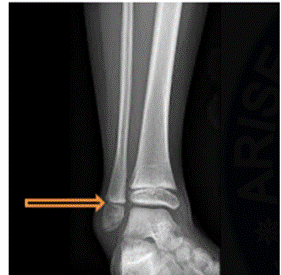
The structure indicated by the arrow represents a specific type of epiphysis. What type of epiphysis is shown?                    (Orthopaedics)

Options:

  1. Pressure epiphysis
  2. Traction epiphysis
  3. Atavistic epiphysis
  4. Aberrant epiphysis

Correct Answer: A) Pressure epiphysis

Get the full explanation here: https://www.doctutorials.com/fmge/qbank/pyq/1000141

6. Subtopic: Endometrial Hyperplasia

Question Number: 1

Clinical question

A 48-year-old postmenopausal female presents with irregular uterine bleeding. Endometrial biopsy reveals endometrial hyperplasia without atypia. What is the most appropriate treatment option?   (OBGYN)

Options:

  1. Combined Oral Contraceptive Pills (COCPs)
  2. Levonorgestrel Intrauterine System (LNG-IUS)
  3. Danazol
  4. Progesterone

Correct Answer: D) Progesterone

Get the full explanation here: https://www.doctutorials.com/fmge/qbank/pyq/1000155

7. Subtopic: Musculoskeletal Infections

Question Number: 2

Clinical question

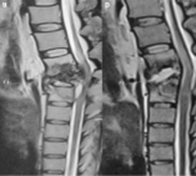
A 40-year-old male presents with chronic back pain that has progressively worsened over the past few months. He also reports fever, night sweats, and unintentional weight loss. On examination, there is localized tenderness over the lower thoracic and lumbar spine. MRI spine is shown below. What is the most likely diagnosis?            (Medicine)

Options:

  1. Pott’s spine
  2. Osteoporotic vertebral fracture
  3. Metastatic spinal tumor
  4. Ankylosing spondylitis

Correct Answer: A) Pott’s spine

Get the full explanation here: https://www.doctutorials.com/fmge/qbank/pyq/1000119

8. Topic: Central Nervous System Infections

Subtopic: Meningitis

Non-Clinical Question:
A 39-year-old patient with HIV and a CD4 count of 139 cells/uL presents with altered sensorium and impaired consciousness. CSF examination using an India ink preparation reveals a positive result. Which organism is most likely responsible?            (Microbiology)

Options:

  1. Candida tropicalis
  2. Histoplasma
  3. Cryptococcus neoformans
  4. Candida albicans

Correct Answer: C) Cryptococcus neoformans

9. Topic: Endocrine System

Subtopic: Tumours

Non-Clinical Question:

69. A 45-year-old patient presents with a solitary thyroid nodule. Histopathological examination of the thyroid mass shows pink, eosinophilic extracellular material. What is the most likely diagnosis?               (Pathology)

Options:

  1. Papillary carcinoma
  2. Follicular carcinoma
  3. Medullary carcinoma
  4. Anaplastic carcinoma

Correct Answer: C) Medullary carcinoma

10. Topic: Acid-base balance

Subtopic: Buffer system

Non-Clinical Question

2. Which of the following amino acids primarily acts as a buffer in blood due to its ability to accept and donate protons at physiological pH?     (Biochemistry)

Options:

  1. Histidine
  2. Arginin
  3. Tryptophan
  4. Tyrosine

Correct Answer: A) Histidine

11. Subtopic: Benign Soft Tissue Tumors of the Hand

Question Number: 3

Clinical question

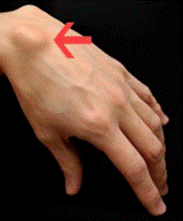
A 20-year-old male patient presented to OPD with the given presentation. He reports fluctuation in size of the swelling, mild numbness in the hand, and occasional pain. Identify the swelling on the dorsal aspect of the wrist?         (Medicine)

Options:

  1. Ganglion cyst
  2. Sebaceous cyst
  3. Lipoma
  4. Hematoma

Correct Answer: A) Ganglion Cyst

12. Subtopic: Laparoscopic Surgery

Question Number: 1

Non-Clinical question

What is the instrument of choice for creating pneumoperitoneum in the closed technique of laparoscopic procedures? (Surgery)

Options:

  1. Veress needle
  2. Hegar’s dilator.
  3. Karman’s cannula
  4. Hassan’s cannula

Correct Answer: A) Veress needle

13. Subtopic: Parasitology

Question Number: 97

Non-Clinical question

Identify A and B in the given image?              (PSM)

A. B.

Options:

  1. Anopheles and Culex
  2. Culex and Aedes
  3. Anopheles and Aedes
  4. Aedes and Mansoni

Correct Answer: A) Anopheles and Culex

14. Subtopic: Cholinergic Antagonists / Antidotes in Toxicology

Question Number: 1

Non-Clinical question

Which symptom of organophosphate (OP) poisoning is not reversed by atropine?            (Pharmacology)

Options:

  1. Coma
  2. Muscle weakness
  3. Pinpoint pupil
  4. Bradycardia

Correct Answer: B)   Muscle weakness     

15. Topic: Cellular Physiology

Subtopic: Skeletal Muscle

Non-Clinical Question:

222. Which of the following changes occur when the muscle contracts while exercising?      (Physiology)

Options:

  1. Band M decreases
  2. Band M & I decreases
  3. Band A decreases
  4. Band I decrease

Correct Answer:  D) Band I decrease

16. Subtopic: Pediatric Growth and Nutritional Assessment

Question Number: 1

Non-Clinical question

Chronic malnutrition is best measured by:     (Pediatrics)

Options:

  1. Height for age
  2. Weight for age
  3. Weight for height
  4. Body mass index

Correct Answer: A) Height for age

17. Subtopic: Bisphosphonates (Adverse Effects & Administration)

Question Number: 2

Clinical question

A patient taking alendronate is advised to remain upright for at least half an hour after administration. What is the reason for this recommendation?           (Pharmacology)

Options:

  1. Reflux esophagitis
  2. Gastritis
  3. Nephrotoxicity
  4. Hypercalcemia

Correct Answer: A)   Reflux esophagitis     

18. Topic: Mood Disorders

Subtopic: Bipolar Disorder

Non-Clinical Question:

A 24-year-old male, previously diagnosed with a psychiatric disorder, has become aggressive with his neighbours, is speaking rapidly, and is sleeping very little. He also exhibits hyperactive behaviour after discontinuing his prescribed medication. What is the most likely diagnosis?                   (Psychiatry)

Options:

  1. Depression
  2. Bipolar disorder. (manic episode)
  3. Schizophrenia
  4. Substance-induced mood disorder

Correct Answer: B) Bipolar disorder (manic episode)

19.  Subtopic: Meckel’s Diverticulum

Question Number: 2

Clinical question

A 27-year-old male presents to the emergency room with complaints of pain in the right iliac fossa and melena. On examination, there is tenderness in the right iliac fossa along with nausea and vomiting. Following surgical intervention, the finding shown in the image was observed. What is the most likely diagnosis?        (Surgery)

Options:

  1. Meckel’s diverticulum.
  2. Mucocele appendix
  3. Carcinoid appendix
  4. Appendiceal serous tumor

Correct Answer: A Meckel’s diverticulum

20. Topic: Substance-Related Disorders

Subtopic: Alcohol Withdrawal

Non-Clinical Question:

A 45-year-old man presents to the hospital with complaints of seeing snakes crawling and an inability to recognise his own family members. He reports his last alcohol intake was 48 hours ago. What is the most likely diagnosis?            (Psychiatry)

Options:

  1. Alcohol-induced psychosis
  2. Delirium tremens
  3. Schizophrenia
  4. Alcoholic hallucinosis

Correct Answer: B) Delirium tremens

21. Subtopic: O2-Hemoglobin Dissociation Curve

Non-Clinical Question:

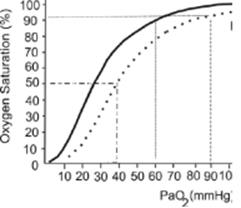
223. Which one of the following leads to a shift toward the dashed line curve in the given graph?               (Physiology)

Options:

  1. Acidosis
  2. Less 2,3 BPG
  3. Hypocarbia
  4. Hypothermia

Correct Answer: A) Acidosis

22. Topic: Disorders of Skin Appendages

Subtopic: Acne

Clinical Question:

243. Which of the following is the most effective treatment for severe nodular acne? (Dermatology)

Options:

  1. Isotretinoin
  2. Steriod
  3. Topical tretinoin
  4. Antibiotics

Correct Answer: A) Isotretinoin

23. Topic: Neuroanatomy

Subtopic: Cranial Nerves

Non-Clinical Question: Which of the following cranial nerves form the afferent limb of the corneal reflex?                        (Anatomy)

Options:

  1. Optic nerve
  2. Facial nerve
  3. Trigeminal nerve
  4. Trochlear nerve

Correct Answer: D) Trigeminal nerve

24. Topic: Integration of Metabolism

Subtopic: Metabolism in Starvation

Non-Clinical Question

3. During starvation, which of the following hormones is primarily produced to maintain blood glucose levels?                      (Biochemistry)

Options:

  1. Glucagon
  2. Insulin
  3. Epinephrine
  4. Cortisol

Correct Answer: A) Glucagon

25. Subject: FMT

Topic: Medico-Legal

Subtopic: Dying Declaration (DD)

Question Number: 85Clinical question

A seriously injured villager is brought to the hospital after being assaulted by a group of 4–5 individuals. A dying declaration is being recorded in the hospital. Which of the following statements is medico-legally correct?

Options:

  1. An oath must be administered before recording the dying declaration.
  2. Only the police are authorized to record a dying declaration.
  3. An oath should not be administered before recording the dying declaration.
  4. Leading questions should be asked while recording the dying declaration.

Correct Answer: C) An oath should not be administered before recording the dying declaration.

26. Topic: Head and Neck

Subtopic: Nasopharynx

Clinical Question:

A 48-year-old man from China presented with hearing loss in the right ear. On examination, the tympanic membrane was dull, and a B-type tympanogram was seen. Lymph nodes in the neck are palpable. What is the appropriate management?                  (ENT)

Options:

  1. Grommet insertion + steroids
  2. Radiotherapy
  3. Wait and watch
  4. Radial neck dissection

Correct Answer:  B) Radiotherapy

27. Subtopic:

Clinical question

A 25-year-old woman is found dead in her apartment. Postmortem examination reveals cherry-red discoloration of the skin and mucosa, and bilateral bright red hypostasis. Which of the following poisons is most likely responsible?

  1. Cyanide
  2. Carbon monoxide
  3. Methanol
  4. Organophosphate

Correct Answer: B) Carbon monoxide

28. Subtopic: Primary Malignant Bone Tumours

Question Number: 2

Clinical question

A 20-year-old male presents with localized pain that is gradual in onset and has progressively worsened over time. An X-ray reveals a sunburst appearance. What is the most likely diagnosis?          (Orthopaedics)

Options:

  1. Osteosarcoma
  2. Ewing sarcoma
  3. Chondrosarcoma
  4. Gout

Correct Answer: A) Osteosarcoma

29. Topic: Disorders of Skin Appendages

Subtopic: Hair loss

Clinical Question:

244. A woman undergoing chemotherapy presents with rapid and significant hair loss within weeks of starting her treatment. This type of hair loss primarily affects the active growth phase of the hair cycle. What is the most likely cause of her hair loss?            (Dermatology)

Options:

  1. Trichotillomania
  2. Anagen effluvium
  3. Alopecia areata
  4.  Telogen effluvium

Correct Answer: A) Anagen effluvium.

30. Subtopic: Clinical Signs of Early Pregnancy

Question Number: 2

Non-Clinical question

Identify the sign shown in the image below:  (OBGYN)

Options:

  1. Osiander
  2. Hartmann sign
  3. Chadwick
  4. Pisakaseck

Correct Answer: C) Chadwick

31. Topic: Cardiovascular System

Subtopic: Myocardial Infarction

Non-Clinical Question:

70. A patient is suspected of having a myocardial infarction. A triphenyl tetrazolium chloride (TTC) stain is used to identify myocardial ischemic damage. When is the best time to use TTC staining for optimal visualisation of myocardial necrosis?            (Pathology)

Options:

  1.  <4 hours
  2. 2-3 hours
  3. 10-24 hours
  4. 36 hours

Correct Answer: B) 2-3 hours

32. Topic: Histology

Subtopic: Cartilage and Bones

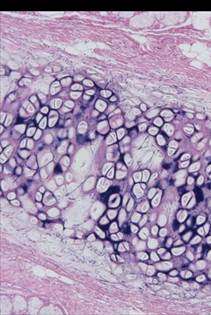
3. Non-Clinical Question Which type of cartilage is present in the histology section given below? (Anatomy)

Options:

  1. Hyaline cartilage
  2. Elastic cartilage
  3. Articular cartilage
  4. Fibrocartilage

Correct Answer: B) Elastic cartilage

33. Topic: Ear

Subtopic: Otitis Media

Clinical Question:

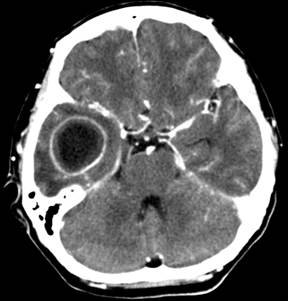
2. A patient with CSOM presented to the OPD with seizures, headache and complaints of nausea and vomiting. CT image of patient is given. Identify the clinical condition?        (ENT)

Options:

  1. Temporal abscess
  2. Extradural abscess
  3. Meningitis
  4. Petrositis

Correct Answer: A) Temporal abscess

34. Subtopic: Heart Murmurs

Question Number: 5

Non-Clinical question

Graham steel murmur is seen in?      (MEDICINE)

Options:

  1. Pulmonary hypertension
  2. Pulmonary regurgitation
  3. VSD
  4. Pulmonary stenosis

Correct Answer: B) Pulmonary regurgitation

35. Topic: Anaesthetic Emergencies

Subtopic: Malignant Hyperthermia

Clinical Question:

A patient undergoing surgery is administered succinylcholine for muscle relaxation. After administration, he developed hyperthermia, rigidity, tremors, and tachycardia. What is the most appropriate treatment for this condition? (Anaesthesia)

Options:

  1. Neostigmine
  2. Sodium dantrolene
  3. Atropine 
  4. Midazolam

Correct Answer:  B) Sodium dantrolene

36. Topic: Mineral metabolism

Subtopic: Potassium

Non-Clinical Question

A hypertensive patient presents with hypernatremia, hypokalemia, and metabolic alkalosis. What is the most likely diagnosis? (Biochemistry)

Options:

  1. Conn’s syndrome
  2. Addison’s syndrome
  3. Bartter’s syndrome
  4. Gitelman’s syndrome

Correct Answer: a. Conn’s syndrome

37. Topic: Female Genital System & Breasts

Subtopic: Tumours

Non-Clinical Question:

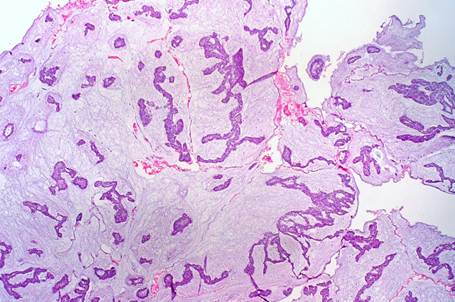
71. A 60-year-old female presents with a slow-growing, painless mass in her left breast. On physical examination, the mass is soft, well-circumscribed, and mobile. A biopsy is performed, and histopathology reveals the following. What is the most likely diagnosis?       (Pathology)

Options:

  1. Medullary carcinoma
  2. Lobular carcinoma
  3. Mucinous carcinoma
  4. Invasive ductal carcinoma

Correct Answer: C) Mucinous carcinoma

What is the Pattern of the FMGE Question Paper?

As per the official updates, the FMGE exam pattern includes 300 MCQs in two parts. It is a computer-based test, divided into Part A and Part B, with each part containing 150 questions.

Here is a table to represent the FMGE Question Pattern:

ParticularsDetails
Examination ModeOnline CBT (Computer-based Test)
Number of Papers2 (Part A and Part B)
Medium of ExaminationEnglish
Duration of ExaminationTotal 5 hours (2.5 hours for each part)
Total Number of Questions300 (150 for each part)
Qualifying Marks150 out of 300
Marking Scheme+1 for each correct answer without any negative marking

Subject-wise Weightage of FMGE

Pre & Para Clinical Subjects (100 Marks):

  • Anatomy
  • Physiology
  • Biochemistry
  • Pathology
  • Microbiology
  • Pharmacology
  • Forensic Medicine

Clinical Subjects (200 Marks):

  • Medicine
  • Surgery
  • Obstetrics & Gynaecology
  • Paediatrics
  • Ophthalmology
  • ENT
  • Radiology
  • Psychiatry
  • Anaesthesia​

Aspirants must understand this pattern to focus on the high-weightage topics while revising for their FMGE examination.​

What are the Steps to Download the FMGE Question Paper?

You can follow these easy steps to download the previous year’s FMGE question paper:

Step 1: Visit the Official FMGE Website

First, open your web browser and enter the official National Board of Examinations (NBE) website address. You can find the genuine FMGE exam-related resources from this authorised portal.

Step 2: Click on the FMGE Examination Tab

Navigate to the FMGE tab on the homepage and select it. Here you can find the section for Foreign Medical Graduate Examination, including application and notification details and downloadable materials.

Step 3: Enter Your Login Credentials

Provide your details, such as registered email and password or candidate ID. This login process ensures that only authorised applicants can access exam resources and previous year question papers.​

Step 4: Download the Question Paper

After logging in, you’ll find a link or section for previous year question papers (such as FMGE 2024). Click the appropriate download link, and the question paper (usually in PDF format) will be saved to your device for practice.​

How Does the Previous Year FMGE Question Paper Benefit an Aspirant?

Solving past FMGE question papers helps aspirants understand the question patterns effectively. It provides the feel of a real examination, helps polish time management skills, and enhances decision-making under pressure.​

Here’s how practising the previous year’s FMGE exam paper helps an aspirant:

  • Understanding Exam Structure and Mark Distribution

Regularly practising the FMGE previous year papers helps candidates understand the changing question trends and difficulty level. Many aspirants have observed that nearly 10–20% of FMGE questions are repeated, either directly or conceptually, across years.​

  • Improves Your Accuracy and Speed

Solving timed papers replicates real-exam conditions, improving both response accuracy and reading speed. This builds exam-day confidence and makes it easier to complete both sections within the 5-hour window.

  • Helps Identify Strengths and Weaknesses

Through self-assessment of attempted PYQs, aspirants can determine their strong areas and recognise subjects requiring additional focus, such as pharmacology or radiodiagnosis.​

  • Helps Learn Time Management

FMGE is an exhaustive exam requiring mental endurance. Practising previous papers in real-time conditions improves focus, mental stamina, and efficiency during the actual CBT session.​

  • Boosts Your Conceptual Clarity

Repeated exposure to MCQs across multiple sessions reinforces core medical concepts, helping link theory to clinical application.

  • Reduces Exam Anxiety through Familiarity

Simulated practice fosters psychological preparedness and reduces pre-exam stress by reproducing the test format and interface experience.​

FAQs about FMGE Previous Year Question Paper

  1. What is the total number of questions in the FMGE exam?

There are 300 multiple-choice questions divided into two parts—Part A and Part B—each containing 150 questions.​

  1. What is the qualifying mark for FMGE?

Candidates must secure a minimum of 150 marks out of 300 (50%) to qualify for the FMGE exam.​

  1. How can I get the official FMGE previous papers?

Visit the official NBE website and download the previous year’s FMGE question paper. You can also access authentic past-year papers from DocTutorials.​

  1. What are the main subjects covered in FMGE?

FMGE covers 19 medical subjects, from Anatomy, Physiology, and Biochemistry to major clinical subjects like Medicine, Surgery, and OBGYN.​

  1. Can solving PYQs guarantee success in FMGE?

While solving PYQs alone does not guarantee success, it significantly boosts understanding, accuracy, and speed, which together increase the odds of qualification.​

  1. What are the best books to prepare for the FMGE exam?

Top books to prepare for FMGE include FMGE Solutions and Comprehensive Guide to FMGE by Dr. Deepak Marwah, FMGE Recall by Dr. Shahana Perveen, Self-Assessment & Review of FMGE by Kamal KV, and Review of Pharmacology by Dr. Gobind Rai Garg.​

  1. What are the benefits of solving previous year’s question papers for the FMGE examination?

The FMGE’s previous year’s question paper generally helps to understand the trends of questions asked in the FMGE examination. It also helps students to make short notes while preparing for the FMGE exam.

  1.  Is there a limit on the number of attempts for the FMGE exam?

Currently, there is no limit on the total number of attempts of the FMGE examination. Students can attend as many sessions as they need.

  1. Which online tools can I use for the preparation of the previous year’s question papers?

Students can easily use numerous digital tools, such as online sites and mobile applications, for FMGE previous year question papers with solutions pdf and progress tracking.

  1. Which previous year’s question papers of FMGE are essential for practice every day?

Practising the last five years’ FMGE question papers is essential for identifying trends. Students can easily identify recurring topics and improve MCQ accuracy and speed by solving them.

Moreover, they can also use genuine FMGE previous year’s question paper guides or FMGE PYQ PDFs for the same.

Conclusion

Mastering FMGE demands strategic preparation, continuous assessment, and extensive practice. Previous year question papers serve as comprehensive tools for understanding exam trends, question framing, and self-evaluation.

Platforms like DocTutorials can be your study partner if you’re looking for extra guidance. We offer comprehensive subject-wise coverage via PYQ recall videos, high-yielding Qbank, targeted test series, and complimentary hardcopy notes, ensuring aspirants are always well-prepared.

Utilising such structured learning ensures clarity, confidence, and a higher likelihood of cracking the FMGE in one go—making DocTutorials a reliable partner in your medical licensing journey.​ Join us now and explore our FMGE course to excel in your exam!

DocTutorials App Download Now

Latest Blogs

FMGE Exam Study Plan: Strategies and Exam Pattern

FMGE Exam Study Plan | DocTutorials

The Foreign Medical Graduate Examination (FMGE) is a crucial step for Overseas Citizens of India (OCI) and Indians who gained their first medical degree from a foreign university and are looking to practice medicine in India.

With the exam around the corner, particularly for applicants aiming for the January 2026 session, your preparation needs to be top-notch, focused, and goal-oriented. Fortunately, with proper FMGE study plans and utilisation of effective resources, you can confidently excel in this exam.

Keep reading for a detailed insight.

FMGE Exam Pattern 2026: An Overview

Here is a concise summary of the FMGE 2026 exam format:

  • Exam Mode: Computer-Based Test (CBT)
  • Structure: The exam consists of two sections (Part A and Part B) covering 19 medical subjects, from pre-clinical to clinical.
  • Total Questions: 300 Multiple Choice Questions (MCQs)
  • Duration: 5 Hours (2.5 hours for Part A and 2.5 hours for Part B)
  • Marking Scheme: +1 mark for each correct answer; no negative marking for wrong answers
  • Minimum Marks for Qualification: 150 out of 300 (50%)

How to Create the Most Effective FMGE Study Plan?

The Foreign Medical Graduate Examination (FMGE) is not a measure of how much you can study, but how smartly you can prepare and implement what you have already studied in your MBBS.

Here is how you can create the best study plan for FMGE:

  • Familiarise Yourself with the Exam Inside Out

Prior to planning, get to know the FMGE pattern—300 MCQs split across two sessions with no negative marking. Know subject-wise weightage as per NBE guidelines to maximise your efforts. Don’t divide equally across all 19 subjects; concentrate more where marks are high.

  • Create a Realistic and Targeted Study Schedule

The syllabus of FMGE is enormous, so don’t approach it blindfolded. Split your preparation into unambiguous blocks of time. For a 2-month study plan for FMGE, spend the first two weeks on high-yield topics such as Medicine, Surgery, PSM, OBG, and Pharmacology.

The subsequent two weeks should be utilised for completing other subjects such as Pathology, Microbiology, Anatomy, and Physiology. Spend daily hours learning and revising clinical and non-clinical subjects, MCQ practice, and more.

  • Start Practising MCQs Early and Daily

Every topic studied must be followed by an MCQ application. FMGE tests your ability to recall and apply, not just memorise. Use question banks and old question papers to solve at least 100 MCQs a day, in total.

  • Use Limited, Trusted Resources Only

Avoid the pitfall of jumping between too many FMGE study materials. Pick one credible source and stick to it. For better results, take assistance from experts and go through their structured video lectures, short notes, PYQs, and Grand Tests based on the FMGE pattern. Make sure that you do not burden yourself.

  • Prioritise Revision from Day One

Never delay revision in the last few weeks. Revise as soon as you start studying. Keep short notes, one-liners, and flashcards for quick recall. Set up every day’s review sessions and attempt to cover the whole syllabus at least two to three times before the exam.

Active revision strategies and monitoring progress from time to time are your best ideals to gain success. If you are following a 3-month study plan for FMGE, this will offer you enough buffer time to revise at least three times.

  • Top Your Practice with Grand Tests and Mock Practice

Begin trying full-length grand tests from the 5th week. Provide a minimum of 3 tests a week in real exam duration. Analyse each error thoroughly and revisit weak topics at once. This assists in time management, endurance, and enhances confidence in dealing with exam pressure.

Utilise test analysis tools to track your progress and make changes accordingly. Having a 4-month study plan for FMGE allows you even more time to deeply practice and analyse mock test performances.

  • Do Not Ignore Previous Year Questions (PYQs)

Previous Year Questions (PYQs) are very important. FMGE exam repeats ideas and patterns; hence, solving the papers of the last 5 years will make you familiar with them. Practice PYQ as a part of your weekly routine, particularly in the last month.

  • Find and Brush Up Weak Spots

Use Grand Test performance, MCQ results, and self-assessment to pinpoint subjects or chapters where you lack confidence. Dedicate extra time to those areas without ignoring your strengths.

  • Simulate the Real Exam Environment

Develop your mindset to work under FMGE-type situations. Try mock tests in two 150-question sessions with prescribed breaks, much like on test day. This will develop stamina and polish your timing tactics—particularly when to skip, when to guess, and when to proceed.

  • Balance Mindset, Rest, and Health

Smart study schedules also involve resting. Sleep for 6–8 hours to hold on to memory and prevent burnout. Eat properly, drink enough fluids, and take physical breaks. Above all, be mentally resilient.

Do not panic and avoid social media diversion too much, as these are red flags during exams. Have faith in your study plan, irrespective of whether it is a 3-month study plan or a 6-month study plan for FMGE.

FAQs about FMGE Exam Study Plan

  1. How many hours should I study for FMGE?

To prepare effectively for FMGE, aim for around 800–1000 hours of study over 6–12 months. This means studying 4–6 focused hours daily, which totals about 120–180 hours in 30 days.

  1. How can I improve my clinical skills while preparing for FMGE?

Make use of case-based learning, participate in virtual clinical workshops, and discuss various clinical scenarios with peers in order to enhance application-based knowledge.

  1. What are the best online resources to include in an FMGE study plan?

Some of the best resources you can include in your study plan for FMGE preparation are topic-specific video lectures, topic-wise multiple choice questions (MCQs), previous years’ question papers (PYQs), and mock tests.

  1. What are the common mistakes to avoid when making an FMGE preparation?

Some common blunders you can avoid during exam preparation are skipping a study plan, avoiding revisions, not studying complicated topics, taking too much strain, reading without practising MCQs, reading from too many books, improper time management, and so on.

  1. Which subjects should I focus on for FMGE preparation?

Concentrate on Preventive and Social Medicine (PSM), Medicine, Surgery, Pharmacology, Pathology, and Microbiology, since they are very important and often come up in exams.

  1. How should I design my study schedule for FMGE exam preparation?

A daily FMGE study plan should mainly focus on rapid revisions using bookmarks and notes. You should also attend full-length mock tests every 2-3 days to improve time management. Moreover, you can also use FMGE study material like concise notes and previous year’s MCQs flashcards, and apps for last-minute brushing up.

  1. What is the exam pattern of the FMGE examination?

The FMGE exam pattern generally consists of two papers, each with 150 MCQs, for a total of 300 marks. This exam is a computer-based test (CBT), with 2.5 hours allocated for each paper.

The exam is conducted in English, and there is no negative marking for incorrect answers.

  1. What is the cutoff for the FMGE examination?

The qualifying marks under the FMGE exam pattern are 50% or above. This exam is generally conducted by the National Boards of Examination (NBE). Students are usually required to score at least 150 marks to qualify for the exam.

  1. Is six months enough to prepare for the FMGE exam?

Yes, a 6-month study plan for FMGE can be enough if the preparation is well planned and consistent. Following a structured timetable, focusing on high-yield topics, practising MCQs regularly, and revising frequently can help students cover the syllabus and perform well in the FMGE.

  1. Should I prioritise theory or practical questions for FMGE preparation?

An in-depth understanding of theory provides the foundation, while practising clinical and scenario-based questions ensures that you can easily apply knowledge effectively.

Therefore, balancing theory with practical problem-solving improves accuracy, decision-making, and overall performance on the FMGE examination.

Conclusion

FMGE can be a challenging exam, but it’s not impossible to crack. Hundreds of thousands of candidates pass it each year with careful planning, discipline over resources, and focused practice. Time management, clear thinking, and confidence are crucial to the final results.

With only 3–5 months remaining for the FMGE 2026, January session, it’s time to concentrate, weed out distractions, and leave your 100%. Adhere to your FMGE study plans and seek assistance from a reliable ally like DocTutorials, where we offer study materials, question banks, PYQs, video lectures, doubt-clearing sessions, and more.

Join DocTutorials today and explore our FMGE course to excel in the exam.

DocTutorials App Download Now

Latest Blogs

Achieve FMGE Success with “V5 Qbank”

FMGE V5Qbank

Successfully clearing the FMGE is one of the toughest challenges for foreign medical graduates who are planning to practice in India. This assertion isn’t merely ours; it’s backed by data from the National Board of Examination (NBE). In June 2023, the FMGE pass rate was around 10.20%, while for December 2023, it rose to around 20.57%.

Multiple factors can contribute to this low pass rate, including an extensive syllabus, challenging questions, not knowing the importance of subjects, incomplete preparation, insufficient practice, or ineffective study strategies. No matter what the factor is, the question remains: Do you aim to be like those who successfully cleared the FMGE, or risk becoming part of the majority who didn’t?

FMGE V5 Qbank: Must-Have Study Material

Our FMGE V5 Qbank is one of the essential study materials that you need to clear the exam. This is crafted specifically for foreign medical graduates like you to help you prepare effectively for the upcoming FMGE exam 2024. With this, you can clear the exam confidently.

It helps streamline your FMGE preparation process and enhances your chances of success. It ensures you’re in the top percentile of students who can clear the FMGE exam easily. Here’s why it stands out:

1. FMGE Previous Year Questions [PYQs] & High Probability Questions

The V5 Qbank we provide includes a collection of previous year’s FMGE exam questions [PYQs] and high probability questions for the upcoming exam. With all these questions, you can gain valuable insights into the FMGE exam pattern.

Practicing these questions can help you become familiar with the exam format and weightage of subjects, and boost your confidence and performance on the exam day.

“Solving DocTutorials FMGE Qbank is one of the major preparation steps towards clearing your exam. Addition of this Qbank into my exam preparation strategy boosted my confidence and helped me understand the type of questions that can come in the final exam,” – Dr Bheem, one of the FMGE Power Pack subscribers.

2. 8,000+ Questions – Test Your Knowledge

Put your knowledge to the test with our FMGE question bank, which helps you sharpen your subject knowledge and makes it easy to clear the exam. Our V5 Qbank is India’s only Qbank that boasts more than 8,000 MCQs and IBQs, covering all 19 FMGE subjects comprehensively.

A wide range of questions from our Qbank covers fundamental concepts to advanced topics, making every question assess your understanding and proficiency. With our FMGE V5 Qbank, you can identify the areas for improvement with precision and make your exam preparation more targeted and effective.

“DocTutorials Qbank is one of the best things I have come across for my FMGE preparation. It has multiple questions that put my knowledge to the test and helped me realize the subjects in which I need improvement. With it, my revision process became structured and efficient.” – Dr. Ranjan, one of the FMGE Qbank subscribers.

3. By Experts for Doctors

Each member of our faculty team boasts over 20 years of experience in guiding and mentoring medical students like yourself. This wealth of expertise ensures that our V5 Qbank delivers unrivaled quality and precision.

One of the best things about our FMGE Qbank is that it is created, curated, and verified by expert faculty. All our faculty team boasts 20+ years of experience in teaching, guiding, and mentoring medical students like you. This wealth of experience ensures that our Qbank offers the utmost quality and accuracy of questions.

With this resource, you are not just preparing for the exam – you are equipping yourself with the depth and breadth of knowledge essential for FMGE success.

“I feel confident enough that with this Qbank by my side, I’ll make my FMGE dream come true. It is the only FMGE Qbank that is perfectly created and verified by experts, evident in every question I came across. Thanks to DocTuorials for providing such effective study material,” – Dr. Rohit, one of the FMGE Power Pack subscribers.

4. Real-Life Clinical Case Scenario-Based Questions

“The integration of real-life clinical case scenario-based questions is one of the most interesting features that sets our V5 Qbank apart from others. These questions make you apply theoretical knowledge to practical situations, solidifying your understanding of core and key concepts.

“Qbank with inclusion of real-life clinical questions is what I’m looking for. This Qbank will be my new favourite study material to boost my FMGE exam preparation.” – Dr. Sunny Marshal, one of the FMGE [Make Your Own Plan] subscribers.

5. Custom Module

With our V5 Qbank, you can generate customized tests. This allows you to learn at your own unique learning pace and preferences. This feature can allow you to strengthen and improve subjects that need your focus. Maximize your chances of success with our custom module Qbank.

“Generating my own test on topics and subjects that need my focus is unbelievable.” – Dr. Sagar, one of the FMGE Power Pack subscribers.

6. Bookmarking Feature

Our V5 Qbank allows you to bookmark challenging or important FMGE questions for later review and clarification. This resource lets you clarify your doubts and understand the topic better.

Become FMGE Topper with Our Qbank

V5 Qbank is the primary resource your hands should be on as it consists of 8,000+ questions, including previous years’ FMGE exam questions and high probability questions for the upcoming FMGE exam. Practice experts created questions that are aligned with the latest exam pattern and help you achieve success.

Eligibility Criteria for the NEET PG Exam

Below are the eligibility criteria for the NEET PG exam according to the National Testing Agency (NTA):

  • Qualification: Students need an approved MBBS degree from the Medical Council of India and MCI registration. 
  • Internship: The candidate needed to finish the internship part no later than June 30th 2025.
  • Registration: Applicants need a provisional or permanent MBBS registration license.
  • Students pursuing their DNB (Diplomate of National Board) course must finish it prior to seeking entry into the system.
  • Students who enrolled in DNB broad speciality courses from January 2019 onward do not qualify for the 2025 admissions.

Eligibility Criteria for Foreign-based Medical Graduates

To practice medicine in India, nationals or Overseas Citizens of India must take the Foreign Medical Graduate Examination (FMGE) under the 2002 Screening Test Regulations from the National Board of Examinations. 

  • Every candidate must enrol with the NMC or their relevant medical council and finish their internship by June 30, 2025. 
  • Foreign Medical Graduates must show their FMGE Pass certificate and registration certificate on exam day.

Eligibility Criteria for Foreign Nationals

  • Foreign medical students need not apply for the National Medical Commission temporary permit to take the NEET-PG exam. Foreign nationals do not need NMC registration to participate in NEET-PG. 
  • After paying the required fee, NMC gives students temporary registration that lasts through their postgraduate study at a single medical college.
  • Student eligibility depends on enrollment with their home country’s medical authority and approval of basic medical training by the local medical board.
NEET PG Online Live Power Pack
DocTutorials App Download Now

Latest Blogs

FMGE Exam Dates – Timing, Centres, and Eligibility Certificate

FMGE Exam Dates

If you are an Indian citizen who earned a medical degree abroad, your path to practicing medicine back home runs directly through the FMGE. Conducted twice a year (in June and December) by the National Board of Examinations in Medical Sciences (NBEMS), this mandatory screening test is your key to securing a medical license in India.  

With the FMGE June 2026 session successfully concluded on June 28, and the results were officially released on July 7, the focus has now shifted from exam preparation to post-result procedures. Here are the most important upcoming dates and milestones you need to track as you move forward in the process: 


EventDate
Availability of the Information BulletinApril 21, 2026,
Online Submission of Application FormApril 21, 2026, to May 11, 2026
Date of ExaminationJune 28, 2026
Declaration of Result July 07, 2026 

You can also download the official FMGE June 2026 session notification for complete details.

Click here to download the FMGE June 2026 Results 

Anyone with an MBBS degree from outside India must take this license exam. To make sure everything goes smoothly, candidates taking the FMGE test need to know the date, time, eligibility certificate, and exam venues.

When is the FMGE December 2026 Exam? 

While the exact date for the FMGE December 2026 session has not yet been announced by the National Board of Examinations in Medical Sciences (NBEMS), the online registration window is expected to open soon. 

This mandatory screening test—which is required for Indian citizens with foreign medical degrees who wish to practice medicine in India—will be conducted as a computer-based test (CBT) across two shifts.  

Here is what you can expect from the upcoming exam cycle: 

  • Application & Corrections: Once registrations open, candidates must apply online. If you miss uploading proper paperwork or make a mistake, NBEMS will provide official “edit windows” on specific dates to let you correct your application.  
  • Results & Guidelines: When the grading is complete, the final results will be published in a PDF format on the official website. For comprehensive rules on eligibility, the exam setup, and marking schemes, candidates should carefully read the official NBEMS Information Brochure as soon as it is published. 

What does the FMGE Eligibility Certificate Mean? 

If you are a medical graduate from another country and want to take the FMGE exam, you must have an FMGE eligibility certificate. The application period for this certificate will begin soon. Applicants must show that they meet the requirements, such as having an approved medical degree, finishing or planning to finish their internship, and sending in the required documents. You don’t need to apply again if you’ve already done so and are waiting for approval. Just check your email from the National Medical Commission (NMC) for developments.

Make sure that all the paperwork is correct and that it is sent in by the deadline. Keep in mind that no applications will be accepted after the submission date. That’s why it’s important to finish the process on time to avoid any problems or delays.

What Time does the FMGE Exam Start?

Candidates need to know when each part of the FMGE exam will take place in order to organise their time well. Each segment of the FMGE exam has a set start time and length. Below is the timetable for the FMGE Part A and B exams:

PartDurationStart TimeEnd Time
Part A150 minutes9:00 AM11:30 AM
Part B150 minutes2:00 PM4:30 PM

All candidates must be in their own examination centres on time for both parts A and B of the FMGE exam.

When is the FMGE Exam 2026? 

The FMGE is a vital licensing exam for foreign medical graduates wishing to practice medicine in India. Held twice a year in June and December, the exam requires candidates to track several critical deadlines. These milestones include application openings, correction windows, admit card releases, exam days, and result announcements. 

To help you stay on schedule, here are the detailed timelines for both the upcoming June 2026 session and the tentative schedule for the December 2026 session. 

Important Events Official Dates 
Online Application Process Starts April 21, 2026 
Application Process Ends May 11, 2026 
Correction Window May 21 – June 10, 2026 (Images) 
Admit Card Release Date June 24, 2026 
Date of Examination June 28, 2026 
Announcement of Result July 07, 2026 

Since NBEMS has not released the official bulletin for the FMGE 2026 December session yet, these dates are highly expected timelines based on historical exam patterns. 

Important Events Speculative Dates 
Online Application Process Starts Expected in October 2026 
Application Process Ends Expected in late October/early November 2026 
Correction Window Expected in November 2026 
Admit Card Release Date Expected in mid-December 2026 
Date of Examination Expected in late December 2026 
Announcement of Result Expected by late January 2027 

Note: FMGE 2026 December session dates are tentative, students should keep an eye on the official natboard.edu.in website for the final schedule later this year. 

What are the FMGE Exam Centres that Have Been Chosen for June 2026?

The FMGE exam takes place in a number of major cities across India. Candidates can choose their favourite city when they register; however, the final exam centre is chosen based on seat availability. Here are some places that people often choose:

  • Chennai
  • NCR Delhi
  • Kolkata
  • Mumbai
  • Hyderabad
  • Bangalore
  • Guwahati
  • Bhopal 
  • Chandigarh
  • Ahmedabad

What do You Need to do to Get Ready for the FMGE Exam in 2026?

If you want to do well in the FMGE, being organised and diligent can really help. Here are some useful and well-organised recommendations to help you get ready for your exam:

Know the Syllabus and Put it in Order of Importance

Start by carefully going over the FMGE syllabus, which covers clinical, preclinical, and paraclinical topics. You need to pay attention to all the subjects, such as anatomy, physiology, medicine, surgery, and others. Give each subject the right amount of time based on how important it is and how comfortable you are with it.

Make a Plan for Studying that is Organised

Make a study plan for each week and month that includes both reviewing what you’ve learnt and learning new things. You can improve your memory by adding short, focused study periods and lengthier revision blocks. Set weekly goals for yourself, such as mastering a certain subject or finishing certain chapters.

Use Past Years’ Question Papers to Practice

Work through old FMGE question papers to become used to the topics that come up again and again and the kinds of multiple-choice questions that are on the test. Going over old papers can help you feel more sure of yourself because you’ll grow used to the pattern and level of difficulty you can expect.

Take Practice Tests Often

Take practice tests that are timed, broken down into sections, and have the same number of questions as the real test. You can look at your performance after each mock test to see where you did well and what you need to work on. Use the results of these tests to improve how you study and how you manage your time.

Stay up to Date with Official News

Check the National Board of Examinations (NBE) official website often for news on changes to exam dates, registration procedures, or the way exams are given. Knowing about changes to deadlines or procedures will help you make sure you don’t miss any important stages when you register or get ready.

Use the Best Study Materials You Can Find

Use up-to-date, trustworthy textbooks and digital materials that closely follow the FMGE syllabus. DocTutorials and other coaching services offer resources, professional advice, and practice questions that are specifically designed to help you pass the FMGE.

Keep Revising Regularly

Plan regular review sessions that focus on important themes and areas that need work. To make last-minute reviews easier before the test day, try making short notes and quick-reference tools.

Candidates can confidently, systematically, and clearly prepare for the FMGE 2026 by using these tactics together. This will help them get ready to practice medicine in India. Keep in mind that being consistent and flexible is just as vital as working hard.

FAQs About FMGE Exam Dates

  1. How many questions are on the FMGE test?

The FMGE consists of 300 multiple-choice questions split into two parts of 150 questions each, with a scheduled break between. Each part is strictly divided into three 50-minute sections (50 questions each). You must complete them sequentially, and you cannot return to a section once its 50-minute timer expires. 

  1. How long should you study for the FMGE exam?

Candidates should study for the FMGE for between 800 to 1,000 hours, which is usually spaced out over 6 to 12 months. A daily schedule of 4 to 6 hours of intense study is best. This method suggests that students should try to study and practice for 120 to 180 hours in a single month.

  1. How can I find out where my FMGE 2026 exam will be held?

Log in to nbe.edu.in, go to the FMGE area, and download your admission card to find out where you will take the FMGE exam. The hall ticket will have the address and time you need to report to your designated exam centre.

  1. Can I edit my FMGE application after submission? 

Yes, NBEMS provides correction windows after the FMGE application submission. During this period, candidates can edit or correct specific details in their application form as permitted by NBEMS guidelines.

  1. What documents should I carry to the exam centre? 

Candidates must carry a printed copy of the admit card, a valid government-issued photo ID, and any additional documents specified in the admit card instructions to the examination centre.

  1. Can I choose my FMGE exam shift?

No, candidates cannot choose their exam shift. The exam shift is allotted by NBEMS, and candidates must strictly follow the date, time, and schedule mentioned on their admit card.

  1. What is the difficulty level of FMGE 2025?

FMGE 2025 was medium to tough, based on the overall standard and pattern of questions asked in the examination.

  1. Can I appear in FMGE without an eligibility certificate?

No, candidates cannot appear for the FMGE without an eligibility certificate. Unless specifically exempted under NBEMS rules, possessing a valid eligibility certificate is mandatory to apply for and appear in the examination.

  1. How can I get the eligibility certificate for FMGE 2026?

The FMGE 2026 eligibility certificate is mandatory for foreign medical graduates appearing in the FMGE December screening test. Candidates must apply for it through the official NMC portal.

  1. What should I do if I don’t get my preferred exam centre?

FMGE exam centres have limited seats and are allotted on a first-come, first-served basis. If your preferred centre is unavailable, NBE will allot the nearest possible alternative. Candidates must report on time, as rescheduling the exam is not permitted.

Conclusion

FMGE is the initial step for international medical graduates who want to work in India. People who are going to take the FMGE exam should keep up with the exam dates so they can plan and prepare properly. DocTutorials can help you with this by giving you resources, helping you make study plans, and giving you professional guidance. Sign up for our online FMGE coaching to get full help.

DocTutorials App Download Now

Latest Blogs

FMGE Exam Pattern: Marking Scheme, Mark Distribution, and Question Pattern

FMGE Exam Pattern

Foreign medical graduates willing to start their medical career in India must qualify for the FMGE exam. If you are appearing for this exam, you must know the FMGE pattern 2026. It helps candidates with exam preparation, time management, and other aspects.

The exam pattern includes multiple parameters like the mode of exam, number of questions, duration of exam, and more. To familiarise candidates with the FMGE question pattern, the NBE (National Board of Examinations) will release a Demo test in 2026 for the June session.

You can also learn about the FMGE pattern from coaching platforms like DocTutorials. Our guidance not only helps you understand the exam pattern but also helps you secure the best score.

Keep reading to learn more!

What is the FMG New Pattern in 2026?

The highlights of the FMGE pattern 2026 are represented in the table below:

Feature of the ExamDetails
Exam NameFMGE (Foreign Medical Graduate Examination)
Frequency of ExamTwo times a year, in June and December
Directed byNBE (National Board of Examinations)
Exam LanguageEnglish
Exam ModeComputer-based (Online)
Question TypeMCQs (Multiple Choice Questions)
Full Marks300
Total Number of Questions300
Pass Marks 150
Negative MarkingNot Applicable
Duration2 hours and 30 minutes for each paper (Paper A and B)

What are the Major Changes in the FMGE Exam Pattern in 2026?

The NBE has made a significant change in the FMGE pattern in 2026. Here they are:

  • All three sections (A, B, and C) of the FMGE question paper will contain 50 questions each, and the time limit for each section will be 50 minutes only.
  • Each portion of the FMGE question paper will now have several time-bound sections.
  • Candidates cannot modify or review the answers of one section once the allotted time for that section has expired.
  • It is necessary to complete all the questions of a section before proceeding to the next section.

What is the Marking Scheme of FMGE?

The FMGE marking scheme is crucial for planning an effective exam strategy. Here’s how it works:

  • The weightage of each question is 1 mark
  • Each paper contains 150 questions, so the total marks are 300
  • You can attempt all the answers even if you are not sure, as there is no negative marking
  • You will get one mark for each correct answer
  • Candidates must score a minimum of 150 marks out of the total 300 marks
  • You cannot opt for any re-checking or re-evaluation of the answer sheets

What is the Marks Distribution in FMGE?

The FMGE exam syllabus is divided into 3 parts: pre-clinical and para-clinical, and clinical subjects. The approximate marks distribution is discussed below:

  1. Pre and Para-Clinical Subjects
SubjectApproximate Marks
Anatomy17
Biochemistry13
Physiology13
Microbiology13
Pathology13
Forensic Medicine10
Pharmacology13
  1. Clinical Subjects
SubjectApproximate Marks
Surgery & Allied Subjects32
Medicine & Allied Subjects33
Paediatrics15
Obstetrics and Gynaecology30
Ophthalmology15
ENT15
Community Medicine30

How does the FMGE Question Paper Pattern Help You Prepare for the Exam?

Understanding the FMGE exam pattern is crucial for shaping a focused and practical preparation approach. Analysing the exam format not only optimises your study techniques but also enhances your confidence and performance on test day. Here’s how to make the most of this knowledge:

  • Strategic Preparation

A deep understanding of the FMGE exam pattern allows you to organise your preparation efficiently. Knowing the distribution of questions across pre-clinical, para-clinical, and clinical subjects will enable you to plan structured revision schedules, allocate effort according to weightage, and avoid overlooking lower-yield subjects.

  • Develop a Targeted Study Plan

Recognising how many marks are assigned per subject lets you strategically prioritise high-weightage topics. By aligning your study plan with the exam’s subject-wise marks distribution, you can balance strengthening weaker areas with reinforcing your existing strengths, making your preparation more goal-oriented and systematic.

  • Time Management

Thoroughly reviewing the FMGE pattern informs you about the total available time, the breakdown per section, and transition rules (you cannot return to completed sections). 

This enables you to practice managing time efficiently, develop strategies for each 50-minute section, and ensure you can answer all questions within the strict timeframes on the actual exam.

  • Mental Preparation

Familiarity with the structure and flow of the exam helps reduce anxiety and build self-assurance. It prepares you mentally for the format, question types, and sequencing, eliminating surprises and allowing you to maintain focus even under pressure. This calmness enhances clarity while answering and directly benefits your performance on exam day.

  • Mock Test Performance

Regularly practising full-length mock tests crafted to mirror the real FMGE exam pattern conditions you for the experience. It highlights adaptive needs, gauges your progress, and helps you adapt your approach, ensuring you’re exam-ready and able to skillfully handle any pacing or pattern challenges.

FAQs About FMGE Exam Pattern

  1. What is the purpose of the FMGE exam?

All Indian medical graduates who have earned their MBBS from a foreign university are required to take the FMGE exam. Clearing this exam is mandatory to become eligible for registration and to practice medicine in India.

  1. How hard is it to crack the FMGE exam?

The FMGE exam is tough, but with consistent focus and regular practice, many candidates successfully clear it on their first try.

  1. What is the maximum number of attempts for the FMGE exam?

There is no restriction on FMGE attempts. You can try as many times as needed, but passing is required to obtain your medical practice license in India.

  1. Which subjects offer the best scoring opportunities in the FMGE exam?

Subjects such as Community Medicine, Medicine, General Surgery, Obstetrics & Gynaecology, and Paediatrics generally have higher weightage and feature more straightforward questions, making them ideal for maximising your FMGE score.

  1. What is the mark distribution in FMGE? 

Each MCQ in FMGE carries 1 mark, making the total 300 marks. The exam has two parts: Part A with 100 MCQs covering pre-clinical and para-clinical subjects (Anatomy, Physiology, Biochemistry, Microbiology, Pathology, Pharmacology, and Forensic Medicine), and Part B focusing on clinical subjects.

  1. Who is the competent authority to release the exam pattern of FMGE?

The National Board of Examinations in Medical Sciences (NBEMS) is the competent authority responsible for releasing the FMGE exam pattern, including details about subjects, question distribution, marking scheme, and duration.

  1. How is the FMGE 2026 exam pattern divided?

The FMGE 2026 exam is divided into two parts, each further split into three sections (A, B, and C). Each section contains 50 questions with 50 minutes allotted, ensuring structured timing and coverage of all subjects.

  1. What is the duration of the FMGE 2026 exam?

The total duration of FMGE 2026 is 5 hours, with 2.5 hours allocated to each part (Part A and Part B).

  1. Which subject is the most scoring in FMGE?

In FMGE, the most scoring subjects are Community Medicine, Medicine, General Surgery, Obstetrics & Gynaecology, and Paediatrics. These subjects carry higher weightage and generally have straightforward questions, so strong preparation in them can significantly boost your overall score.

  1. What is the minimum passing score as per the FMGE Exam Pattern 2026?

Candidates must score at least 150 out of 300 marks (50%) to clear FMGE 2026. Achieving this minimum score is mandatory to pass and become eligible for medical registration in India.

Conclusion

Thoroughly understanding the FMGE exam pattern gives you a strategic advantage, tailored preparation, efficient time management, and greater confidence on exam day. 

For structured guidance and expert mentoring throughout your FMGE journey, DocTutorials offers comprehensive study plans, high-yield resources, and realistic mock tests. We help you convert your preparation into outstanding results.

Join DocTutorials and explore our FMGE course to excel in your medical journey!

DocTutorials App Download Now

Latest Blogs

FMGE Exam News: Stay Updated and Pursue Your Dream Career in Medicine

FMGE Exam News

FMGE is a crucial milestone for Indian candidates and Overseas Citizen of India (OCI) students who have completed their medical education outside India and now wish to practice in the country. 

Being up to date with FMGE news, especially regarding the pattern changes in the exam, dates, and Supreme Court decisions, is a prerequisite for every FMGE candidate. With changing updates from the National Board of Examinations (NBE) and the latest legal and administrative changes, keeping abreast of the current FMGE news today is not only useful—it’s essential. 

The FMGE June 2026 exam was held on June 28, 2026. Below is the complete schedule of the June 2026 session: 

EventDate
Availability of the Information BulletinApril 21, 2026
Online Submission of Application FormApril 21, 2026, to May 11, 2026
Date of ExaminationJune 28, 2026
Declaration of Result July 07, 2026 

You can download the official FMGE June 2026 Result here.Please Update the June 2026 results) 

Check Results Now 

Let’s explore the latest FMGE news, containing updates regarding exam dates, announcements, and other critical information for aspiring candidates.

FMGE Exam 2026: Latest News and Important Dates

The latest information regarding the FMGE (Foreign Medical Graduate Examination) 2026 includes key dates for the application process, test, and issue of admit cards. Here’s a list of the latest and most important updates that every candidate must know:

  • Online Application Window: The official online application process for the FMGE June 2026 session ran from April 21, 2026, to May 11, 2026. 
  • Edit Application: The official correction window for candidates to edit their applications was open from May 16 to May 18, 2026. 
  • Final Selective Edit Window: NBEMS opened a special edit window from May 21 to June 10, 2026, for changing deficient photographs, signatures, or thumbprints before the examination. 
  • Test City Allotment: The official test city allotment information was released on June 17, 2026. 
  • Release of Admit Card: Admit cards for the FMGE 2026 were officially available for download on June 24, 2026. Candidates downloaded and printed their hall tickets for entry into the examination hall. 
  • FMGE Exam June 2026 Session: The FMGE 2026 examination was officially conducted on June 28, 2026, in two sessions of 2 hours and 30 minutes each. 
  • Result Declaration: The results of the FMGE June 2026 examination were officially declared ahead of schedule on July 7, 2026. 

Note: These are the official dates as per the completed NBEMS timeline. You can check the official NBE website to get any further updates regarding individual scorecards or documentation procedures. 

FMGE Exam 2026: Highlights

Here are the overall highlights of the upcoming FMGE examination 2026:

EventDetails
Exam NameForeign Medical Graduates Examination
Mode of the ExaminationComputer-based Test (CBT)
Conducting BodyNational Board of Examinations (NBE)
Exam FrequencyTwice a year
Subjects CoveredAnatomy, Biochemistry, Pharmacology,
Pathology, Physiology, Forensic Medicine, Microbiology, and Community Medicine
Official Websitehttps://natboard.edu.in/ 
Exam FeesThe application fee for the FMGE 2026
is set at ₹5,250. Furthermore, an 18% GST
amounting to ₹945 is applicable.
Consequently, the overall fee for the
FMGE 2026 form is ₹6,195.
Total Marks300
Total Questions300 multiple-choice questions (MCQs)
Exam Duration2 hours and 30 minutes
Marking Scheme1 mark for each correct answer
No negative marking

FMGE 2026: Exam Pattern

Here is the news regarding the examination pattern of the FMGE exam 2026: 

ParticularsDetails
Total Questions300 multiple-choice questions.
Pre-clinical SubjectsAnatomy, Biochemistry, Physiology
Para-clinical SubjectsPathology, Microbiology, Pharmacology,
Forensic Medicine, Social and
Preventive Medicine (SPM)
Clinical SubjectsGeneral Medicine, Paediatrics, Orthopaedics, Ophthalmology, Obstetrics and
Gynaecology, ENT (Ear, Nose, Throat), Surgery, Radiology, Dermatology, Anaesthesia, Psychiatry
Examination Duration2.5 hours (150 minutes)
Mode of ExaminationOnline (Computer-Based Test)
Marking PatternCorrect Answer: +1 marks 
Incorrect Answer: No negative marking

Note: By staying active on social media like Twitter, students can receive periodic updates on FMGE’s recent news. These include announcements regarding the registration process, admit cards, application deadlines, etc. 

FMGE Subjects Weightage 2026: Total Questions 

Here is a detailed overview of the FMGE marks distribution for 2026 across various subjects. While there may be minor fluctuations, it typically remains within a certain range:

SubjectExpected Questions
Anatomy17
Biochemistry17
Physiology17
Pathology13
Pharmacology13
Forensic Medicine10
Microbiology13
Medicine33
Psychiatry5
Dermatology and STD5
Radiotherapy5
General Surgery32
Anaesthesiology5
Orthopaedics5
Radiodiagnosis5
Paediatrics15
Otorhinolaryngology15
Community Medicine30
Obstetrics and Gynaecology30

FMGE Exam News: Step-by-Step Application Process 

Here is the step-by-step process to apply for the FMGE 2026: 

Step 1: Keep an Eye Out for Notifications

If you are following the NBE processes, keep an eye out for the FMGE 2026 notification on the NBE’s official website. It will include the detailed date of registration, eligibility requirements, and crucial details about the examination.

Step 2: Go to the Registration Portal

After the notice has been released and registration is opened, go to the FMGE (on the NBE Official Website) page and click on the application portal.

Step 3: Creating a User Account

If you are using an account for the first time, you will need to create an account using a valid email address and mobile number. If you have used the account previously, just log in!

Step 4: Filling Out the Application Form

Fill in your correct personal information, educational details, contact number, email, and home address, and details regarding the application as per your official documentation.

Step 5: Document Upload

Upload your latest passport-size photo, signature, ID proof, degree certificate, and an eligibility certificate (if required) in the format specified by NBE.

Step 6: Payment of Application Fee

After filling out your application, you will need to pay the registration fee amount online with your debit/credit card or net banking option. Do not forget to save the payment confirmation; you will need it as proof of payment.

Step 7: Double-check and Submit

Once you are done, double-check your details and documents, then click “Final Submit”.

Step 8: Download Confirmation and Print

Once you have submitted your application, download the confirmation page and print a copy of the completed application form.

Step 9: Download Exam Admit Card

Once the admit cards are released by the NBE, go to the NBE Portal, log in, and download the admit card. Do not forget to check the exam centre details!

Step 10: Continue to Check the Website

Continue to check the website regarding your application status, correcting error(s) if applicable, and in case of any changes in the exam.

FAQs on FMGE Exam 2026 

  1. What is the FMGE Exam 2026 exam date? 

The FMGE June 2026 examination was held on Saturday, 28th June 2026. 

  1. What is the FMGE exam cut-off?

For FMGE 2026, the passing score is the same as before. Students must score 150 out of 300 to pass.

  1. What is the distribution of marks for FMGE 2026?

The FMGE 2026 exam will cover 100 marks for pre-clinical and para-clinical subjects altogether, while allocating 200 marks to clinical subjects. 

  1. Will the FMGE exam be postponed again? 

The FMGE examination is anticipated to take place in July 2026. However, there have been no updates concerning any postponement of the exam.

  1. Who is required to take the FMGE?

Any Indian national or Overseas Citizen of India (OCI) who has obtained their MBBS (or an equivalent degree) from a foreign medical institution and wishes to practice medicine in India.

6. Who is eligible to appear for the FMGE exam?

Indian citizens or Overseas Citizens of India (OCI) who have obtained their primary medical degree from a foreign medical institution recognised by the relevant authority are eligible to apply for FMGE.

7. How often is the FMGE conducted?

The FMGE is generally held twice annually, usually in the months of June and December, as per the official schedule released by NBEMS.

8. What is the exam pattern of FMGE?

FMGE is conducted in computer-based mode and includes 300 multiple-choice questions, divided into two separate sections. The examination does not include negative marking.

9. What is the passing criteria for FMGE?

To qualify for FMGE, candidates are required to secure a minimum of 150 marks out of 300, which equals 50% of the total score.

10. Can FMGE be reattempted if a candidate fails?

Yes, candidates are allowed to reappear for the FMGE without any restriction on the number of attempts, provided they meet the eligibility requirements.

Conclusion

The Foreign Medical Graduate Examination (FMGE) 2026 is not just a medical exam—it’s a stepping stone to realising your dream of becoming a licensed medical practitioner in India. Since legal decisions, test schedules, and policies keep changing, staying updated with the latest FMGE news is essential.

From FMGE news latest notifications to Supreme Court updates and Twitter notifications, each piece of information matters. Hence, wise preparation, strategic planning, and awareness are the vital ingredients to crack this exam. 

If you are studying for FMGE 2026, DocTutorials is your ideal partner. With our advanced study materials, video lectures, mock tests, and strategy sessions specifically designed for FMGE, you can stay ahead in your preparation. 

Best of luck!

DocTutorials App Download Now

Latest Blogs

NEET PG Online Live Power Pack
DocTutorials App Download Now