pg residency Archives - Page 4 of 4 -

An Insider’s Guide to Clinical Medicine: Overview, Features, and Table of Contents
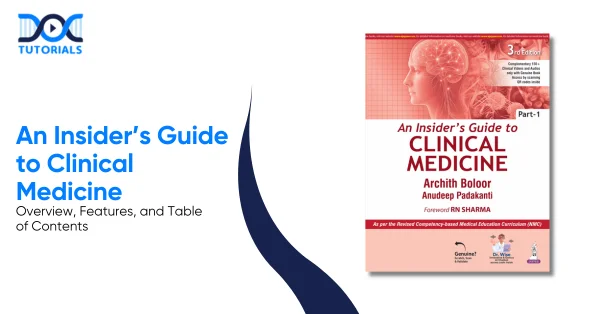
An Insider’s Guide to Clinical Medicine

An Insider’s Guide to Clinical Medicine, authored by Archith Boloor, is the one-stop solution for practical examination preparations for both undergraduate and postgraduate medical students.

Medical students prefer this textbook for the PG residency course because it is easy to read, provides conceptual explanations, and is full of visual aids for memorisation. Additionally, the fresh design and colours of the textbook make it easy to read and comprehend.

Keep reading to have a detailed insight into an Insider’s Guide to Clinical Medicine!

Overview of an Insider’s Guide to Clinical Medicine

An Insider’s Guide to Clinical Medicine is an essential textbook for PG residency medical students that helps them understand symptom-based diagnosis through visual diagrams and concept maps.

An Insider’s Guide to Clinical Medicine is authored and peer-reviewed by experienced medical mentors. It is a practical and student-focused textbook for building clinical confidence in the PG Residency medical course.

The textbook is aligned with the latest MBBS and PG curriculum to present symptom-based, clinically oriented chapters that emphasise the real-world challenges in the medical domain. The book provides clear details on differential diagnosis and examination techniques, helping students understand clinical examinations in a more structured and efficient manner.

It is essential to note that the textbook’s font size, colour, and page breaks have been adjusted for better, more efficient reading. The textbook covers common clinical assessment techniques, including common examination cases, general examination, cardiovascular, respiratory, and nervous system examinations.

It includes a comprehensive geriatric assessment, rheumatologic and gastrointestinal system assessments, an approach to psychiatric illness, a systematic approach to chest X-rays, and several other instruments. Some common clinical examination concepts pertinent to university clinical examinations are discussed in detail.

In the latest edition, the authors have also added a detailed section on history taking. Numerous images have been added for visual experience and vector memorisation. Therefore, the textbook is strongly recommended for medical students, teachers and PG Residency interns.

Features of an Insider’s Guide to Clinical Medicine

An Insider’s Guide to Clinical Medicine is an essential textbook for medical students as it provides visual memory aids, case sheets for diagnosis, and video lectures through QR codes, making it a suitable resource for medical practical examinations and vivas.

An Insider’s Guide to Clinical Medicine is a gold standard for clinical examination for medical students. Here are the essential characteristics of the textbook, which make it a standout among other similar resources:

  • The textbook includes numerous easy-to-read visual memory aids, along with conceptual explanations to support better memorisation and effective understanding.
  • The chapters provide comprehensive information in compact boxes and diagrams, making it a useful tool for revision before examination.
  • It is the only textbook on clinical examination that includes dedicated chapters on rheumatology and comprehensive assessments of geriatric and psychiatric illnesses, making it unique among other resources.
  • The textbook has won the 2020 Award for Excellence in Book Production from the Federation of Indian Publishers, making it an essential resource for medical students in PG residency.
  • The textbook includes case sheets and diagnosis formats to help understand cases in each system and build confidence through clinical examinations across different medical scenarios.
  • It is the only textbook to comprehensively cover all aspects of practical examination, including long cases, short cases, semi-long cases, Potters, laboratory data, and interpretation instruments for a comprehensive understanding of clinical examination.
  • The recent edition of the textbook has a dedicated section on history-taking and common drugs to ensure it remains relevant in the current medical world.
  • This textbook on clinical examination has been authored by experienced teachers and includes real-world clinical challenges and practical insights that help students to gain real-world experience in clinical assessments.
  • This textbook has been crafted to help students prepare for practical examinations and vivas.
  • The textbook includes QR codes linking to video demonstrations of examinations to help students prepare for real-world simulations and achieve better scores.

Table of Contents in an Insider’s Guide to Clinical Medicine

An Insider’s Guide to Clinical Medicine has been divided into four parts, followed by 27 chapters that cover essential details on clinical examination, academic medicine, academic duties, and facets of academic life.

An Insider’s Guide to Clinical Medicine includes all the essential topics related to clinical examination. Here are the contents of the textbook, structured for better understanding:

Part 1: Academic Medicine as a Complex

  • Introduction: Inside What?
  • The Ecosystem of Academic Medicine and Academic Health Centres
  • The Tripartite Mission of Academic Medicine
  • The (Not So) Hidden Objectives: The Pursuit of Prestige

Part 2: Academic Duties

  • Prelude and Introduction to this Section
  • To Teach
  • To Mentor
  • To Serve
  • To Discover
  • To Publish
  • To Tell the Truth
  • To Reach Beyond the Walls
  • To Change

Part 3: Facts of Academic Life

  • Introduction to this Section
  • Academic Systems-Based Practice: the Knack and How to Get It
  • Reputation and Connections
  • Promotion and Tenure (or not)
  • Rejection
  • The Imposter Syndrome
  • Burnout
  • Interprofessional Practice and Education
  • Collaboration: From Scholarly Collaboration to Peer Mentoring and Friendship
  • Frustrations Part 1: Why is it So Difficult to Improve Quality of Health Care?
  • Frustrations Part 2: Tales of Bureaucracy- Rule by Desks
  • Moving (or at Least Thinking About it)
  • Another Perspective by Mamta K. Singh with an Introduction by David C. Aron

Part 4: Final Thoughts

  • Word of Wisdom?

Importance of an Insider’s Guide to Clinical Medicine

Medical students usually prefer An Insider’s Guide to Clinical Medicine because it helps them stay ahead in examinations with clinically focused content, prepare effectively for practical examinations, and revise effectively through the video library and diagrams. 

An Insider’s Guide to Clinical Medicine is essential for PG residency students due to the following reasons:

  • Clinically-Focused Content

The textbook includes content relevant to the real examination and clinical settings to support effective understanding. It focuses on high-yield topics, care-based learning, and practical application, without stuffing the content with unnecessary theory.

It helps you understand the concepts quickly and memorise them easily for the clinical assessments and written examinations.

  • Practical Exam Preparation

Practical examinations and viva tests not only test your theoretical knowledge but also your clarity, confidence, and ability to explain concepts effectively. Therefore, it is essential to choose a textbook that provides structured answers to commonly asked viva questions, examination methods for practicals, and clinical tips to help you respond accurately and confidently in vivas.

  • Revision Manual and Video Library

Rather than going through multiple resources for a single topic, students can use this textbook as it is an all-in-one guide that combines detailed explanations for practicals, quick revision notes, diagrams, and access to video content for a better learning experience.

Therefore, it saves time, reduces confusion, and ensures that you have everything you need for revision and last-minute preparation.

FAQs about an Insider’s Guide to Clinical Medicine

  1. What is the use of an Insider’s Guide to Clinical Medicine?

An Insider’s Guide to Clinical Medicine is a practical textbook that helps medical students in the PG residency course understand real-world clinical practice. It focuses on common cases, diagnostic reasoning, and exam-oriented topics to improve understanding.

Therefore, the textbook bridges the gap between theoretical concepts and real-world hospital experience, providing a relevant understanding of clinical cases.

  1. Who should read an Insider’s Guide to Clinical Medicine?

An Insider’s Guide to Clinical Medicine is an ideal textbook for medical students in MBBS, interns, and early postgraduate trainees in PG residency. Therefore, anyone preparing for the clinical postings, practical examinations and vivas can read this textbook.

It is useful for students who feel overwhelmed in wards and want a structured approach to examine patients confidently.

  1. Is an Insider’s Guide to Clinical Medicine useful for exam preparation?

Yes, an Insider’s Guide to Clinical Medicine is a highly exam-oriented textbook useful for medical students’ exam preparation, as it highlights frequently asked questions, important clinical science, and key topics tested in practicals and viva.

It helps students revise concepts more easily and focus on high-yield material, saving time and improving performance.

  1. Does an Insider’s Guide to Clinical Medicine cover practical examination skills?

Yes, the textbook covers practical examination skills by explaining step-by-step methods for examining patients. Additionally, teaches the students how to present findings logically to the examiners for better scores.

Therefore, the structured approach is used in the textbook to help the students perform better during clinical examinations and real patient encounters in the clinical setting.

  1. Is the language of an Insider’s Guide to Clinical Medicine easy to understand?

Yes, students prefer an Insider’s Guide to Clinical Medicine because it uses simple, clear language rather than complex medical jargon, helping them understand the concepts more easily.

The concepts are explained in a straightforward manner, making it easier for students to grasp quickly. Hence, this approachable style makes it suitable for fast reading during busy clinical rotations and last-minute revisions.

  1. Does the textbook include real clinical cases?

Yes, the textbook includes several sections that are based on real hospital scenarios. The case-based explanations help students understand how diseases present in real patients, rather than only in theory.

This supports accurate clinical reasoning, diagnostic thinking, and the ability to connect symptoms with underlying conditions.

  1. Can beginners in the medical field use an Insider’s Guide to Clinical Medicine?

Yes, medical beginners can use an Insider’s Guide to Clinical Medicine, as the book starts with fundamental clinical methods and generally builds towards more complex topics. Additionally, the diagrams and video lectures accessible via QR codes in the textbook make it easier for beginners, helping them overcome fear and confusion during their first clinical postings.

  1. Is an Insider’s Guide to Clinical Medicine useful for viva exams?

Yes, an Insider’s Guide to Clinical Medicine is extremely helpful for viva examinations, as it includes commonly asked viva questions, model answers, and strategies for responding clearly and confidently to examiners.

It helps students think in real examination scenarios and explain concepts verbally, which is crucial for scoring well in oral examinations.

  1. Does an Insider’s Guide to Clinical Medicine replace standard textbooks?

An Insider’s Guide to Clinical Medicine is not intended to replace standard medical textbooks; it serves as a complement to them.

It means that the standard textbooks provide detailed theories, while this guide focuses on practical understanding, quick revision and exam readiness. Therefore, using both resources together gives the students a strong foundation and real-world clinical insights.

  1. What is the content of an Insider’s Guide to Clinical Medicine pdf?

An Insider’s Guide to Clinical Medicine 2nd edition pdf includes all the essential details medical students need for practical examinations and vivas, such as practical strategies, shortcuts, and unwritten rules that experienced clinicians know, but textbooks rarely mention.

Conclusion

An Insider’s Guide to Clinical Medicine serves as a practical companion for medical students in the PG residency course, helping them navigate the transition from theory to real patient care. By focusing on bedside skills, clinical reasoning and exam-oriented preparation, the textbook builds both knowledge and confidence.

For further guidance, DocTutorials can be your study partner. We offer Viva preparation & OSCE, clinical case discussions, patient history-taking, and videos covering the PG Residency syllabus. This helps ensure residents gain clarity over complex medical concepts.
DocTutorials App Download Now

Latest Blogs

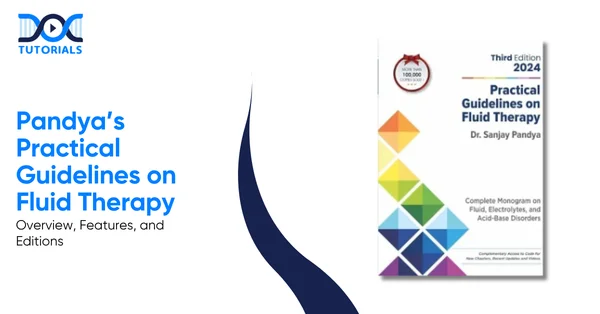
Pandya’s Practical Guidelines on Fluid Therapy: Overview, Features, and Editions

Practical Guidelines on Fluid Therapy is a popular reference in postgraduate training, particularly amongst residents who work with hospitalised and critically ill patients. It is written by the author, Dr Sanjay Pandya. It presents a practical, evidence-based method of IV fluid administration, electrolyte balance, and acid-base fluid disorders.

This guide is an overview of Practical Guidelines on Fluid Therapy as a vital source of PG residency training, and how it will enhance decision-making abilities in fluid, electrolyte and acid-base disorders. Keep reading to know more.

Overview of Practical Guidelines on Fluid Therapy

Practical Guidelines on Fluid Therapy is a concise, bedside-focused monograph that deals with IV fluids, electrolytes and acid-base disorders. It emphasises practical implementation with dosing algorithms, clinical knowledge, and troubleshooting in the medical, surgical, pediatric, and obstetric cases.

Practical Guidelines on Fluid Therapy is designed to represent an easy-to-understand monograph of IV fluid, electrolytes, and acid-base disorders. It does not focus exclusively on theory; it is more about bedside implementation, using dosing algorithms, clinical understanding, and informal troubleshooting of standard clinical cases.

Its main focus is to help clinicians manage the salt-water imbalances safely and efficiently among different patient groups (medical, surgical, pediatric, and obstetric). The book highlights some of the important practical features contributing to effective decision-making in a real-life environment.

Key characteristics include:

  • Comprehensive Content: The book includes both basics (physiology of fluids, IV solutions) and advanced (electrolyte disorders, acid-base, parenteral nutrition) issues.
  • Clinical Focus: It focuses on the application of IV fluids. The composition and the indications of crystalloids and colloids are explained, with contraindications and guidelines for rapid response to fluid problems.
  • Problem-oriented Layout: Specific chapters deal with medical and surgical patients affected by fluid/electrolyte problems. For example, a chapter on the complications of hypotonic saline, shock resuscitation, burn formulas, renal and endocrine disease, etc. This assists residents in finding solutions to certain clinical cases.
  • Clear and Simplified Approach: Complex concepts are broken down into charts and stepwise plans. The text contains tables, algorithms, and bullet points to reflect decision steps (e.g. when to use a fluid bolus).

Structure of Pandya’s Practical Guidelines on Fluid Therapy, 3rd Edition

The structure of Pandya’s Practical Guidelines on Fluid Therapy outlines the book’s organisation into parts and chapters. It highlights key topics and chapters most relevant to surgical residents, monitoring and parenteral nutrition.

Practical Guidelines on Fluid Therapy is organised into 12 parts. Each part groups related chapters:

Part 1

1. Basic Physiology

Part 2

2. Overview of Intravenous Fluids

3. Dextrose and Sodium Chloride Solutions

4. Balanced Solutions

5. Colloid Solutions

Part 3

6. Principles of Fluid Therapy

7. Maintenance Fluid Therapy

8. Resuscitation Fluids

9. Fluid Therapy in the Elderly

Part 4

10. Calcium and Hypertonic Dextrose Solutions

11. Hypertonic Saline

12. Magnesium Sulfate

13. Potassium Chloride and Phosphate

14. Sodium Bicarbonate

Part 5 (Online Access)

15. Fluid Assessment and Monitoring

16. Basic and Non-Invasive Hemodynamic Monitoring

17. Static Hemodynamic Monitoring

18. Fluid Responsiveness Techniques

19. Cardiac Output Monitoring

Part 6

20. Hyponatremia

21. Hypernatremia

22. Hypokalemia

23. Hyperkalemia

24. Hypocalcemia

25. Hypercalcemia

26. Hypophosphatemia

27. Hyperphosphatemia

28. Hypomagnesemia

29. Hypermagnesemia

Part 7

30. Basic Understanding and Approach to Acid-Base Disorders

31. Metabolic Acidosis

32. Metabolic Alkalosis

33. Respiratory Acid-Base Disorders

Part 8

34. Gastrointestinal Losses and Upper GI Bleeding

35. Ascites in Cirrhosis

36. Hepatic Encephalopathy

37. Hepatorenal Syndrome

38. Acute Pancreatitis

39. Fluid Therapy in Bronchial Asthma, ARDS, and in Ventilation

40. Diabetic Ketoacidosis

41. Neurological Disorders

Part 9

42. Preoperative Fluid Therapy

43. Intraoperative Fluid Therapy

44. Postoperative Fluid Therapy

45. TURP Syndrome

46. Burns

47. Urinary Diversion

Part 10

48. Resuscitation and Maintenance Fluid in Children

49. Replacement Fluid Therapy in Children

50. Oral Rehydration Therapy

Part 11 (Online Access)

51. Fluid Management during Pregnancy

52. Fluid Management for Cesarean

53. Fluid Management in Preeclampsia and PPH

54. Hyponatremia during Labour

Part 12 (Online Access)

55. Parenteral Nutrition: Principles and Requirements

56. Parenteral Nutrition in Specific Diseases

57. Parenteral Nutrition: Administration and Complications

Key Features of Pandya’s Practical Guidelines on Fluid Therapy

Fluid Therapy by Sanjay Pandya presents some major upgrades, including separate pediatric and obstetric units, a detailed discussion of hemodynamic monitoring methods, and a thorough discussion of total parenteral nutrition. The book provides a contemporary, holistic view of fluid therapy, with digital materials, increased imagery, and an emphasis on fluid stewardship.

Practical Guidelines on Fluid Therapy by Dr Sanjay Pandya is characterised by its practical bedside-based approach to fluid, electrolyte, as well as acid-base management.

The most recent version further expands the clinical relevance through the introduction of modern concepts, increased coverage, and evidence and is useful to postgraduate trainees and practising clinicians.

Key comparative enhancements include:

  • Specialised Patient Cohorts: The introduction of completely new chapters on pediatric resuscitation, oral rehydration therapy, and maternal fluid control in pregnancy, cesarean delivery, and labour.
  • Advanced Hemodynamic Monitoring: A shift of the established methods of static monitoring with the newer, provocative, dynamic parameters of fluid responsiveness, including passive leg raise and pulse contour.
  • Total Parenteral Nutrition: An extensive new section describing the principles, clues, disease-specific needs, and complications in parenteral nutrition.
  • Digital Integration: The newer upgrade bridges the gap between physical textbooks and digital learning by having a free access code that people can use to keep updating continuously, to access future chapters and even instructional clinical videos.
  • Expanded Topics: New information on fluid stewardship (e.g., four rights of fluid prescribing) and risks of overhydration is introduced.

Current critical care practice is integrated in the chapters on dynamic monitoring (passive leg raise, stroke volume variation).

  • Visual aids: It introduces additional figures, flowcharts, and insight tables to accelerate lookups. Colour-coding and boxes highlight vital information for easy access during rounds.
  • Global perspective:  Even though the 3rd edition was written in India, it is oriented toward international readers. Both high and low resource settings are discussed with recommendations that include oral rehydration (in cases of cholera).

Practical Guidelines on Fluid Therapy, 3rd Edition

The Practical Guidelines on Fluid Therapy, 3rd edition, was released in April 2024. Being the latest version, it represents significant progress in evidence-based practice, revised clinical guidelines, and developing fluid, electrolyte, and acid-base management. This edition builds upon the previous editions and turns the book into a clinically useful tool.

The most recent edition is an entirely revised and expanded monograph of more than 750 pages, arranged in 12 parts and 57 chapters.

It has been published under the supervision of Sanjay Pandya and made available through medical publishing houses such as Nirali Prakashan, and has since expanded into a detailed reference text familiar to postgraduate trainees and clinicians.

New issues are added regularly to align with fast changes in critical care and nephrology. The 2024 edition is based on the earlier editions with a number of significant upgrades, such as:

  • Integrates recent guidelines in fluid resuscitation, electrolyte replacement, and critical care guidelines.
  • Covers a wider scope of topics, including specialised sections in clinical situations of different disciplines.
  • Provides access to online updates, additional chapters, and instructional videos, forming a hybrid model of learning.
  • Includes more in-depth coverage of areas like advanced hemodynamic monitoring, obstetric fluid therapy, and parenteral nutrition.
  • Integrates an elaborate print format and digital resources, which can be accessed easily by the learners in various environments.

Editions and Updates of Pandya’s Practical Guidelines on Fluid Therapy

The first edition appeared in 2002; the 3rd edition (2024) is fully revised with current evidence. Compared to previous editions, which only treated and looked at basic fluid and electrolyte care, the revised 3rd edition (2024) includes recent evidence, more coverage, and specialised areas, making it a comprehensive modern resource.

With the initial publication in 2002, the awareness of IV resuscitation, electrolyte balance, and hemodynamic monitoring has increased greatly, with major trials reorganising treatment regimes and necessitating the need for updated resources.

At first, the editions concentrated on fundamental concepts such as fluid computations, IV pharmacology and routine electrolyte disorders. Although simple and clear, they were predominantly adult-oriented and covered little on pediatric and obstetric aspects, highlighting the need for a more comprehensive text.

Practical Guidelines on fluid therapy, 3rd edition (2024), exemplifies a significant change. Completely updated and developed, it becomes a detailed monograph with a wider focus, revised evidence, and at least a chapter on specialised groups of patients. It renders it a more comprehensive and clinically relevant resource.

The table below provides an outline of the structural development of the textbook throughout its editions:

Feature1st & 2nd Editions (2002)3rd Edition (2024)
LengthAround 325 pagesExpanded to 750+ pages
Content StructureLimited core chapters57 detailed chapters across 12 parts
Pediatric CoverageMinimal focusSpecialised sections about neonates and children.
Obstetric CoverageGeneral guidelines onlyDedicated section on preeclampsia, labour and cesarean care.
Nutritional SupportBasic IV supplementationComprehensive discussion of total parenteral nutrition.
Learning FormatPrint-only resourceHas access to online chapter and instructional videos.

Practical Guidelines on Fluid Therapy: Comparison with Leading Textbooks

Practical Guidelines on Fluid Therapy by Dr Sanjay Pandya takes a special place in fluid and electrolyte textbooks, and strikes a balance between clinical utility and adequate theoretical foundation. Other books have detailed physiology, visual learning, or niche care, whereas the book by Pandya balances out these with a problem-oriented approach.

In clinical medicine, Practical Guidelines on Fluid Therapy is often compared to texts such as Clinical Physiology of Acid-Base and Electrolyte Disorders by Burton David Rose, The Fluid, Electrolyte and Acid-Base Companion by Sarah Faubel and Joel Topf, and the handbook by the American Society for Parenteral and Enteral Nutrition.

The book by Pandya emphasises practical, algorithmic bedside care, whereas the books by Burton, David Rose, Sarah Faubel, and Joel Topf stress simplified learning, and the American Society for Parenteral and Enteral Nutrition implements protocol-driven nutrition care. Therefore, Pandya has the most versatile text to be used in everyday clinical practice.

In general, Pandaya succeeds in filling the gap between theory and practice. Although Burton David Rose has unparalleled physiological depth, Sarah Faubel and Joel Topf make learning easy, and the American Society for Parenteral and Enteral Nutrition is more concerned with nutrition-based care, the book by Pandya remains the most practical and versatile resource for everyday clinical use.

The table below describes the major key differences of the features across major fluid therapy resources:

Analytical AreaPandya’s Practical Guidelines on Fluid TherapyBurton RoseFaubel & Topf CompanionASPEN Handbook
Core ApproachProblem-centred, algorithmic,  bedside-focused.Deep physiological and molecular knowledge.Q&A, visual, interactive learning.Protocol-driven, nutrition-focused.
Clinical UtilityHigh- best suited to real-time decisions.Moderate- best conceptual clarity.Moderate – most appropriate in early learning.High but limited to nutrition/ICU scope.
Content DepthBalanced (Equal emphasis on theory and application).Very elaborate basic science.Focused on core concepts.Focused, niche coverage.
Target AudienceResidents, doctors, intensivists.Nephrology fellows, academicians.Junior residents, medical students.Pharmacists, ICU teams, and nutritional professionals.
Scope of TopicsBroad multi- specialty (medical, surgical, pediatric, obstetric).Primarily renal physiology.Core electrolytes and acid-base only.Nutrition and fluid balance.
Distinct StrengthBridges’ theory, including bedside fluid prescription.Gold standard for pathophysiology.Very pictorial and simple to grasp.Strong integration with nutrition support.

Practical Guidelines on Fluid Therapy: Clinical Relevance for PG Surgical Residents

Fluid therapy plays an important role in enhancing patient outcomes in the field of surgery. This part will describe how the topics of the book are applicable to surgical training, such as perioperative care, trauma resuscitation, and complication management.

The concept of fluid management is an everyday requirement for a surgical trainee. Dr Pandya’s book addresses key surgical scenarios:

  • Perioperative Management: Guides pre- and post-operative fluid planning, such as dehydration testing, intravenous fluids requirements and schedule of oral intake.
  • Intraoperative Care: Covers the use of fluid to replace blood and insensible losses, risk factors such as overload or coagulopathy.
  • Burn Resuscitation: Gives formulas and monitoring points to control significant increases or decreases of fluids in burn patients.
  • TURP Syndrome: Explains the process of water intoxication caused by glycine irrigation and how it can be treated.
  • Trauma/Sepsis: Provides shock management algorithms that are in line with existing sepsis protocols.
  • Complication Prevention: Offers guidance on electrolyte balance, particularly, safe correction of sodium to avoid neurological complications.

FAQs about Sanjay Pandya’s Fluid Therapy

  1. What is the Practical Guidelines on Fluid Therapy book about, and who is it for?

It is a clinical handbook which is authored by Sanjay Pandya and encompasses IV fluids, electrolytes and acid-base disorders. It is aimed at doctors, surgeons, and, specifically, the postgraduate residents, with a brief, case-based format to be used in clinical applications.

  1. What makes the Practical Guidelines on Fluid Therapy book different from standard textbooks?

Unlike heavy-theory texts, Practical Guidelines on Fluid Therapy is practice-based; it includes step-by-step management, quick tables, and direct treatment guidelines to make decisions at the bedside.

  1. What is new in the 3rd edition (2024) of Practical Guidelines on Fluid Therapy?

The most recent version of Practical Guidelines on Fluid Therapy has new evidence, revised sepsis protocols (e.g., 30 mL/kg fluids), new monitoring techniques and improved visuals for clarity.

  1. Does the Practical Guidelines on Fluid Therapy book cover surgical fluid management?

Yes, the Practical Guidelines on Fluid Therapy gives extensive coverage of surgical scenarios, such as how to plan perioperative situations, intraoperative fluid losses, postoperative burn resuscitation, and complications, such as TURP syndrome.

  1. Are the recommendations evidence-based in Practical Guidelines on Fluid Therapy?

Yes, the Practical Guidelines on Fluid Therapy book aligns with international guidelines as well as the latest studies in critical care, making fluid therapy practices safe, up to date, and clinically relevant.

  1. Is the Practical Guidelines on Fluid Therapy book useful for exam preparation?

Absolutely. The Practical Guidelines on Fluid Therapy book addresses high-yield concepts of fluid calculations, electrolyte imbalances, and shock management, and provides brief summaries and tables, making it helpful in a quick revision.

  1. Do the Practical Guidelines on Fluid Therapy contain real clinical situations?

Yes, the content is case-based and problem-driven, which helps the reader to understand how concepts might be applied to an actual clinical situation.

  1. What is the Practical Guidelines on Fluid Therapy’s contribution to routine practice?

The Practical Guidelines on Fluid Therapy book provides rapid-reference algorithms, stepwise managerial plans, and valuable suggestions that enable quick and accurate bedside decision-making.

  1. Is there a digital or e-book version available of the Practical Guidelines on Fluid Therapy?

Yes, the Practical Guidelines on Fluid Therapy book can be accessed digitally, so users can search, highlight interesting ideas and access the book at any time they wish to during clinical work.

  1. Why are the Practical Guidelines on Fluid Therapy popular among the residents?

The Practical Guidelines on Fluid Therapy book  is practical, brief and bedside oriented, which makes it ideal for busy residents who are in search of quick, reliable guidance when handling patients.

Conclusion

Practical Guidelines on Fluid Therapy equips postgraduate residents with a strong foundation of the evidence-based approach to fluid, electrolyte, and acid-base management practices. The latest version aligns with the current set of guidelines, which help trainees make accurate, fluid decisions and improve patient outcomes.

For further guidance, DocTutorials can be your study partner. We offer Viva preparation & OSCE, clinical case discussions, patient history-taking, and videos covering the PG Residency syllabus. This helps ensure residents gain clarity over complex medical concepts.

Join DocTutorials today and explore our PG Residency course to excel in your medical career!

DocTutorials App Download Now

Latest Blogs

DNB or MD/MS: Comparing Career Growth and Opportunities

Enter Mobile Number

Enter your mobile number to access study materials
Enter valid phone number
📱 OTP via SMS
qBE@5c
Enter the code exactly as shown (case sensitive)
We'll send you a verification code

Verify OTP

OTP sent to

Complete Registration

Academic Details

🎓 Please provide your academic information

Processing...
No internet connection. Please check your network.
✓ Session Active
DNB vs MD/MS

Choosing the suitable postgraduate medical degree is a major milestone in the career path of every MBBS graduate. After years of dedication, preparation for NEET-PG, and clinical exposure, choosing between DNB and MD/MS can be quite daunting.

All aspirants share common questions about which course offers better recognition, future scope, higher salaries, and stronger superspecialty pathways. The fact is that DNB and MD/MS are equally excellent opportunities, but the best choice depends on the kind of career you want.

This blog post breaks down every important difference so you can make a confident and well-informed choice. Keep reading for a detailed insight.

What is DNB?

DNB full form in medical degree for Diplomate of National Board. This section explains how DNB training works and why its clinical exposure is highly valued.

The DNB full form in the field of medical science is Diplomate of the National Board. It is a degree awarded by the National Board of Examinations, an autonomous body under the Ministry of Health & Family Welfare, Government of India.

To pursue admission to a DNB course, candidates have to clear NEET-PG, just like aspirants of MD/MS. This postgraduate degree is usually 3 years in duration with mandatory academic activities, logbooks, and a rigorous examination. DNB is conducted primarily in:

  • Corporate multispecialty hospitals
  • Private medical centres
  • High-volume referral hospitals
  • Selection of NBE-Accredited Government Hospitals

These institutions often handle a high volume of patients, thereby providing extensive hands-on, procedural, and clinical exposure. In specialities such as anesthesiology, radiology, critical care, and cardiology, DNB candidates are frequently exposed to a wide variety of patient profiles.

Additional Benefits:

  • Regular audit of training standards
  • The rotation postings ensure wider exposure.

Nationally uniform examinations improve competency levels. There used to be misconceptions that DNB is “inferior,” but with changing health care needs, policy updates, and international recognition, this perception is fast fading away.

What is MD/MS?

MD (Doctor of Medicine) and MS (Master of Surgery) are university-based postgraduate degrees known for academic rigour and teaching-oriented training.

MD (Doctor of Medicine) and MS (Master of Surgery) are awarded as postgraduate degrees by universities recognised by the National Medical Commission. Training is based on:

  • Government medical colleges
  • Deemed universities
  • Private medical colleges affiliated with a university

These institutions remain the backbone of India’s medical education with a large, structured academic faculty. Salient Features of MD/MS:

  • Strong academic & research exposure
  • Regular seminars, journal clubs, tutorials
  • Excellent opportunity to teach undergraduates
  • Easier access to cadaver labs and structured departments for MS

Students pursuing the MD/MS course appreciate the teaching atmosphere, monitoring by professors, and the historical prestige accompanying university qualifications. Traditionally, MD/MS has dominated the specialities of General Medicine, Paediatrics, Ophthalmology, and Dermatology.

DNB vs MD: Differences in Training Environment

Understand how DNB vs MD differ in patient load, academic learning, exam difficulty, faculty engagement, hospital setup, and real-time procedural experience that shapes long-term clinical skills and confidence.

Although both degrees are postgraduate qualifications, their environments and expectations differ. Refer to the table below:

AspectsDNB MD/MS
FeatureDNB/DrNB (Diplomate of National Board/Doctorate of National Board)MD/MS (Doctor of Medicine/Master of Surgery)
Training SetupCorporate/private hospitals, or large government hospitals.University medical colleges (government or private).
Case VolumeUsually high and diverse, as training centres are often busy hospitals.High in large government medical college setups; variable in private colleges.
Teaching CulturePractical and patient-centric; focus often on clinical skills and hands-on experience.Structured academic focus; emphasises theory, didactic lectures, and departmental rotations.
ResearchDepends heavily on the specific institution and supervisor’s interest; often less structured.Strong involvement and emphasis on mandatory thesis/dissertation and publications.
Faculty AvailabilityBased on the specialists available and working in the hospital.Academic faculty are specifically dedicated to teaching, often with defined teaching roles.
AssessmentStrict national-level exit exam (DNB Final Exam) with high uniformity.University-level exams may vary in marking and structure across universities.

What is the Career Growth after DNB and MD/MS?

Both DNB and MD/MS graduates can have rewarding career growth with eligibility for consultant posts, teaching roles, research careers, and hospital administration in government and corporate institutions nationwide.

Here’s what both the DNB and MD/MS graduates can pursue professionally after their course completion:

  • Specialist Doctor in the Government and Private sectors

Both qualifications equally allow you to serve as a specialist across public hospitals and corporate healthcare institutions.

  • Senior Resident and Consultant

Graduates can start as Senior Residents and then go to Consultant based on their experience, performance, and clinical acumen.

  • Medical Educator with Necessary Eligibility Criteria

Eligible candidates may thus be admitted as faculty in medical colleges when they fulfil NMC teaching norms for their speciality.

  • Superspecialty Trainee in DM/MCh

Either of these degrees gives full eligibility for higher training in medical and surgical super-specialities.

  • Research Roles in National or Autonomous Institutes 

Both pathways bring opportunities for research roles in reputed institutions like ICMR, AIIMS, and other academic centres.

  • Private Practitioner in Clinical Specialities 

Once registration requirements are completed, doctors with either qualification are allowed to establish an independent clinical practice.

  • Superspecialty Opportunities (DM/MCh)

Both MD/MS and DNB are fully eligible for superspecialty training. The graduates will be eligible to appear for DM (medical superspecialties) and MCh (surgical superspecialties) solely based on NEET-SS.

Factors to Consider During DNB vs. MD/MS Job Opportunities

Explore how salaries, hiring preferences, and career security compare for DNB and MD/MS specialists across government institutions, corporate hospitals, private clinics, and international healthcare systems.

Listed below are the factors to consider while exploring your job opportunities after graduating from DNB or MD/MS:

  • Regional Preference

Recruitment preference in certain regions has always been given to MD/MS because of earlier governmental regulations and selection panels. But most states now offer equal recruitment to DNB graduates.

  • Equal Opportunities

Now, for DNB graduates, equal opportunities are provided. Most state and central medical recruitment boards grant official recognition to DNB as an equivalent, thus providing equal access to specialist posts.

  • Average Salary Range

Government departments pay specialists between ₹1,20,000 – ₹2,50,000 per month, based on state policies and experience.

  • Private & Corporate Hospitals

The graduates of DNB usually have a better edge in practical roles. Many of the DNB candidates get the opportunity to train in large private hospitals with a high load of patients, giving them strong hands-on exposure and confidence about procedures.

  • Salary Range in the Private Sector

Specialists can make ₹1,50,000- ₹4,50,000 per month, whereas those in high-demand and procedure-driven fields like GI endoscopy may earn ₹5 lakh or more per month.

  • Self-Practice/Clinic Setup

Both degrees offer full independent practice rights. Doctors with DNB or MD/MS are eligible to open clinics or start private practice once they complete the required registration formalities.

  • Earnings Heavily Rely on Reputation and Quality of Service

Success in private practice is not defined by the type of degree but rather by patient trust, consistent clinical outcomes, and good communication.

  • Opportunities Abroad

Accepted in multiple countries with licensing exams. Graduates of both programs are eligible to practice internationally once regional and examination requirements are met.

  • Recognition Snapshot

The UK accepts post-2017 DNB for GMC registration in certain specialities, the Middle East values both degrees due to strong clinical training, and the US mandates USMLE and residency regardless of postgraduate qualification.

DNB vs. MD/MS: Which Degree is Better for You?

Choosing between DNB and MD/MS depends on your learning style, future vision, interest in academic teaching versus clinical roles, and the type of medical practice you want to build.

There is no universal “best” choice. Instead, consider your goals and preferred career pursuits. Choose MD/MS if you want:

  • A teaching-oriented career in medical colleges
  • A structured academic mentorship system
  • More research focus and publications
  • Prestige attached to university titles

Choose DNB if you want:

  • Maximum clinical exposure & procedural skills
  • Career in private corporate hospitals
  • Patient interaction-based specialities
  • Flexibility to train in metro-based setups

FAQs about DNB or MD/MS Career Growth and Opportunities

  1. Is DNB equivalent to MD/MS for jobs?

Yes, NMC recognises them as equivalent for most teaching and clinical posts, with specific experience requirements where applicable.

  1. Is the DNB exam harder than the MD/MS exams?

Some people believe so because it is a national-level standardised examination with strict evaluation.

  1. Which one earns more: DNB or MD/MS?

While in private/corporate sectors, the salaries are generally at par, sometimes with DNB specialists earning more owing to stronger procedural experience.

  1. Can DNB doctors go for DM/MCh? 

Yes, both degrees have equal eligibility for NEET-SS/NExT-SS superspecialty seats. 

  1. Which is better for academic medicine? 

While MD/MS has traditionally been an academic favourite, recent changes in regulations have ensured that DNB holders are increasingly being recruited as faculty.

  1. What is the duration of DNB after MS?

The duration of the course is three years for postgraduates, such as MS, MD, or DNB. Candidates can also join after MBBS directly into an integrated six-year DrNB programme in limited super-specialty disciplines.

  1. Can DNB graduates apply for teaching posts in medical colleges?

Yes, DNB holders are eligible for faculty positions in medical colleges as per NMC guidelines.

  1. Why do candidates pursue MD after DNB?

DNB and MD/MS are equal in value if you want to practice in a private job in India. MD/MS degrees are considered more prestigious and offer more opportunities in academic and research fields.

  1. What career opportunities can one expect with DNB or MD/MS?

MD/MS opens more doors in academic, research, and teaching roles, while DNB is more beneficial for clinical practice and can lead to opportunities abroad.

  1.  What is DNB full form?

DNB full form in medical is Diplomat in National Board. It is a postgraduate degree awarded by the National Board of Examinations under the Union Ministry of Health, India. 

Conclusion

The DNB vs MD debate creates confusion among aspirants. In reality, both are respected and equivalent degrees that can lead to superspecialty excellence, high salaries, and fulfilling careers. Whether you are aiming for DNB or MD/MS, NEET-PG preparation shapes your options. 
For added guidance, DocTutorials can be your study partner. We offer Viva preparation with the OSCE, clinical case discussion, patient-history taking, and much more.

Join DocTutorials today and explore our PG Residency & DNB course to excel in your medical career!

DocTutorials App Download Now

Latest Blogs

Dr AV Gurava Reddy – Orthopaedic & Orthoplastic Surgeon

Dr AV Gurava Reddy Best Faculty for Orthopaedics

Dr. A. V. Gurava Reddy, one of the best faculties in Orthopaedics, brings over 33 years of experience in the field. With qualifications including MBBS, D (Ortho), DNB (Ortho), FRCS, and M Ch Ortho, he serves as a Chief Joint Replacement Surgeon. His dynamic and engaging teaching style simplifies complex concepts, providing students with both theoretical knowledge and hands-on insights into joint replacement surgeries. His expertise and approach make him an invaluable mentor for aspiring Orthopaedics professionals.

About Subject

What is Orthopaedic & Orthoplastic Surgeon?

An Orthopaedic and Orthoplastic Surgeon specializes in treating musculoskeletal conditions and performing reconstructive surgeries. They combine expertise in bone, joint, and soft tissue management, focusing on complex injuries, deformities, and reconstructive procedures.

Orthopaedic & Orthoplastic

117 Topics

  • Pathological Fractures
  • Genetics and Orthopaedics
  • Stem Cells and Therapy
  • Phagocytic Disorders
  • Immunology, Inflammation, and Cytokines
  • Articular Cartilage
  • Cell Biology
  • Menisci and Labrum Structure and Function
  • DVT

Total

117 Videos

Speciality of Orthopaedic & Orthoplastic In DocTutorials

Embark on a smoother PG Residency journey with our comprehensive breakdown of Orthopaedic & Orthoplastic topics. Featuring high-quality videos, real-life case studies, and expert insights, our experienced faculty ensures you grasp essential concepts, equipping you with the knowledge and confidence to excel in your exams.

Top Quality Videos

Top Quality Video lectures for conceptual understanding.

Qbank

PYQs

Practice expert-curated PYQs—accurate, concept-based, and exam-focused.

DNB Exam Result 2026: How to Check Your Result and Scoreboard?

DNB Exam Results

The DNB full form in medicine simply stands for Diplomate of National Board, but the qualification holds immense value. DNB results serve as proof of a candidate’s practical and theoretical knowledge and relevant skills in a particular medicine residency specialty. Correspondingly, the announcement of the result is crucial to any candidate preparing to pursue a career as a specialist.

The National Board of Examinations in Medical Sciences (NBEMS) has scheduled the DNB Final Practical Examination (June 2026 Session) for September 2026. The practical exams for specific specialties will be conducted between September 8, 2026, and September 11, 2026, and candidates can now download their admit cards from their OEEP accounts or view their allocated centers directly on the official NBEMS website. 

The result of DNB Final Theory Examinations – June 2026 has been declared on 24.08.2026. Click the button below to download the PDF. 

How to Check DNB Exam 2026 Results?

You can check the results of the DNB Exam 2026 now that they have been released to see whether you have qualified as a medical resident for admission into a postgraduate DNB programme. You will be able to check the merit list for your name; therefore, you must download the official PDF of your result or scorecard when it becomes available on the official portal.

You can check and download the DNB Exam 2026 results by following the steps outlined below:

  • Step 1: Visiting the Official NBEMS Website: The candidate should log in to the official website of the National Board of Examinations in Medical Sciences, natboard.edu.in.
  • Step 2: Results Section Access: Access the results section by clicking the “DNB Results/Examination” link on the homepage.
  • Step 3: Select the Exam: Click on ‘DNB Final Examination, June 2026’.
  • Step 4: Login Information: Enter your Roll Number / Candidate ID and Password / Date of Birth as required.
  • Step 5: Download Your Result: Your DNB 2026 result will be displayed on the screen. You can download the PDF scorecard or take a printout for future reference.
  • Step 6: Request Answer Scripts or Re-evaluation: Candidates may apply for digital copies of answer scripts or submit requests for re-evaluation through the NBEMS portal, if needed, within the notified timeline.

After this, download the DNB exam results and print a few copies for future reference.

What Information is Included in the DNB Exam Result 2026?

The DNB exam 2026 result is provided in PDF format, which includes the basic details. For a better understanding of the result, you can refer to their individual scorecards. The result includes the following information:

  • Marks in the exam
  • Candidate’s roll number
  • Rank for the relevant speciality

DNB Exam 2026: Result Announcement and Other Details

The DNB Final Exam is conducted twice a year. The final theory examination has concluded, and the final practical examination of the June 2026 session is scheduled to take place between September 8, 2026, and November 6, 2026. 

The details regarding the DNB Final Practical Examination June 2026 are provided below: 

Particulars Details 
Exam Dates September 8, 2026, to November 6, 2026 
Mode of Examination Practical Examination / Objective Structured Clinical Examination (OSCE) 
Admit Card & Centre Intimated and downloaded via the candidate’s Online Exit Examination Portal (OEEP) account 
Result Declaration Date To be announced 
Result Availability Will be available on the NBEMS site (natboard.edu.in) 

The tentative dates for the announcement of the DNB 2026 December session results and other details are provided below:

Key EventsTentative Dates
Exam DatesNovember 19, 20, 21 & 22, 2026
Mode of ExaminationComputer-based Test (CBT)
Admit Card AvailabilityDate yet to be announced
Exam StagesTheory + Practical
Eligibility for Practical ExamOnly candidates who qualify for the theory exam
Result Declaration DateTo be announced

DNB Exam 2026: Key Tips for DNB Candidates

Focusing on basic insights may help students focus on high-value topics, structure their answers, and manage their time in a better way. It shows accuracy, allowing students to gain a better understanding of the concepts.

Let’s check out the key insights and tips that every candidate must know:

  • Understand Common Hurdles

DNB students often struggle with different examiners’ high clinical standards and the need to learn a lot in a short time. Stress, worry about retaking exams, and not having expert guidance also make studying complex. Knowing these problems helps students plan more effectively and feel more confident in themselves.

  • Prepare for the Theory Test

To perform well on the theory part, start studying about 6–8 months before the test. You need to read standard books like the Bailey and Love surgery book, take brief notes for review, and write answers with clarity. Keeping up with new rules, reading journals, and learning about recent changes helps you get more right and score higher.

  • Get Ready for the Practical Test and Oral Exam

Success in practical tests needs daily case discussions, simulated viva practice, and comfort with instruments, X-rays, ECGs, and slides. Examiners care more about a step-by-step clinical method than memorised answers. Speaking with clarity and confidence may have a positive impact on final impressions.

  • Time Management Tips

Students should allocate most of their study time to theory (60–70%), while also developing their practical skills. Weekly goals, focused review in the last two months, and doing old exam papers help to speed up and get used to the test format. A well-planned schedule stops burnout and helps you retain more information.

FAQs about DNB Exam Result 2026

  1. What are the grace marks for the DNB exam?

A DNB candidate can get grace marks up to 2% of the total marks or 8 marks out of 400. Candidates are eligible for grace marks only if they come within the zone of consideration, which means candidates who score in the range of 192 to 199 out of 400.

Grace marks are applicable only to the theory examination. Only the candidates qualifying in theory are allowed to appear for the practical examination.

  1. How can I check my DNB exam result 2026?

To check your DNB Exam Result 2026, visit the official NBEMS website. Look for the DNB Results/Examination section. After that, click on the relevant DNB Final Theory Examination link and sign in using the provided roll number, password/date of birth. The screen will display your result, which can be downloaded or printed for further reference.

  1. What are the benefits of passing the DNB Exam?

Clearing the DNB exam ensures a highly valued postgraduate qualification throughout India and beyond. It offers strong clinical training, assessments, and unveils several opportunities for specialist posts, teaching jobs, fellowships, and advanced career opportunities in the medical field.

  1. Is the DNB result declared separately for theory and practical exams?

Yes. The DNB theory exam result is declared first. Only candidates who successfully qualify in the theory examination are permitted to appear for the DNB practical or clinical examination, which has a separate result announcement.

  1. What is the minimum requirement to pass the DNB exam?

To pass the DNB examination, candidates must obtain the minimum qualifying marks prescribed by NBEMS in both the theory and practical exams. There is no provision for grace marks under any circumstances.

  1. Can candidates apply for rechecking or re-evaluation of DNB results?

NBEMS does not allow rechecking or re-evaluation of DNB exam answer sheets. However, candidates may apply for photocopies of their evaluated answer scripts by following the official procedure and paying the prescribed fee.

  1. What happens if a candidate fails the DNB exam?

Candidates who do not clear the DNB exam can reappear in subsequent examination sessions, provided they are within the permitted number of attempts and training tenure.

  1. How are DNB results communicated to candidates?

DNB exam results are published online on the NBEMS official website. Candidates must download their scorecards themselves, as NBEMS does not send results individually through post, email, or any personal communication.

  1. Is the DNB result valid for future academic or professional use?

Yes. Once officially declared, the DNB result is valid and recognised across India. It can be used for higher academic pursuits, super-speciality admissions, teaching positions, and professional medical practice, as per NMC regulations

  1. What should candidates do after passing the DNB exam?

After successfully passing the DNB exam, candidates should complete all required post-result formalities. This includes document verification, submission of necessary certificates, and following NBEMS instructions to receive the final DNB degree.

Conclusion

The result of the 2026 DNB exam is the outcome of months of perseverance, long clinical hours, and commitment. As candidates move forward to the next phase of their medical journey, having the right guidance and resources becomes invaluable.

DocTutorials is a trusted learning partner offering complete medical courses for PG Residency and DNB. We provide expert Viva preparation, OSCE sessions, and clinical case discussions to help you succeed. We also offer high-quality hard-copy notes for MD General Medicine, DNB Pediatrics and MS General Surgery under our PG Residency programs, along with many other helpful resources.

Join DocTutorials today and explore our PG Residency course.

DocTutorials App Download Now

Latest Blogs

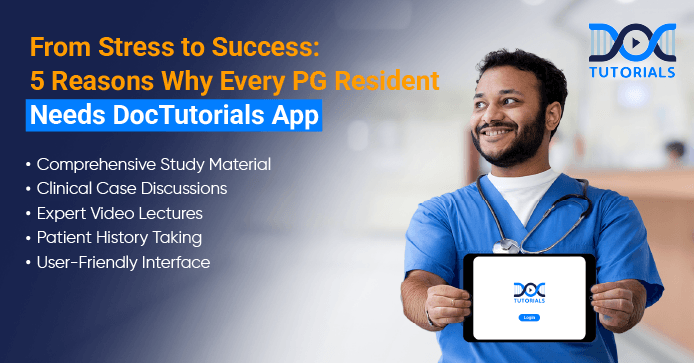
From Stress to Success: 5 Reasons Why Every PG Resident Needs DocTutorials App

Embarking on your journey to secure a PG residency is a pivotal step in your medical career. It’s a dream nurtured over years of rigorous study, dedication, and countless sacrifices. However, as daunting as the preparation might seem, having the right tools and resources can make all the difference. Enter the DocTutorials app—the ultimate companion for acing your PG residency preparation.

The Significance of PG Residency Preparation

Securing a postgraduate medical seat isn’t just about achieving high scores; it’s about being prepared for the competitive nature of entrance exams like NEET PG, INI CET, and others. These exams test not just your knowledge but also your ability to manage time, apply concepts, and handle pressure. That’s where specialized tools like the DocTutorials app step in, equipping you with everything you need to excel.

Why Choose DocTutorials for PG Residency Preparation?

When it comes to medical residency study tools, the DocTutorials app has emerged as a top contender. Let’s explore why this app is a game-changer for medical aspirants.

1. Comprehensive Study Material

The DocTutorials app boasts a vast library of high-yield content, tailored to meet the needs of PG residency preparation. From detailed video lectures by renowned faculty to concise notes and concept summaries, it covers the entire syllabus efficiently.

2. PG Residency Focused Test Series

Preparing for medical residency exams involves practicing a wide variety of questions. The app’s test series is meticulously designed, offering both topic-wise and full-length tests. With real-time performance analytics, students can identify their weak areas and improve effectively.

3. Expert Video Explanations

One of the standout features of the DocTutorials app is its video explanations for Grand Tests and practice questions. Understanding the reasoning behind every question helps students retain concepts better and builds confidence for exam day.

4. User-Friendly Interface

Studying for a PG residency is stressful enough; navigating your study app shouldn’t add to that. DocTutorials offers a seamless and intuitive experience, making it one of the best apps for medical residency preparation.

5. Mentorship and Guidance

A distinguishing feature of DocTutorials is the personalized mentorship from top-ranking doctors and faculty. These mentors provide insights into effective study techniques, time management, and stress management, ensuring students stay motivated throughout their preparation journey.

How the DocTutorials App Makes a Difference

Preparing for a PG residency requires more than just theoretical knowledge—it demands a strong foundation in clinical skills, diagnostic acumen, and practical preparedness. The DocTutorials app goes beyond conventional preparation tools, offering unique features that set it apart and make it a preferred choice for medical aspirants.

Clinical Case Discussions

The app includes in-depth clinical case discussions designed to sharpen your diagnostic skills. These sessions simulate real-world scenarios, enabling you to think critically, connect symptoms to diagnoses, and build confidence for clinical practice.

Patient History Taking

Mastering the art of patient history-taking is essential for making informed clinical decisions. The DocTutorials app offers guidance and practical tips to help you confidently gather crucial information, ensuring you’re well-prepared for both exams and real-life medical settings.

Comprehensive Video Lectures

The backbone of the app’s content is its comprehensive video lectures, which cover the entire PG residency syllabus. Delivered by expert faculty, these lectures focus on simplifying complex topics, reinforcing core concepts, and providing high-yield information to maximize your preparation.

Focused Viva & OSCE Prep for Orthopaedics

Practical exams can be intimidating, especially in specialized fields like orthopaedics. The DocTutorials app offers tailored Viva and OSCE (Objective Structured Clinical Examination) preparation to help you ace these critical components. By focusing on frequently tested cases and exam techniques, the app ensures you’re ready to excel in your practicals.

Tips to Maximize Your PG Residency Preparation

  1. Plan Your Study Schedule: Use the DocTutorials app to create a structured study plan.
  2. Regular Practice: Take full advantage of the app’s test series to refine your problem-solving skills.
  3. Revise Smartly: Use the app’s concise notes for quick revisions during the final days.
  4. Seek Guidance: Interact with mentors for expert advice and motivation.

Final Thoughts

Your journey to a successful PG residency begins with the right preparation strategy, and the DocTutorials app is your trusted partner in this endeavor. With its robust features, user-centric design, and unwavering focus on delivering results, it’s undoubtedly one of the best apps for medical residency preparation.
Don’t leave your future to chance. Download the DocTutorials app today and take the first step toward realizing your dream of a thriving medical career.

Latest Blogs

NEET PG Online Live Power Pack
DocTutorials App Download Now