Sweat Glands: Functions and Disorders
Sweating is often seen as an inconvenience. However, from a physiological standpoint, it is an essential function. Sweating is a tightly regulated process carried out by specialised structures known as sudoriferous or sweat glands.
These glands form the body’s built-in thermoregulatory system, maintaining core temperature and preserving homeostasis under varying environmental and metabolic conditions. Their activity also reflects underlying autonomic and metabolic processes, offering insights into overall physiological health. Keep reading to know more about sweat glands.
What are Sweat Glands?
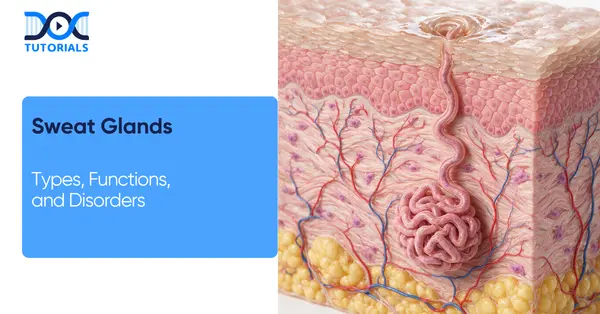
Sweat glands are tiny tubular structures beneath the skin that release sweat onto the skin’s surface. They are distributed throughout the body at varying densities and help regulate body temperature. In addition, they play minor roles in waste excretion and even social signalling.
In scientific terminology, sweat glands are also referred to as sudoriferous glands. These act like small tubular structures situated beneath your skin at its subcutaneous level. These glands are known as exocrine glands. They secrete their products through their ducts on an epithelial surface.
They are distributed throughout your body. However, they vary in their densities. For instance, your palms and soles carry them in higher concentrations than your back and limbs. They primarily contribute to thermoregulation. However, they also execute minor roles in excretion and social communication.
What are the Types and Functions of Sweat Glands?
There are 2 main types of sweat glands. Eccrine glands cool your body by producing watery sweat, while apocrine glands, found in areas like the armpits, produce thicker sweat that can cause body odour.
Human anatomy recognises 2 types of sweat glands: Eccrine and Apocrine. They differ in their locations, sweat composition, and triggers. They are as follows:
1. Eccrine Sweat Glands
These glands are generally referred to as ‘True Glands’ of your body. They are present in large numbers, totalling an estimated 2 to 4 million.
- Location: Eccrine sweat glands cover nearly the entire body surface. They are highly dense in areas of the soles, palms, and forehead.
- Structure: These look like coiled tubular glands opening directly on your skin’s surface through a pore.
- Secretory Product: Eccrine sweat is primarily 99% water, with electrolytes such as urea, sodium chloride, and trace amounts of lactic acid.
- Primary Function: When your core internal temperature rises, your hypothalamus signals these Eccrine glands to release fluid. As it evaporates, it absorbs heat from the environment and cools your body.
2. Apocrine Sweat Glands
Apocrine sweat glands are larger and more complex. Unlike the earlier ones, these glands remain inactive until puberty.
- Location: These glands are restricted to specific areas. A lot of them are concentrated around the axilla (armpits), the anogenital region, and the breast areola.
- Structure: Apocrine glands are situated deeper in the dermis and empty themselves into the hair follicles. They do not open up directly on your skin surface.
- Secretory Product: They secrete a thicker and milky fluid. This fluid is rich in proteins, steroids, and lipids. The sweat initially has no odour but later develops a pungent smell when attacked by the skin-dwelling bacteria.
- Primary Function: These glands are considered vestigial scent glands in humans. For animals, they play an important role in pheromone signalling and territorial marking.
Here’s an overview of both the sweat glands given in the table below:
| Feature | Eccrine Glands | Apocrine Glands |
| Size | Small | Large |
| Exit Point | Skin Surface (Pore) | Hair Follicle |
| Distribution | All over the body | Armpits, Groin, Areola |
| Activation | Birth | Puberty |
| Fluid Type | Watery, Salty | Thick, Oily |
Apocrine Glands (The Hybrid)
Unknown to many, hybrid apocrine glands are the third least studied and discussed type of sweat glands. The presence of these glands was identified in the adult axilla. They develop during puberty from eccrine-like precursors. However, their sweat secretion rate is much higher and contributes significantly to ‘underarm wetness.’
What are the Common Disorders of the Sweat Glands?
Sweat gland disorders occur when normal sweating is disrupted. This can lead to problems such as excessive sweating, insufficient sweating, heat rashes, or painful skin lumps. These conditions can cause both physical discomfort and affect daily life.
Significant physical discomfort occurs when the complex signalling between your nervous system and sweat glands malfunctions. Sometimes, it can result in psychological distress, too. Here are some of the common sweat gland disorders:
1. Hyperhidrosis (Excessive Sweating)
Hyperhidrosis, or excessive sweating, is characterised by sweating that exceeds your body’s thermoregulation requirements. It is of 2 types:
- Primary Focal Hyperhidrosis: This type is usually genetic and affects your hands, feet, and underarms.
- Secondary Generalised Hyperhidrosis: This type is usually a symptom of hyperthyroidism, menopause or diabetes.
2. Anhidrosis and Hypohidrosis (Lack of Sweating)
Anhidrosis and hypohidrosis are your body’s inability to sweat normally. It is actually life-threatening. When your body loses its ability to cool down, you are at high risk for heatstroke and organ failure.
3. Miliaria (Heat Rash)
Miliaria is generally referred to as ‘prickly heat.’ The condition occurs when your sweat ducts become clogged, trapping sweat beneath your skin. It results in inflammation, small itchy blisters, and redness.
4. Hidradenitis Suppurativa (HS)
Hidradenitis Suppurativa (HS) is a chronic inflammatory skin condition that results in painful lumps beneath the skin. These lumps usually develop near your apocrine glands. It is a complex phenomenon requiring long-term dermatological management.
FAQs about Sweat Glands
1. Does sweating “detoxify” the body?
It is a common misconception that sweating detoxifies the body. The primary detoxification organs are your liver and kidneys. While your sweat contains trace amounts of heavy metals or BPA (Bisphenol A), it primarily helps cool your body.
Q2. Why does sweat smell?
Your actual sweat will always be odourless. Bromhidrosis occurs when the fats and proteins present in your apocrine sweat. Eccrine sweat is mainly water and salt, and rarely contributes to a strong odour.
3. Why do I sweat when I’m nervous?
If you sweat while being nervous, you are probably dealing with a condition called ‘Emotional Sweating.’ Your hypothalamus controls your ‘Thermal Sweating’ to cool your body down.
Amygdala controls your ‘Emotional Sweating.’ It typically impacts your soles, palms, and armpits and contributes to your ‘fight or flight’ response.
4. Can antiperspirants help to stop sweating?
Antiperspirants contain aluminium-based salts. These salts temporarily plug the sweat ducts to reduce the surface moisture. However, they do not entirely stop your sweat glands from functioning. The effect produced is localised to the zone where you apply the product.
5. Why do some people sweat more than others?
Sweat rates vary with the number of active sweat glands. This count is determined during your early childhood based on body mass, fitness level, and genetics. Interestingly, highly fit individuals start sweating sooner and more profusely as their bodies turn hyper-efficient while cooling down.
6. Can I be allergic to my own sweat?
It is a rare phenomenon. Yes, you can be allergic to your own sweat, and this condition is known as Cholinergic Urticaria. It causes hives or a skin rash when your body temperature rises, and you sweat. It is essentially a hypersensitive reaction of your immune system to its sweating process.
7. Do we stop sweating as our age progresses?
Research indicates that ageing decreases the responsiveness of sweat glands. Older adults produce less sweat and may take longer to even start sweating. This delay increases the rate of heat exhaustion and heatstroke in elderly populations.
8. Why do I suffer from “night sweats”?
Occasional night sweats are the result of warm room temperature. However, if you experience them persistently, the underlying reasons might be clinical. They are linked to your hormonal shifts or menopause, infections such as tuberculosis, and certain medicines. In case they drench and become persistent, you need immediate medical attention.
9. Can spicy food trigger sweat?
Yes, spicy food can trigger sweat. This condition is called “Gustatory Sweating.” Spicy foods containing capsaicin trick your brain into thinking that the body is overheating. As a result, your eccrine glands activate, particularly those present on your face and forehead, to cool down your body.
10. What is the difference between a “sweat gland” and an “oil gland”?
Sweat glands or sudoriferous glands produce a water or protein-based fluid. This fluid supports cooling and scent. Oil glands or sebaceous glands produce sebum. It is an oily substance that provides lubrication to your skin and hair. Both these glands are different structures with entirely different biological purposes.
Conclusion
Sweat glands may seem insignificant, but they play a key role in keeping your body balanced and functioning normally. From regulating temperature to reflecting overall health, their role goes beyond producing sweat. Therefore, it is important to understand how they work and help you better recognise and manage related conditions.
For additional guidance, DocTutorials can be your study companion. We offer crisp videos, clinical Qbank, exam-focused notes, flashcards, and mind maps. This helps ensure aspirants gain complete clarity over complex medical topics.
Join DocTutorials today and explore our NEET PG course to excel in your medical career!


Latest Blogs
-

INI CET Exam 2026: Your Roadmap to Success – Key Topics, Strategies, and Lessons from Last Year’s Papers
The INI CET exam is more than just a test; it’s a significant milestone for many medical students aiming to…
-

INI CET Exam Success: Previous Year Question Papers & Ultimate Guide – INI CET PYQ
One can feel overwhelmed while preparing for the INI CET (Institute of National Importance Combined Entrance Test). A vast syllabus,…
-

NEET PG 2026 Preparation with Live Power Pack: Your Path to Success in 2026
Preparing for the NEET PG 2026 can be an overwhelming journey because of its vast syllabus and the pressure to…