NEET SS Groups: Overview, Super-Speciality Courses & More
The NEET SS test is one of the most important exams for medical professionals seeking additional study in specialised domains. Given the high level of competition, applicants must take a well-thought-out approach to effective preparation. To make this effective and hassle-free for the students, the National Board of Examinations (NBE) has segregated the aspirants into groups.
In this guide, we are going to cover the various NEET SS groups, their available super-speciality courses, how the syllabus is structured, and the details of the major NEET SS groups.
Keep reading to learn more!
What are the Different NEET SS Groups?
For the ease of conducting the exam and the ease of studying for the aspirants, the NBE has created 15 different specialisation groups in the NEET SS examination. The syllabus varies according to the group.
There are 15 different major groups in the NEET SS examination. These groups mainly channel the aspirants into primary streams; one is the medicine stream (the DM stream), and another is the surgical stream (the MCh stream). Hence, it is essential to know about the various groups and their syllabus as well.
The table given below mentions all 15 groups:
| NEET SS Group | Primary Eligible Feeder Specialty | Super-speciality Courses |
| Medical Group | MD/DNB General Medicine | CardiologyClinical HaematologyClinical Immunology & RheumatologyEndocrinologyMedical GastroenterologyHepatologyInfectious DiseasesMedical GeneticsNephrologyNeurology |
| Surgical Group | MS/DNB General Surgery | General SurgeryPaediatric SurgerySurgical GastroenterologyNeurosurgeryPlastic & Reconstructive SurgeryUrologyVascular SurgerySurgical OncologyEndocrine SurgeryCardiothoracic Surgery |
| Paediatric Group | MD/DNB Paediatrics | NeonatologyPaediatric HepatologyPaediatric NephrologyPaediatric OncologyPaediatric NeurologyPaediatric CardiologyPaediatric GastroenterologyPaediatric Critical Care |
| Obstetrics & Gynaecology Group | MD/MS/DNB Obstetrics & Gynaecology | Gynaecological OncologyReproductive Medicine & Surgery |
| Orthopaedics Group | MS/DNB Orthopaedics | Hand SurgeryPaediatric Orthopaedics |
| Anaesthesia Group | MD/DNB Anaesthesiology | Cardiac AnaesthesiaNeuroanesthesiaOrgan Transplant Anaesthesia & Critical CarePaediatric & Neonatal Anaesthesia |
| Radiodiagnosis Group | MD/DNB Radiology | NeuroradiologyInterventional Radiology |
| Respiratory Medicine Group | MD/DNB Respiratory Medicine | Pulmonary Medicine |
| Microbiology Group | MD/DNB Microbiology | Virology |
| Pathology Group | MD/DNB Pathology | Onco-Pathology |
| Psychiatry Group | MD/DNB Psychiatry | Geriatric Mental HealthChild and Adolescent Psychiatry |
| Pharmacology Group | MD/DNB Pharmacology | Clinical Pharmacology |
| ENT Group | MS/DNB ENT | Head & Neck Surgery |
| Medical Oncology Group | MD/DNB General Medicine | Medical Oncology |
| Critical Care Medicine Group | MD/DNB General Medicine | Critical Care Medicine |
How is the NEET SS Syllabus Structured?
The NEET SS syllabus mainly consists of two sections, namely Section A and Section B. The details of these parts have been mentioned below:
- Section A
This section’s topics are shared by all super-speciality groups. The topics covered include:
- Biochemistry
- Pathology
- Anatomy
- Physiology
- Microbiology
- Pharmacology
- Forensic medicine
The clinical disciplines cover subjects like:
- Paediatrics
- Internal Medicine
- Obstetrics
- Gynaecology
- Anaesthesia
- Surgery, etc.
- Section B
The particular super-speciality stream that a candidate chooses is included in this section. As a result, the syllabus’s subjects will change according to the super-speciality stream that is selected.
For instance, cardiac pathology, heart failure, electrophysiology, and other cardiology-related procedures are among the topics that applicants must cover if they choose cardiology as a super-speciality area.
In the same way, neurology will include topics such as neuroimaging, brain architecture, stroke treatment, neurological diseases, etc.
What are the Major Groups in the NEET SS Examination?
Out of the 15 groups, some are the most sought after, such as DM Medicine, Medicine Oncology, or Surgical Oncology.
Check out the major NEET SS groups in the section below:
- The NEET SS Medical Group
The NEET-SS Medical Group (DM) is for postgraduate doctors who have completed their MD or DNB in core medical fields. These include General Medicine, Paediatrics, Respiratory Medicine, and related areas.
This NEET SS group opens up your path to various medical specialities such as Cardiology, Neurology, Gastroenterology, Nephrology, Endocrinology, Medical Oncology, and others. The exam for each medical group assesses advanced clinical reasoning, precise diagnosis, and management principles specific to that field, going beyond basic postgraduate ideas.
- The NEET SS Medical Oncology Group
The Medical Oncology group is a highly competitive field and falls within the medical group category. Medical Oncology involves the medical care of cancer patients. This includes treatments like chemotherapy and immunotherapy. The group also focuses on targeted therapy and supportive cancer care.
Usually, those with qualifications like MD General Medicine, MD Paediatrics, or MD Radiotherapy can apply. It is important that eligibility criteria are always confirmed in the latest NBE guidelines for the current year. The exam gives a lot of weight to tumour biology, treatment plans, blood cancers, and urgent situations in oncology.
- The Surgical or MCh Group
The NEET-SS Surgical Group (MCh) is for people who have finished an MS or DNB in General Surgery or related surgical fields. This group offers access to special surgical areas, including:
- Neurosurgery
- Cardiothoracic Surgery
- Vascular Surgery
- Plastic Surgery
- Paediatric Surgery
- Urology
- Surgical Oncology
The exam covers advanced surgical concepts and decisions made during surgery and specific clinical situations. These topics reflect the technical understanding needed in highly specialised surgical fields.
The MCh Surgical Oncology programme, part of the Surgical group, covers the surgical treatment of cancer in different parts of the body. Eligibility typically requires candidates to hold an MS or DNB in General Surgery. The syllabus covers the following:
- Principles of cancer surgery
- How tumours are staged
- Managing cancer in specific body areas
- Reconstructive options
- Planning for treatments that use more than one method
Securing a spot in this group is quite challenging, given the limited seats and high number of applicants. Other than these, there are a few more important groups like the paediatric group, the gynaecology and obstetrics group, and the orthopaedics group, which also remain in high demand among aspirants.
FAQs about NEET SS Groups
- What is the total number of groups in NEET SS?
The total number of groups in NEET SS is 15. They help aspirants decide whether to enter the medical or surgical stream and choose their desired super-speciality.
- What is the total number of subjects in NEET SS?
The NEET SS exam covers a total of 13 super-speciality group courses, including Clinical Haematology, Cardiology, Endocrinology, etc.
- What is the total number of seats in NEET SS?
In 2025, there were a total of 6,823 SS seats across India. Check out the seat matrix of the year in which you are planning to appear for the NEET SS to get an accurate idea of the expected level of competitiveness.
- Can an MD in Anesthesiology do a DM in Cardiology?
No. As an MD in Anesthesiology, you can do DM Cardiac Anaesthesiology, but not DM in Cardiology.
- Can someone pursue MCh Neurosurgery after doing MS ENT?
Yes. One can opt for MCh Neurosurgery after MS/DNB General Surgery or MS/DNB ENT.
- Which super-speciality is in high demand nowadays?
With the rise of pandemics and lifestyle-related emergencies worldwide, the need for Critical Care and Emergency Medicine specialists is increasing.
- Can someone with a DNB degree give the NEET SS examination?
Yes. If you have an MD/MS/DNB degree from any recognised institution in India, then you are eligible to take the NEET SS exam.
- In a year, how many times is the NEET SS conducted?
The NEET SS is conducted once a year. Dates and other essential details related to the exam are published on official websites months in advance, enabling candidates to prepare accordingly.
- Is NEET PG considered more difficult than NEET SS?
Generally, NEET PG is considered more difficult than NEET SS as it involves a lot more competition to secure a PG seat. However, the perceived difficulty will tend to vary across candidates.
- Who should go for NEET SS?
Any physician with an MD or MS degree who wishes to enhance their skill sets and open up lucrative career paths should consider NEET SS.
Conclusion
NEET SS is a crucial step in becoming a super specialist. Thus, one needs to have a clear idea of the NEET SS groups to explore one’s super-speciality options and chalk out the future course of their medical careers.
However, given the high demand for super-speciality seats, candidates usually need dedicated support. In this regard, DocTutorials, with its expert faculty, concise notes, and animated video lectures, can serve as the ideal study partner.
Explore our NEET SS courses today!
Latest Blogs
-

NEET SS Exam 2024: Analysis, Key Dates, Counselling
The NEET SS 2024 exam kicked off on March 29, 2025. Over two days and two slots, candidates across 13…
-
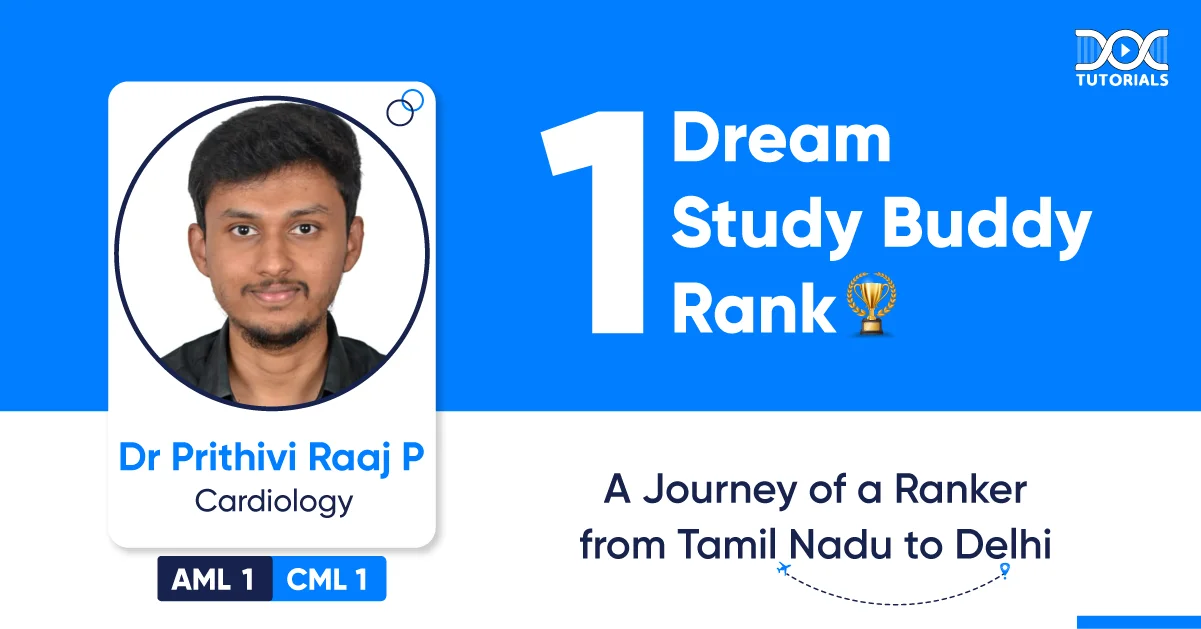
INI SS Topper: 1 Dream, 1 Study Buddy, 1 Rank – The Journey of Dr. Prithivi Raaj, CML 1 & (AIIMS) AML 1 in DM Cardiology
Achieving the top rank in a competitive exam like the INI SS DM Cardiology requires tireless dedication, a structured approach,…
-
INI SS Results: Merit List, Exam Insights, and What Comes Next
The INI SS results for October 2024 are just around the corner. This is a life-changing moment for thousands of…