NEET SS PYQs: The Ultimate Strategy to Boost Your Exam Preparation

Practicing Previous Year Questions (PYQs) for NEET SS is a crucial component of your preparation strategy. It offers students a comprehensive understanding of the exam pattern, highlights high-yield topics, and strengthens problem-solving skills, all while improving confidence for the actual exam.
How NEET SS PYQs Help You Excel:
- Understand Exam Structure & Trends
By solving PYQs, you become familiar with the exam’s recurring patterns, including question formats and subject focus areas. This allows students to focus on high-yield topics that are frequently tested in NEET SS exams. - Increase Exam Confidence
Regularly practicing with PYQs simulates real exam conditions, allowing students to build the confidence needed to face the actual test. - Sharpen Speed & Accuracy
With a time limit, students can boost their speed and accuracy, crucial for completing the exam within the given timeframe. - Reinforce Core Concepts
Solving PYQs helps reinforce understanding of important concepts while identifying areas requiring further revision.
Identify Weaknesses & Track Progress
Tracking your performance through PYQs provides a clear picture of weak spots, ensuring focused revision for last-minute prep.
Whether you’re in the early stages of NEET SS prep or revising closer to the exam, these PYQs with solutions will sharpen your strategy and elevate your performance.
NEET SS Medical Group Previous Year Question Papers with Solutions
| 📘 NEET SS Medicine 2022 – Previous Year Question Paper (PDF) |
| 📘 NEET SS Medicine 2023 – Previous Year Question Paper (PDF) |
| 📘 NEET SS Medicine 2024 – Previous Year Question Paper (PDF) |
NEET SS Surgical Group Previous Year Question Papers with Solutions
| 📘 NEET SS Surgery 2022 – Previous Year Question Paper (PDF) |
| 📘 NEET SS Surgery 2023 – Previous Year Question Paper (PDF) |
| 📘 NEET SS Surgery 2024 – Previous Year Question Paper (PDF) |
NEET SS Pediatric Group Previous Year Question Papers with Solutions
| 📘 NEET SS Pediatric 2022 – Previous Year Question Paper (PDF) |
| 📘 NEET SS Pediatric 2023 – Previous Year Question Paper (PDF) |
| 📘 NEET SS Pediatric 2024 – Previous Year Question Paper (PDF) |
NEET SS Medical Oncology Group Previous Year Question Papers with Solutions
NEET SS Critical Care Group Previous Year Question Papers with Solutions
NEET SS Medical Group Previous Year Question Papers with Solutions
NEET-SS Medicine 2024
Subject: Gastroenterology
Topic: Liver Transplantation
Subtopic: Post-Transplant Infections
Question Number: 1
Question Type: Clinical question
Question:
A liver transplant patient presents with diarrhoea, colitis, a total leukocyte count of 1800, and a positive blood CMV PCR. What is the next step in management?
Options:
A) Endoscopy and mucosal biopsy
B) Start fungals
C) Increase immunosuppression
D) Observation and supportive care
Correct Answer: A) Endoscopy and mucosal biopsy
Subject: Infectious Diseases
Topic: Dengue Fever
Subtopic: Complications and Secondary Infections
Question Number: 2
Question Type: Clinical question
Question:
A 32-year-old male recovering from dengue fever initially showed clinical improvement but now presents with recurrence of high-grade fever, fatigue, and pancytopenia on day 10 of illness. He is hemodynamically stable with no bleeding manifestations. Which of the following investigations should be performed first to evaluate the cause of relapse and cytopenia?
Options:
A) Serum ferritin
B) Triglycerides
C) Bone marrow study
D) All of the above
Correct Answer: D) All of the above
Subject: Gastroenterology
Topic: Hepatitis C Virus (HCV) Infection
Subtopic: Disease Progression Factors
Question Number: 3
Question Type: Non-clinical question
Question:
A 48-year-old man with chronic hepatitis C infection is being evaluated for risk factors associated with progression of liver disease. He has a 20-year history of infection, drinks alcohol occasionally, and has a high serum HCV RNA viral load. Which of the following factors is not associated with an increased risk of progression of liver disease in chronic HCV infection?
Options:
A) Old age
B) HCV RNA titers
C) Chronic alcohol use
D) Long-term chronic HCV infection
Correct Answer: B) HCV RNA titers
Subject: Infectious Diseases
Topic: Rabies and Opportunistic Infections
Subtopic: Post-Exposure Management and Fungal Infections
Question Number: 4
Question Type: Clinical question
Question:
A 28-year-old veterinary worker who previously received a full 3-dose pre-exposure rabies vaccination series is bitten by a stray dog while handling an animal in the clinic. The wound is cleaned immediately. What is the most appropriate post-exposure management?
Options:
A) Immunoglobulin alone
B) ARV 0-3 days
C) ARV 0-3-7-14-28 days
D) ARV 0-7-28 days
Correct Answer: B) ARV 0-3 days
Subject: Infectious Diseases
Topic: Fungal Infections in Immunocompromised Hosts
Subtopic: Post-Chemotherapy Complications
Question Number: 5
Question Type: Clinical question
Question:
A 42-year-old patient undergoing chemotherapy for acute myeloid leukemia develops neutropenia (ANC < 500) and is treated with broad-spectrum antibiotics. After initial recovery of neutrophil counts (ANC = 1500), he again develops high-grade fever and right upper quadrant abdominal pain. Imaging shows multiple small hypodense lesions in the liver and spleen. What is the most likely diagnosis?
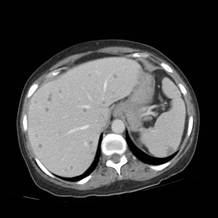
Options:
A) Hepatosplenic candidiasis
B) Typhlitis
C) Bacterial liver abscess
D) CMV hepatitis
Correct Answer: A) Hepatosplenic candidiasis
Subject: Infectious Diseases
Topic: Viral Infections
Subtopic: Mumps and Its Complications
Question Number: 6
Question Type: Clinical question
Question:
A 22-year-old man presents with testicular pain and swelling 5 days after an episode of parotid gland enlargement and fever. Ultrasound confirms orchitis. He reports that he was not vaccinated in childhood. Which of the following statements regarding mumps orchitis is true?
Options:
A) Subfertility occurs in 30-80%
B) Vaccination provides lifelong immunity
C) Parotitis lasts 3-12 months
D) Meningitis is unlikely
Correct Answer: A) Subfertility occurs in 30-80%
Subject: Gastroenterology
Topic: Malabsorption Syndromes
Subtopic: Infectious Causes
Question Number: 7
Question Type: Clinical question
Question:
A 45-year-old man presents with chronic diarrhea, significant weight loss, and arthralgia. Endoscopic biopsy of the small intestine reveals numerous foamy macrophages in the lamina propria that stain positive with Periodic Acid–Schiff (PAS). What is the most likely diagnosis?
Options:
A) Tropical sprue
B) Celiac disease
C) Whipple’s disease
D) Giardia infection
Correct Answer: C) Whipple’s disease
Subject: Infectious Diseases
Topic: HIV-Related Neurological Disorders
Subtopic: Intracerebral Lesions in AIDS
Question Number: 8
Question Type: Clinical question
Question:
A 38-year-old HIV-positive man with a CD4 count of 38 presents with fever and generalized tonic-clonic seizures. MRI brain reveals two ring-enhancing subcortical lesions without any specific differentiating features. What is the most likely diagnosis?
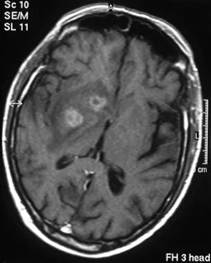
Options:
A) Toxoplasmosis
B) Tuberculosis
C) Neurocysticercosis
D) Primary CNS lymphoma
Correct Answer: A) Toxoplasmosis
Subject: Gastroenterology
Topic: Liver Abscess
Subtopic: Antimicrobial Therapy
Question Number: 9
Question Type: Non-clinical question
Question:
What is the drug of choice in the treatment of liver abscess?
Options:
A) Metronidazole
B) Azithromycin
C) Drainage
D) Needle aspiration
Correct Answer: A) Metronidazole
Subject: Pharmacology
Topic: Antimicrobial Agents
Subtopic: Aminoglycosides – Pharmacokinetics and Dosing
Question Number: 10
Question Type: Non-clinical question
Question:
Understanding the pharmacokinetics of Amikacin is important because it helps clinicians to:
Options:
A) Give once daily
B) Give twice daily
C) Give thrice daily
D) Given only in combination
Correct Answer: A) Give once daily
Subject: Rheumatology
Topic: Reactive Arthritis
Subtopic: Reiter’s Syndrome
Question Number: 11
Question Type: Clinical question
Question:
What is the most common cause of reactive arthritis in a patient with diarrhea and dysuria?
Options:
A) Treponema pallidum
B) Mycoplasma
C) Salmonella
D) Streptococcus
Correct Answer: C) Salmonella
Subject: Infectious Diseases
Topic: Diphtheria
Subtopic: Neurological Complications
Question Number: 12
Question Type: Clinical question
Question:
A 7-year-old unvaccinated child presented with a history of sore throat and fever 3 weeks ago. The child now develops nasal regurgitation of fluids, facial deviation, and tongue weakness with numbness. On examination, there is palatal paralysis and a nasal twang to the voice. What is the most likely diagnosis?
Options:
A) Diphtheria
B) CMV
C) Guillain-Barré syndrome (GBS)
D) Quincy abscess
Correct Answer: A) Diphtheria
Subject: Infectious Diseases
Topic: HIV and Antiretroviral Therapy
Subtopic: Drug-Induced Toxicities
Question Number: 13
Question Type: Clinical question
Question:
A 42-year-old HIV-positive patient on antiretroviral therapy with stavudine presents with progressive motor weakness, tingling in the limbs, hepatomegaly, and metabolic acidosis. Laboratory evaluation shows elevated serum lactate levels, and neurological examination reveals large fiber sensory loss. What is the most likely diagnosis?
Options:
A) Toxic neuropathy
B) HIV neuropathy
C) HIV myelopathy
D) Neuromuscular disorder
Correct Answer: B) HIV neuropathy
Subject: Neurology
Topic: Central Nervous System Infections
Subtopic: Bacterial Meningitis
Question Number: 14
Question Type: Clinical question
Question:
A 60-year-old man presents with high-grade fever, headache, neck stiffness, and altered sensorium. Cerebrospinal fluid (CSF) examination is pending, but clinical findings are highly suggestive of bacterial meningitis. Which empirical antibiotic regimen should be started immediately?
Options:
A) Ampicillin
B) Ampicillin + Vancomycin
C) Ampicillin + Vancomycin + Ceftriaxone
D) Ampicillin + Cefotaxime
Correct Answer: C) Ampicillin + Vancomycin + Ceftriaxone
Subject: Microbiology
Topic: Antimicrobial Resistance
Subtopic: Mechanisms of Drug Resistance
Question Number: 15
Question Type: Clinical question
Question:
A 45-year-old man on antitubercular therapy is found to have a rifampicin-resistant strain of Mycobacterium tuberculosis on GeneXpert testing. Which of the following best explains the mechanism of resistance?
Options:
A) Inactivating enzymes
B) Activating enzymes
C) Altered target enzymes
D) Efflux of drug
Correct Answer: C) Altered target enzymes
Subject: Infectious Diseases
Topic: Leishmaniasis
Subtopic: Diagnostic Investigations
Question Number: 16
Question Type: Non-clinical question
Question:
A 35-year-old man from Bihar presents with prolonged fever, weight loss, and hepatosplenomegaly. Laboratory findings show pancytopenia. Which of the following is considered the gold standard investigation for confirming the diagnosis of leishmaniasis?
Options:
A) Bone marrow biopsy to demonstrate amastigotes
B) Blood culture
C) rK-39
D) PCR
Correct Answer: A) Bone marrow biopsy to demonstrate amastigotes
Subject: Medicine
Topic: Urinary Tract Infections in Pregnancy
Subtopic: Asymptomatic Bacteriuria
Question Number: 17
Question Type: Clinical question
Question:
A 28-year-old pregnant woman in her first trimester undergoes routine antenatal evaluation. Urine culture reveals >100,000 CFU/mL of E. coli, but she remains asymptomatic. What is the most appropriate next step in management?
Options:
A) Screening in first trimester and management accordingly
B) Management/antibiotics only if symptomatic
C) Screening in third trimester and treat only if positive
D) Treat only in third trimester
Correct Answer: A) Screening in first trimester and management accordingly
Subject: Medicine
Topic: Diverticular Disease
Subtopic: Complicated Diverticulitis
Question Number: 18
Question Type: Clinical question
Question:
A 58-year-old man presents with left lower quadrant pain, low-grade fever, and leukocytosis. CT abdomen shows diverticulitis with a small pericolic abscess. What is the first step in management?
Options:
A) IV antibiotics
B) CT-guided drainage
C) Surgical resection
D) Conservative management only
Correct Answer: A) IV antibiotics
Subject: Medicine
Topic: Febrile Neutropenia
Subtopic: Microbiological Etiology
Question Number: 19
Question Type: Non-clinical question
Question:
A 48-year-old man undergoing chemotherapy for acute myeloid leukemia presents with high-grade fever, chills, and hypotension. Laboratory tests show an absolute neutrophil count (ANC) of 300 cells/mm³. Blood cultures are pending. Which of the following organisms is most commonly responsible for sepsis in patients with febrile neutropenia?
Options:
A) Escherichia coli
B) Streptococcus pneumoniae
C) Pseudomonas aeruginosa
D) Enterococcus
Correct Answer: C) Pseudomonas aeruginosa
Subject: Infectious Diseases
Topic: Febrile Neutropenia
Subtopic: Empirical Therapy
Question Number: 20
Question Type: Clinical question
Question:
A 45-year-old patient with acute myeloid leukemia undergoing chemotherapy develops high-grade fever with chills and a total leukocyte count of 400 cells/mm³. Blood pressure is stable, but the patient has mucositis and no localizing source of infection. Which of the following is the most appropriate empirical antibiotic regimen to start?
Options:
A) Meropenem
B) Ceftriaxone
C) Piperacillin-tazobactam + Gentamicin
D) Vancomycin alone
Correct Answer: C) Piperacillin-tazobactam + Gentamicin
Subject: Neurology
Topic: Multiple Sclerosis
Subtopic: Disease-Modifying Therapy in Pregnancy Planning
Question Number: 21
Question Type: Clinical question
Question:
A 32-year-old woman with relapsing-remitting multiple sclerosis presents with a positive Lhermitte sign indicating cervical cord involvement. She has low JC virus antibody titers and wishes to conceive in the future. Which of the following disease-modifying therapies is most appropriate for her?
Options:
A) Fingolimod
B) Interferon gamma
C) Natalizumab
D) Teriflunomide
Correct Answer: C) Natalizumab
Subject: Gastroenterology
Topic: Viral Hepatitis
Subtopic: Hepatitis E in Pregnancy
Question Number: 22
Question Type: Clinical question
Question:
A 28-year-old woman in her third trimester presents with jaundice, malaise, and elevated liver enzymes. Serology confirms Hepatitis E infection. Which of the following statements regarding Hepatitis E infection in pregnancy is true?
Options:
A) Acute liver failure (ALF) is more severe in the 1st trimester than in the 3rd trimester
B) ALF is more common in pregnancy than in non-pregnant state
C) Chronic liver disease is more common in pregnancy
D) It is the most common cause of ALF worldwide
Correct Answer: B) ALF is more in pregnancy than in the non-pregnant state
Subject: Gastroenterology
Topic: Liver Transplantation
Subtopic: Contraindications
Question Number: 23
Question Type: Clinical question
Question:
A 48-year-old male with acute hepatic failure is being evaluated for liver transplantation. His urine test shows ethylene glycol positivity. Which of the following constitutes an absolute contraindication to liver transplantation?
Options:
A) HIV infection
B) Urine ethylene glycol positive
C) Coronary artery disease with EF 40%
D) Coronary artery disease with 85% stenosis
Correct Answer: B) Urine ethylene glycol positive
Subject: Gastroenterology
Topic: Wilson’s Disease
Subtopic: Diagnostic Evaluation
Question Number: 24
Question Type: Clinical question
Question:
A 22-year-old male presents with progressive tremors, slurred speech, and personality changes over the past few months. On examination, he has mild hepatomegaly, dysarthria, and a brownish ring around the cornea visible on slit-lamp examination (Kayser–Fleischer ring). Laboratory evaluation shows mildly elevated liver enzymes. Which of the following is the definitive diagnostic test for Wilson’s disease?
Options:
A) Hepatic copper content
B) Serum copper
C) Urine copper
D) Serum ceruloplasmin
Correct Answer: A) Hepatic copper content
Subject: Gastroenterology
Topic: Cirrhosis
Subtopic: Diagnostic Approach
Question Number: 25
Question Type: Clinical question
Question:
A 52-year-old man with long-standing alcohol use presents with jaundice and mild ascites. Laboratory tests show total bilirubin of 4.8 mg/dL, AST 48 U/L, ALT 45 U/L, and INR 1.8. Viral hepatitis serology is negative, and ultrasound shows a coarse echotexture liver with features of portal hypertension. What is the most appropriate method to determine the cause of cirrhosis in this patient?
Options:
A) Liver elastography
B) Transjugular biopsy
C) Percutaneous biopsy
D) FNAC liver
Correct Answer: B) Trans jugular biopsy
For more PYQs – Sign up on the DocTutorials App Now!
Website: https://www.doctutorials.com/plans
Play store: https://zcu.io/3jPK
App Store: https://apple.co/2Zmm9jr

Latest Blogs
-

NEET SS Exam 2024: Analysis, Key Dates, Counselling
The NEET SS 2024 exam kicked off on March 29, 2025. Over two days and two slots, candidates across 13…
-

INI SS Topper: 1 Dream, 1 Study Buddy, 1 Rank – The Journey of Dr. Prithivi Raaj, CML 1 & (AIIMS) AML 1 in DM Cardiology
Achieving the top rank in a competitive exam like the INI SS DM Cardiology requires tireless dedication, a structured approach,…
-

INI SS Results: Merit List, Exam Insights, and What Comes Next
The INI SS results for October 2024 are just around the corner. This is a life-changing moment for thousands of…