DNB in Medicine: Course Details, Syllabus, and Admission Process
The DNB is an esteemed and competitive postgraduate qualification awarded to MBBS graduates after completing higher training in medicine, as well as its sub-specialities, and has become an influential part of the medical education system in India.
Presented by the National Board of Examinations in Medical Sciences, belonging to the Ministry of Health and Family Welfare, the DNB is to be considered equivalent to Doctor of Medicine and Master of Surgery.
Let’s have a comprehensive overview of the DNB in Medicine, including its structure, syllabus, and the career pathways it promotes.
What is a DNB in Medicine?
A DNB (Diplomate of National Board) in Medicine is a 3-year postgraduate medical degree taken in India, awarded by the National Board of Examinations, and accredited by the National Medical Commission. It is considered equivalent to an MD/MS degree course.
The Diplomate of National Board (DNB) certification is a centralized examination and certification process that is also equivalent to the MD/MS degrees awarded by universities, as per the NMC rules for different academic and professional purposes.
DNB training is conducted only in accredited hospitals, including private hospitals, corporate hospitals, and mission hospitals. The DNB curriculum is similar to that of MD/MS in terms of content framework, but the candidates have to go through centralised evaluations and exit exams, which many appear to be more challenging.
What are the Course Details of DNB in Medicine?
The DNB in Medical is a 3-year postgraduate programme, similar to MD/MS or postdoctoral courses. This course provides various opportunities for career advancement and jobs in areas such as hospitals, research labs, and government organisations.
The table below reflects the essential details of the DNB course:
| Particulars | Details |
| DNB Full Form | Diplomate of the National Board |
| Course Level | Postgraduate (PG) |
| Duration of the Course | 3 years |
| DNB Course Fees | Up to ₹1.1 lakhs |
| Admission Process | Entrance-Based |
| Eligibility Criteria | Need to clear the MBBS successfully |
| Entrance Exam | NEET PG |
| Average Salary After DNB | Up to ₹35 lakhs per annum |
| Top Recruiters | Central Bureau of Investigation (CBI), Intelligence Bureau (IB), Hospitals, Police Departments, Forensic Labs, Law Firms, Defence/Army, Central Government, Private Detective Agencies |
| Job Roles | Investigative Officers, Crime Scene Investigators, Forensic Experts, Crime Reporters, Forensic Scientists, etc. |
DNB in Medicine: Course Syllabus
Knowing the Medicine DNB syllabus thoroughly would help a doctor in developing an effective study plan, clinical training, and exam-oriented preparation, detailing a broad outline of the topics, skills, and competencies required for a general medicine specialist to provide high-quality patient care.
The subjects included in the DNB syllabus are provided in the table given below:
| Anatomy | General Medicine |
| Physiology | Psychiatry |
| Pathology | General Surgery |
| Microbiology | Orthopaedics |
| Ophthalmology | Obstetrics and Gynaecology |
| Pharmacology | Anaesthesiology |
| Forensic Medicine | Radiology |
| Biochemistry | Dermatology and STD |
| ENT | Paediatrics |
| SPM, Statistics & Biomedical Research | Pharmacology |
DNB in Medicine: Admission Process (Step-by-Step Guide)
Admission to the DNB General Medicine course will be through NEET-PG or DNB PDCET entrance examinations, followed by counselling conducted by MCC. Candidates seeking admission must possess an MBBS degree with a one-year internship.
The Diplomate of National Board (DNB) admission process involves multiple stages, from registration to final counselling. Candidates must carefully follow each step to ensure a smooth and successful application:
- Step 1: Registration: Candidate registration involves entering basic information such as name, email ID, and mobile number via the NBEMS official portal. This step generates login credentials.
- Step 2: Filling the Application Form: After registering, the applicants must fill in the online application form with personal, academic, and contact details correctly. All entries should be verified before submission for accuracy.
- Step 3: Uploading of Documents: Candidates must scan and upload the required documents, including mark sheets, photographs, and signatures, in the prescribed format and size as specified.
- Step 4: Payment of Application Fees: The next step is paying the application fee online (credit/debit card, net banking) or offline, depending on the options available. Confirmation of payment completes the process of application.
- Step 5: Downloading the Admit Card: Admit cards are issued to candidates once eligibility has been verified. Candidates should download and print the admit card since its possession is compulsory for entry at the time of the examination.
- Step 6: Entrance Examination: The candidates will get prepared for the exam as per the official syllabus, as well as previous question papers. The entrance test will be conducted on a specified date at designated centres.
- Step 7: Declaration of Results: Results are announced a few weeks following the examination. Candidates will be shortlisted on the basis of their performance, whereby they qualify for the next stage.
- Step 8: Counselling/Personal Interview and Admission: The shortlisted candidates are then called for counselling or a personal interview. Candidates can get admission in the DNB course based on merit, preference, and availability of seats.
Key Challenges in the DNB Curriculum
The DNB in Medicine is one of the most prestigious postgraduate degrees, but it’s a tough journey. Students often have to go through numerous academic and clinical challenges that test their persistence, concentration, and dedication.
Discussed below is a list of major challenges encountered by the medical students during the training period while pursuing the DNB course:
- Intensive Workload and Long Duty Hours
Long working hours, heavy workloads, etc., are common challenges faced by medical residents in DNB programmes, especially those training in corporate or private hospitals. The balancing between clinical responsibilities and academic learning is exhausting, leaving little time for self-study and rest.
- Balancing Research and Clinical Duties
Every candidate has to undertake a thesis as part of the curriculum. Therein lies the challenge of managing research work alongside heavy clinical postings, emergency duties, and departmental work, which require strong time management and guidance.
- Rigorous Exit Examination
The DNB final examination is essentially an exit-level test with high performance standards. Many of these exams are much tougher than university-based exams, as they demand a deep conceptual understanding, strong clinical judgment, and comprehensive preparation.
- Limited Structured Teaching Opportunities
Not all DNB-accredited hospitals follow the traditional medical college format of formal academic teaching; some stress patient care and service delivery. This may imply fewer classroom sessions, with students having to be more self-directed in their learning, and mentorship playing an important role in their academic success.
FAQs about DNB in Medicine
- What is the duration of the DNB course after MBBS?
The DNB, or the Diplomate of National Board in medicine, is a postgraduate degree given by the National Board of Examinations, under the Union Ministry of Health, Government of India. It holds recognition equivalent to the degrees of MD/MS.
- Do all DNB students in medicine need to submit a thesis?
Yes, every candidate must submit a thesis and have it approved before taking the final examination. In this way, exposure to research methodology and evidence-based medicine is ensured.
- Can DNB doctors work as faculty in medical colleges?
Yes, the NMC recognises the DNB degree, and qualified DNB holders are eligible for faculty positions in medical colleges as per existing regulations.
- Is there any difference in salary during DNB training?
Stipends during DNB training vary from institution to institution. Government hospitals generally follow state postgraduate salary norms, while private or corporate hospitals give out comparatively lower stipends.
- Can DNB graduates perform surgery?
Yes, the DNB graduates in surgical specialities, after qualifying in the final NBE examination, are fully competent and independent in performing various surgeries, with comprehensive knowledge of surgical principles and clinical skills.
- Is DNB higher than MD?
No, DNB and MD are equivalent postgraduate medical degrees in India. The National Board of Examinations awards DNB, while universities award MD. Both have the same value for practice and further studies.
- What is the role of DNB?
DNB holders are qualified to work as senior residents, consultants, or specialists in hospitals and can also take up academic positions in medical institutions.
- Can someone pursue DM after DNB?
Yes, a DNB graduate can pursue DM or MCh. To do so, you must clear the NEET Super-Speciality (NEET-SS) exam, which requires completion of an MD, MS, or DNB in the relevant speciality.
- How many attempts are allowed to pass DNB?
There is no fixed limit on attempts for the DNB exam. Candidates must pass within the eligibility period set by the National Board of Examinations in Medical Sciences (NBEMS).
- Can DNB be done in a private hospital?
Yes, DNB training can be pursued in accredited hospitals, which include private hospitals, corporate hospitals, and mission hospitals, as approved by the National Board of Examinations (NBE).
Conclusion
DNB in medicine strikes a perfect balance between the pursuit of academic excellence and clinical mastery aimed at creating a stream of doctors who can provide quality, evidence-based care in the dynamic healthcare environment.
Build strong foundations for your DNB journey with DocTutorials’ PG Residency programme today. It combines viva and OSCE preparation, clinical case discussion, patient history-taking, and hard-copy notes for medicine.
Join DocTutorials today and explore our PG Residency course to excel in your medical career!
Latest Blogs
-

NEET SS Exam 2024: Analysis, Key Dates, Counselling
The NEET SS 2024 exam kicked off on March 29, 2025. Over two days and two slots, candidates across 13…
-
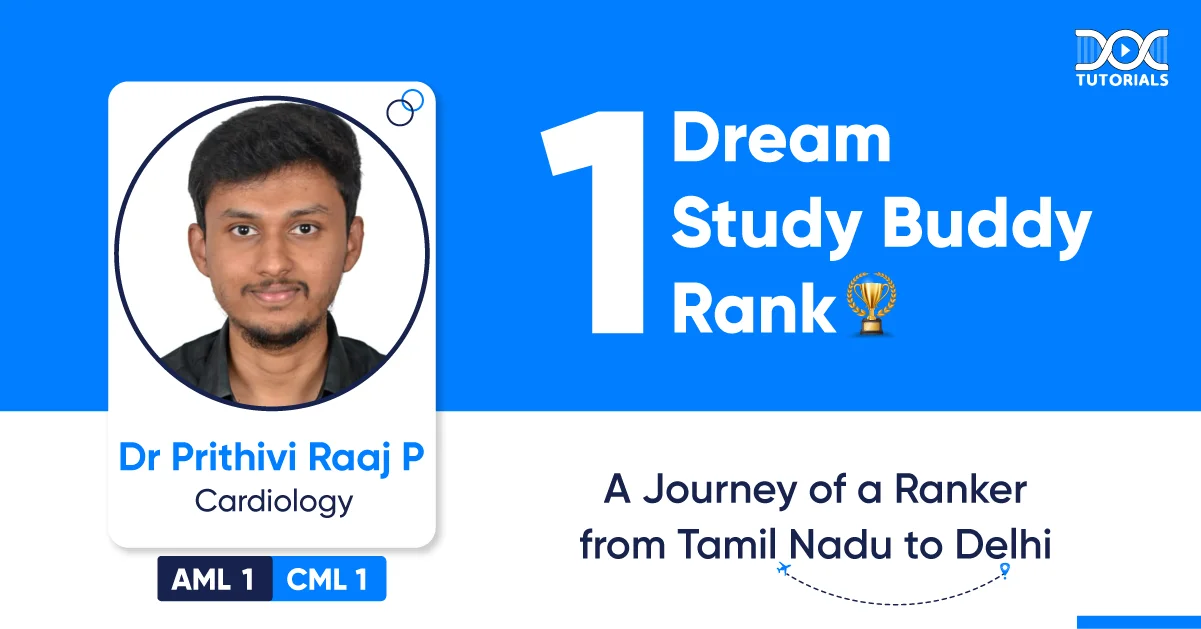
INI SS Topper: 1 Dream, 1 Study Buddy, 1 Rank – The Journey of Dr. Prithivi Raaj, CML 1 & (AIIMS) AML 1 in DM Cardiology
Achieving the top rank in a competitive exam like the INI SS DM Cardiology requires tireless dedication, a structured approach,…
-
INI SS Results: Merit List, Exam Insights, and What Comes Next
The INI SS results for October 2024 are just around the corner. This is a life-changing moment for thousands of…