DNB Practical Exam 2026: Dates, Pattern, Structure, and Preparation Tips
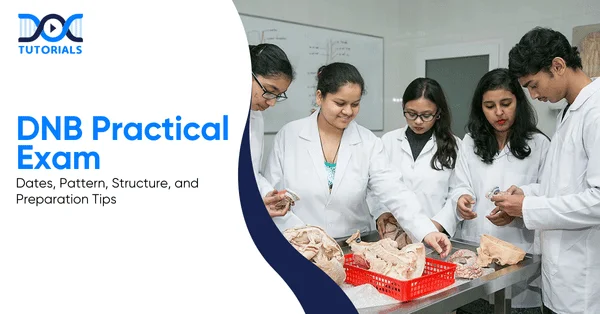
The Diplomate of National Board or DNB practical exam is a crucial step to assess candidates who want to pursue postgraduate medical courses. This exam helps evaluate the skills of eligible candidates in clinical aspects, decision-making, and communication in a real-world setting.
The NBEMS (National Board of Examinations in Medical Sciences) conducts this examination every year for candidates who have cleared the DNB theory exam. If you are preparing for this examination, this blog can help you stay updated with the DNB practical exam date, pattern, preparation strategies, and more!
Keep reading for a detailed insight.
What is the DNB Practical Exam 2026?
The DNB practical exam assesses the candidate’s clinical skills and knowledge. It is examined through structured clinical scenarios, vivas, and ward rounds, which are necessary for certification in postgraduate medical education.
The DNB practical exam is a clinical assessment to evaluate a candidate’s practical knowledge and skills beyond their theoretical experience. It includes Objective Structured Clinical Examination (OSCE) stations, case scenarios, viva, etc.
In the OSCE, candidates are given multiple focused clinical tasks to check their quick-thinking abilities and hands-on proficiency in patient examination, diagnosis, and treatment planning. Case scenarios involve noting down the patient history thoroughly and the case presentation. It tests the candidate’s analytical and communication skills.
The viva voce section demands in-depth, oral responses to clinical questions to assess your understanding and problem-solving ability.
What is the Date of the DNB Practical Exam 2026?
The DNB Practical Examination for the June 2026 session will run from September 8 to September 11, 2026, following the earlier conclusion of the theory exams. NBEMS has now opened admit card downloads on OEEP accounts, and candidates can check their allocated test centers directly on the official board website.
The table below represents the dates of the theory and practical DNB exam in 2026:
| DNB Exam Type | Dates (2026) |
| DNB Final Theory (June 2026) | June 18th, 19th, 20th, and 21st (Concluded) |
| DNB Final Practical (June 2026) | September 8 to November 6 |
| DNB Final Theory (Dec 2026) | November 19th, 20th, 21st, and 22nd |
| DNB Final Practical (Dec 2026) | Yet to be announced |
Note: Candidates need to check the official NBEMS website regularly for exact exam dates, admit card releases, and updates.
What is the DNB practical exam pattern?
The total marks for the DNB practical exam are 300, and a candidate must secure at least 150 marks to qualify. The syllabus for the practical exam includes OSCEs, vivas, clinical cases, and ward rounds. Candidates must have an understanding of each category to ensure success in the DNB practical exam.
The DNB practical exam is designed to assess candidates’ clinical skills within a structured framework. The exam structure is explained in the table below:
| Particulars | Details | Marks |
|---|---|---|
| OSCE Stations | 20 stations, each lasting for 4 minutes | 100 (5 marks each) |
| Clinical Cases | 2 cases, each lasting for 15 minutes | 100 (50 marks each) |
| Viva Voce | 4 sessions of oral questions for 15 marks each | 60 |
| Ward Rounds | 4 ward rounds for 10 marks each | 40 |
| Total | 300 |
Note: The minimum qualifying marks for the DNB practical exam are 150. Candidates have a total of 4 hours to answer all the questions.
How to Prepare for the DNB Practical Exam 2026?
Candidates must prepare themselves well before appearing for the DNB practical exam. The preparation strategy includes understanding the exam pattern, practising case presentations regularly, revising high-yield topics, etc.
Here are some tips to follow while preparing for the DNB practical exam 2026:
- Understand the Exam Pattern
The first and foremost task is to understand the exam structure properly. It includes knowing the number of OSCE stations, case presentations, viva sessions, and ward rounds. Knowing the format helps reduce surprises and enables you to target your preparation effectively.
- Master Clinical Examination Skills
You should practice clinical examinations systematically. This includes inspection, palpation, percussion, and auscultation of patients or regular volunteers. Mastering these basics ensures you can efficiently perform during OSCEs and case exams.
- Practice Case Presentation Regularly
Present cases to peers and mentors frequently, with special focus on history taking, clinical findings, differential diagnosis, and treatment plans. This enhances clarity, confidence, and timing for the actual exam.
- Use Mock OSCE Stations
Set up mock OSCE stations mimicking exam scenarios to practice rapid clinical decision-making and communication. This builds comfort with exam pace and a wide variety of potential tasks.
- Revise High-Yield Topics
Focus on revising commonly tested conditions and systems across specialities. Prioritise key diseases, emergency protocols, and practical skills likely to be examined.
- Enhance Viva Preparation
Practice crisp and confident responses for viva voce questions, including recent advances, clinical pharmacology, and diagnostic interpretation. This boosts your ability to handle quick, in-depth questioning.
- Manage Time Efficiently
During mock practice, time yourself completing clinical exams and presentations to build speed without sacrificing accuracy. Effective time management is critical to complete all exam components.
- Build Mental Resilience
Maintain steady motivation and avoid burnout by setting small goals, taking breaks post theory exams, and practising relaxation techniques. Staying calm improves focus and presentation.
- Learn from Feedback
Seek continuous feedback from mentors and peers, learn from mistakes, and adjust preparation strategies. Constructive criticism refines skills before the final exam.
- Join Online Coaching
For professional guidance, you can seek assistance from online coaching platforms like DocTutorials. We guide each candidate in preparing for the DNB practical exam successfully.
FAQs about DNB Practical Exam 2026
- What is the date for the DNB practical exam in 2026?
NBEMS will conduct the DNB Final Practical Examination for the June 2026 session from September 8 to September 11, 2026.
- How many attempts are allowed for the DNB practical exam?
Candidates can attempt the practical exam up to three times. The first attempt follows the theory exam, and if failed, two more attempts are allowed in the next three sessions.
- What are the components of the DNB practical exam?
The exam includes OSCE stations, clinical case presentations, viva voce, and ward rounds, in total about 4 hours, with a focus on clinical skills and decision-making.
- How can I best prepare for OSCE stations?
To increase confidence and accuracy, practise allied skills such as taking a history, performing physical examinations, and making quick clinical decisions regularly through simulated stations.
- When will the admit cards be available?
Admit cards are typically released a few days before the exam date on the official NBE website, and candidates must download them with their login credentials.
- Who is eligible to appear for the DNB Practical Exam?
Only candidates who have successfully cleared the DNB theory examination and completed the full prescribed training period are eligible to appear for the DNB practical exam. Fulfilling both requirements is mandatory before being allowed to sit for the practical assessment.
- Can candidates apply for super-speciality courses after clearing the DNB Practical Exam?
Yes, after successfully completing the DNB practical exam and being awarded the DNB degree, candidates become eligible to apply for super-speciality courses such as DM, MCh, or DNB-SS, subject to meeting the entrance exam and speciality-specific eligibility criteria.
- Where is the DNB Practical Exam conducted?
The DNB practical examination is conducted at designated examination centres or NBEMS-accredited hospitals. The exact exam centre is allotted by NBEMS and mentioned in the admit card issued to eligible candidates before the examination.
- Can candidates reappear for the DNB Practical Exam if they fail?
Yes, candidates who are unable to clear the DNB practical exam are allowed to reappear in subsequent sessions. Reattempts are permitted as per NBEMS guidelines, including the prescribed attempt limits and eligibility conditions.
- How are the results of the DNB Practical Exam declared?
The results of the DNB practical exam are declared online on the official NBEMS website after evaluation. Candidates can log in using their credentials to check and download their results once published.
Conclusion
The DNB practical exam 2026 helps assess the depth and practical application of clinical knowledge. For that, candidates must understand the exam pattern, practice diligently, and stay updated with official notifications. Candidates can join professional courses to boost confidence and ensure success.
In this regard, DocTutorials play a crucial role in helping candidates approach the exam with confidence. For further assistance and guidance, you can join our PG Residency & DNB courses.
Latest Blogs
-

NEET SS Exam 2024: Analysis, Key Dates, Counselling
The NEET SS 2024 exam kicked off on March 29, 2025. Over two days and two slots, candidates across 13…
-

INI SS Topper: 1 Dream, 1 Study Buddy, 1 Rank – The Journey of Dr. Prithivi Raaj, CML 1 & (AIIMS) AML 1 in DM Cardiology
Achieving the top rank in a competitive exam like the INI SS DM Cardiology requires tireless dedication, a structured approach,…
-
INI SS Results: Merit List, Exam Insights, and What Comes Next
The INI SS results for October 2024 are just around the corner. This is a life-changing moment for thousands of…