MD Pediatrics: Course, Eligibility, & Career Scope
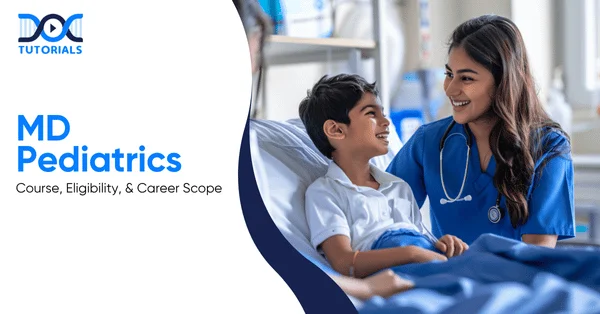
Pediatric medicine is an essential and life-saving branch of medical science which is committed to the well-being and development of infants, children, and teens. pediatricians play a key role in diagnosing, treating, and preventing childhood diseases while guiding parents on vaccinations, diet, and behavioural health.
Obtaining an MD degree in Pediatrics is perfect for those who want to be a child health care specialist and influence the lives of children positively. The program equips the students with comprehensive theoretical and practical knowledge of pediatric medicine; thus, the graduates can work in a variety of settings such as hospitals, clinics, and research institutions.
In this article, we will explore the MD Pediatrics course details, eligibility, admission process, and career scope to help you make an informed career choice. Keep reading for a detailed insight.
What is pediatrics?
Pediatrics is a medical discipline that covers the physical, psychological, and social health of children from birth up to 18 years of age. A pediatrician is a specialist doctor focused on diagnosing and treating illnesses specific to children, monitoring their growth and development, and providing essential preventive healthcare services.
Pediatrics is a medical discipline that deals with the physical, psychological, and social health of children from birth up to 18 years of age. A pediatrician is a medical practitioner who specialises in diagnosing and treating diseases specifically for kids, handling growth and development, and offering preventive healthcare services.
What is MD Pediatrics Course?
The MD Pediatrics course is a 3-year post-graduate degree program that equips medical college graduates with the skills to diagnose, treat, and manage the health problems of infants, children, and adolescents.
Further, you can check the table below to see the MD pediatrics course details:
| MD Pediatrics Course Duration | PG |
| MD Pediatrics Course Fees | 3 years |
| MD Pediatrics Admission Process | ₹2,110 – ₹1.25 Crore |
| MD Pediatrics Entrance Exams | Entrance-Based |
| MD Pediatrics Eligibility Criteria | NEET PG/INI CET |
| MD Pediatrics Top Recruiters | MBBS with 50% |
| MD Pediatrics Salary | ₹33 LPA |
| MD pediatrics Top Recruiters | Apollo Hospitals, Fortis Healthcare, Max Healthcare, Manipal Hospitals |
What is the Curriculum Overview?
Core Subjects
- Neonatology (newborn care)
- Pediatric emergencies (e.g., respiratory distress, seizures).
- Growth and development monitoring.
- Nutrition and malnutrition management.
- Infectious diseases in children.
Practical Training
- Clinical rotations in OPD, wards, and NICU.
- Practices such as lumbar puncture and resuscitation.
- Research: Completing a thesis under the supervision of the faculty is mandatory.
Evaluation
- Formative: Case presentations, viva voce, and skill evaluations.
- Summative: Final exams (theory, clinical, and oral) plus thesis defence.
Through this program, the graduates will be prepared for both direct patient care and teaching roles.
Why Study MD Pediatrics?
Studying MD pediatrics is a rewarding and multifaceted career choice that offers numerous opportunities for specialisation, such as Pediatric Cardiology or Neonatology.
The initial investment for setting up a private practice is relatively low, and dealing with children provides immense peace and satisfaction, making it a fulfilling and financially lucrative field with high employment potential.
- As a super-specialist, the job of an MD pediatrician is multi-faceted, demanding, and rewarding. Upon completing the MD pediatrics Course, you will have a large number of options and be able to work in different areas.
There are also different sub-specialities in pediatrics, such as Pediatric Cardiology, Child Neurology, Neonatology, Pediatric Surgery, etc.
- The cost of setting up a practice is not very high. So, if you intend to open your own private clinic as an MD pediatrician, then you do not have to be concerned about the initial investment.
- There is no doubt that pediatricians are called happy doctors. Dealing with the most innocent and purest thing in nature (a child) will give you peace and satisfaction. In addition, it will make you a diligent observer and a patient person.
- MD pediatrics is a highly exploratory branch. Therefore, as a specialist, you can earn up to ₹1 Lakh to ₹3 Lakhs per month. Moreover, an ultimate reason for the youngsters choosing this branch is its multiple employment opportunities.
Key Areas in Pediatrics
Pediatrics is a field that opens up a wide spectrum of super-specialisations for doctors to delve deeply into numerous aspects of child health. The most common ones among them are Neonatology (newborn care), pediatric Cardiology (heart diseases), pediatric Neurology (nervous system disorders), pediatric Oncology (cancers in childhood), and pediatric Surgery.
Here are the key areas available in pediatrics:
- Neonatology: Care of newborns, especially premature and sick babies.
- Pediatric Cardiology: Heart-related diseases in children.
- Pediatric Neurology: Disorders of the nervous system.
- Pediatric Oncology: Childhood cancers.
- Pediatric Endocrinology: Hormonal issues such as diabetes and growth problems.
- Pediatric Surgery: Surgical operations for children.
- Pediatric Intensive Care: The most extreme medical attention for very ill children.
- Developmental pediatrics: It is a behavioural, learning, and developmental problems identification and management module.
- Pediatric Infectious Diseases: Advanced care in diseases such as tuberculosis, dengue, etc.
- Adolescent Medicine: Medical care for teenagers and young adults.
Eligibility Criteria
To be eligible for MD pediatrics, a candidate must hold an MBBS degree from an MCI-recognised college, with an aggregate score of 50-60%. Furthermore, candidates must successfully clear entrance examinations like NEET-PG or INI-CET for admission in India, and may need to pass international English proficiency tests (IELTS/TOEFL) for admission abroad.
- To get admission to the MD pediatrics, candidates must have an MBBS degree from a recognised college approved by the MCI. (Medical Council Of India).
- The candidate’s percentage in MBBS should be 50-60% of the aggregate.
- Candidates must also pass exams like NEET-PG and INI-CET.
- If you want to take admission in a foreign country, you also need to pass IELTS/ TOEFL/ PTE/Cambridge Test.
Steps for Becoming a Pediatrician
The journey involves completing senior secondary education with science subjects, cracking NEET-UG to secure admission to the MBBS program (including a one-year compulsory internship). Following MBBS, the candidate must clear the NEET PG or INI-CET to gain admission to the 3-year MD pediatrics PG degree.
Here are step-by-step details on how to become a pediatrician in India:
Step 1: Complete your Senior Secondary Education
- An applicant must have achieved at least 50% in each of the four major subjects – Physics, Chemistry, Biology/Biotechnology, and English – in the 12th grade from an accredited board.
Step 2: Crack the NEET-UG Entrance Examination
- A candidate must succeed at the National Eligibility Cum Entrance Test for Undergraduates (NEET-UG). This one-window entrance test is the only path for admission to MBBS, BDS, BAMS, BUMS, BHMS, and other undergraduate medical programs in approved/recognised Medical/Dental/AYUSH and other Colleges/Deemed Universities/Institutes (AIIMS & JIPMER) in India.
- It is a must to achieve a competitive score in the NEET-UG exam to be qualified for the counselling and admission process to get admitted to a medical college for an MBBS program, which is a prime requirement for becoming a pediatrician.
Step 3: Complete your MBBS Degree along with the Internship.
- Complete your MBBS degree with at least a cumulative GPA of 50% together with a one-year compulsory rotational internship. You have to be very attentive to the lectures, practicals, ward rounds, seminars, conferences, etc., during your graduation as they form a firm basis for your further studies.
At this stage, you are introduced to the basics of every medical speciality. Now you will be able to pinpoint the field in which you want to take a postgraduate degree.
Step 4: Crack the NEET PG or INI-CET Entrance Examination
- Once you have completed your MBBS degree, you have to take the NEET PG or INI-CET exam with a competitive score to get admission to medical postgraduate programs.
INI-CET is a national-level entrance examination for admission to MS/MD/DM (6 years)/MCh (6 years), and MDS courses at the INI Institutes comprising AIIMS, JIPMER, etc., whereas NEET-PG is a national-level entrance examination for admission to MS/MD/PG Diploma courses at various government and private universities.
- Depending on the admission test scores, candidates decide on their postgraduate specialisation and university during the counselling session. An MBBS student has to pick MD with a pediatrics specialisation to become a pediatrician and, at the same time, pursue higher education in pediatrics.
If you want to follow the MCh Pediatrics Surgery and Pediatric Cardio Thoracic Vascular Surgery path, you can do an MS in General Surgery.
Step 5: Complete Your PG Degree
- After being accepted into a medical college accredited by MCI, complete your three-year master’s degree and your PG dissertation.
- The PG syllabus includes lectures, practicals, conferences, symposiums, workshops, clinical postings, meetings, OT ward postings, junior residency, and more.
Step 6: Complete your Residency Program and Get Licensed.
- Complete your residency program and experience the world of pediatrics and medicine. Get your medical certificate and get licensed to practice as a Pediatric Specialist.
Step 7: Crack the NEET-SS Entrance Examination to Pursue a Super Specialisation
- After an MD degree and a residency program, super specialisation can be done by pursuing DM, DrNB, or MCh courses, followed by completion. To get admission for super-speciality courses in the pediatrics discipline, you need to crack NEET-SS, an eligibility cum ranking examination.
- If you want to bring more worth to your professional life, you have to opt for a super specialisation course, a fellowship course, and advanced-level certification courses.
- Besides super specialisation, you can also decide to do research, be a pediatrician in any healthcare facility, or join a children’s organisation at any post.
Entrance Exams for MD pediatrics
The primary entrance exams for MD pediatrics are NEET PG and INI-CET. NEET PG is a national-level, certified ranking examination conducted by NBE for admission to various PG-level programs across most universities, while INI-CET is specifically for admission to the Institutes of National Importance, including the 12 campuses of AIIMS.
- NEET PG
The National Eligibility Cum Entrance Test is a certified ranking examination. The main aim of this exam is to allow admission to various PG-level programs in Medicine. Every year, the National Board of Examinations (NBE) conducts NEET-PG.
- INI-CET
National Importance Combined Entrance Test is an entrance examination organised by the All India Institute of Medical Sciences (AIIMS). So, NEET-PG is accepted by every college in the country. But, INI-CET is accepted by the 12 campuses of AIIMS.
List of Best Government Colleges offering MD pediatrics under the NEET-PG Entrance Exam
Top government colleges offering MD pediatrics through NEET-PG include prestigious institutions like Maulana Azad Medical College, Lady Hardinge Medical College, Madras Medical College, and Vardhman Mahavir Medical College in New Delhi, among others.
Here are a few of the best government colleges that offer MD pediatrics under the NEET PG entrance exam:
| Sr. No | Name of Institute |
| 1 | Maulana Azad Medical College, New Delhi |
| 2 | Lady Hardinge Medical College, New Delhi |
| 3 | Madras Medical College, Chennai |
| 4 | Government Medical College, Kozhikode |
| 5 | Vardhman Mahavir Medical College, New Delhi |
| 6 | Ram Manohar Lohia Hospital, New Delhi |
| 7 | Government Medical College, Thiruvananthapuram |
| 8 | Seth Gordhandas Sunderdas Medical College, Mumbai |
| 9 | Stanley Medical College, Chennai |
| 10 | Bangalore Medical College, Bangalore |
List of the Best Private Colleges offering MD pediatrics, Including Seats and Fees
Leading private colleges for MD pediatrics include Kasturba Medical College, Manipal, Alluri Sitaram Raju Academy of Medical College, Eluru, and Father Muller Medical College, Mangalore.
Here are a few of the best private colleges that offer MD pediatrics under the NEET PG entrance exam:
| S.No | Name of Institute | No. of Seat | Fees (Yearly) |
| 1 | Kasturba Medical College, Manipal(Karnataka) | 18 | ₹26 Lakh |
| 2 | Alluri Sitaram Raju Academy of Medical College, Eluru | 12 | ₹26.5 Lakh |
| 3 | Narayan Medical College, Nellore | 10 | ₹13 Lakh |
| 4 | Father Muller Medical College, Mangalore | 9 | ₹15 Lakh |
| 5 | Mahatma Gandhi Missions Medical College, Mumbai | 11 | ₹25 Lakhs |
| 6 | GCS Medical College, Ahmedabad | 5 | ₹16 Lakh |
| 7 | SBKS Medical Institute & Research Centre, Vadodara | 12 | ₹23.5 Lakh |
| 8 | Faculty of Medicine and Health Sciences, Gurgaon | 4 | ₹15 Lakh |
| 9 | MS Ramaiah Medical College, Bangalore | 18 | ₹8 Lakh |
| 10 | JSS Medical College, Mysore | 12 | ₹23 Lakh |
Job Roles for a Pediatrician in India
Pediatricians in India can take on various roles, including a General pediatrician in clinics or hospitals, a Neonatologist in NICUs, or a specialised role like a Pediatric Surgeon, Cardiologist, or Neurologist. Opportunities also exist in academics, research, public health (with WHO/UNICEF), and emerging fields like Telemedicine and Digital Healthcare.
1. General pediatrician
- Employment in hospitals, clinics, or private practice
- Diagnose and treat illnesses like infections, asthma, and allergies
2. Neonatologist
- Focus on the care of infants, particularly those in NICUs
- Handle premature and low-birth-weight babies
3. Pediatric Surgeon
- Perform operations for deformities like cleft palate, hernia, and intestinal blockages.
4. Pediatric Cardiologist / Neurologist / Endocrinologist
- Specialises in organ systems and chronic disorders in children
5. Pediatric Intensive Care Specialist
- Perform tasks in ICUs and deal with the most severe cases of emergencies.
6. Academician / Researcher
- Impart knowledge to medical students and conduct research on child health.
7. Public Health Expert
- Collaborate with WHO, UNICEF, NGOs, and government programs like NRHM and ICDS.
8. Telemedicine and Digital Healthcare
- Make consultations available online for children living in rural areas.
Average Pediatrician’s Salary in India
The salary for a pediatrician in India increases significantly with experience and specialisation. A Junior pediatrician can expect to earn ₹7.20 – ₹14.40 Lakh annually, while a Senior Specialist/Consultant can command ₹36.00 – ₹75.00 Lakh+.
The table below discusses the average salary ranges of a pediatrician:
| Role | Monthly Salary (₹) | Annual Salary (₹) |
| Junior pediatrician (0–2 yrs) | ₹60,000 – ₹1,20,000 | ₹7,20,000 – ₹14,40,000 |
| Experienced (3–8 yrs) | ₹1,50,000 – ₹3,00,000 | ₹18,00,000 – ₹36,00,000 |
| Senior Specialist / Consultant | ₹3,00,000 – ₹6,00,000+ | ₹36,00,000 – ₹75,00,000+ |
| Neonatologist / Pediatric Surgeon | ₹4,00,000 – ₹8,00,000+ | ₹50,00,000 – ₹1.2 Crore |
| Government Jobs (MD pediatrician) | ₹80,000 – ₹1,50,000 | With added benefits/pension |
Note: The pay varies based on location, hospital, doctor’s abilities, and area of expertise.
Skills Required for a Pediatrician
A successful pediatrician requires a blend of professional and interpersonal skills, including perfect communication ability with both children and parents, immense patience and love, and the capacity for making quick decisions under pressure.
Here are the primary skills required to be a pediatrician:
- Perfect communication ability (both with children and parents)
- Patience and love
- Making decisions even when under pressure
- Strong diagnostic abilities
- Knowledge of child psychology and development
- Willingness to work for a long time
Responsibilities of a pediatrician
A pediatrician’s main duties are the identification of health problems and providing health care services to the infants, children, and teenagers while complying with professional ethics and health policies.
A successful pediatrician ought to accomplish these duties:
- Identifying the health needs of infants, children, and teenagers and following up with providing health services according to the National Health Policy and professional ethics.
- Has acquired the pediatric skills adequate for community practice at all levels of the health system.
- They should have also acquired excellent communication skills with the children, families, and the community.
- They are aware of the latest advances and changes in medical sciences that are related to the health of children.
- Teaching of medical and paramedical professionals.
- Recognises mental disorders and cooperates with Psychiatrists/Child Psychologists to treat patients with such illnesses.
FAQs about MD Pediatrics
- What is the salary of a pediatric doctor?
The median salary of a pediatrician is about ₹7 lakh annually.
- What is MD pediatrics?
MD pediatrics is a medical specialisation that comes after MBBS for students. It deals with the diagnosis, treatment and management of the diseases of neonates, infants, children, and adolescents.
- Is a pediatrician a DO or an MD?
MD is a Doctor of Medicine, whereas DO stands for Doctor of Osteopathy (DO). A pediatrician can be awarded either an MD or a DO degree by a recognised medical university.
- What is the process of becoming a pediatrician?
You need to have completed your Bachelor of Medicine (MBBS), take NEET PG, and then enrol in MD pediatrics. MD pediatrics is a specialised 3-year degree course in pediatrics.
- Is the pediatrician’s career stressful?
A career as a pediatrician is generally considered less stressful compared to many other medical specialities. Completing an MD in pediatrics sharpens your observational and diagnostic skills, helping you handle young patients with precision and empathy.
- What can I do after MD pediatrics?
After MD Pediatrics, doctors can work as pediatric consultants in hospitals, start private practice, or join child care centres. Many choose to pursue fellowships or DM courses in subspecialties.
- What is the highest-paid pediatric job?
The highest paid pediatric jobs are usually in specialties like neonatology, pediatric cardiology, pediatric intensive care, and pediatric gastroenterology.
- What is the scope of a pediatrician?
The scope of pediatrics is broad. Pediatricians are always in demand due to constant child healthcare needs. Pediatricians ideally work in hospitals, clinics, government services, and NGOs.
- Which pediatric specialties have the best career growth in India?
Specialties with strong career growth include neonatology, pediatric critical care, pediatric cardiology, pediatric neurology, and pediatric endocrinology.
- Can MD Pediatric doctors work abroad, and what are the requirements?
Yes, MD Pediatrics doctors can work abroad. However, it is essential that they clear the country specific licensing exam, such as USMLE (USA), PLAB (UK), or AMC (Australia).
Conclusion
To sum up, the main objective of MD pediatrics is to train a doctor competent enough to look after the health of infants, children, and adolescents. In addition to theoretical knowledge, this program provides candidates with ample clinical exposure to acute and chronic childhood ailments, besides imparting communication and counselling skills for parents.
For aspiring pediatricians, choosing the right preparation partner is key to success. That’s where DocTutorials comes in! Being one of the prominent PG Residency preparation platforms in India, we can help you to prepare well.
Join DocTutorials today and explore our PG Residency course!

Latest Blogs
-

NEET SS Exam 2024: Analysis, Key Dates, Counselling
The NEET SS 2024 exam kicked off on March 29, 2025. Over two days and two slots, candidates across 13…
-
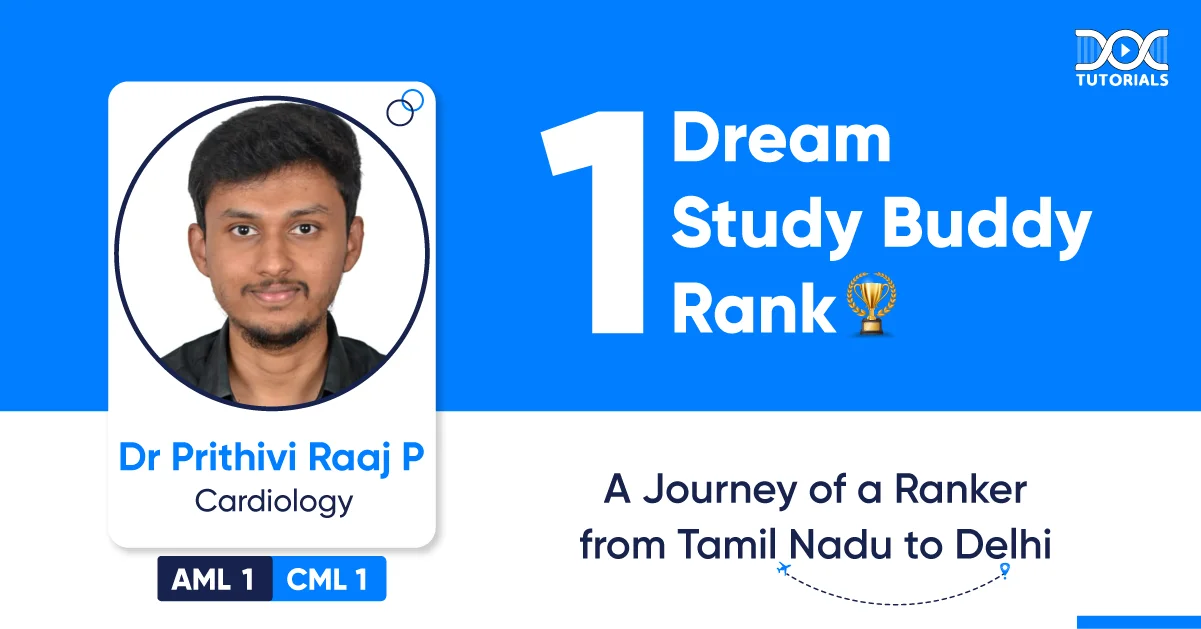
INI SS Topper: 1 Dream, 1 Study Buddy, 1 Rank – The Journey of Dr. Prithivi Raaj, CML 1 & (AIIMS) AML 1 in DM Cardiology
Achieving the top rank in a competitive exam like the INI SS DM Cardiology requires tireless dedication, a structured approach,…
-
INI SS Results: Merit List, Exam Insights, and What Comes Next
The INI SS results for October 2024 are just around the corner. This is a life-changing moment for thousands of…