DeVita Oncology Textbook: Overview, Key Updates, and Latest Edition
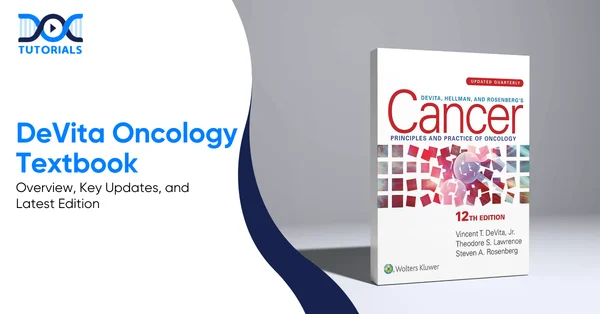
Oncology postgraduate residency is one of the most specialised medical graduate career paths in India. That’s why residents need proper foundational resources, and DeVita, Hellman & Rosenberg’s Cancer: Principles and Practice of Oncology is one of them.
This guide summarises oncology postgraduate training in India and explains why the DeVita Oncology textbook remains a key resource for residents. It explores how the book supports the concepts and clinical reasoning throughout oncology residency. Keep reading to know more.
Overview of the DeVita Oncology Textbook
DeVita’s Cancer: Principles & Practice of Oncology is a residency-based oncology resource that covers cancer biology, treatment principles, and site-specific management. The 12th edition uses developments in immunotherapy, genetics, prevention, and supportive care in academic education.
DeVita’s Cancer: Principles & Practice of Oncology is designed to reflect the modern training of oncology. It begins with cancer biology and epidemiology, then covers treatment principles, and finally site-specific cancers and supportive care.
Through this arrangement, residents learn disease mechanisms and apply the knowledge in organ-based clinical rotations. The book is edited by prominent oncologists and adopts a multidisciplinary approach, bringing together perspectives from surgical, medical, and radiation oncology.
The 12th edition is the most recent and incorporates advances in immunotherapy, genetics, prevention, and survivorship, and is regarded as an integrated, single-volume work from basic science to clinical care.
The main features of the latest edition are:
- Integrated Basic Science: Each chapter incorporates molecular and cell biology concepts, as well as clinical information.
- Quarterly Updates: The information is also updated regularly (online) with any breakthroughs, such as new drugs or trial results.
- Multidisciplinary Advice: The text is balanced in regard to surgical, medical, and radiation perspectives.
- New Content on Immunotherapy: The Immune Checkpoint Inhibitor and CAR-T sections have been added.
- Coverage of Supportive Topics: Chapters covering cancer prevention, screening, palliative care, and quality-of-life issues are also covered.
- Single or Multivolume Format: The 12th edition is also available in a single large volume or as a set of seven volumes for easier handling.
The textbook also provides digital support. It can be accessed as an eBook through services and includes features such as text-to-speech and multimedia resources. For students, this means they can search for or listen to the chapters on their phones or tablets, which supports their practical learning.
Latest Edition (12th) of the DeVita Oncology Book
The DeVita Oncology latest edition is the 12th (2022) edition of this textbook. It introduces significant changes to the view of recent developments, including immunotherapies, genetic insights, and novel treatment combinations.
The 12th edition of “DeVita’s Cancer: Principles & Practice of Oncology”, published in December 2022, was later named a Doody’s Essential Title of 2025 about medical education. As with the evolving field of oncology, this edition features more content, revised treatment recommendations, and several new figures and tables.
Major updates cover modern immunotherapies such as:
- PD-1/PD-L1 inhibitors
- CAR-T cell therapy
- Advances in cancer genomics and prevention
- HPV vaccination
The book is available in single- and multi-volume editions totalling almost 2,000 pages, as well as digital editions that are updated regularly. For NEET-SS aspirants and oncology residents, it provides a reliable resource on guidelines and complex clinical decision-making.
Key Updates in the 12th Edition
- Integration of Basic Science: In contrast to earlier editions, the latest DeVita edition integrates molecular biology into the clinical chapters. This helps residents immediately associate the mutation with the medicine.
- Focus on Immunotherapy: As checkpoint inhibitors and CAR T-cell therapies have become more useful, the text includes significant passages on the complexities of immunotherapy and its side effects.
- Quarterly Updates: Since a printed book may become obsolete soon, the DeVita Oncology 12th edition typically includes digital access that provides quarterly updates on new medication discoveries and study outcomes.
- Streamlined Content: The editors have minimised the historical preface in most chapters and placed greater focus on the information residents require at the point of care.
Study Strategies to Tackle the DeVita Oncology Textbook
The DeVita Oncology textbook should be used as a clinical reference to avoid burnout. Case-based reading, focusing on algorithms, digital search, and group study, can also make it more effective and manageable.
One of the major errors residents make is to start reading the DeVita oncology book as a novel. This method leads to burnout due to its encyclopaedic scope. Rather, students should view DeVita Oncology as a supplement to their clinical rotations.
Here are some of the effective study strategies:
- Case-Based Reading: If a resident admits a patient with Diffuse Large B-Cell Lymphoma (DLBCL), the indication to read the applicable chapter on DLBCL in DeVita Oncology is triggered. This just-in-time learning embeds concepts more effectively than abstract reading.
- Focus on Tables and Algorithms: The DeVita textbook is well known for its elaborate management algorithms. Memorising the flowcharts should be a primary concern for the residents since those are the foundation of board exam questions.
- Use the Digital Version: The DeVita latest edition digital versions can be searched with keywords, allowing one to find a particular mutation target or drug dose during a hectic shift.
- Group Study: A good way to address the large amount of content in DeVita is to assign different chapters to the co-residents and summarise them during journal clubs.
DeVita vs. Other Oncology Resources
DeVita Oncology textbook explains the science behind cancer management, while other resources focus on what to do in practice. When used together, DeVita builds exam-ready depth that supports protocol-based clinical decisions.
Residents often ask whether they should read the DeVita textbook or rely solely on the NCCN guidelines. The reason is that they have different purposes. The guidelines at NCCN inform you on what to do, whereas DeVita Oncology informs you on why.
A comparison of the DeVita Oncology Book with other popular sources is given below:
| Feature | DeVita Oncology (12th Edition) | MD Anderson Manual | Harrison’s Principles | NCCN Guidelines |
| Depth of Science | Extremely High (Gold Standard) | Moderate | Moderate (Generalist view) | Low (Protocol focused) |
| Clinical Utility | Comprehensive Reference | Practical/Ward-based | General Overview | Immediate Decision Making |
| Best For | Theory, Exams, Tumour Boards | Quick Ward Reference | Internal Medicine Foundation | Daily Prescribing |
| Exam Focus | Essential for NEET SS/Boards | Good for Viva | Basics only | Essential for Management Qs |
Although manuals and guidelines are useful for fast decisions, the DeVita Oncology 12th edition raises complex questions that a resident is expected to answer after being questioned by an examiner studying the biology of the disease.
How Should PG Residents Use the DeVita Oncology Textbook?
In Indian oncology residencies, DeVita’s Cancer: Principles & Practice of Oncology is used as an academic and clinical resource. It is an essential, multidisciplinary tool in oncology training, helping residents build concepts, prepare for the PG and NEET-SS exams, and conduct research.
DeVita Oncology Book is a reference used by Indian oncology residents to expand their knowledge of cancer medicine and prepare for exams. They also tend to place relatable chapters after clinical rotations and to use them as references when managing complex cases.
The DeVita book has several functions in an oncology residency:
- Conceptual Framework: DeVita textbook is used by residents to deepen fundamental ideas presented in lectures and around the ward. They also review staging, pathology, and treatment in cases such as Hodgkin lymphoma to help them integrate molecular biology into clinical decision-making.
- Exam Preparation: For PG finals and entrance tests such as NEET-SS, the DeVita book is a crucial resource because it covers a broad range of topics. Its tables and summaries with chemotherapy regimens, tumour markers, and treatment protocols are often referred to by residents.
- Clinical Decision Support: Complex or uncommon cases are often referred to DeVita to ensure that diagnostic and treatment techniques are accurate. Its multidisciplinary framework helps explain when surgery, chemotherapy, or radiation is most appropriate.
- Research and Thesis: Thesis work is commonly guided by the textbook’s coverage of therapies and historical trials. The referenced chapters help residents locate and review key research articles.
- Continuous Learning: Digital access improves usability, enabling users to find content quickly, bookmark it, and access periodic online updates. These characteristics enable residents to keep up with new developments during training.
- Integration with Other Disciplines: Through contributions from surgical, medical, and radiation oncologists, DeVita presents balanced views of all types of cancer to residents. This helps them understand that cancer care is a coordinated, multidisciplinary approach.
Overall, the DeVita Oncology textbook is treated as an “Encyclopedia” of Oncology. Often called the “resident’s bible,” it is used regularly in both print and e-book formats, and its depth and breadth make it indispensable during the demanding years of oncology training.
FAQs about the DeVita Oncology Textbook for PG Residency
- Why is DeVita, Hellman & Rosenberg’s Cancer recommended?
It is recommended due to its extensive coverage, combining cancer biology and clinical management of all tumour types. Over time, it has established itself as a standard reference in oncology postgraduate education, and faculty members recommend its use alongside clinical case discussions.
- What is the latest edition of DeVita’s oncology book?
The latest edition is the 12th edition, published in December 2022. It was recognised as a Doody’s Essential Title for 2025, reflecting its academic importance.
- What is new in the DeVita textbook, 12th edition?
The DeVita 12th edition has revised information on immunotherapy, cancer genetics, targeted therapies, screening, prevention, and quality-of-life concerns. It also provides regular updates on the latest online trials.
- Is there an Indian edition of DeVita’s textbook?
Yes. It has a South Asian version that is cheaper and largely mirrors the international version. Both versions can be used in the PG tests.
- How should residents study using the DeVita oncology textbook?
Residents typically read only chapters relevant to the current rotations or exam questions, not the entire book. The notes are often presented as tables and summaries, and the digital search option helps with hectic schedules.
- Are there supplementary resources by the same authors?
Yes. A DeVita review book in MCQ format and other exam-oriented resources are available, but the main textbook remains the primary reference.
- What topics does the DeVita textbook cover?
It includes cancer biology, cancer prevention, screening, diagnostics, treatment modalities, site-specific cancers, supportive care, and palliative oncology; equivalent to a complete oncology residency curriculum.
- Is the DeVita 12th edition very different from the 11th?
Yes. The DeVita 12th edition is more organised, incorporates basic science in clinical chapters, and contains new immunotherapy material that was omitted in earlier editions.
- Is DeVita too advanced for first-year residents?
The DeVita textbook can feel like a lot to grasp, but focusing on the principles and cancer biology sections early helps build a strong foundation.
- Does the DeVita textbook cover radiation oncology?
Yes. It is a multidisciplinary book involving substantial input from radiation oncologists, hence it is also applicable to radiation oncology residents.
Conclusion
The DeVita oncology textbook has become a reliable handbook, helping residents study cancer biology and complex exam-oriented concepts. Students and residents should invest time in the DeVita 12th edition as it is an investment in science-based clinical practice.
For added guidance, DocTutorials can be your study partner. We offer viva preparation, clinical case discussions, patient history-taking, and videos covering the PG Residency syllabus.
Join DocTutorials and explore our PG Residency course to excel in your medical career!
Latest Blogs
-

NEET SS Exam 2024: Analysis, Key Dates, Counselling
The NEET SS 2024 exam kicked off on March 29, 2025. Over two days and two slots, candidates across 13…
-
INI SS Topper: 1 Dream, 1 Study Buddy, 1 Rank – The Journey of Dr. Prithivi Raaj, CML 1 & (AIIMS) AML 1 in DM Cardiology
Achieving the top rank in a competitive exam like the INI SS DM Cardiology requires tireless dedication, a structured approach,…
-
INI SS Results: Merit List, Exam Insights, and What Comes Next
The INI SS results for October 2024 are just around the corner. This is a life-changing moment for thousands of…