Hutchinson’s Clinical Methods: Overview, Features, Table of Contents
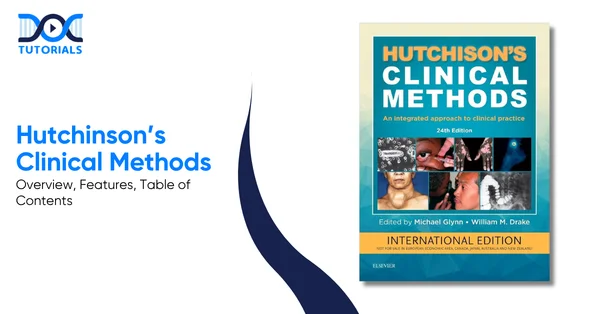
Hutchison’s Clinical Methods is a classic textbook recommended for students of PG Residency. It contains all the essential details for learning and serves as reference material for undergraduate and postgraduate medical students, helping them score better in their examinations.
It provides a step-by-step clinical explanation of examination techniques used in everyday medical practice. It utilises several clinical methods to explain processes in simple terms to students, including medical skills such as patient history-taking and interpretation, as well as clinical science and physical examination. Read on to know more!
Overview of the Hutchison Clinical Methods
The Hutchinson’s Clinical Medicine Book is an essential source of information for the PG Residency students to help them improve their clinical reasoning and patient assessment skills. It is a recommended book for learning clinical decisions in healthcare settings.
Hutchinson Clinical Methods has been edited by Michael Glynn and William M.Drake. By combining theory and practical examinations, Hutchison’s Clinical book is a trusted source for understanding how to assess patients carefully and make accurate and reliable clinical decisions in healthcare settings.
It is an invaluable source for all those learning and medical trainees seeking a standard textbook of medicine, specialities, and surgery. The latest 24th edition of Hutchison’s Clinical Methods, released in 2017, comprises 488 pages and is an invaluable source for PG students.
The book focuses on practical skills, helping students learn systematic methods for disease diagnosis to ensure accurate treatment. It covers several body systems, such as the cardiovascular, respiratory, and nervous systems, to provide a holistic understanding of the body’s mechanisms.
Thus, the Hutchison’s clinical methods, an integrated approach to clinical practice, help in improving clinical reasoning and patient assessment skills, as the first-hand treatment makes it an essential learning source for medical students and PG residency students.
Key Features of the Hutchison Clinical Methods Book
The Hutchinson Clinical Medicine, latest edition (25th edition), includes all the updated chapters that cover the main bodily systems, written by experts in the field. Additionally, it includes diagrams and tabulated information for better understanding.
Hutchison Clinical Medicine is an award-winning medical textbook used widely by doctors at all levels of training and residency to learn about the clinical needs of everyday practice. Here are the essential features of the textbook that make it stand out from others:
- The latest edition includes all the chapters essential for clinical understanding, which are reviewed and updated properly to reflect the modern healthcare practice.
- The Hutchison Clinical Methods book is written by clinical experts in the field and is reviewed by an International Advisory Board. Thus, it has reliable content relevant to an international audience.
- The latest edition of the Hutchison Clinical Medicine book covers all the main bodily systems, including the primary areas of cardiology, respiratory, gastrointestinal, locomotion, and neurology, making it a holistic source for clinical understanding.
- The contents of the textbook are organised by system and problem, which helps students navigate the chapters more easily for better readability and understanding. Additionally, it helps them retain concepts effectively and in an organised manner.
- The chapters are framed in such a manner that they can be read individually and are not duplicated with other contents in the book. Hence, there is a limited need for cross-referencing.
- The book provides tabulated information and diagrams to enhance conceptual clarity and retention.
- The book is dedicated to the needs of doctors at PG Residency and other levels of training and practice.
- Hutchison Clinical Methods latest edition, has won several awards, including the BMA book awards, making it a reliable source of learning for medical students.
- The latest edition of the Hutchinson Clinical Methods book includes a new appendix which describes the clinical features of COVID-19. Thus, it is updated regularly to inculcate the latest information available in the Medical Sciences.
- The ebook is easily downloadable for access on mobile devices anytime, anywhere.
Table of Contents in Hutchinson 24th Edition
The Hutchison clinical medicine book includes all the essential details of clinical examination, such as general patient assessment, assessment in particular patient groups, basic systems of the human body and clinical specialities.
The Hutchinson Clinical Medicine, latest edition, is carefully organised into sections and chapters for better readability and understanding. Here are the major topics covered in this textbook:
Section 1: General Patient Assessment
- Doctor and Patient: General Principles of History Taking
- General Patient Examination and Differential Diagnosis
- Ethical Considerations
Section 2: Assessment in Particular Patient Groups
- Women
- Children and Adolescents
- Older People
- Psychiatric Assessment
- Patients Presenting as Emergencies
- Patients in Pain
Section 3: Basic Systems
- Respiratory System
- Cardiovascular System
- Gastrointestinal System
- Locomotor System
- Nervous System
Section 4: Clinical Specialities
- Skin, Nails, and Hair
- Endocrine Disorders
- Diabetes and Other Metabolic Disorders
- Kidneys and Urinary Tract
- Eyes
- Ear, Nose and Throat
- Sexually Transmitted Infections
Updated Elements in Hutchison 24th Edition
The latest edition of the Hutchison Clinical Methods includes all the essential details of clinical settings and is reviewed thoroughly by an international group of students, presented to the International Advisory Board from the Middle East and South Asia, to provide it with a global perspective.
The Hutchison Clinical Methods, 24th edition, is an established textbook of clinical methods. It includes the following updated elements for advanced learning:
- The book has been thoroughly reviewed by an international group of students and trainee doctors to ensure that its contents are consistent with the basic principles of history and examination.
- It includes content specific to various clinical settings that PG residency students are required to master to become better doctors.
- The book has been provided with a global perspective by introducing it to the new international Advisory board recruited from the Middle East and South Asia.
FAQs about Hutchison’s Clinical Methods
- What is Hutchison’s Clinical Methods?
Hutchison’s Clinical Methods is a popular medical book used by students and doctors. It explains how to examine patients properly.
The book teaches how to take patient history, check symptoms, and do physical examinations. It helps medical students understand diseases and learn practical clinical skills step by step.
- Who should read Hutchison’s Clinical Methods?
Hutchison’s Clinical Methods is mainly written for medical students, interns, and young doctors. It is especially useful for those learning clinical examination for the first time.
Nursing students and other healthcare learners can also read it to understand how doctors examine patients and identify health problems.
- Why is Hutchison’s Clinical Methods important for medical students?
Hutchison’s Clinical Methods is important because it teaches basic clinical skills that every doctor must know.
It explains how to talk to patients, check symptoms, and examine different body systems. These skills help students move from classroom learning to real patient care with more confidence.
- What topics are covered in Hutchison’s Clinical Methods?
Hutchison’s Clinical Methods covers many important clinical topics. These include patient history taking, general physical examination, and examination of body systems like the heart, lungs, abdomen, and nervous system. It also explains how to understand signs and symptoms to reach the correct diagnosis.
- Is Hutchison’s Clinical Methods easy to understand?
Many students find Hutchison’s Clinical Methods easy to read because it explains clinical examination in a clear and simple way.
The book includes step-by-step explanations, illustrations, and examples. This helps students remember the examination process and apply it while seeing real patients during training.
- How does Hutchison’s Clinical Methods help during clinical postings?
During hospital training, Hutchison’s Clinical Methods becomes very helpful. It shows the correct order of examining patients and what signs doctors should look for.
Students can revise these steps before seeing patients, which makes their clinical practice more organised and confident.
- When was Hutchison’s Clinical Methods first published?
Hutchison’s Clinical Methods was first published in 1897. Since then, many updated editions have been released. Each new edition adds modern medical knowledge while keeping the original focus on bedside clinical examination and patient care skills.
- Do doctors still use Hutchison’s Clinical Methods today?
Yes, many doctors and medical students still use Hutchison’s Clinical Methods today. Even with modern medical technology, basic clinical examination is still very important. The book helps doctors build strong observation and diagnostic skills before relying on tests.
- Can beginners in medicine read Hutchison’s Clinical Methods?
Yes, beginners can read Hutchison’s Clinical Methods. The book starts with basic concepts of patient examination and slowly moves to more detailed topics. Because of its clear explanations, it is often recommended to students starting their clinical years in medical college.
- What makes Hutchison’s Clinical Methods different from other medical books?
Hutchison’s Clinical Methods mainly focuses on practical bedside skills instead of only theory. It teaches students how to observe patients, ask the right questions, and identify important clinical signs. This practical approach makes it a trusted guide for learning real-life medical examination.
Conclusion
The Hutchinson’s Clinical Methods, first published over a century ago, is a classic textbook on clinical skills for PG residency students. It is an outstanding source of information that provides medical students with a detailed clinical understanding.
The integrated approach and the new learning methods, such as diagrams and tabular presentations, make it an essential learning source. Medical trainees find it an essential guide for taking a full history and examining a patient to interpret clinical findings.
For further guidance, DocTutorials can be your study partner. We offer Viva preparation & OSCE, clinical case discussions, patient history-taking, and videos covering the PG Residency syllabus. This helps ensure residents gain clarity over complex medical concepts.
Join DocTutorials today and explore our PG Residency course to excel in your medical career!

Latest Blogs
-

NEET SS Exam 2024: Analysis, Key Dates, Counselling
The NEET SS 2024 exam kicked off on March 29, 2025. Over two days and two slots, candidates across 13…
-

INI SS Topper: 1 Dream, 1 Study Buddy, 1 Rank – The Journey of Dr. Prithivi Raaj, CML 1 & (AIIMS) AML 1 in DM Cardiology
Achieving the top rank in a competitive exam like the INI SS DM Cardiology requires tireless dedication, a structured approach,…
-
INI SS Results: Merit List, Exam Insights, and What Comes Next
The INI SS results for October 2024 are just around the corner. This is a life-changing moment for thousands of…