Manual of Practical Medicine: Overview, Features, and Table of Contents
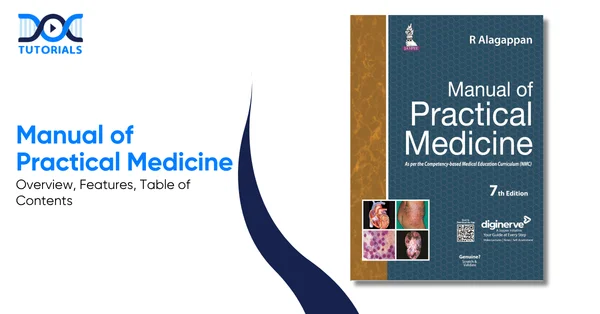
Manual of Practical Medicine by Alagappan is one of the best medical books for the practice of clinical medicine. Students consider it a golden standard for clinical practice, as it strikes a balance between theory and clinical practice.
It has been highly recommended by the faculty of medicine across the country and is highly liked by PG Residency medical students. Alagappan Practical Medicine is a highly demanded book, as all the chapters have been revised and updated regularly in full colour for better visual learning.
Keep reading to know more about the Alagappan Manual of Practical Medicine in detail.
Overview of Alagappan Manual of Practical Medicine
The latest edition of the Manual of Practical Medicine by R Algappan (7th edition) includes the latest advancements in several healthcare issues, such as COVID-19, tuberculosis, hepatitis, and multiple sclerosis, to provide advanced clinical knowledge for better-quality patient care.
The Alagappan Manual of Practical Medicine is a vital resource for medical students and healthcare professionals seeking to study clinical examination. The latest edition of the Manual of Practical Medicine by R Alagappan emphasises the integration of advanced treatments, particularly newer monoclonal antibodies.
It provides in-depth discussions across various systemic disorders, leading to a better understanding of several issues. Every chapter of the latest edition includes advanced research and clinical classification updates to ensure readers are well informed about the current best practices in medical science.
The latest topics in the textbook include a detailed examination of COVID-19 in the infectious diseases chapter, which addresses its implications for public health and treatment strategies. Moreover, the inclusion of gout in the connective tissue disorder section reflects an expanding understanding of these medical conditions, enabling better diagnosis and treatment.
Medical students seek the textbook because it provides detailed guidance on national protocols for several health issues, including tuberculosis management, with a specific focus on drug-resistant forms. It emphasises the importance of tailored treatment plans for tuberculosis in complex situations.
Additionally, a detailed discussion of the latest antiviral therapies for Hepatitis B and Hepatitis C highlights advancements in the management of viral hepatitis for medical students. Ultimately, the addition of new drug therapies for multiple sclerosis reflects the ongoing evolution in the treatment of neurological disorders.
This provides medical students seeking to understand these complex cases with practical insight. Therefore, the Alagappan Practical Medicine not only equips readers with theoretical knowledge but also provides essential practical knowledge grounded in evidence, making it an indispensable textbook for committed medical students.
Key Features of Alagappan Practical Medicine
The main features of Alagappan’s book of Medicine, including the inclusion of the latest medical advancements, make it an essential source for students in PG residency.
The Alagappan’s medicine practical manual includes several clinical features with the latest advancements of new diseases, which makes it an indispensable textbook for medical students. Here are the major characteristics of the textbook that make it stand out among other related books:
- The introduction of tables and illustrative clinical photographs in the textbook makes it easier to understand and more suitable for better memorisation.
- The latest edition includes the new colour coding, which is extensively used to highlight the core features, including investigations, clinical features and treatments for particular disorders.
- The addition of monoclonal antibodies to the textbook reflects their mechanism of action and their application in systemic disorders.
- The chapter on infectious diseases includes updates on coronavirus epidemiology, treatment protocols, and vaccines. This helps students understand the effective management of common infectious diseases.
- The connective tissue disorders chapter provides an overview of the latest treatment guidelines and advances in several health conditions, including rheumatoid arthritis, lupus, and gout.
- The textbook includes national protocols for tuberculosis and strategies for managing drug-resistant tuberculosis.
- The current content includes key details on antiviral therapies for Hepatitis B and Hepatitis C, including screening and management guidelines for effective clinical assessment and improved treatment strategies.
- The textbook also includes new drug therapies and treatment approaches for multiple sclerosis, including symptom management and patient care strategies.
- The chapter on general medical protocols includes evidence-based guidelines for various disorders, with particular emphasis on interdisciplinary approaches and treatment.
- The inclusion of multiple case studies and investigations in the textbook enhances the authenticity, making it suitable for medical students.
Table of Contents in Alagappan General Medicine Book
The table of contents in the Alagappan General Medicine book is framed in such a manner that it reflects a detailed understanding of several issues related to clinical examinations and the diagnosis and treatment of several health issues.
The organised framework of the Alagappan book of general medicine makes it a suitable resource for medical students. Here are the major contents of the textbook:
- Introduction to Internal Medicine
- Nutrition
- Infectious Diseases
- Cardiovascular System
- Respiratory System
- Abdomen
- Haematology
- Nephrology
- Nervous System
- Endocrine and Metabolic Disorders
- Connective Tissue Disorders
- Oncology
- Substance Abuse
- Imaging Modalities in Internal Medicine
- Procedures
- Geriatric Medicine
How to Read Alagappan’s Practical Medicine?
Reading and analysing the community medicine practical manual by Alagappan includes several tips, such as previewing the topics, active reading, asking questions, learning vocabulary, breaking down complex topics, analysing the author’s thought pattern, creating notes, and final revision.
The Manual of Practical Medicine by Alagappan is a complex medical textbook which requires a careful strategy to study and understand. Given below are some essential tips to understand the textbook:
- Preview the Topic
The Manual of Practical Medicine includes several pieces of information that might be unfamiliar to a medical student. Therefore, it is essential to preview the important topics such as the title, learning objectives, headings and subheadings to skim the main idea and understand the broad theme of the topics.
- Active Reading
After skimming the main ideas, the reader should actively read everything, avoiding skipping topics to maintain the flow. Use a highlighter to mark the main topics and underline the chapter’s core ideas.
Additionally, you can draw boxes around the essential details and put a check mark in the margin for any remarks. Put a question mark in the margin where you don’t understand the topic, and go back to your mentors for better understanding.
- Ask Questions
Ask yourself questions as you read the topic’s headings and subheadings, and find the answers to those questions. Make sure that you understand the how and why of every topic, and comprehend it in detail.
- Understand the Vocabulary
Create a list of new terminologies and essential root words to understand the abbreviations and notations. This list will help you understand the complex terminology used across the textbook for better memorisation.
- Breakdown Complex Topics
The textbook may include several complex topics that may be difficult to understand on first reading. Try to break down the complex topics into simpler terms and subheadings for better understanding.
- Analyse the Thought Pattern
Try to understand the textbook’s thought pattern, which includes the cause-and-effect process and the problem-solving approach to a particular health issue.
Other important thought patterns include classification, experimentation, instructional patterns, and factual statements, which help you skim the topics more easily. Recognising the transition words will help you identify the pattern of content organisation.
- Write Short Notes
Reduce the chapter to the most important information by creating short notes from your highlighted ideas. You can use several note-taking methods, such as concept maps, outlining, or thematic diagrams.
- Revise
Revision and memorisation are the keys to achieving better exam scores. Use your short notes to revise them multiple times to ensure you fully understand the entire textbook.
FAQs about Manual of Practical Medicine
- What is the Manual of Practical Medicine by Alagappan?
The Alagappan Book of General Medicine is a standard textbook used by medical students in PG Residency to understand the clinical examination of several diseases, including the symptoms, diagnosis and treatment in the most effective manner. The textbook focuses on practical clinical knowledge useful for patient examination.
- Who is the author of the Manual of Practical Medicine?
The Manual of Practical Medicine was written by R Alagappan, a respected physician and teacher. He wrote the book for medical students to help them easily understand the clinical examination for various medical conditions. Alagappan’s clear, practical writing style makes the book useful for medical students.
- Who should read the Manual of Practical Medicine by Alagappan?
The Manual of Practical Medicine by Alagappan is a recommended textbook for medical students in MBBS, PG Residency, and young doctors seeking quick revision.
The usage of simple language and creative diagrams makes it preferable for students preparing for clinical examinations and ward postings.
- What topics are covered in the Manual of Practical Medicine by Alagappan?
The Manual of Practical Medicine by Alagappan includes several topics such as cardiovascular diseases, respiratory problems, infections, endocrine disorders, and neurological conditions.
The book explains the symptoms, clinical signs, investigations, and treatment methods of the associated illnesses, helping students understand how different diseases are managed in real medical practice.
- Why is the Manual of Practical Medicine by Alagappan popular among students?
Many students prefer reading the Manual of Practical Medicine because it presents complex medical topics in a simpler format. The book’s focus on key clinical points makes it useful for quick study, revision, and preparation for medical examinations.
- Is the Manual of Practical Medicine by Alagappan useful for exam preparation?
Yes, the Manual of Practical Medicine by Alagappan is used for exam preparation, as it covers essential symptoms, diagnostic steps, and treatments in a structured format.
Many students read this textbook before clinical examinations, as it helps them memorise key medical details more effectively.
- Does the book explain clinical examination methods?
Yes, the Manual of Practical Medicine by Alagappan includes guidelines on clinical examination. Additionally, it explains how doctors examine patients, identify symptoms, and interpret signs of various disorders to provide effective treatment. This practical approach, utilised in the textbook, improves students’ patient examination skills.
- Is the Manual of Practical Medicine by Alagappan easy to understand?
Yes, the Manual of Practical Medicine is popular among medical students because it is easily understandable, thanks to the author’s simple language.
The information in the book is presented in short points and clear illustrations, helping students understand difficult concepts without confusion.
- How is the Manual of Practical Medicine by Alagappan different from other medical books?
The Manual of Practical Medicine is a significant medical textbook used by PG residency students, as it focuses on practical, concise information rather than unnecessary details, unlike many other medical textbooks.
It highlights the most important clinical facts, making it easy for young doctors to understand medical practice.
- Where can students use the knowledge from the Manual of Practical Medicine by Alagappan?
Medical students can use the knowledge from the Manual of Practical Medicine during hospital rounds, clinical examinations, internships, residency courses and patient care.
The practical explanations provided in the textbook help them understand real-life medical situations and improve their confidence when dealing with patients.
Conclusion
The manual of Practical Medicine by R. Alagappan is a valuable textbook for medical students and young doctors seeking a practical guide to several diseases. It explains several diseases, their symptoms, diagnosis, and treatment in clear, simple language, making them easier to understand and better for memorisation.
For further guidance, DocTutorials can be your study partner. We offer Viva preparation & OSCE, clinical case discussions, patient history-taking, and videos covering the PG Residency syllabus. This helps ensure residents gain clarity over complex medical concepts.Join DocTutorials today and explore our PG Residency course to excel in your medical career!

Latest Blogs
-

NEET SS Exam 2024: Analysis, Key Dates, Counselling
The NEET SS 2024 exam kicked off on March 29, 2025. Over two days and two slots, candidates across 13…
-

INI SS Topper: 1 Dream, 1 Study Buddy, 1 Rank – The Journey of Dr. Prithivi Raaj, CML 1 & (AIIMS) AML 1 in DM Cardiology
Achieving the top rank in a competitive exam like the INI SS DM Cardiology requires tireless dedication, a structured approach,…
-
INI SS Results: Merit List, Exam Insights, and What Comes Next
The INI SS results for October 2024 are just around the corner. This is a life-changing moment for thousands of…