neet-pg Archives - Page 14 of 20 -

INI CET Question Paper 2026: Syllabus, Question Type, Marking Scheme, and Exam Mode
INI CET Question Paper

Are you preparing for INI CET 2026 and aiming for a seat in the most prestigious medical institutions of India, such as AIIMS, PGIMER, JIPMER, NIMHANS, and SCTIMST? Then your ultimate path to success is the INI CET exam. However, cracking this examination requires more than just hard work; it demands clarity on the exam pattern, syllabus, question types, and marking scheme. 

Understanding the INI CET exam question paper structure is your first strategic step towards achieving success. In this comprehensive guide, we dissect each salient point of the INI CET 2026 question paper so that you may study objectively and confidently.

Keep reading!

Complete Syllabus: INI CET Exam 2026

The syllabus for INI CET 2026 is comprehensive, covering all subjects taught in the MBBS curriculum. These are grouped under three sections: Pre-Clinical, Para-Clinical, and Clinical subjects. A detailed breakdown is as follows:

Pre-Clinical SubjectsClinical SubjectsPara-Clinical Subjects
Anatomy: Histology, Imaging, Embryology, Neuroanatomy, Surface AnatomyMedicine: Gastroenterology, Nephrology, Endocrinology, Cardiology, Neurology, General MedicinePathology: Haematology, General Pathology, Neoplasia, Systemic Pathology, Immunopathology
Physiology: Neurophysiology, Cardiovascular, Endocrinology, Renal, Reproductive PhysiologyPaediatrics: Nutrition, Neonatology, Growth and Development, Paediatric InfectionsPharmacology: Endocrine Drugs, Autonomic Nervous System Drugs, General Pharmacology, Antimicrobials, CNS, CVS, 
Biochemistry: Enzymes, Molecular Vitamins, Biology, Metabolism, Clinical BiochemistryObstetrics and Gynaecology: Gynaecology, Obstetrics, Infertility and Reproductive MedicineMicrobiology: Virology, Immunology, Mycology, Bacteriology, Parasitology
Community Medicine (PSM): National Health Programmes, Preventive Medicine, Epidemiology, BiostatisticsForensic Medicine (FMT): Legal Aspects, Toxicology, Medical Jurisprudence
Surgery: General Surgery, Anaesthesia, Ophthalmology, Orthopaedics, ENT, Radiology

Note: You need to understand the syllabus to prepare for the INI CET exam question paper effectively. For better information on the syllabus, trust DocTutorials. We offer topic-based study materials to make sure that the INI CET aspirants can cover the syllabus seamlessly.

INI CET Exam 2026: Subject-Based Weightage Breakdown

Covering the entire syllabus for INI CET is not enough to appear for the examination; you need to comprehend the question pattern properly. The INI CET exam question paper covers 200 (MCQ) questions in total. Here’s a detailed distribution of questions for each subject: 

  1. For Pre-Clinical Subjects 
SubjectProbable QuestionsFocus Chapters/Topics
Anatomy10–15Diaphragm, Neuroanatomy, Embryology, Brachial Plexus
Physiology10–15Neuro, CVS, Acid-Base Balance, Renal
Biochemistry10–15Enzymes, Metabolism, Vitamins, Heme Pathway
  1. For Clinical Subjects 
SubjectProbable QuestionsFocus Chapters/Topics
Paediatrics5–10Respiratory ailments, Growth milestones, IMNCI
OBGYN15–20Gynec cancers, Obstetric emergencies, Labour, Contraception
General Medicine20–25CVS, CNS, Rheumatology, Infectious Diseases 
Orthopaedics5–10Fractures, Bone tumours, Paediatric ortho
Dermatology5–10Leprosy, Psoriasis, STDs, 
Psychiatry5–10Sleep, Mood disorders, Substance abuse
ENT5–10Audiometry, Vertigo, CSOM
General Surgery20–25Thyroid, Breast, Hernia, Trauma, GI
Anaesthesia5–10Airway, CPR, IV drugs, Monitoring
Ophthalmology5–10Glaucoma, Cataract, Vision defects
Radiology5–10X-rays, Signs, Contrast agents
  1. For Para-Clinical Subjects 
SubjectProbable QuestionsFocus Chapters/Topics
Forensic Medicine5–10IPC sections, Injuries, Identification
Pathology15–20Neoplasia, Cell Injury, Haematology
Microbiology15–20Virology, Immunology, Bacteriology
PSM (Community Medicine)15–20Screening tests, Biostats, NHPs, Epidemiology
Pharmacology15–20DOCs, ADRs, Autonomic + CNS drugs

Common Preparation Strategies for INI CET Exam 2026

To excel in INI CET, it’s necessary to create a structured and effective preparation plan. The following are some ideal tips that will help you prepare and crack the INI CET exam efficiently:

  • Start Your Preparation Early

The huge syllabus needs time for reading, practice, and several revisions. Beginning early also provides you with sufficient space to improve weak spots and consistently enhance them.

  • Know the Entire Syllabus

INI CET covers all 19 topics of the MBBS course, categorised under the Pre-Clinical, Para-Clinical, and Clinical sections. Focus on the most vital and common topics that appeared in the past year’s question analysis.

  • Adhere to the Exam Pattern

You will be given 200 MCQs to solve in 3 hours, so time management is important. Practise question-solving under exam-simulative conditions and become familiar with clinical case-based, image-based, and single-answer question types.

  • Concentrate on High-Weightage Topics

Topics such as general medicine, surgery, pathology, and pharmacology tend to cover the maximum number of questions in the INI CET question paper. Pay attention to these aspects in your study, while not overlooking low-weightage topics completely.

  • Practice from Previous Year Papers (PYQs)

Many students mistakenly drop the idea of practising INI CET previous years’ question papers. However, it is an excellent way to become familiar with the exam pattern and questions. Practise and analyse them regularly to enhance your accuracy and confidence.

  • Practise Full-Length Mock Tests Regularly

Mock tests serve as a replica of the real exam and help in developing accuracy, speed, and time management. It also helps you determine your weak areas where you need to invest extra effort. Participate in various mock tests to familiarise yourself with the actual exam. 

  • Revise Multiple Times

Do not leave the revision work for the last couple of days before the exam. Attempt to revise the entire syllabus at least twice prior to the exam. Utilise concise notes, mind maps, and flashcards to accelerate the process.

  • Monitor Your Progress

Utilise test results and self-evaluations to keep track of how you are improving. Work hard on areas where you consistently make errors. Monitoring progress keeps you motivated and goal-focused.

  • Be Consistent and Positive

Be mentally tough, take a break when required, and stay positive during the preparation process.

Common Mistakes to Avoid While Preparing for the INI CET Exam

Here are some common mistakes you need to steer clear of while preparing for the INI CET examination:

  • Focusing solely on theoretical knowledge without engaging in MCQ practice.
  • Failing to create exam pressure through comprehensive mock tests.
  • Not creating a tight-scheduled preparation routine and adhering to it. 
  • Disregarding low-weightage subjects such as Psychiatry, FMT, and ENT.
  • Undervaluing the importance of image-based learning.

FAQs About the INI CET Exam Question Paper

  1. Is the question paper pattern for the INI CET exam 2026 going to change?

The INI CET exam pattern is expected to remain constant. Essential data and news regarding the same will be declared via the information brochure by the AIIMS, Delhi, on their official website. It will comprise mode, medium, the total number of questions, and a marking scheme.

  1. What type of questions will be covered in the INI CET exam question paper in 2026?

The INI CET exam is a computer-based test (CBT). It will feature 200 MCQs, a 3-hour (180 minutes) duration, and a marking scheme of +1 for right answers and -1/3 for incorrect ones.

  1. Are there any limits on the number of attempts for the INI CET exam?

No, there is absolutely no limit on INI CET exam attempts. Candidates can participate many times to enhance scores, as long as they fulfil the required eligibility criteria.

  1. Who qualifies to take the INI-CET exam?

Only candidates who have obtained their MBBS degree from a University acknowledged by the National Medical Commission/Medical Council of India are qualified to sit for the INI CET exam. 

6. Is there negative marking in the INI-CET question paper?

Yes, INI-CET follows a negative marking scheme. For every incorrect answer, one-third of the allotted marks is deducted. This makes it important for candidates to avoid guesswork and answer questions only when reasonably confident.

7. How many questions are there in the INI-CET question paper 2026?

The INI-CET 2026 question paper consists of a total of 200 multiple-choice questions. All questions must be attempted within the fixed exam duration, testing a candidate’s knowledge, accuracy, and time management skills.

8. What is the duration of the INI-CET question paper 2026?

The total duration of the INI-CET 2026 examination is three hours, or 180 minutes. Candidates are required to attempt all 200 questions within this time frame, making efficient time management extremely important.

9. Are questions in INI-CET more clinical or theoretical?

INI-CET questions are mostly clinical and concept-based. The exam focuses more on applying medical knowledge to clinical situations rather than testing direct theoretical facts or rote memorisation from textbooks.

10. What is the syllabus for the INI-CET question paper 2026?

INI-CET does not have a fixed or topic-wise syllabus. Questions can be asked from the entire MBBS curriculum, including pre-clinical, para-clinical, and clinical subjects, covering both basic concepts and their clinical applications.

Conclusion

To excel in INI CET 2026, you must have a clear perception of the exam pattern, syllabus, types of questions, and marking scheme. With regular practice and a well-structured study plan, cracking this highly competitive exam comes within reach. 

That’s where DocTutorials comes into play. Our INI CET courses offer a structured preparation plan, comprehensive topic-wise study material, well-designed MCQs, mock tests, high-quality video classes, and PYQ banks with step-by-step solutions. 

Study smarter with DocTutorials!

NEET PG Online Live Power Pack
DocTutorials App Download Now

Latest Blogs

INI CET July 2026 Exam Date: Official Exam Schedule, and Updates

INI CET Exam Date

The INI CET July 2026 Exam Date has been officially announced by AIIMS, which will be conducted on May 16, 2026. This important national-level postgraduate medical entrance examination will be held in computer-based mode at different test centres in India.
Aspirants seeking admission into MD, MS, DM, M.Ch., and MDS courses should remain updated with information about the application process, exam pattern, and preparation. The AIIMS INI CET July 2026 Session admit card will be released on 9th May 2026 as per the official admission notice.
This guide provides the entire INI CET July 2026 timetable, marking scheme, schedule, and the most recent updates to ensure you’re well-prepared on time.
Keep reading for more details.

Important Dates for INI CET July 2026 Exam Date

The tabular representation below reflects the important dates on which various events regarding the INI CET exam will take place:

EventsDates 
INI CET July 2026 basic registrationStarts on 28.03.2026
Final date to submit the application form April 25 2026, by 5:00 PM.
Last date of correction (rejected images/ incorrect registration details)April 30, 2026, to May 2, 2026
INI CET Admit card dateMay 9, 2026
Official INI CET July exam date16 May, 2026
Result announcement23 May, 2026
Counselling commencesDate yet to be announced.

Note: Keep in mind that all these dates can change, so you should stay updated and follow the official AIIMS website on a regular basis.

INI CET July 2026 Exam: Eligibility Criteria

To qualify for the INI CET 2026 examination, candidates are required to fulfil the following criteria:

  • All applicants for the INI CET July 2026 must be either Indian Nationals, Overseas Citizens of India (OCI)/ Persons of Indian Origin (PIO), or Foreign Nationals to be eligible for participation.
  • All applicants must have achieved a minimum of 55% in their qualifying examination.
  • All applicants must have completed their MBBS or BDS from a college or university recognised by the NMC/MCI.
  • Applicants must provide evidence of having completed a 12-month rotating internship by or before applying for the exam.

INI CET July 2026 Exam: Exam Pattern

It is essential for students to have a thorough understanding of the examination format. The INI CET is conducted as a computer-based test featuring questions in a multiple-choice question (MCQs) format.

To gain a clearer insight, students can refer to the INI CET 2026 exam pattern outlined below:

ParticularsDetails
Exam modeComputer-Based Test (CBT)
Type of questions Multiple Choice Questions (MCQs)
Total questions200
Exam duration3 Hours (180 Minutes)
Time Per Part45 minutes per part; Candidates cannot return to the previous part once the time expires
Exam frequency Twice, yearly 
Subjects Covers Pre-Clinical, Para-Clinical, and Clinical subjects from the MBBS curriculum, including Anatomy, Biochemistry, Microbiology, Physiology, Community Medicine, Pathology, Obstetrics, Pharmacology, Surgery, Gynaecology, Medicine, and Paediatrics, with a focus on clinical application.
Marking Scheme+1 for every correct answer
Negative Marking-1/3 for every incorrect answer
Total Marks200

INI CET July 2026 Preparation Tips

As the AIIMS-administered INI CET 2026 exam is approaching shortly, candidates should concentrate more on their studies to achieve a consistent score and secure a place in a prestigious medical institution.

Here are some effective preparation strategies for the upcoming INI CET July 2026 exam:

  • Familiarise yourself with the exam format and syllabus for the INI CET 2026 July session exam.
  • Create a timetable to cover each subject and adhere to it.
  • Analyse the exam syllabus as per the trends from previous years. Knowing which topics are asked most in the exam will help you prepare and boost your chances of cracking the INI CET exam.
  • Complete the INI CET syllabus within the initial months.
  • Practice as many MCQs as possible from previous years’ INI CET questions and participate in mock tests.
  • Take additional time to revise the difficult chapters. Full concentration is essential to boost your performance.
  • Take concise notes while studying for quick revision in the final months.
  • Seek feedback and expert assistance when necessary to clarify doubts.
  • Enrol in reputable coaching for guidance on the INI CET July 2026 exam.
  • Seek help from the medical study platforms like DocTutorials for expert support during your preparation journey.

Things to Avoid for the INI CET July Exam 2026

As the INI CET date is approaching, candidates should stay serious and steer clear of certain things to achieve better results in the exam:

  • Reduce Distractions: Make sure to study in a quiet environment, away from many distractions. No matter when the INI CET exam is scheduled, staying focused during your revision sessions will certainly lead to better results.
  • Always Revise: Remember to go over what you have learned. Make it a point to frequently review the toughest topics as the INI CET exam dates approach.
  • Steer Clear of Last-Minute Rush: Do not try to study new chapters/topics the night before the INI CET exam, as this can lead to stress and anxiety.
  • Avoid Comparing Yourself to Others: Refrain from measuring your achievements against those of other candidates. Concentrating on your own improvement can help you achieve better exam results by eliminating unnecessary stress.
  • Do Not Take Unnecessary Pressure: Stress can negatively impact your performance. Take time to relax and incorporate breaks into your study routine. Additionally, try relaxation techniques like meditation to help ease anxiety before the INI CET 2026 exam date.

FAQs About INI CET Exam Dates 2026

  1. On which date will the INI CET examination 2026 be held?

As per the current announcement, the AIIMS-administered INI CET July 2026 session examination is going to take place on 16 May 2026.

  1. What is the timeline for the release of INI CET 2026 admit cards?

The AIIMS INI-CET July 2026 session admit card will be released on 9th May 2026 as per the official admission notice and will be uploaded on the AIIMS website at aiimsexams.ac.in.

  1. How many questions will be there in the INI CET 2026 exam?

The total number of questions in the INI CET examination is 200, all multiple-choice questions (MCQ).

  1. What is the marking scheme of the INI CET 2026?

There will be 200 MCQ questions in the INI CET exam. Candidates will get 1 mark for every correct answer but lose 1/3 mark for every wrong answer.

6. What documents should I carry for the INI-CET exam day?
Carry your admit card with photo and signature, a valid photo ID (Aadhaar, Passport, PAN, Voter ID, etc.), a passport-size photograph if required, and a PwD certificate if applicable.

7. Can I wear jeans or casual clothes for the INI-CET exam?
Yes. Simple casual clothes like jeans are allowed. Avoid heavy pockets, metallic zippers or buttons, jackets, hoodies, and accessories to prevent delays during frisking.

8. What items are allowed inside the INI-CET exam centre?
Allowed items include the admit card, valid ID proof, passport-size photo (if required), a transparent water bottle, and permitted stationery. Mobile phones, smartwatches, calculators, and electronic devices are prohibited.

9. What is the reporting time for the INI-CET exam?
Candidates should report at least 60–90 minutes before the exam. Entry after the gate closing time mentioned on the admit card is usually not allowed.

10. How many times is the INI-CET exam conducted in a year?

INI-CET is conducted twice a year—generally for January and July admission sessions.

Conclusion

As the INI CET July session 2026 exam approaches, it is essential to stay updated on the INI CET exam dates and preparation tips. Early registration, familiarisation with the pattern of the exam, and rigorous practice can be extremely crucial.

For systematic learning and expert mentorship, DocTutorials offers an exclusive INI CET course, created by experts, featuring exceptional study materials, mock tests, and time-efficient revision aids. Begin your journey with DocTutorials and gain the confidence and clarity needed to excel in the INI CET exam.

Stay on track, stay updated, and all the very best for your exam!

NEET PG Online Live Power Pack
DocTutorials App Download Now

Latest Blogs

AIIMS INI CET Admit Card: How to Download and Other Exam Details

INI CET Admit Card

The INI CET admit card is a mandatory document for every medical aspirant who wants to appear for the entrance exam conducted by the All-India Institute of Medical Sciences (AIIMS). 

For the recent July 2026 session, the exam was successfully held on 16th May 2026. The official INI CET Admit Card 2026 download link was activated on the AIIMS website on Saturday, 9th May 2026. Following the exam, AIIMS declared the official results shortly after, on 23rd May 2026. 

How to Download INI CET Admit Card 2026

Follow these simple steps to download the INI CET 2026 admit card for the 2026 July session:

  1. Visit the Official Website
    Go to the official website of AIIMS Exams: aiimsexams.ac.in.
  2. Navigate to the Academic Courses Section
    Under the “Academic Courses” tab, find “Postgraduate” Click on it and click on “INI CET (MD/MS/MCh(6yrs)/DM(6yrs)).”
  3. Log in to the Candidate Portal
    On the candidate login page, enter your registration ID, password, EUC code, and the captcha code.
  4. Access the Admit Card
    After logging in, the INI CET admit card for the July 2026 session will appear on your screen.
  5. Review Your Admit Card Details
    Carefully check all the details mentioned on the admit card, including your personal information and exam center.
  6. Download and Save the Admit Card
    Once you’ve verified the information, download the admit card and save it on your device. It’s crucial to carry a printed copy to the exam center.

Ensure that all details are correct and keep your admit card safe for the examination day!

The hall ticket will be issued only to candidates who have completed the application process by the official deadline. It has vital information such as the candidate’s name, roll number, exam date and time, centre location, and instructions on the day of the exam. No student will be permitted to take the exam without this document.
Let’s go through the AIIMS INI CET July 2026 admit card download procedure beforehand so that you stay completely prepared and confident on the exam day. Keep reading to get a deeper understanding!

AIIMS INI CET 2026: Important Events and Dates

The All India Institute of Medical Sciences (AIIMS) is likely to declare the INI CET 2026 admit card release date shortly. Candidates can easily download the admit card online from the official website. The table below discusses the important dates for the INI CET exam, admit card, and related events:

EventsDates
INI CET July 2026 basic registrationStarts on 28. 03.2026
Deadline to submit the application form April 25, 2026, by 5:00 PM
Last date of correction (rejected images/ incorrect registration details)April 30, 2026, to May 2, 2026
INI CET Admit card dateMay 9, 2026
INI CET July Session Exam dateMay 16, 2026
Result announcementMay 23, 2026
Counselling commencesJune 11, 2026 

Information Mentioned on AIIMS INI CET Admit Card

The AIIMS INI CET admit card comprises essential information about the candidate and the examination. Before the exam, it is necessary to verify the details in every section to make sure that there are zero errors. The key details are as follows:

  • Applicant’s Name: The candidate’s name as recorded in the application must correspond with the identification documents.
  • Applicant’s Date of Birth: This verifies the candidate’s age and eligibility for the examination.
  • Candidate’s Gender: This denotes the candidate’s gender, assisting in verifying their identity at the examination site.
  • Candidate’s Category: This indicates the category under which the candidate has applied (e.g., General, OBC, SC, ST), which may be significant for reservation considerations.
  • Photograph, Signature, and Thumb Impression: These biometric markers are utilised to authenticate the candidate’s identity, prevent impersonation, and maintain the integrity of the examination process. 
  • INI CET Roll Number: A distinct identification number allocated to each candidate, vital for monitoring their exam records and outcomes.
  • Date and Time of Examination: The exact date and time when the examination will take place.
  • Exam Centre Details: This section includes the name and address of the examination centre where the candidate is required to report.

Candidates should meticulously review all these details on the admit cards. Any mistakes must be reported to the examination authorities immediately to ensure a seamless experience on exam day.

AIIMS INI CET Admit Card: Photograph Details

Here are the necessary photo guidelines for photographs needed for the AIIMS INI CET 2026 examination:

  • No need to glue a photo on the admit card. Bring two recent passport-sized photographs (preferably identical to those uploaded while registering) along to the test centre.
  • The face, neck, eyes, and whole head should be clearly visible.
  • The background should be white or light-coloured.
  • The face and head should occupy at least 75% of the photograph.
  • Neutral expression with full frontal view.
  • No caps, goggles, or ornaments.
  • The photograph should be clean — no creases, marks, or tears.
  • Minimum resolution: 600 dpi.
  • Maximum size: 3.5 cm x 4.5 cm.

AIIMS INI CET Admit Card 2026: Key Instructions

The AIIMS INI CET admit card has key instructions that all candidates must read before going to the exam hall. These rules will help you avoid unnecessary hassles, such as:

  • Reach the Exam Centre on Time

Candidates have to be present at the exam centre prior to the reporting time mentioned on the admit card. Being there early will help you avoid the last-minute rush and ensure a seamless exam process.

  • Carry Required Documents

Candidates must bring some valid photo ID proof, such as their PAN card, Aadhaar card, driving licence, or voter ID, alongside the admit card. These are essential for identity verification.

  • Items Not Allowed in Exam Hall

Any electronic gadgets, such as mobile phones, smartwatches, tablets, and even expensive jewellery, are strictly prohibited in the exam hall. Make sure you do not bring any of these items, or else it could be detrimental.

INI CET Admit Card 2026: Discrepancy Resolution

If any candidate finds an error on their INI CET admit card, they must reach out to the relevant authority without delay. The contact information for reporting discrepancies is provided below:

  • To Contact: Assistant Controller of Examinations, AIIMS, New Delhi-110608
  • Toll-Free Contact Number: 1800117898
  • Email ID: aiims.inicet@gmail.com

FAQs about AIIMS INI CET 2026 Admit Card

  1. When will the AIIMS INI CET 2026 admit card be released?

As per the official admission notice, the AIIMS INI-CET July 2026 admit card was released on 9th May 2026 and made available on the AIIMS website at aiimsexams.ac.in. 

  1. How can I download the AIIMS INI CET 2026 admit card?

The INI CET admit card will be accessible for download only on the official website of AIIMS. Candidates are required to navigate to the website using their credentials (valid user ID and password).

  1. What key details are present on the INI CET 2026 admit card?

The INI CET admit card will have details of the candidate’s name, roll number, registration number, photograph, and signature, examination centre details, exam date and time, and various reporting instructions.

4. Who issues the INI-CET admit card?

The INI-CET admit card is issued by AIIMS, New Delhi, the exam’s conducting authority.

5. When is the INI-CET admit card released?

The AIIMS INI-CET May 2026 admit card was released on 9th May 2026, as per the official admission notice, approximately one week before the exam date of May 16, 2026. 

6. Can the INI-CET admit card be shown in digital form at the exam centre?

No. Candidates must carry a printed hard copy of the admit card. Digital copies on mobile phones are usually not accepted.

7. Is the INI-CET admit card mandatory to appear for the exam?

Yes. Carrying a printed copy of the admit card along with a valid photo ID is mandatory to enter the examination centre.

8. What should a candidate do if there is an error on the admit card?

In case of any discrepancy (name, photograph, exam centre, etc.), candidates should immediately contact AIIMS examination authorities through the official helpdesk.

9. What documents should be carried along with the INI-CET admit card?

Along with the admit card, candidates must carry a valid government-issued photo ID (Aadhaar card, PAN card, passport, etc.)

10. Should the INI-CET admit card be preserved after the exam?

Yes. Candidates are advised to keep the admit card safe until the entire admission and counselling process is completed.

Conclusion

The INI CET 2026 admit card is your ticket to the most competitive medical exam in India. The AIIMS INI-CET May 2026 admit card was released on 9th May 2026. Candidates can download their hall tickets from the official AIIMS portal at aiimsexams.ac.in. 

Make sure you download it on time, check all the details, and bring it along with a valid photo ID to the exam venue. Following the instructions on the admit card is important to prevent any last-minute problems.

For proper preparation and expert guidance, you rely on DocTutorials. Our INI CET course — with detailed video lectures, revised question banks, and test series has been designed to help students crack INI CET confidently. Keep yourself organised, informed, and ensure a seamless exam day experience with DocTutorials as your reliable study partner!

NEET PG Online Live Power Pack
DocTutorials App Download Now

Latest Blogs

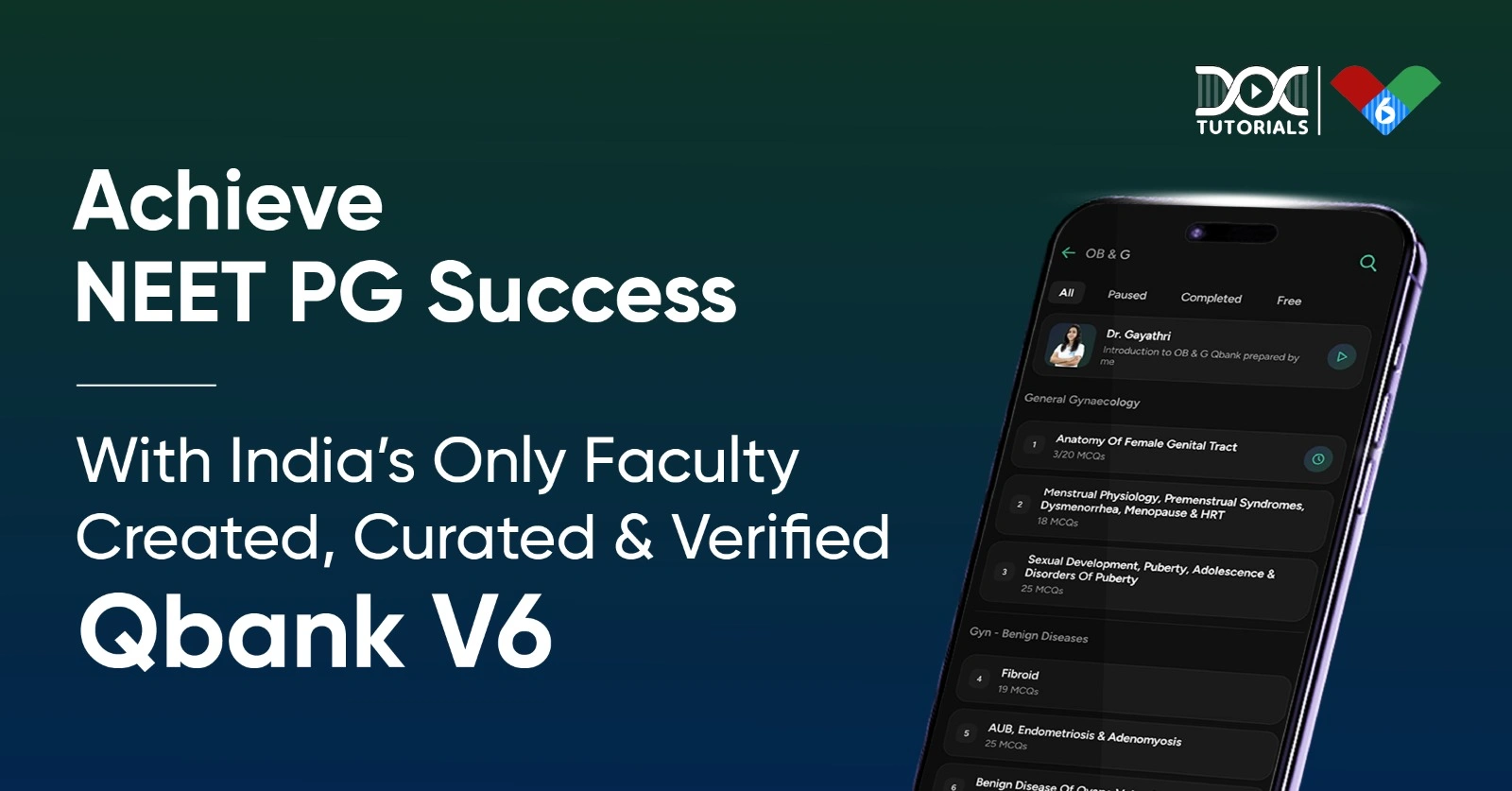
Elevate Your NEET PG Prep with the All-New V6 Qbank 

Access NEET PG previous year question papers, high-yield MCQs, and advanced image-based questions (IBQs) across all subjects with our revolutionary V6 Qbank. Building on our legacy of excellence, this remains India’s only faculty-created, curated, and verified NEET PG question bank, guaranteeing you the most relevant, top-notch practice materials aligned with the latest exam pattern. 

Start your FREE NEET PG Mock Test now — your rank begins here!

V6 Qbank: Your Ultimate NEET PG Companion 

Our V6 question bank is meticulously engineered to streamline your preparation process and maximize your scoring potential. Here is why the upgraded V6 Qbank stands in a league of its own: 

Covers Every Important Concept 

Our crisp and concise V6 Qbank comprises an extensive repository of over 12,000+ MCQs and IBQs spanning all 19 relevant subjects. We have meticulously mapped out the entire syllabus to ensure that no high-yield topic is left behind. From mastering the basic foundational concepts in anatomy and biochemistry to navigating complex, advanced topics in psychiatry and medicine, this Qbank ensures your complete readiness for the exam. 

By eliminating the fluff and focusing strictly on what matters, we save you hundreds of hours of aimless studying. Every single question is designed to maximize your retention and recall, acting as a bridge between passive reading and active, exam-oriented learning. 

Curated by India’s Top Faculty 

The V6 Qbank isn’t just a random set of questions. It is a carefully designed study tool created by top teachers with over 20 years of experience. Because they know exactly how the NEET PG exam changes year by year, they have packed every module with their best clinical and teaching knowledge. 

This rigorous creation and review process offers unparalleled quality and accuracy. You can practice with absolute confidence, knowing that the explanations and references reflect the exact depth, breadth, and current medical guidelines required to conquer today’s highly competitive medical entrance exams. 

Next-Gen Clinical Case Scenarios 

With recent exams shifting heavily toward clinical application, theoretical knowledge alone is no longer enough. Our upgraded set of clinical scenario-based questions drops you directly into real-world medical situations. You will practice diagnosing and managing patient presentations exactly as you would on the hospital floor, bridging the gap between textbook facts and clinical reality. 

These scenarios are specifically designed to reinforce your understanding and build essential critical thinking skills. By training your brain to sift through clinical distractors and identify key diagnostic clues, you will develop the deductive reasoning necessary to confidently tackle the lengthiest and most complex questions on exam day. 

Master High Yield PYQs 

Previous Year Question papers are the true blueprint of the NEET PG exam, and the V6 Qbank gives you a comprehensive, highly organized collection to practice from. Gaining insights into these past papers allows you to identify recurring examiner favorites, common question structures, and core themes that are tested year after year. 

By practicing these PYQs in a structured, subject-wise format, you can effectively audit your preparation and pinpoint exactly where you stand. Familiarizing yourself with the historical format not only streamlines your revision strategy but also dramatically minimizes exam-day anxiety and enhances your overall confidence. 

Advanced Question Formats & IBQs 

Medical entrance exams are notorious for throwing curveballs, but the V6 Qbank ensures you are prepared for the unexpected. We have integrated new, advanced question formats that are fully compatible with the rigorous standards of both NEET PG and INICET exams. This means you will be fully trained to handle multiple-completion, assertion-reasoning, and extended matching questions without hesitation. 

Furthermore, our upgraded Image-Based Questions (IBQs) provide deeper visual insights to increase your conceptual clarity. Featuring high-resolution clinical images, radiology scans, and pathology slides, these questions refine your clinical expertise and train your eye to make rapid, accurate diagnoses under intense test pressure. 

Smarter Custom Modules & Bookmarking 

Every aspirant has a unique learning curve, and the V6 Qbank is built to tailor your learning experience entirely around your personal needs. Our custom module generator gives you the flexibility to build highly specific tests targeting individual subjects, specific topics, or even just your weakest areas. You are in complete control of your practice environment. 

Complementing this is our enhanced bookmarking feature, which acts as your ultimate revision assistant. You can easily save challenging questions, tricky concepts, or vital explanations to a personalized dashboard for targeted review and doubt clarification. This allows you to create a customized “must-review” list for those crucial final weeks before the exam. 

What Our Community Says 

DocTutorials gave me the exact edge I needed. While the concise workbooks made vast subjects manageable, the real game-changer was their Qbank. Rigorously practicing the integrated PYQs right alongside the theory cemented my retention and built the clinical problem-solving skills I needed to confidently secure AIR 21. 

– Dr. Aravind, AIR 21 – INI CET 2026 (NEET PG Online Power Pack Subscriber) 

“DocTutorials provided the perfect ecosystem for my final prep. The rigorous practice from their Qbank and Grand Tests was the real difference-maker. The detailed video explanations broke down complex concepts perfectly, making this the most concise and effective tool for that critical last-minute preparation to secure AIR 6. 

– Dr. Philip Christy, AIR 6 – INI CET May 2025 (NEET PG Power Pack Subscriber) 

Why Upgrade to V6?  

Feature How It Benefits You 
Unmatched Accuracy Questions are hand-picked and strictly crafted by specialists to reflect the absolute latest exam patterns. 
Ultimate Convenience Seamless access anytime, anywhere, through our highly responsive and user-friendly online platform. 
Advanced Performance Tracking Monitor your progress with detailed analytics to identify strengths, target weaknesses, and track your improvement over time. 

Don’t leave your success to chance – harness the power of the V6 Qbank and take your NEET PG preparation to the next level. Join the ranks of successful candidates who have leveraged our Qbank to achieve their medical career aspirations. 

“With our most effective NEET PG question bank [V6 Qbank] by your side, success is within reach.” – Adit Desai, Co-Founder of DocTutorials 

NEET PG Online Live Power Pack
DocTutorials App Download Now

Latest Blogs

INI CET Previous Year Question Papers

INI CET

INI CET stands for Institute of National Importance Combined Entrance Test. As the name suggests, it is the entrance test for some of the most prestigious medical institutions in the country for postgraduate courses. It has unequivocally replaced the individual tests for these institutions. 

The exam is conducted by the All India Institute of Medical Sciences, New Delhi.

Knowing about the particulars of the test is crucial for the aspirants. However, with all the pressure the medical aspirants have, it is next to impossible for them to find the required resources for the exam. 

This is where DocTutorials makes a difference. With a team of experienced faculty, extensive resources, and comprehensive guidance, all you need to focus on is your preparation.

INI CET May 2025 Previous Year Question Paper (PYQs) with Solutions

INI CET 2025 Anatomy Previous Year Question Paper PdfINI CET 2025 Biochemistry Previous Year Question Paper Pdf
INI CET 2025 Physiology Previous Year Question Paper PdfINI CET 2025 Microbiology Previous Year Question Paper Pdf
INI CET 2025 Pharmacology Previous Year Question Paper PdfINI CET 2025 ENT Previous Year Question Paper Pdf
INI CET 2025 FMT Previous Year Question Paper PdfINI CET 2025 Ophthalmology Previous Year Question Paper Pdf
INI CET 2025 PSM Previous Year Question Paper PdfINI CET 2025 Dermatology Previous Year Question Paper Pdf
INI CET 2025 Medicine Previous Year Question Paper PdfINI CET 2025 ObGyn Previous Year Question Paper Pdf
INI CET 2025 Orthopaedics Previous Year Question Paper PdfINI CET 2025 Pediatrics Previous Year Question Paper Pdf
INI CET 2025 Psychiatry Previous Year Question Paper PdfINI CET 2025 Radiology Previous Year Question Paper Pdf
INI CET 2025 Surgery Previous Year Question Paper PdfINI CET 2025 Anaesthesia Previous Year Question Paper Pdf
INI CET 2025 Pathology Previous Year Question Paper Pdf

INI CET Nov 2025: First Insights & Grand Recall | Comprehensive INI CET Analysis & Review

Dive into our expert‑led faculty breakdown of the INI CET Nov 2025! This session brings you first‑hand insights from the exam hall, key topic recall and trends, and actionable strategies to boost your prep. Tune in now and get a head start on your revision!

In this article, we will cover all the essential aspects of the INI CET previous year question papers, including the exam structure, analysis of trends, and preparatory tips.

Continue reading to gain a detailed insight.

Overview of the INI CET Exam

The INI CET provides a gateway to postgraduate courses in the top medical institutions of the country. There are a total of 23 institutions participating in the INI CET exam. The top 23 institutions of the country include:

  • 19 AIIMS across the country
  • NIMHANS, Bengaluru
  • JIPMER, Puducherry
  • PGIMER, Chandigarh
  • SCTIMST, Trivandrum

The exam consists of a computer-based testing format with a total of 200 questions to be answered in 180 minutes. The exam paper is made up of four sections, each consisting of 50 questions and, technically, 45 minutes for each section. 

Once you complete a section, you cannot navigate back to the previous section, as there is no backwards navigation available. Hence, it is extremely essential to manage your time strategically. The exam follows a +1 and -1/3 marking scheme, where you are awarded +1 for every correct answer and -1/3 for every incorrect answer. 

The questions that are left marked for review receive 0 marks. Hence, it is necessary to submit definitive answers rather than leaving out questions.

What is the Syllabus Coverage for the INI CET Exam?

The INI CET exam consists of the undergraduate medical curriculum, which is further subdivided into 3 phases:

  • Pre-Clinical Subjects: Including the subjects of the first year, like Anatomy, Physiology, and Biochemistry
  • Para-Clinical Subjects: Includes subjects of the second and third years, like Pathology, Pharmacology, Microbiology, Community Medicine, and Forensic Medicine.
  • Clinical Subjects: This included the major subjects of the final year, like Medicine, Surgery, Obstetrics and Gynaecology, Paediatrics, Otorhinolaryngology, and Ophthalmology.

Analysis of Previous Year Papers

The analysis of the previous year’s papers reveals a pattern of evolving questions and increasing difficulty. The May 2025 paper was rated moderately difficult by the students. A shifting pattern from memory-based to clinical application-based questions was noted.

A recent paper showed subject-wise distribution in the following manner:

SubjectNo. of Expected Questions
Medicine22
Surgery17
Pathology17
Obstetrics & Gynecology16
Social & Preventive Medicine16
Pharmacology15
Microbiology14
Anatomy10-15
Physiology10-12
Biochemistry10-12

The questions have significantly transformed with a heavy shift to the clinical-based questions. The May 2025 paper revealed the following pattern:

  • Clinical Scenarios: 60-65% of questions
  • One-liners: 25% of questions
  • Image-based MCQs: 10% of questions

Another major point about the questions noticed was the integration of subjects into a single question. This shows an evolution of the questions from a single-subject memory-based question to a comprehensive clinical knowledge-based question. 

The examination now demands that students apply clinical knowledge and combine the information from various subjects into a single question. With the increasing difficulty of the INI CET exam and the shift to a clinical pattern, it is essential to imbibe clinical skills. 

At DocTutorials, you can find a plethora of comprehensive resources to sharpen your clinical skills. The extensive video resources help you polish your patient examination skills.

Click here for the INI CET Previous Year Question Papers

Preparatory Tips for INI CET Exam As Per Previous Year Papers

Listed below are some of the preparation tips for the INI CET exam:

  1. Strategic Study Planning

Good preparation for INI CET has to be methodical, phase-by-phase, and not a haphazard subject-wise coverage. The ideal period of preparation depends on your existing level of knowledge, but the majority of successful candidates adopt a 3-6 month rigorous preparation schedule.

  1. Phase 1: Building Foundations (Months 1-2)

Focus on comprehending ideas instead of memorisation. Spend study time as follows:

  • Pre-clinical Subjects: 30% of the study time (concentrating on neuroanatomy, physiology mechanisms, biochemical pathways)
  • Para-clinical Subjects: 35% of the study time (pathology concepts, pharmacology mechanisms, microbiology classification)
  • Clinical Topics: 35% of study time (synthesis of medicine and surgery, case-based learning)
  1. Phase 2: Practice and Integration (Months 3-4)

Change of focus to clinical application and integration. Start attempting previous year questions in a structured manner, beginning with subject-wise questions prior to attempting full-length tests. Attempt 75-100 MCQs every day with rigorous analysis of answers.

  1. Phase 3: Intensive Revision (Final 1-2 months)

Practice rapid cycles of revision and concentrate strongly on areas of weakness. The last month must have:

  • 15 Days: Detailed subject-wise revision
  • 10 Days: Complete mock tests (at least 5-6 tests)
  • 5 Days: High-yield topics consolidation and confidence building
  1. Daily Study Routine Optimisation

Good preparation is not quantity but quality study time. Adhere to the following daily program:

  • Morning Session (3-4 hours): Acquisition of core topics through active recall strategies
  • Afternoon Session (2-3 hours): MCQ practice and analysis on clinical scenarios 
  • Evening Session (2-3 hours): Reinforcement of weak areas and review of previous day

In order to have an effective morning, try to keep the bed-to-book time to less than 45 minutes. Use productivity apps to track your study time, focusing on deep, intensive study time instead of passive reading.

  1. Mock Test Strategy

Go through each mock test very carefully, marking not only the incorrect choices but also the lucky guesses and time-wasting questions. Try to score a 5-10 mark improvement with each test until a 160-170 band is attained.

  1. Resource Optimisation

Avoid resource proliferation in preparation. Stay with trusted sources:

  • Use reference books for conceptual clarity 
  • Previous year question sets on pattern recognition 
  • Good quality mock test series for performance evaluation 
  • Revision notes for final consolidation 

Prioritise learning about existing resources over the identification of new resources, particularly during the last preparation months.

FAQs About INI CET Previous Year Question Papers

  1. When were the results for the INI CET 2025 released?

The results for the INI CET 2025 were published on 24th May 2025.

  1. Does solving the INI CET previous year question papers help?

Solving the previous year’s question papers of INI CET 2025 greatly helps in improving your score band. It helps you get an overview of the type of questions that are asked in the exam.

  1. Does AIIMS release an official answer key for the INI CET exam?

No. AIIMS does not publish an official answer key for the INI CET exam. However, you can find many unofficial answer keys on the internet.

  1. Do the questions get repeated from previous years’ INI CET papers?

The chances of getting the questions repeated are quite rare; however, you might find the concept getting repeated often.

  1. How many times is the INI CET conducted in one year?

The INI CET exam is conducted twice in one year.

Conclusion

Overall, it is quite evident that analysing and revising the previous years’ question papers is as important as concept building. With the knowledge of the previous years’ questions, you can be confident in answering almost all the questions in the INI CET.

To make your routine a bit less hectic, DocTutorials provides you with a bunch of exclusive resources, including previous year question papers along with their solutions.
Join DocTutorials and explore our INI CET course to get started.

NEET PG Online Live Power Pack
DocTutorials App Download Now

Latest Blogs

Baker’s Cyst | Causes, Symptoms, Diagnosis, and Treatment

Baker’s Cyst

Baker’s cyst, also referred to as a popliteal cyst, is a widely studied knee pathology, the prevalence of which has been reported to be between 5% to 41% in adults who are subjects of knee MRI or ultrasound. The prevalence rates are lower in community or asymptomatic middle-aged cohorts, at 11.7%, in the middle- and older-aged populations, as determined through ultrasound screening. 

As a NEET PG candidate, you must know that initial care is aimed at treating the underlying pathology of the knee (e.g., arthritic condition or meniscus injury), whereas symptomatic treatment can be reached through aspiration, steroid injection, or, rarely, excision. The majority of the ruptured cysts are treated conservatively with rest and elevation in case of no complications.

Keep reading to learn the causes, symptoms, diagnosis, and treatment options for a Baker’s cyst!

What is a Baker’s Cyst? 

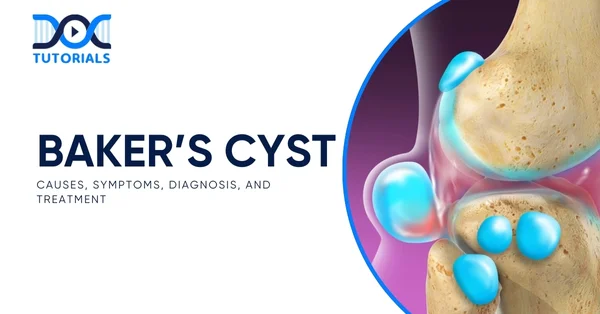
A Baker’s cyst (popliteal cyst) is a synovial fluid–filled sac in the posterior knee, usually arising from intra‑articular pathology like osteoarthritis or meniscal tear. It may cause swelling or tightness behind the knee, sometimes calf pain if ruptured, and is typically confirmed via ultrasound or MRI. 

This condition is a distension of the gastrocnemio-semimembranosus bursa with synovial fluid, which is usually in continuity with the knee joint. It closely relates to intra-articular pathologies, especially osteoarthritis, meniscal injury, rheumatoid arthritis, and joint effusions. 

Symptoms that patients report typically include stiffness of the back of the knee or discomfort, accompanied by a demonstrable mass or enlargement of the popliteal fossa, which manifests as swelling. 

What are the Causes of Baker’s Cyst?

Check out a detailed overview of the Baker’s Cyst causes in the section below:

  1. Osteoarthritis

Degenerative joint diseases, such as osteoarthritis, serve as a major contributor to Baker’s cyst.   Disintegration of cartilage due to osteoarthritis is accompanied by inflammation, which irritates the joint lining and triggers the production of more synovial fluid as a protective mechanism. This added fluid may drain into the popliteal bursa at the back of the knee, causing the formation of a cyst.

  1. Rheumatoid Arthritis

Being an autoimmune disease, rheumatoid arthritis leads to a continuing inflammation of the synovial membrane. This inflammation encourages the knee joint to produce excessive synovial fluid, after which the joint is not able to cope with the excess fluid levels. 

As a result, the fluid may accumulate in the popliteal area, causing a cyst.

  1. Meniscal Tears

The cartilage (meniscus) cushion between the tibia and femur may undergo tears, which may interfere with joint stability and mechanics. This tends to bring about irritation and swelling within the knee joint, which promotes synovial effusion, which can develop into a Baker’s cyst.

  1. ACL Injuries

An ACL tear, either a partial or complete one, is a prevalent sports injury causing knee destabilisation. It usually causes lining bleeding and inflammation, which promotes swelling, resulting in the accumulation of synovial fluid in the bursa.

Baker’s cysts in young patients and children are chiefly idiopathic (they develop in the absence of a discernible underlying disease of the joint/injury), as opposed to adult patients. These cysts can be spontaneous, and often they are asymptomatic.

What are the Symptoms of a Baker’s Cyst?

A Baker’s cyst is often asymptomatic and may go unnoticed. In many cases, it’s detected incidentally during imaging tests, such as an MRI performed for unrelated knee issues.

However, if Baker’s cyst symptoms do occur, they may include:

  • Pain localised to the back of the knee
  • Stiffness or a feeling of tightness in the joint
  • A sense of fullness or swelling behind the knee, especially noticeable during knee extension
  • A soft lump that disappears on flexion of the knee

These symptoms typically worsen with prolonged standing or physical activity. When the cyst occurs alongside an underlying intra-articular pathology, like osteoarthritis, patients may also report generalised knee pain or crepitus.

In some cases, complications such as cyst enlargement or rupture may lead to additional signs, including:

  • Warmth
  • Redness
  • Tingling
  • Numbness

How to Diagnose a Baker’s Cyst?

When evaluating knees suspected of having popliteal cysts, various imaging techniques can be employed. These include:

  1. Plain Radiographs (X-rays)

Early in the diagnostic process, obtaining plain radiographs is helpful. Recommended views include:

  • Posteroanterior Rosenberg view
  • Lateral view
  • Patellofemoral axial view

These X-rays help detect other knee conditions often associated with popliteal cysts, such as:

  • Osteoarthritis
  • Inflammatory arthritis
  • Loose bodies within the joint

Occasionally, loose bodies may also be visible inside the Baker’s cyst on radiographs.

  1. Direct Arthrography

Baker’s cysts were identified with the help of direct arthrography in the past. It can be done by injecting the knee joint with gas or iodinated contrast. The joint is then manoeuvred to force the contrast into the cyst, after which it will be checked on radiography or by use of a fluoroscope to detect the presence of the contrast in the cyst.

Drawbacks of direct arthrography are:

  • It is invasive due to the need for contrast injection.
  • It exposes the patient to ionising radiation.

Because of these disadvantages, arthrography has largely been replaced by other imaging modalities.

  1. Ultrasound

Ultrasound is now often preferred over arthrography due to several advantages:

  • It is noninvasive and does not involve radiation exposure.
  • It is cost-effective and widely available.
  • Ultrasound can detect Baker’s cysts with nearly 100% sensitivity.

However, it has the following limitations:

  • It is highly dependent on the operator’s skill and experience.
  • It cannot reliably differentiate Baker’s cysts from other cystic lesions like meniscal cysts or myxoid tumours.
  • It does not provide detailed images of other intra-articular knee structures that are often involved in these cases.
  1. Magnetic Resonance Imaging (MRI) – The Gold Standard

MRI is considered the most accurate imaging modality for diagnosing Baker’s cysts. It excels in:

  • Differentiating Baker’s cysts from other similar cystic lesions, such as meniscal cysts.
  • Visualising soft tissue abnormalities comprehensively.
  • Evaluating associated intra-articular disorders like meniscal tears, synovitis, or arthritis.

Despite its high diagnostic accuracy, MRI is expensive and not always necessary as a first-line investigation. In cases where detailed evaluation of the knee joint’s internal structures is not required, ultrasound remains a practical and effective screening tool.

What are the Treatment Options for Baker’s Cyst?

Not every case of Baker’s cyst has to be treated actively. The cyst is usually self-resolving without treatment, and it is seen in most cases, particularly in children. 

However, in instances where Baker cyst forms due to a certain underlying knee condition, e.g., arthritis or meniscal injury, symptoms tend to clear up when the correct management of such a condition has been done.

Other Baker’s cyst treatment options include:

  1. Pain Relief: Over-the-counter painkillers can help manage discomfort.
  2. Steroid Injection: A hydrocortisone injection directly into the knee joint may reduce inflammation and relieve pain.
  3. Physiotherapy: Exercises aimed at strengthening the muscles around the knee can improve joint stability and reduce symptoms.
  4. Aspiration: Removing excess fluid from the cyst using a needle can provide temporary relief.
  5. Surgery: In rare cases, surgery may be needed to fix damage within the knee joint. However, surgical removal of the cyst itself is uncommon.

It’s essential to note that Baker’s cysts may take several months or even years to resolve fully.

FAQs About Baker’s Cyst

  1. Is a Baker’s cyst contagious?

A Baker’s cyst is a sterile, fluid‑filled swelling behind the knee due to joint fluid leakage, not infection, so it’s not contagious. It arises from intra‑articular issues like arthritis or meniscal tears, not transmissible agents. 

  1. Can I live a normal life with a Baker’s cyst?

Yes. Most cysts are asymptomatic or produce mild discomfort. Treating the underlying knee issue (e.g., arthritis, meniscal tear) and conservative measures (rest, physiotherapy, NSAIDs) usually allow full daily activities. It rarely requires surgery. 

  1. Can children get a Baker’s cyst?

Yes, though rare in children aged 4–8 years. Paediatric cysts are typically primary, asymptomatic, and unrelated to joint pathology. They usually resolve spontaneously over months to years without intervention. 

  1. Is a Baker’s cyst normal?

A Baker’s cyst is benign and not dangerous. In adults, it often signals underlying pathology. In children, it’s generally harmless. It is a common clinical finding and does not imply malignancy. 

  1. How do I know that I have a Baker’s cyst?

Diagnosis begins with examination, and visible or palpable swelling behind the knee is more obvious when standing. Confirmation is done by ultrasound or MRI. Transillumination may also help. 

Conclusion

Recognising symptoms such as sudden swelling of the knee, tightness, and pain behind the knee could be an indication of a Baker’s cyst, particularly in people with related joint diseases like arthritis or meniscal injuries. It is necessary to diagnose the problem early and provide appropriate management to avoid complications, suppress the symptoms, and retain joint functionality. 

For NEET PG aspirants, having a clear understanding of Baker cyst is not only essential for covering the syllabus but also for performing accurate diagnoses in clinical settings. To assist students in this regard, DocTutorials offers high-quality video lectures, concise high-yield notes, mock tests, and more, helping you take your exam prep to the next level.  
Check out our NEET PG courses today!

NEET PG Online Live Power Pack
DocTutorials App Download Now

Latest Blogs

NEET PG 2025 Postponed: Check Revised Schedule and Prepare Accordingly

NEET PG 2025 Postponed

The National Board of Examinations in Medical Sciences (NBEMS) has postponed the NEET PG exam in response to a Supreme Court directive requiring it to be conducted in a single shift. Initially scheduled for 15 June, the examination has been deferred to allow sufficient time for the necessary logistical arrangements, including expanding test centres and supporting infrastructure.
If you’re a NEET PG aspirant, this guide provides updated information regarding the revised exam schedule, the expected new date, the reasons behind the decision, and essential preparation tips to make the most of the additional time. 

Ace Your NEET PG Prep With DocTutorials NEET PG Online Live Power Pack


Watch this video by Dr. Rahul Rajeev & Dr. Vandana Puri where they discusses Why NEET PG 2025 Postponed! Preparation Strategy, New Timeline & Plan Ahead.

Keep reading!

When Will NEET PG 2025 Be Held?

According to a notice issued by the NBEMS, the NEET PG 2025 exam has been postponed and rescheduled to accommodate the expansion of test centres and the necessary infrastructure. 

The NBE (National Board of Examinations) will take NEET PG 2025 on Aug 3. Following the Supreme Court’s recent directive, the exam will now be taken in one session.

Why was the NEET PG 2025 Exam Postponed?

This change in exam date is due to various national-level and university exams already occupying most weekends in June and July. 

For example, the UPSC (Union Public Service Commission) Engineering Services (Main) Exam is planned for 21 and 22 June, while the NIMCET MCA (National Institute of Technology Master of Computer Applications Common Entrance Test) entrance examination is slated for 28 and 29 June. 

The PTE (Pearson Test of English) Academic (online) will be held on the first weekend of July, while the SSC (Staff Selection Commission) online skill test is expected to be held the following weekend. Additionally, numerous university semester examinations and government recruitment tests are set to take place in the latter half of July.

Why Did the Supreme Court Direct NEET PG 2025 to Be Held in a Single Shift?

The Supreme Court of India has strongly opposed conducting NEET PG in multiple shifts, describing the approach as ‘arbitrary’ and lacking fairness. 

The Court raised concerns over the inadequacy of score normalisation processes, noting that such mechanisms do not guarantee complete equity in a competitive, high-stakes examination used for postgraduate medical admissions nationwide.

Emphasising the importance of consistency and transparency, the Court ordered that NEET PG 2025 be conducted in a single session to ensure uniform examination conditions for all candidates.

When Will the NEET PG 2025 City Intimation Slip and Admit Card Be Released?

After the NEET PG 2025 postponement, the NBE will likely provide updated dates for issuing the city intimation slip and the admit card. Initially, the city intimation slip was set to be released on 2 June 2025. In due course, a revised date will be confirmed and made available on the official NBE website.

Similarly, the NEET PG 2025 admit card, which was initially set for release on 11 June 2025, will now be issued later. This document will include essential information such as the candidate’s name, application ID, category, date of birth, and details of the assigned exam centre. NBE will publish the updated schedule for the admit card release along with other important announcements.

How Can NEET PG Aspirants Manage Stress Following the Exam Postponement?

For many NEET PG aspirants, the scheduled exam date was a powerful motivator to intensify preparation efforts. News of its postponement, however, may now be contributing to frustration and anxiety. 

While such responses are understandable, prolonged stress can hinder practical study and long-term performance. Staying grounded and focused on the larger objective is essential to maintaining momentum and mental clarity. 

Consider the following strategies to navigate this period constructively:

  • Maintain a calm and composed mindset. Keep the end goal in view and remind oneself why the journey began.
  • Include short, restorative breaks in the routine to reset and regain focus.
  • Reassess the current study plan and revise it to make optimal use of the extended timeline.

Staying mentally resilient and adapting to the change in schedule can help turn this delay into an opportunity for deeper preparation.

Highlights of NEET PG 2025 Exam

The following are the key highlights of the postponed NEET PG examination 2025:

EventDetails
Exam nameNational Eligibility cum Entrance Test for Post-Graduate courses (NEET PG)
Conducting BodyNational Board of Examinations (NBE)
Mode of the examinationComputer-based test
Courses offeredMD/MS/PG Diploma/DNB post-MBBS
Exam frequencyOnce a year
Exam fees₹3,500 (for General and OBC)
₹2,500 (for SC/ST/PWD/Physically Handicapped)
NEET PG exam postponed official websitehttps://nbe.edu.in./ 
Total questions200
Total marks800
Exam duration3.5 hours (210 minutes)
Marking Scheme4 marks for correct answers
-1 for wrong answers
No marks for unanswered questions

FAQs About NEET PG Exam Postponement 

  1. Why has the NEET PG 2025 exam been postponed?

The NEET PG exam has been postponed to comply with a Supreme Court directive mandating a single-shift format. Additional time is needed to expand test centres and infrastructure accordingly.

  1. Is the NEET PG 2025 exam going to be held on one shift?

Yes, NEET PG 2025 is expected to be held in a single shift, following a directive issued by the Supreme Court on 30 May 2025. 

While hearing a petition challenging the fairness of conducting the exam in two separate shifts, the Court highlighted that maintaining identical difficulty levels across shifts is impossible. It emphasised the importance of complete transparency and uniformity.

  1. When will NBE officially confirm the NEET PG 2025 exam date?

The NBE will officially announce the new NEET PG 2025 exam date once it obtains clearance from the Supreme Court. Currently, NBE has proposed August 3, 2025, as the earliest possible date and has filed a plea seeking the Supreme Court’s permission to conduct the exam in a single shift on that day.

  1. How should aspirants utilise the extra preparation time?

Candidates are advised to revise thoroughly, focus on high-yield topics, and take regular mock tests to stay exam-ready while maintaining a calm and consistent study routine.

  1. Will the exam pattern of NEET PG 2025 change?

No, the exam pattern of NEET PG 2025 will not change. It will be the same 2.5-hour CBT exam. It will consist of 200 MCQs in English.

  1. Which websites to refer for timely official updates of NEET PG 2025?

You must visit the official websites of NBEMS, i.e., nbe.edu.in and natboard.edu.in, to get the latest updates on exam details and changes.

  1. What are the last-minute tips for NEET PG 2025 preparation?

Some of the last-minute tips for NEET PG 2025 preparation include focusing on revising pocket notes, using flashcards, staying hydrated, and getting sound sleep the night before the exam.

  1. Does the postponement of the NEET PG 2025 exam affect the overall cut-off?

The delay in NEET PG 2025 does not affect the cut-off directly. However, it could lead to increased preparation time for students, an unusually high number of vacant seats, and increased competition for lower ranks.

  1. What are the dates of NEET PG 2025 Counselling? 

The authorities released the NEET PG 2025 counselling results for the second round on December 16, 2025. The results for the next round are expected to be announced at the end of January 2026.

  1. What is the pass percentage of students appearing in NEET PG 2025?

The success percentage of NEET PG 2025 was impressive at 60.26%. Around 2,30,114 applicants appeared for the competitive exam.

Conclusion

Since the NEET PG exam has been postponed, aspirants now have an unexpected yet valuable opportunity to strengthen their preparation and focus on revising challenging topics more thoroughly. Staying informed about official updates from the NBE is essential to avoid missing any key announcements regarding the revised schedule, city intimation slip, or admit card.

If you’re a NEET PG aspirant, unlock your medical career with DocTutorials, a trusted platform offering comprehensive resources and expert guidance tailored for NEET PG. This additional time can be used to take regular mock tests, revise frequently asked concepts, and improve speed and accuracy in solving MCQs.

Start your preparation today with DocTutorials and take one step closer to making your NEET PG 2025 success!

NEET PG Online Live Power Pack
DocTutorials App Download Now

Latest Blogs

NEET PG Single Shift: Supreme Court Trashes the Two-Shift Format in 2025

NEET PG 2025 Single

The Supreme Court’s recent directive to consolidate the National Board exam into a single shift has generated both relief and uncertainty among NEET PG aspirants. While a formal notification about the NEET PG Single Shift is still pending from the National Board of Examinations (NBE), this change promises greater fairness. Explore the key points of the court’s decision, why they are crucial for your NEET PG journey.

1. Why the NEET PG Single Shift Matters?

  1. Fairness Restored. Exams held in two shifts often end up with different difficulty levels, even when scores are adjusted. By moving to a single session, the court wants to remove any unfair advantage one group might have over another.
  2. Transparency Demanded. Alongside the shift, there’s a strong push for NBE to publish answer keys promptly. Transparent evaluation helps you verify responses, understand national performance trends, and build confidence in the grading process.

Watch this video by Dr. Rahul Rajeev, where he discusses how this decision will impact your NEET PG Journey


Key Takeaways from the Supreme Court Directive

  • No More Two Shifts: All candidates will sit together, ensuring uniform difficulty.
  • Answer-Key Release: Aspirants are calling for the immediate publication of solutions to verify responses.

2. What the Supreme Court Observed

  1. Irreconcilable Difficulty Gaps. Even with statistical adjustments, two versions of a paper cannot be identical in challenge, leading to inevitable disparities.
  2. Judicial Oversight. The ruling reaffirms that high-stakes medical examinations must meet the highest standards of fairness, under judicial scrutiny.

3. Immediate Next Steps for Aspirants

  1. Await the Official NBE Notification. As soon as the Board issues its circular, await for the official NBE Notification and avoid all rumors on whatsapp and other social media channels.
  2. Mute All but Trusted Groups. Silence non-official discussions. Stay connected only to verified student-faculty groups where authentic updates will appear.
  3. Stick to the Exam Date. Unless officially postponed, continue to prepare for the scheduled exam (currently slated for June 15th). Treat every study day as precious.

4. Avoiding Disruption to Your Study Rhythm

It’s natural to feel a mix of excitement and apprehension after such a landmark decision. However:

  • Don’t Let Speculation Derail You. Pre-exam uncertainty—whether about postponements or format changes—can throw you off balance. Focus on your revision plan rather than “what-ifs.”
  • Maintain Your Timetable. Trust the schedule you’ve committed to. Deviating from your study calendar may introduce gaps and erode confidence.
  • Use Mock Tests Wisely. Continue with scheduled grand tests to identify lingering weakness. These simulations remain the best gauge of readiness, regardless of format.

5. Keeping Calm Until the Official Word

Remember: the court’s direction is a welcome framework, but its implementation hinges on the NBE’s official notification about the NEET PG single shift pattern. Until then:

  • Resist the Urge to Refresh Websites Constantly. Over-monitoring adds stress without benefit.
  • Lean on Faculty Guidance. Your mentors will interpret and relay any nuances of the final circular.
  • Trust the Process. Fairness has been restored; now it’s up to you to maintain discipline and focus.

6. Turning Change into Opportunity

Use this pause wisely to:

  • Revisit Tough Topics. Allocate extra time to concepts you’ve found challenging—neurology pathways, biochemistry cycles, or clinical scenario management.
  • Optimize Test-Taking Strategies. Practice time management, question-analysis techniques, and targeted revision based on past performance data.
  • Build Mental Resilience. Incorporate brief mindfulness exercises or physical breaks to keep stress levels in check.

Conclusion

This transition to a NEET PG single shift 2025 exam is more than a procedural update; it’s a commitment to fairness and transparency. While you await NBE’s official circular, channel your energy into disciplined preparation: trust your study rhythm, continue mock tests, and shield yourself from rumor-driven stress. With a clear plan and mental resilience, every study hour you invest now will bring you closer to achieving your NEET PG dreams.

Good luck, and stay focused!

NEET PG Online Live Power Pack
DocTutorials App Download Now

Latest Blogs

NEET PG Exam Pattern 2027: Your Ultimate Guide to Mastering the Exam Structure

neet pg pattern 2027

Cracking the NEET PG exam for 2027 requires a clear understanding of its pattern, as it plays a crucial role in securing your desired postgraduate medical seat. A well-structured preparation strategy begins with a thorough grasp of the exam format, enabling you to prioritize high-weightage topics, optimize study plans, and improve time management during the test. With the right strategy, you can focus on subjects with a higher weightage and can confidently tackle each section. 

This guide will serve as your manual for the NEET PG paper pattern and will take you through each section to prepare you for the challenges ahead.

Ace NEET PG 2027 with DocTutorials NEET PG Online Live Power Pack and NEET PG Power Pack—featuring high-yield Exam Strike MCQs, PYQs, video lectures, live classes, direct faculty guidance, and more!

Key Highlights of NEET PG 2027 Pattern

Here is a quick breakdown of the NEET PG 2027 pattern to give you a clearer picture:

ParticularsDetails
Examination ModeOnline (Computer Based Test)
Language of the ExaminationEnglish
Examination Duration3.5 hours
Total Number of Questions180
Total Marks720
Question FormatMultiple-choice questions
Negative MarkingApplicable

Click Here to Download NEET PG Syllabus 2026 PDF

Major Changes in the NEET PG Exam Pattern

The NBEMS has updated the sectional rules for the NEET PG 2026 exam. The paper is now divided into five distinct blocks (A, B, C, D & E). Because the total question count has dropped to 180, each section now holds exactly 36 questions and is strictly locked to a 42-minute timer. What this means for you is that you must complete your active block within that window, as freely navigating back and forth across the entire question paper is strictly prohibited.  

The moment your 42-minute timer for a specific section reaches zero, you can no longer return to review or modify your responses. The computer system will permanently lock that segment and automatically launch the countdown for the following section, making time management within each individual block critical.

Latest NEET PG 2027 Exam Pattern 

It is important for you to understand the exam pattern before you start your preparation. Here is everything you need to know about the exam pattern of NEET PG 2027:

ParameterDetails
Exam DateYet to be announced
Exam ModeComputer-based test (CBT)
Duration3 hours 30 minutes (210 Minutes)
Total Marks720 Marks
Number of Questions180 Questions
Time-Bound Sections5 Sections (A, B, C, D, E)
42 Minutes Per Section
36 Questions Each
Marks per QuestionEach correct answer: +4 marks, Incorrect answer: -1 mark
Marking SchemeNegative marking for incorrect answers applicable
LanguageEnglish only (No regional language option)
SyllabusCovers all 19 subjects from the MBBS curriculum

Marking Scheme of NEET PG 2027 

The 2027 NEET PG marking scheme is designed to reward your accuracy and penalise wrong answers. Here is how the marking scheme of NEET PG works for you:

NEET PG Syllabus Marking Scheme
ActionResponse
Correct answer+4 marks
Incorrect answer-1 mark
Unanswered questions0 marks

This scoring system shows that you need to be selective in your answers to make the most of your score. So, you must answer the questions confidently.

Moreover, during exams, you can mark any question, whether you have attempted it or not, for review. Before you finish the exam, you can go back to check and change your answers if you feel like it. However, just remember that the marked questions will be scored based on the same marking rules as the rest. 

Subject-Wise Marks Distribution of NEET PG 2027 

To prepare well for the NEET PG exam in 2027, it is crucial to understand the weightage of questions across different subjects. Knowing this will help you figure out which subjects to prioritise in your exam strategy. By looking at the number of questions from each subject, you will have a clearer idea of where to focus more and how to manage your time effectively. 

The following table shows the NEET PG question pattern subject-wise to fine-tune your study plan for next year.

Section Sl. No. Subject Expected Questions Total Marks 
Pre-Clinical Subjects Anatomy 10 40 
 Physiology 10 40 
 Biochemistry 10 40 
Para-Clinical Subjects Clinical Pathology 15 60 
 Pharmacology 12 48 
 Microbiology 12 48 
 Forensic Medicine 24 
 Social and Preventive Medicine (PSM) 15 60 
Clinical Subjects General Medicine (Including Psychiatry, Venereology, and Dermatology) 27 108 
 10 General Surgery (Including Orthopaedics, Anaesthesia, and Radiodiagnosis) 27 108 
 11 Obstetrics and Gynaecology 18 72 
 12 Pediatrics 24 
 13 ENT 24 
 14 Ophthalmology 24 

Getting a clear picture of the NEET PG exam format helps you manage your time and resources more effectively. Clinical subjects hold more weight, so it is crucial for you to focus on mastering these areas to boost your chances.

Why is It Crucial to be Aware of the NEET PG Pattern?

Here is why understanding the NEET PG exam pattern 2026 is critical:

  • Preparation Strategy Development

Understanding the exam pattern helps you create a focused study plan that includes mock tests and time management strategies. By practising with this structure, you get familiar with the test format and pacing, which can significantly improve your performance on exam day.

  • Reduces Exam Day Anxiety

A hint of familiarity with the exam pattern will ease away much of the anxiety and instill confidence. A proper understanding of what is going to come helps focus better and perform well in the test.

  • Improves Time Management

Understanding the allotted time for each section helps you manage your time more efficiently. This awareness allows you to pace yourself and ensure that you do not get stuck on any one section.

  • Helps Prioritise Important Topics

When you know the distribution of questions and their types, you can prioritise topics accordingly in your study plan. Focusing on areas that are more heavily tested can give you an edge in the exam.

NEET PG 2026: Mock Test  

NBE has provided a mock test for the NEET PG exam on their official website. You can access the NEET PG 2026 sample test without needing to log in.

The goal of this mock test is to help you understand the exam’s structure. It is a great way for you to get used to the computer-based test format. Moreover, it gives you a chance to evaluate how well you are prepared for the exam.

Preparation Tips for NEET PG 2027

Here are some important NEET PG 2026 exam preparation tips that you can follow to crack the examination:

  • Get a Grasp on the Syllabus

Make sure you cover all 19 subjects, but give extra focus to high-yield topics like pathology, pharmacology, and general medicine. These are crucial for your exam success.

  • Practice MCQs Regularly

Speed and accuracy really count in NEET PG. Practice MCQs along with explanations to gain proficiency, and monitor your own progress. Because the exam features strict, non-reversible time-bound sections (such as 36 questions per 42-minute block), practice solving question sets under isolated timers. Training yourself to pace each section independently ensures you do not run out of time or leave questions unattempted before a block permanently locks.

  • Watch Revision Videos

Add revision videos to your study plan for quick reviews of key topics. They are great for when you are short on time but need a fast recap.

  • Take Mock Tests

Take full-length mock tests in a timed setting to simulate exam day. This will help you manage time better and get used to the exam pressure.

  • Tackle Weak Areas

Find the subjects or topics where you are struggling, and spend more time on them. Strengthening these areas will help improve your overall performance.

FAQs on NEET PG Exam Pattern 

  1. Is it necessary to answer all the questions in the NEET PG exam?

No, it is not necessary to attempt all the questions in the NEET PG exam. It is better to answer only those questions you are confident about, as there is a negative marking for incorrect answers.

  1. Can I choose Hindi as a language for the NEET PG exam?

No, the NEET PG exam is only available in English, and there is no option to select any other language.

  1. How many questions are there in the NEET PG 2026 exam?

The NEET PG exam will consist of 180 multiple-choice questions, with each question carrying 4 marks. This means the total marks for the exam will be 720.

  1. What is the exam duration of the NEET PG?

You will have a total of 3.5 hours to complete all your answers during the NEET PG exam.

  1. How are the total marks for NEET PG calculated?

The total marks for NEET PG are determined by adding 4 marks for each correct answer and subtracting 1 mark for each incorrect response.

  1. Which branch has the highest cut-off in NEET PG?

Clinical branches like Dermatology, Radiology, and General Medicine usually have the highest cut-offs in NEET PG. This happens because these branches are highly preferred by students, have fewer seats, and face very high competition.

  1. What is the distribution of marks in NEET PG 2026?

The National Testing Agency has stated that the total marks for NEET PG 2026 will be 720. Of these total marks, Pre-Clinical (approx. 50 questions), Para-Clinical (100), and Clinical subjects (150). Physics will carry 180 marks, and Chemistry will also carry 180 marks.

  1. Which subject has the maximum weightage in NEET PG?

In NEET PG, General Medicine has the maximum weightage. Additionally, related subjects such as Dermatology, Venerology, and Psychiatry can be included in this section as they carry a high number of questions in the examination.

  1. What is a safe rank in NEET PG?

A safe rank in NEET PG ranges between 1 and 10,000; however, it depends on various factors, such as the branch and the college that one wants to join.

  1. How to avoid negative marking in NEET PG?

Proven strategies to avoid negative marking in NEET PG are as follows:

  • Follow the Two-Pass Strategy: This is the strategy followed by most toppers.
  • Do Not Attempt Questions Blindly: This may lead to the loss of marks.
  • Follow the MCQ Elimination Technique: It will help get closer to the correct answer.
  • Avoid Changing Answers Without Reason: The first answer you choose is mostly the correct one, so trust your gut feeling.

Maintain Proper Time Management: This is essential to complete the paper on time.

Conclusion 

Knowing the NEET PG exam pattern 2027 is your ticket to a successful attempt at this highly competitive test. By understanding the structure, practicing diligently, and managing your time well, you will set yourself up for success.

With DocTutorials by your side, you can gain access to comprehensive resources, expert guidance, and targeted practice that will help you stay ahead in your preparation. Their reliable tools and strategies will boost your confidence and improve your chances of securing a top rank. Start your preparations with DocTutorials today and turn your NEET PG 2026 dreams into reality.

NEET PG Online Live Power Pack
DocTutorials App Download Now

Latest Blogs

NEET PG Exam 2027: A Comprehensive Guide to Fulfill Your Medical Aspirations

NEET PG Exam

Each year, medical students across India take the NEET PG Exam (National Eligibility cum Entrance Test for Postgraduates) to enter postgraduate medical education. As an aspirant, you must take this test to qualify for the MD, MS, and PG Diploma studies across India.

The NEET PG Exam aims to create one common test to make the admissions process for postgraduate medical studies simpler across India. If you are planning a career in medicine, you must take this test to know your possible fields of speciality.

Keep reading to know all about NEET PG examination, from requirements to subjects, application systems, and efficient preparation methods.

Download NEET PG Syllabus 2027 PDF

Eligibility Criteria for the NEET PG Exam

Below are the eligibility criteria for the criteria for the NEET PG 2027 exam, as set by the National Board of Examinations in Medical Sciences (NBEMS)

  • Qualification: Candidates must possess an MBBS degree or a provisional pass certificate that is recognized under the National Medical Commission (NMC) Act
  • Internship: Candidates must complete their mandatory one-year rotatory internship.
  • Registration: Applicants must hold a valid permanent or provisional MBBS registration certificate issued by the NMC or a State Medical Council (SMC).
  • Under current regulatory guidelines, while candidates currently enrolled in a postgraduate medical course (MD, MS, or DNB) are permitted to sit for the NEET PG examination, they cannot claim a new seat through counselling without formally resigning from their ongoing program, satisfying all applicable seat-leaving bond liabilities, and securing an official release certificate. Furthermore, under NBEMS rules, candidates actively registered in a DNB program remain strictly barred from taking admission into another DNB seat until the full duration of their current training concludes, regardless of course resignation. 

Eligibility Criteria for Foreign-based Medical Graduates

To pursue postgraduate medical education in India, Indian nationals or Overseas Citizens of India (OCI) who obtained their primary medical qualification outside India must first qualify for the Foreign Medical Graduate Examination (FMGE), conducted by the National Board of Examinations in Medical Sciences (NBEMS) as per the 2002 Screening Test Regulations.

  • Registration: Every FMG candidate must hold a valid provisional or permanent registration certificate issued by the National Medical Commission (NMC) or a State Medical Council (SMC).
  • Internship: Candidates must successfully complete their mandatory one-year rotatory internship.
  • Exam Day Requirements: Unlike domestic graduates, Foreign Medical Graduates must carry their original FMGE Pass Certificate (issued by the NBEMS) along with their valid photo ID and admit card to the test center on the day of the NEET PG 2027 exam.

Eligibility Criteria for Foreign Nationals

  • Foreign Nationals can participate in the NEET PG 2027 exam without holding a permanent Indian medical license, provided they meet specific international registration requirements.
  • No NMC Registration Needed for the Exam: Foreign Nationals are not required to be registered with the National Medical Commission (NMC) or hold a temporary permit just to appear for the NEET PG exam.
  • Home Country Registration is Mandatory: To be eligible to write the exam, the candidate must be officially registered with the competent medical registering authority of their own home country. Their basic medical qualification must be recognized by that local authority.
  • Temporary Registration Upon Admission: If a Foreign National clears NEET PG and secures a seat in a postgraduate course in India, they must then apply to the NMC for temporary registration. Upon payment of the required fee, the NMC will issue a temporary registration that is valid only for the duration of the PG course.
  • Institutional Restriction: This temporary registration is strictly limited to the specific medical college or institution where the candidate is admitted. They are not permitted to practice medicine outside of their postgraduate training requirements.

Age Limit for Candidates

The NEET PG Exam has no age restrictions on participation. So, any qualified candidate with relevant educational requirements can submit their application.

Note: Explore the official website of NTA to access the latest information and updates.

Syllabus and Exam Pattern of NEET PG Exam

The NEET PG Exam syllabus includes topics from:

  • Pre-clinical subjects: Anatomy, Biochemistry, and Physiology 
  • Para-clinical subjects: Pharmacology, Microbiology, Pathology and Forensic Medicine.
  • Clinical subjects: Medicine, Surgery, Obstetrics and Gynecology, Pediatrics and other clinical departments.

Here’s a revised version of the NEET PG subject-wise weightage:

Section Sl. No. Subject Expected Questions Total Marks 
Pre-Clinical Subjects Anatomy 10 40 
 Physiology 10 40 
 Biochemistry 10 40 
Para-Clinical Subjects Clinical Pathology 15 60 
 Pharmacology 12 48 
 Microbiology 12 48 
 Forensic Medicine 24 
 Social and Preventive Medicine (PSM) 15 60 
Clinical Subjects General Medicine (Including Psychiatry, Venereology, and Dermatology) 27 108 
 10 General Surgery (Including Orthopaedics, Anaesthesia, and Radiodiagnosis) 27 108 
 11 Obstetrics and Gynaecology 18 72 
 12 Pediatrics 24 
 13 ENT 24 
 14 Ophthalmology 24 

Exam Pattern and Marking Scheme

  • Mode of Examination: Computer-Based Test (CBT). 
  • Total Questions: 180 objective-type multiple-choice questions (MCQs). 
  • Total Marks: The maximum achievable score is 720. 
  • Duration: 3 hours and 30 minutes (210 minutes). 
  • Marking Scheme: Candidates earn +4 marks for every right answer, while -1 mark is deducted for each incorrect response. Unattempted questions receive 0 marks.  
  • Time-Bound Sections (Sections A, B, C, D, E): The question paper is split into five distinct, individually timed parts. You get exactly 42 minutes to tackle the 36 questions within each block. You are only allowed to modify or review your responses within the currently active block. Once a section time runs out, it locks permanently, and you cannot revisit those questions. 

Preparation Tips for Each Section

  1. Set aside increased time for studying Pharmacology along with Pathology and Medicine while you focus on high-yield subjects.
  2. The study of clinical case scenarios should be revised to promote practical understanding.
  3. Using previous year’s MCQs will help you understand the exam question format.

The successful outcome in NEET PG depends fundamentally on solid clinical and conceptual understanding. When concepts become clear the comprehension of medical conditions increases while skills in diagnosis and treatment become stronger. The combination of an organised study program and daily question objectives, together with repeated error analysis, enables constant improvement.

How to Apply for NEET PG 2027 Exam? 

Step 1: Online Registration & Profile Creation 

  • Visit the official website of the National Board of Examinations in Medical Sciences (natboard.edu.in or nbe.edu.in). 
  • Navigate to the NEET PG registration link under the “Entrance Examination” column. 
  • Click on the “Application Link” to open the candidate portal. 
  • Read the information bulletin carefully and register with your primary details to receive your unique “USER ID” and “password” via SMS and email. 

Step 2: Filling out the Application Form 

  • Log into your account using the credentials sent to your registered mobile number and email ID. 
  • Click on the “Go to Application Form” link available on the dashboard. 
  • Fill in all required personal information, including your full name, father’s name, category, and communication address. 
  • Input your MBBS marks, university details, and provisional/permanent registration numbers issued by the NMC or State Medical Council. 
  • Select up to three preferred examination cities in order of priority. Final center allocation is done by NBEMS on a first-come, first-served basis. 

Step 3: Uploading Documents & Images 

  • Prepare your scanned passport-sized photograph, signature, and left thumb impression according to the exact guidelines. 
  • Using a device with a working webcam or camera, capture a live, real-time photograph of your face against a plain white background. 
  • Upload the required digital files, along with your MBBS degree/passing certificate and internship completion verification if required. 
  • Strictly adhere to the background, size, and DPI specifications outlined on the web page to avoid application rejection. 

Step 4: Payment of the Application Fee 

Choose Payment Method: Select your preferred online payment method. You can pay your application fee through a credit card, debit card, net banking portal, or UPI. 

Fee Structure: 

  • For General / Unreserved (UR) / OBC / EWS candidates: ₹3,500 
  • For SC / ST / PWD candidates: ₹2,500 

Save Transaction Proof: After your payment process completes, you should keep the payment receipt or transaction ID for your personal records. 

Step 5: Final Submission & Confirmation Page 

  • You must check all information you entered multiple times to verify its accuracy before hitting final submit. 
  • Once submitted, download your acknowledgment or confirmation page. 
  • You should download a printed confirmation page, which will serve as proof of successful submission and will assist you in the future. 

Application Fees and Payment Methods

CategoryApplication FeePayment Methods
General/OBC Category₹3,500Credit Card, Debit Card, Net Banking, UPI
SC/ST/PWD Category₹2,500Credit Card, Debit Card, Net Banking, UPI
  • Apply and make payments only electronically through the official funding portal that operates as part of the application procedure.
  • Protect your transaction ID and receipt for future use after you confirm a successful payment.

Important Dates and Deadlines

The National Board of Examinations in Medical Sciences (NBEMS) and the National Medical Commission (NMC) are expected to follow the recent mid-year examination cycle. Therefore, the 2027 exam is anticipated to be conducted around July or August 2027. 

These dates are strictly tentative and based on the standard examination processing window. 

Event Expected Dates (Tentative) 
Application Window Open First Week of June 2027 
Last Date to Register Last Week of June 2027 
Admit Card Release First Week of August 2027 
NEET PG 2027 Examination Date July to August 2027 
Result Declaration By First Week of September 2027 

Preparation Tips for NEET PG Exam

As part of your NEET PG preparation, you need to build your foundation by studying from standard textbooks, including Harrison’s Internal Medicine, along with Robbins Pathology. Laboratory studying with MCQ banks and video lectures through online resources improves your effectiveness in important topics.

Here’s a chart outlining the recommended books for the three major subjects for your NEET PG preparation:

SubjectBook TitleAuthors
AnatomySelf-Assessment and Review of AnatomyRajesh Kaushal
PharmacologyReview of PharmacologyGobind Rai Garg, Ranjan Patel
MedicineComplete Review of Medicine for NBEDeepak Marwah, Mudit Khanna

Time Management Strategies for Exam Preparation

Your ability to succeed in NEET PG requires beginning your preparatory efforts as early as possible. Students should start building concepts during their third and fourth years of MBBS education by writing systematic notes while incorporating MBBS topics within the NEET PG curriculum.

Create daily plans complemented with monthly strategies and weekly objectives for attacking the syllabus effectively. Devote greater time to complicated subjects and initiate your studies with advanced material so you can accumulate confidence throughout your academic journey, starting with high-weightage topics, including general medicine, surgery, and pathology.

Here’s a suggestive structured study plan to ace your preparation:

  1. Mock Tests and Previous Year Question Papers
  • Establish a Routine
  • Commit a carefully organised segment of daily time to handle one study topic at a time, following your study schedule.
  • Built-in small pauses throughout your schedule will help you stay focused as well as prevent burnout.

Weekly Mock Tests:

  • Take weekly tests
  • Assess performance.
  • After finding your main weaknesses, work through specific improvements.

2. Understanding the Syllabus

  • Familiarise Yourself with the Syllabus
  • List all subjects and topics.
  • Identify and address fields that require special attention.

3. Daily Study Goals

  • Create Achievable Goals
  • Break subject matters into portions you can handle throughout each day.
  • Follow your progress closely to stay motivated and reach your milestones consistently.

4. Focus on Conceptual Clarity

  • Build a Solid Conceptual Foundation:
  • When studying information, absorb it thoroughly.
  • To improve learning, rely on a combination of printed materials and digital resources such as videos and online talks.

5. Efficient Revision Strategy

  • Prepare Self-Made Notes
  • Defining concepts with brief notes helps you remember information better.
  • Your notes should have subjects as categories so you can find and study them quickly and efficiently.
  • Revision Practice:
  • Complete 2-3 extensive syllabus revisions during your preparation period leading up to the exam.

6. Practice Previous Year’s Papers

  • Gain Exam Insights:
  • Future success depends on the regular practice of the previous year’s question bank.
  • Learn about the exam structure and the prevalence of different question types that will appear for assessment.

7. Positive Mindset and Balance

  • Maintain a Positive Mindset
  • Motivate yourself and think about how successful you will become.
  • The practice of positive notices alongside meditation will decrease your stress levels.
  • Balance Study and Relaxation:
  • Schedule your study time in combination with enough breaks so your brain stays healthy.

Strategies to Ace the NEET PG Exam

Here are some revision techniques for better retention:

  1. Quickly memorise topics using flashcards.
  2. You should use the Pomodoro technique to develop focused study durations.
  3. Make brief notes to explain complicated information.

Tips for Managing Exam Stress and Anxiety

  • Following breathing techniques while practicing mindfulness can help.
  • Reviewing all material must start before the final days to eliminate last-minute panic.
  • Physical exercise leads to better concentration throughout studies.

Dos and Don’ts on the Day of the Exam

Dos:

  • Make sure to hold both your admit card and official identification proof with you.
  • Arrive at your exam centre a full hour before your allotted start time.
  • Follow the right dietary practices and stay hydrated.
  • Follow All Exam Guidelines.

Don’ts:

  • Avoid last-minute revisions.
  • Powder your forehead when you encounter an unmanageable question, but revisit this problem in the next section.
  • Make sure you possess every item necessary for the exam.
  • Electronic devices should remain outside the examination hall.
  • Speak only with test administration staff at the examination site.

Top Medical Colleges in India Accepting NEET PG Scores

Here’s a list of some prestigious government medical colleges in India:

  1. All India Institute of Medical Sciences (AIIMS), New Delhi
  2. Post Graduate Institute of Medical Education and Research (PGIMER), Chandigarh
  3. Armed Forces Medical College (AFMC), Pune
  4. Maulana Azad Medical College (MAMC), New Delhi
  5. Jawaharlal Institute of Postgraduate Medical Education and Research (JIPMER), Puducherry

Here’s a list of some prestigious private medical colleges in India:

  1. Christian Medical College (CMC), Vellore
  2. Kasturba Medical College (KMC), Manipal
  3. Sri Ramachandra Institute of Higher Education and Research, Chennai
  4. St. John’s Medical College, Bangalore
  5. Kasturba Medical College (KMC), Mangalore

Students gain admission into the program through NEET PG Exam performance, and then the Medical Counselling Committee (MCC) organises their subsequent selection process. Top medical colleges graduate their students into prestigious hospital positions where they perform research and join international healthcare organisations.

FAQs on NEET PG Exam 2027

1. What are the passing criteria for the NEET PG Exam? 

To become eligible for admission, candidates must meet the minimum qualifying percentiles: 50th percentile for General/EWS, 40th percentile for SC/ST/OBC, and 45th percentile for General-PwD categories. 

2. Can foreign nationals apply for the NEET PG Exam? 

Yes. Foreign nationals do not need to hold an MBBS degree from an Indian university or have National Medical Commission (NMC) registration just to take the exam. They are eligible to apply as long as their basic medical qualification is recognized by the competent medical registering authority in their home country and they are registered there. 

3. How is the NEET PG Exam score calculated? 

The exam score is out of 720 total marks. Candidates receive +4 marks for every correct answer, -1 mark for every incorrect answer (25% negative marking), and 0 marks for unattempted questions. Because NEET PG 2027 will be held in a single shift, your rank is based on your direct raw score without the need for normalisation. 

4. Is there a limit on the number of attempts for the NEET PG Exam? 

No, candidates have unlimited opportunities to take the exam whenever they satisfy the established eligibility standards.  

5. What are the documents required during the counselling process? 

Candidates will present their NEET PG score/rank card along with their MBBS degree certificates, internship completion certificate, NMC/SMC registration, and personal identification during counselling sessions. 

6. How to prepare for NEET PG 2027? 

  • Study the Basics: A good base will make revision and MCQs easier. 
  • Practice Time-Bound Sections: Because the 2026 exam uses 5 locked sections (42 minutes per 40 questions), you must take mock tests with strict sectional timers since you cannot go back to previous sections. 
  • Solve Past Year Papers (PYQs): PYQs will help you get familiar with the pattern and repeated topics. 
  • Make Flashcards & Pocket Notes: Keep short notes or flashcards with you to revise whenever you have a minute. 
  • Active Learning through Self-Teaching: Teach yourself out loud or revise as if you are teaching someone else. 
  • Focus on High-Yield Subjects: Spend more time on subjects that are high-yield and have a higher weightage.  

7. How many months of preparation are required for NEET PG? 

The preparation time required for the NEET PG is usually between 6 to 12 months, depending on the level of preparation you are currently in. What matters most is not the number of months, but the proper planning and strict adherence to a daily routine. 

8. Which subjects are most difficult in NEET PG? 

According to student feedback from recent exams, Anatomy, General Medicine, Community Medicine (PSM), and Biochemistry are frequently reported as the most challenging subjects by a large number of candidates. 

9. Which is the highest-paid branch in NEET PG? 

The branch of Radiology is one of the highest-paid PG courses, considering that diagnostic imaging is a major part of the healthcare field today. The average salary is between ₹24 and ₹60 lakhs per annum, while senior radiologists in metro cities can earn as high as ₹1 crore per annum. 

10. Is it possible to clear NEET PG on the first attempt? 

Yes, it is definitely possible to clear NEET PG on the first attempt; however, it is not easy. Success depends on not limiting yourself to fixed preparation methods and moving beyond routine study patterns. A focused, well-planned, and practical approach can make a big difference. 

NEET PG Online Live Power Pack
DocTutorials App Download Now

Latest Blogs

NEET PG Online Live Power Pack
DocTutorials App Download Now